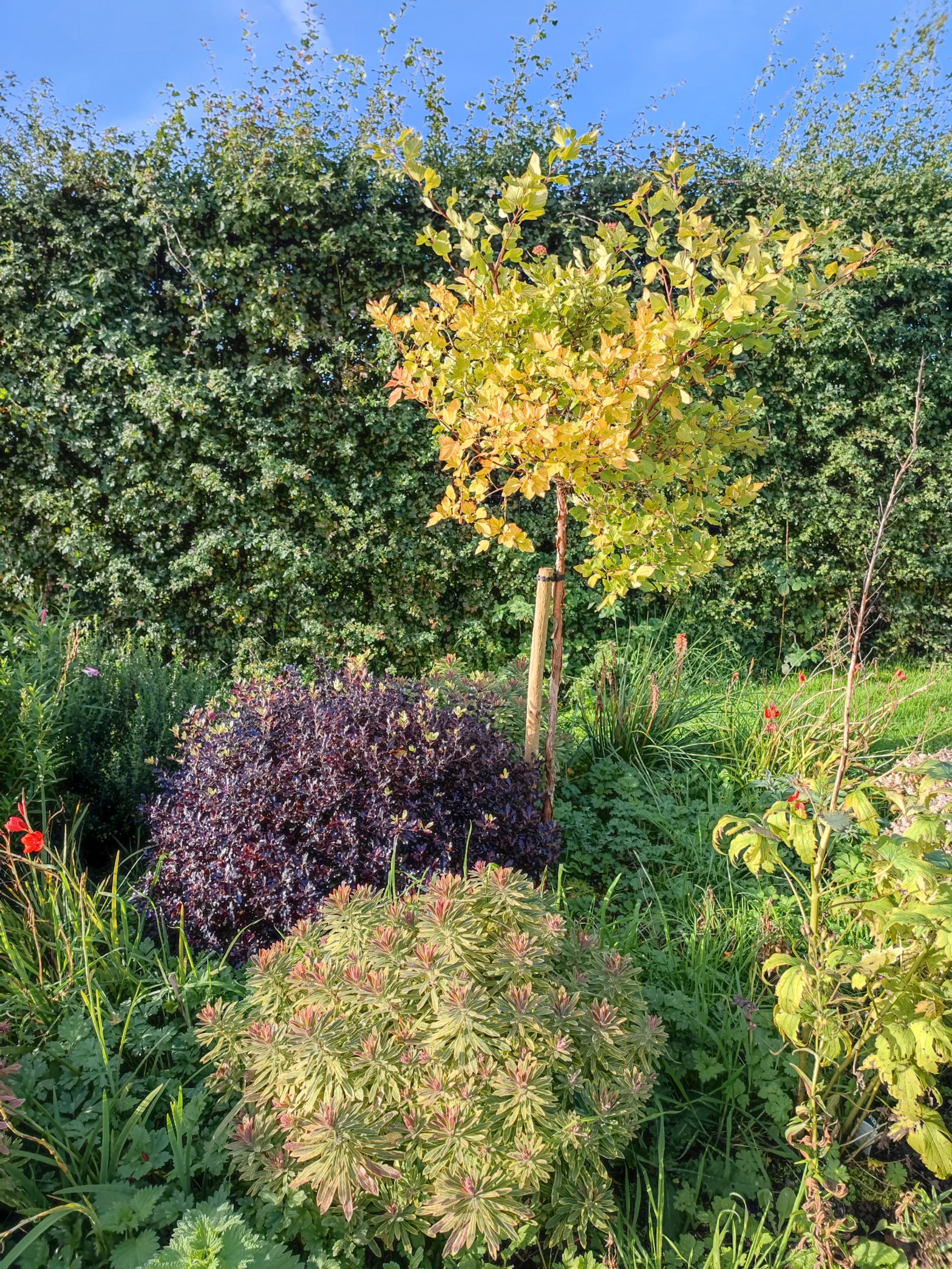
When it comes to designing a captivating garden, creating unity and harmony is vital. One effective method to achieve this is by incorporating plants with similar shapes. By selecting plants that share common characteristics, such as the shrub Pittosporum tenuifolium ‘Tom Thumb’ and Physocarpus opulifolia ‘Dart’s Gold’, along with plants like Euphorbia ‘Ascot Rainbow’ and Pittosporum tenuifolium ‘Bannow Bay,’ you can create a visually appealing landscape that captures the eye and instills a sense of tranquility. Here, I will discuss the unique qualities of these plants and discuss how their use can enhance unity and harmony in your garden design.
Pittosporum tenuifolium ‘Tom Thumb’
Pittosporum tenuifolium ‘Tom Thumb’ is a dwarf shrub with striking dark purple foliage that forms a compact mound. Its small size and distinctive shape can be utilized to create a cohesive look in your garden design. Consider placing ‘Tom Thumb’ in groups or as borders to provide a consistent, well-defined element throughout your landscape.
Euphorbia ‘Ascot Rainbow’
Euphorbia ‘Ascot Rainbow’ is a colorful perennial that adds texture and interest to any garden. With its variegated leaves in shades of green, cream, and pink, it provides a soothing and harmonious visual experience. Using Euphorbia ‘Ascot Rainbow’ as a repetitive feature can help tie together different areas of your garden design, giving it a cohesive and balanced appearance.
Physocarpus opulifolia ‘Dart’s Gold’ trained as a small tree
Take your garden to new heights by training Physocarpus opulifolia ‘Dart’s Gold’ as a small tree. This cultivar boasts vibrant golden-yellow foliage and an appealing rounded shape. The use of this plant as a feature tree or focal point in your garden design adds vertical interest and creates a unified structure. Combining the height and distinctive shape of ‘Dart’s Gold’ with the other plants in this list will create a harmonious balance between different layers in your landscape. In the same border I also have a standard trained Hydrangea paniculate ‘Limelight’ that continues the same visual theme.
Pittosporum tenuifolium ‘Bannow Bay’
With its graceful weeping habit and eye-catching deep green foliage, Pittosporum tenuifolium ‘Bannow Bay’ brings an elegant touch to any garden design. This evergreen shrub can be used as a backdrop or a unifying element in your landscape, tying together areas and providing a sense of continuity. The flowing shape and deep green color of ‘Bannow Bay’ will complement the other plants with similar shapes, creating a cohesive and visually stunning garden display.
I think something to be aware of is the tendency to just repeat the same plant: instead sometimes use a similar but different plant, it can add a visual energy and add extra interest to the planting scheme.
Using plants with similar shapes can greatly enhance unity and harmony in your garden design. By carefully selecting and combining plants like Pittosporum tenuifolium ‘Tom Thumb,’ Euphorbia ‘Ascot Rainbow,’ Physocarpus opulifolia ‘Dart’s Gold’ trained as a small tree, and Pittosporum tenuifolium ‘Bannow Bay,’ you can create a garden that exudes tranquility and visual appeal. Whether you choose to group similar plants together or use them as focal points, these plants will work together to create a unified landscape filled with cohesive shapes and forms. Embrace the beauty of nature’s variety while achieving a harmonious balance in your garden design.

 Ciaran The Gardener