
Rose sawflies are a common pest that can wreak havoc on your beautiful rose plants, like the Rosa ‘Rhapsody in Blue’ that I grow in a pot at the front of my house. Recently, I had a firsthand experience with the damage these pesky insects can cause to my beloved plant.
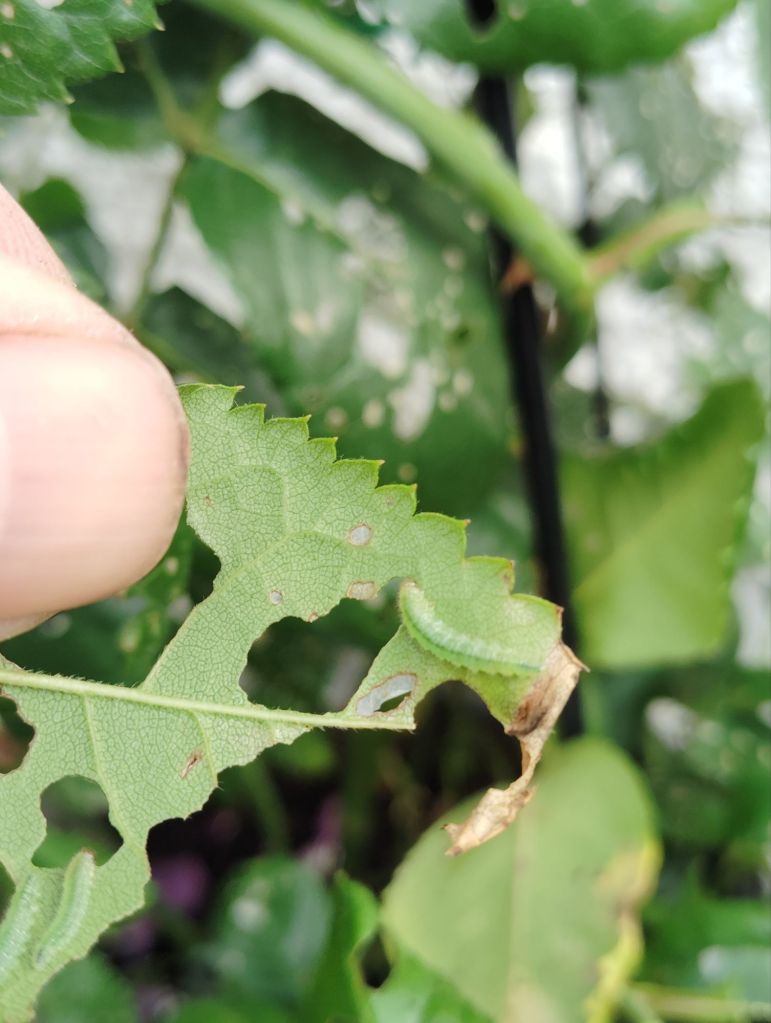
Sawflies are small, flying insects that lay their eggs on the leaves of roses. When the eggs hatch, the larvae feed on the foliage, causing significant damage to the plant. The larvae can skeletonize the leaves, leaving them looking chewed up and lacy. If left untreated, sawfly infestations can lead to defoliation and weaken the overall health of the plant. Look out for signs of damage from between June and October.
In my case, I noticed the distinctive signs of sawfly damage on my ‘Rhapsody in Blue’ rose. The leaves had been chewed up and had a lacy appearance, with small green larvae visible on the foliage. It was clear that immediate action was needed to save my plant from further damage.
There are various options for controlling these pests, including handpicking the larvae off the plant, or applying chemical insecticides. I should point out, that most roses will tolerate an attack from the sawfly and recover without any need for treatment.
I hand picked larvae from the plant, but they are small and hard to spot, so I must have missed some. More holes have appeared, I will be more vigilant and look for more larvae on the undersides of the leaves.
If you are using an insecticide as a treatment for your rose sawfly problem, you can use Resolva Bug Killer, but this should be a last resort, if using insecticides follow the instructions and apply in early morning or late evening when pollinators are not active.
In conclusion, dealing with rose sawflies can be a challenge for amateur gardeners, but with the right treatment and proactive approach, you can protect your plants from these destructive pests. Stay vigilant, be prepared to take action when necessary, and your roses will thrive in a healthy and pest-free environment, and don’t panic, usually they do not cause any lasting damage, and at most the damage is cosmetic.

 Ciaran The Gardener