
Valerian
Valeriana officinalis
Plant Profile: Valeriana officinalis (Garden Valerian, Common Valerian)
- Scientific Name: Valeriana officinalis
- Common Names: Garden valerian, common valerian, all-heal
- Family: Valerianaceae
- Type: Herbaceous perennial

Size:
- Height: 1 to 1.5 m (3.3 to 5 ft)
- Spread: 0.5 to 1 m (1.6 to 3.3 ft)
Cultural Details:
- Sun Exposure: Full sun to partial shade
- Soil Type: Well-drained, humus-rich soil; tolerant of a variety of soil conditions
- Soil pH: Prefers slightly acidic to neutral (pH 5.5 – 7.0)
- Watering Needs: Moderate; consistent moisture preferred but is drought tolerant once established
- Bloom Time: Early summer to late summer
- Flower Color: Tiny, sweet-smelling white or pale pink flowers
USDA Hardiness Zone:
- Hardiness Zone: 4 – 9
Royal Horticultural Society (RHS) Hardiness Rating:
- RHS Hardiness Rating: H7 (Hardy in the severest European continental climates; -20 °C to -15 °C or -4 °F to 5 °F)
Planting Tips:
- Plants should be spaced 30 to 40 cm (11.8 to 15.7 inches) apart.
- Incorporate organic matter (e.g., compost) at planting time to enrich the soil.
Maintenance:
- Pruning: Can be cut back after flowering if plants become straggly.
- Propagation: Divide in spring or autumn; also can be grown from seed.
- Pests/Diseases: Generally pest-free, but can be prone to slug damage and powdery mildew in damp conditions.
Uses:
- Gardening: Used in mixed borders, cottage gardens, and medicinal gardens.
- Medicinal: Historically used to treat a variety of ailments including nervousness, insomnia, and headaches (note: consult a medical professional before using medicinally).
Caution:
- All parts of the plant can cause stomach upset if ingested.
- Can become invasive in some regions due to self-seeding;


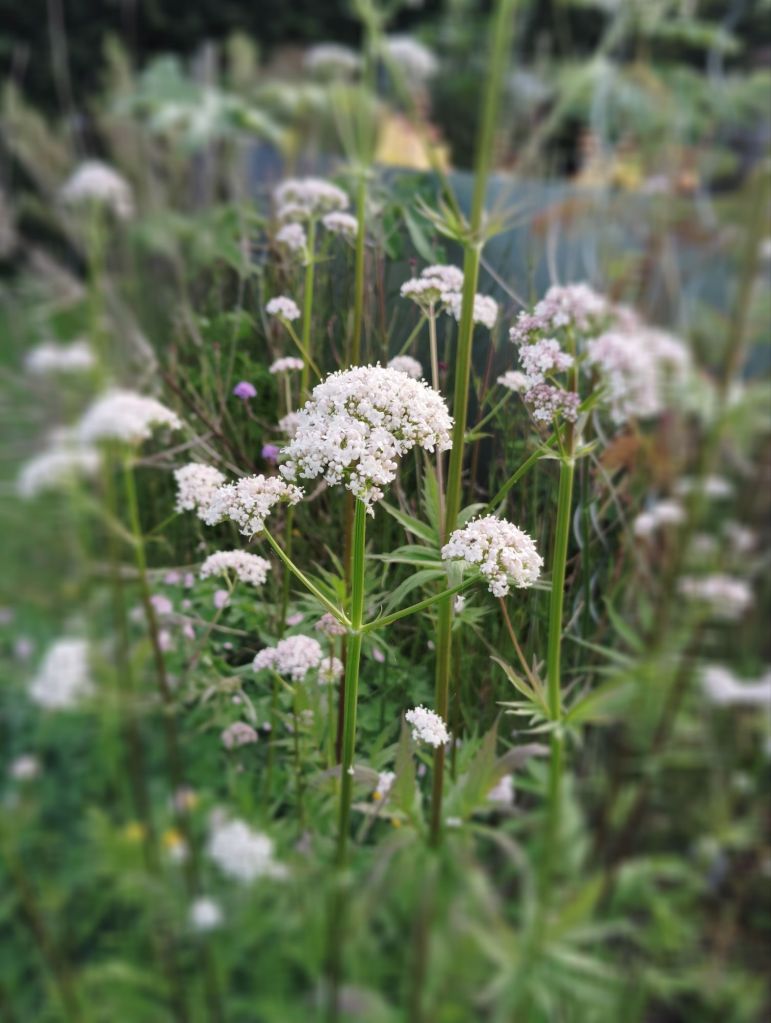
Valeriana officinalis grows wild in some parts of Ireland, seen sometimes growing in wet solids, in ditches.
I love the structure of this plant, similar in ways to the popular garden plant, Verbena bonariensis.
The white blooms start in May and will continue for many weeks, then making structural seedheads
It does self-seeded, quite prolifically, which I welcome, I pull out the ones I don’t want, and many others pop up in random places, which I think is great.
Most don’t need staking, the stems support themselves well.

.

 Ciaran The Gardener