
Spirit
Low, fragrant, and evergreen
Plant Profile: Viburnum tinus ‘Spirit’
A great choice for low growing mounds of evergreen foliage, long flowering through autumn to Spring and perfumed blooms.


Plant Info
1. Common Name:
Laurustinus ‘Spirit’
2. Scientific Name:
Viburnum tinus ‘Spirit’
3. Family:
Adoxaceae
4. Plant Type:
This is an evergreen shrub.
5. Native Range:
Mediterranean Region
6. Zone Adaptability:
USDA hardiness zones 7-10, RHS hardiness rating H5 (hardy – cold winter).
7. Ideal Conditions:
It prefers to be in full sun or partial shade. Soil should be well-drained, with a pH of neutral to slightly alkaline.
8. Size:
This plant usually grows to be about 2 meters tall (6. feet) and about 2meters wide (6 feet). Slow growing, compact and can be pruned annually to maintain a smaller size.
9. Growth Rate:
Moderate growth rate.
10. Bloom Time:
Flowers typically bloom from late winter to spring, fragrant.
11. Bloom Description:
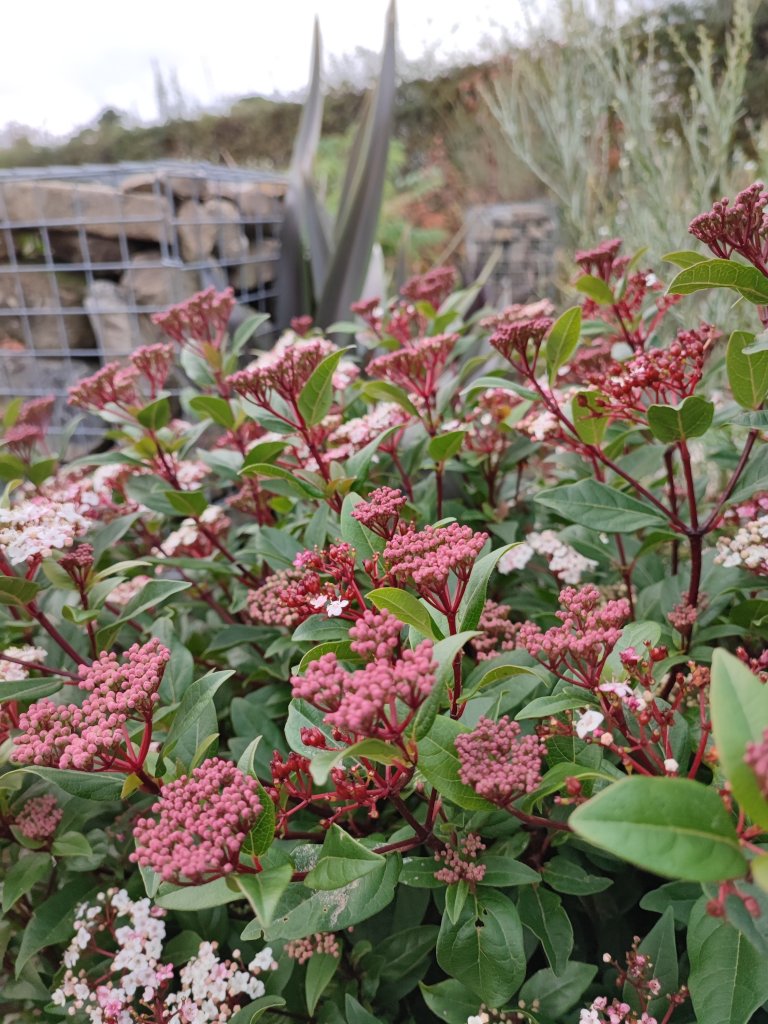
The blooms are small, star-shaped, and pinkish-white in color. They usually appear in dense, rounded clusters from dark red buds.
12. Leaf Description:
Leaves are glossy, dark green, and broadly oval.
13. Uses in Landscaping:
V. tinus is commonly used as a screening plant, hedge or in mixed borders due to its dense foliage. It can also be a great addition to wildlife gardens as it provides shelter and food for some bird species. This varit is more suited to smaller gardens due to its compact growth and long flowering season.
14. Maintenance:
Low maintenance – only needs annual pruning to maintain its shape.
15. Pests/Diseases:
It is generally trouble free
16. Other Features:
This plant has great value for wildlife and it’s known to be particularly attractive to birds.
17. Propagating:
Propagation is usually done by semi-hardwood cuttings, typically in late summer.
18. Availability:
It’s widely available at most nurseries and garden centers.
19. Pollinators:
The plant attracts bees and certain species of butterflies.
Fragrance
In my experience I have found V. tinus to be disappointing in the fragrance department, especially when compared with some other Viburnums that have heady perfumed blooms. This variety however, is the exception, on mild winter mornings I can sniff the fragrance of its blooms on the air.
I have planted two of these in The Pylon Garden, chosen for their compact rounded growth habit, they add 12 months of foliage and form to the area.
The dark red buds appear in September and gradually they open the flowers sequentially throughout the winter reaching a crescendo of fragrant blooms in Spring.
.

 Ciaran The Gardener