
I first grew Oxalis tuberosa about fifteen years ago. I received the seed from a seed list, it was listed as an alpine plant from South America. I grew it in a well drained compost, lean, without much fertilizer and it eventually produced an attractive yellow flower. It was quite nice. Last year I was re-acquainted with this Oxalis, under quite different circumstances. A gardening firend of mine, Carmen Cronin who runs the Clare Garden Festival gave me some tubers of a vegetable plant which she described as having shamrock-like leaves and that it came from South America. I suspected that it was indeed my old friend O. tuberosa, although she called it OCA and pronounced it Och- ah.

Well I was intrigued! The tubers were waxy textured and brightly coloured, some red, some yellow, others almost white. The following week I planted them in pots with the help of some students taking part on The New Growth Project course that we run in our garden. We watched the plants closely, all were curious to see how they would grow, would these funny looking tubers be a substitute for the beloved spud? We joked that one day people might be ordering bags of Oca fries to go with their burgers.
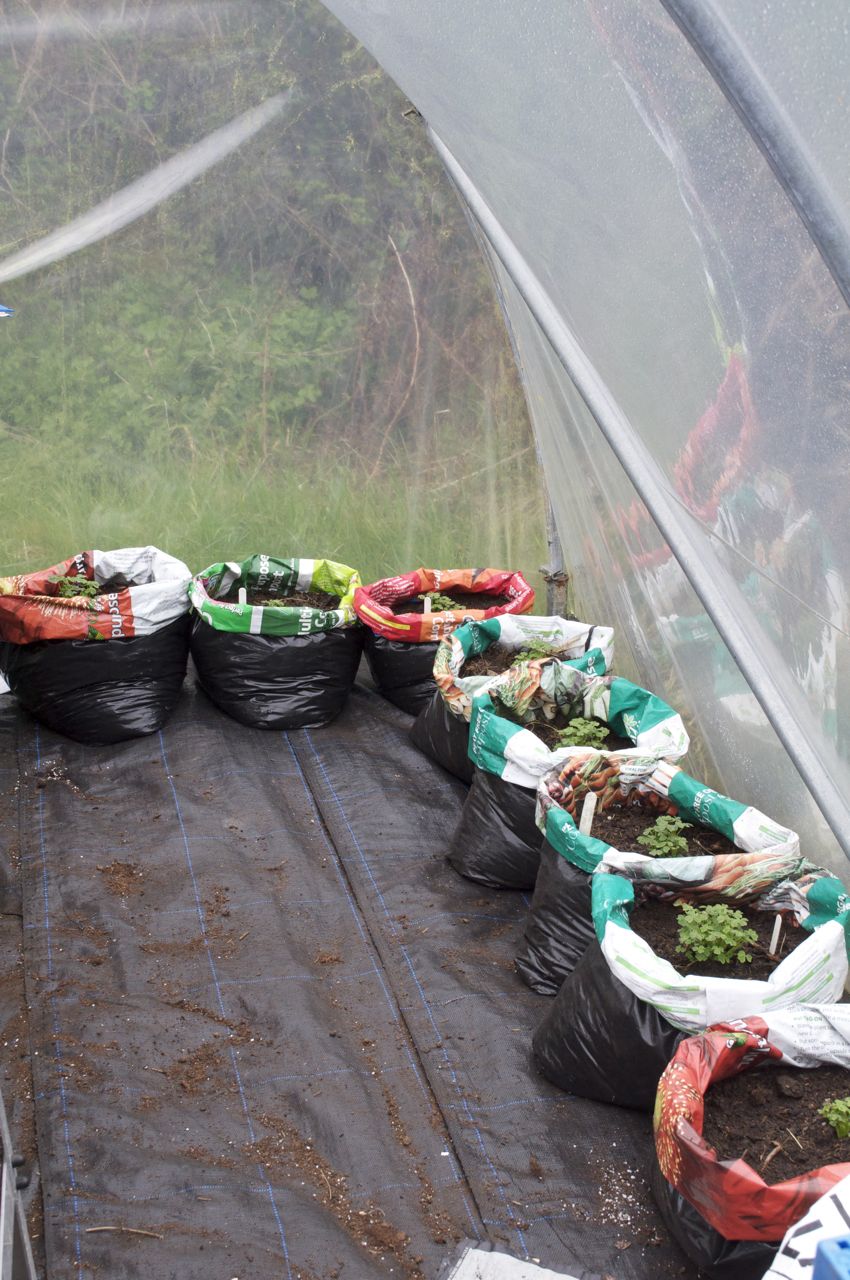
That was back in April. We planted the tubers in 2 litre pots of garden compost and later potted on the plants into re-cycled compost bags filled with more of the garden compost. These were kept in the polytunnel where we work with the students. The growth of the Oca was far more than I expected and by mid-summer we were battling for space with the South American vegetables.

Ocas are relatively unknown as a vegetable, apparently they grow them in New Zealand where they call them yams, which is a very misleading name. Oca or Oxalis tuberosa are related to wood sorrel, Oxalis acetosella, a native of Irish woodlands. The foliage is very similar being trifoliate and shamrock like. The foliage can be eaten, it has an acidic sour taste which is quite appealing, similar to sorrel.
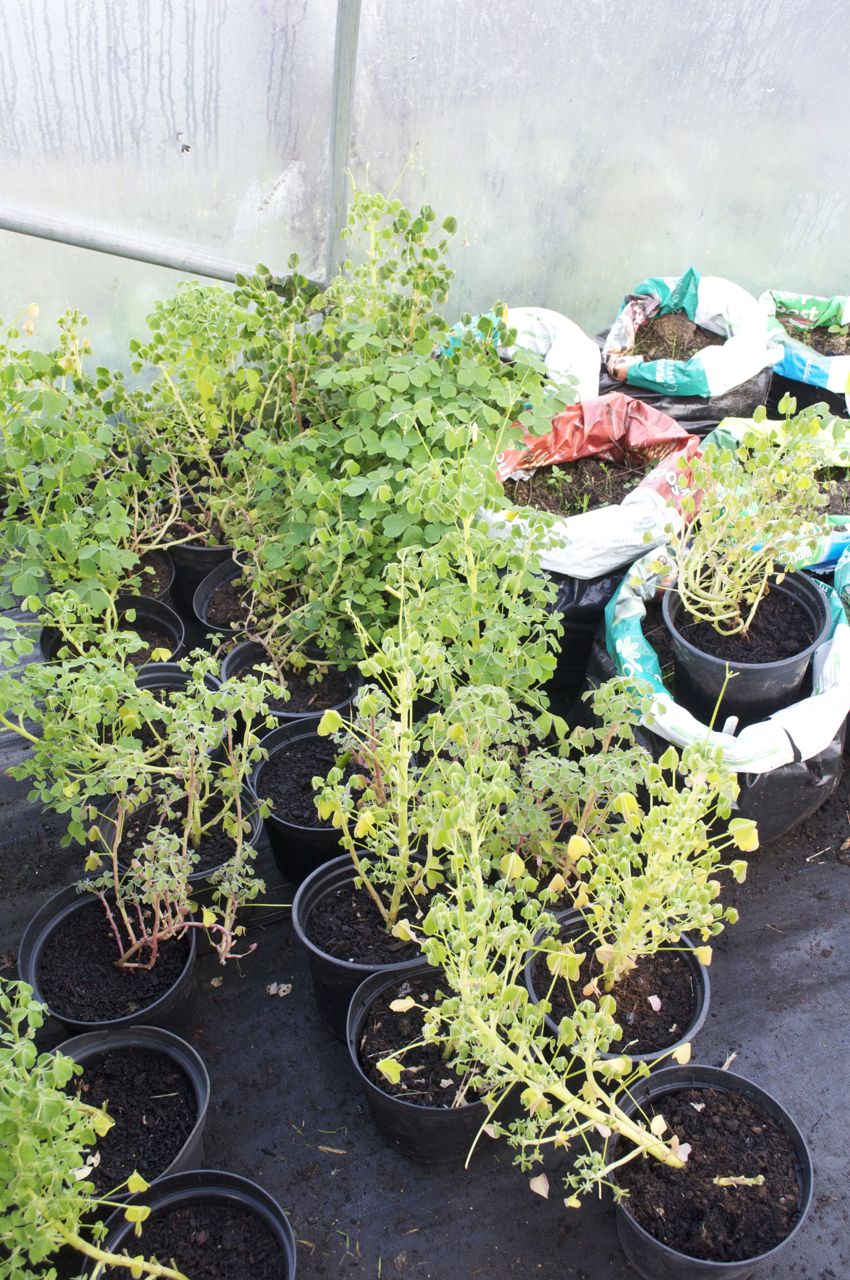
Oca will grow vigorously, some of the plants produced stems 2 metres (over 6ft) long by the autumn. Oca are not suitable for growing outdoors in all parts of Ireland, early frosts will turn the fleshy stems to mush before tubers start to form. The plants have a short day photoperiodic response for tuber formation which means that tubers do not start to form and swell until mid-October. Covering the plants with polythene or fleece will help protect them from light frosts.

GROWING OCA – MY EXPERIENCE
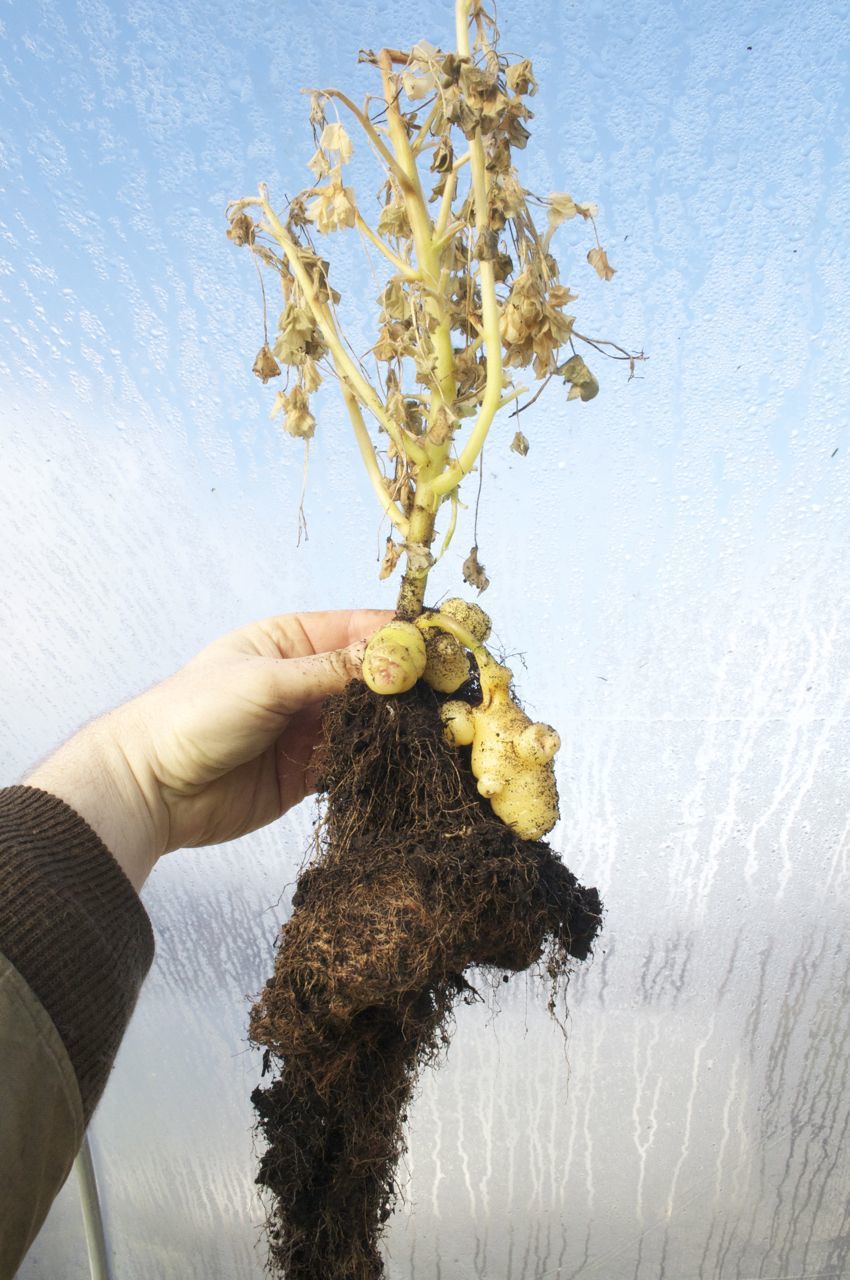
I found that plants in the polythene tunnel also got frost damaged when temperatures went below zero degrees Celcius (32F). As the days got shorter the students and I checked the plants weekly. After the tomato plants were cleared from our upper tunnel we moved the plants that we had been fighting for space in our potting tunnel to the bed vacated by the tomatoes. We laid the trailing stems of the Oca on the beds. Along the stems small tubers started to form. Portions of the stems that were covered with soil developed larger tubers. Next year I will earth up the tubers more as some close to the surface had holes eaten in them by birds. Otherwise the Oca were untroubled by pests and untroubled by diseases. I did not give any extra fertilizer to the plants while they were growing as the plants were growing so big, but addition of supplementary fertilizer low in nitrates might help increase the yield of tubers if applied late in the growing season. We kept the plants watered throughout the summer.

During late summer I experimented with taking cuttings of the Oca plants. They rooted quickly and easily and by Christmas most of the plants had made one or two decent sized tubers. I will use these plants for replanting this year.
HARVESTING AND COOKING OCA
Our first harvest of the tubers was made just before Christmas. Two good portions were made from a well cropping bag.
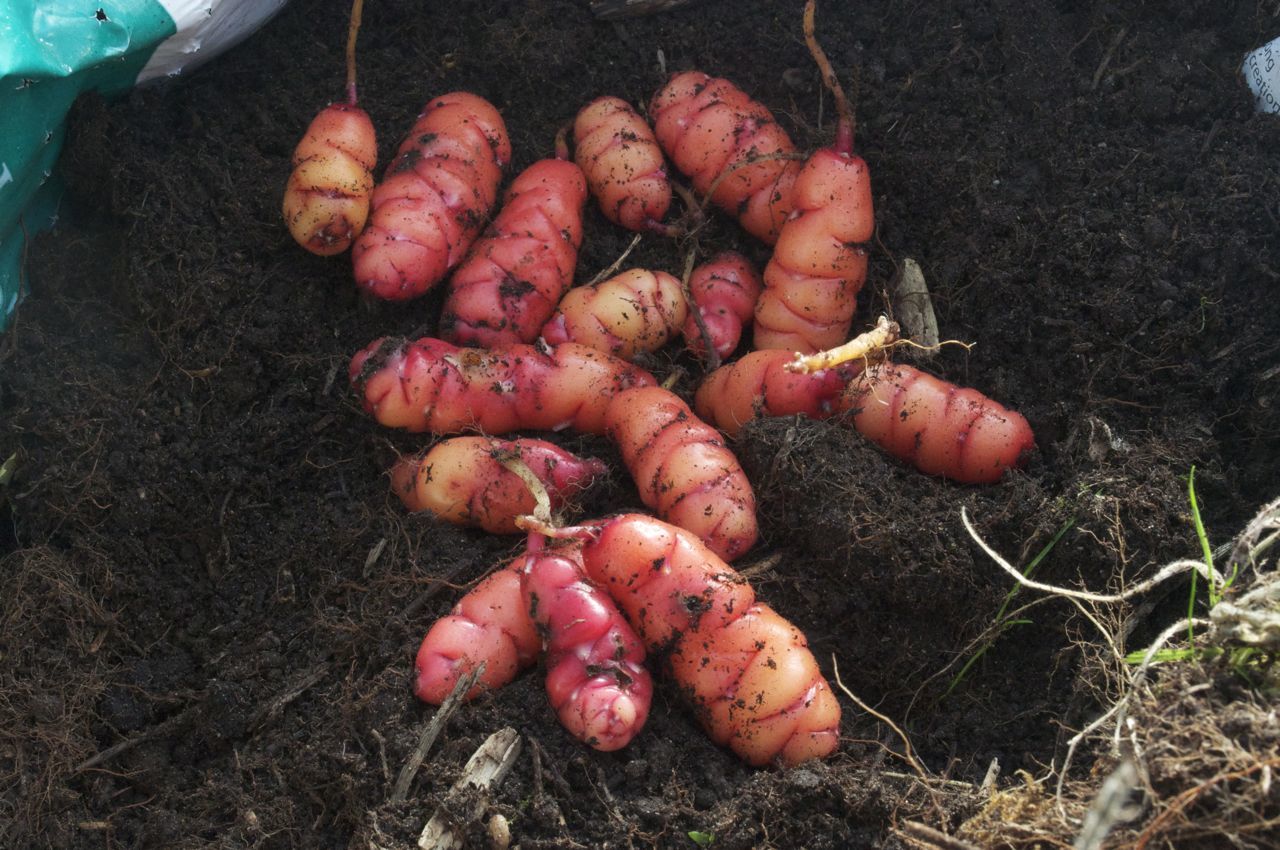
So after all this, how do Oca taste? On Christmas Eve my wife and I roasted our first harvest of red and yellow Oca tubers. Oca tubers can even be eaten raw, but i prefer to cook them. They can be fried, boiled, steamed, deep fried or roasted. After washing the well, they are easy to clean due to their smooth and waxy skins. We then tossed them in rapeseed oil and baked them for about 20 minutes until they were tender.

OCA ARE DELICIOUS! They remind me a little of a fried potato seasoned with vinegar.
So next season we are going to grow more Oca. I look forward to experimenting with them; I am going to take cuttings from the first flush of growth and see if the plants make more tubers, I will earth up the stems as they grow. I will also experiment with day length control, and try to induce tuber formation early by covering the plants with black polythene for a few hours each morning to produce a shorter day length.
I can see it now, fast food outlets on Saturday nights after closing time “Do you want Oca fries with your burger?” “Yes please!”



 Ciaran The Gardener
Another fantastic post…I actually planted out some oca, never knowing that it was in the oxalis family. I know that it is a crop that grows really well in New Zealand and it must be doing alright here (Tasmania) because I purchased some from a local fruit and veggie grocer. I might have to give it another go. I was given some recently by a local nurseryman but they didn’t sprout. Excellent tutorial on a most interesting tuber 🙂
Really interesting! I wonder how they’d do in our Texas climate? We get freezes starting in November each year. I guess I’ll just have to try some!
The important thing is the day length, the tubers did not start to form until mid-October, the day length is getting short, less than 10 hours light.
I really like to read about new things to grow and this Ocra sounds really interesting. I will have to wait until I have a big enough Polytunnel because it doesn’t look like it will survive the harsh Ardennes winters. Great post!
Thanks Laila, but be aware Oca is not to be confused with Ocra, different things entirely!
Hello – I am looking for these Oca and Skittets could somebody point me in the right direction From Indiana U.SA.
Thank you.
In case someone runs across this post and is looking for oca in the US, as of December, 2016 this and other exotic fruits and veggies can be ordered from Raintree Nursery in Washington state. http://www.raintreenursery.com
I was given two tiny little plants approx 4 inches high from a neighbour on my allotment. Having not much room in my green house I planted them in with my lettuce in a raised box. The foliage grew and grew to around 1.5 metres high. The frost has just killed of the foliage so I dug one of the plants up. What I got was around 100 beautiful yellow/orange tubers. Some of them were sliced and put in a stir fry others were mashed and eaten with a roast absolutely delicious. I am just going round to the allotment to dig up the other one and will definitely growing more for next year. Mike Hillingdon. Middlesex. UK.