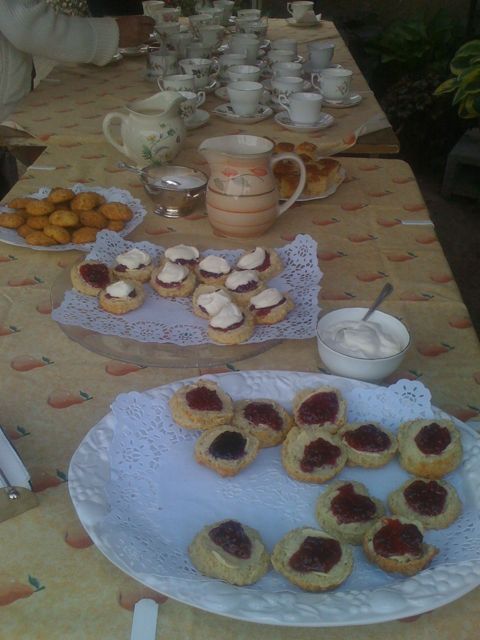
Mildred’s Scone Recipe

Everyone enjoyed the scones at Killurney so much, I had to get the recipe for all to try at home.

Ingredients:
-1lb (450g) of self raising flour, if using normal flour add 1 teaspoon of baking powder
-2 ounces (60g) of butter
– 2 eggs
– a fist of sugar (half cup/1.25dl/125ml)
– half pint (3 dl/ 300m)lof full cream milk, none of that skinny fat free stuff

Method
1. Sieve flour into a bowl
2. Add sugar (and baking powder if using it)
3. Rub in the butter.
4. Mix the eggs and milk in a seperate bowl.
5. Pour eggs and milk into the flour
6. Knead (vaivata) the mixture
7. Cut into 2 cm squares
8. Place on a greased baking tray

Mildred has always baked her scones in a stove oven. She uses a hot oven and places the tray on a middle shelf for ten minutes. Then she moves the tray to a lower shelf for a further ten minutes. We estimate the temperature to be about 200 degrees celcius.

Killurney Paradise

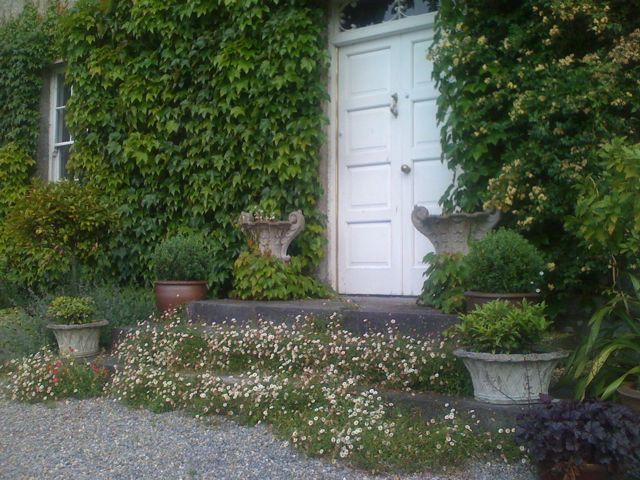
“It is like a paradise” the Finnish lady gasped, still catching her breath. The beauty of the garden having left her breathless.

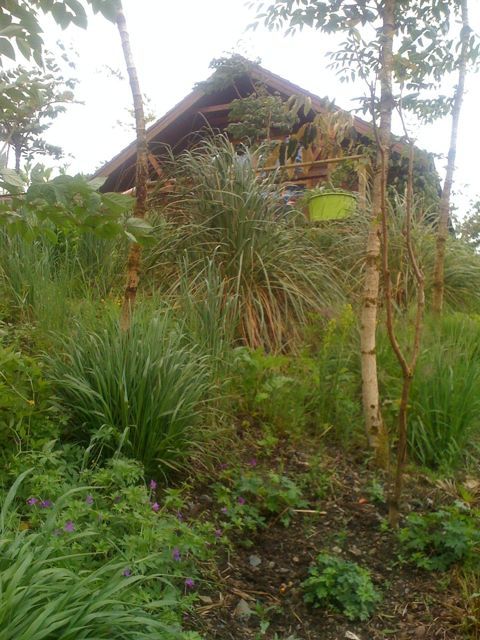
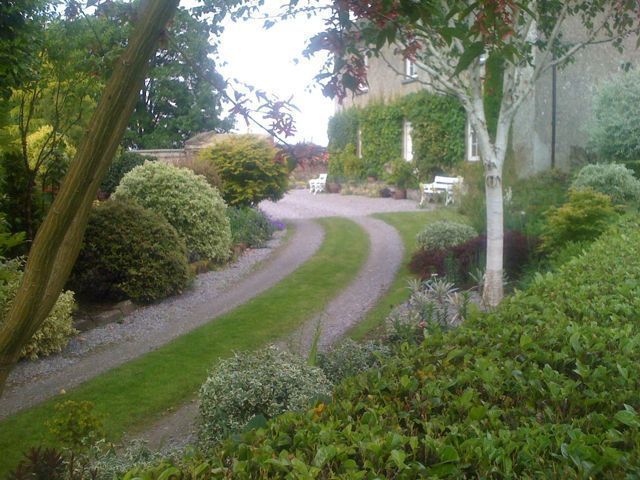
Killurney garden looks out over stunning views of the Comeragh mountains. In the 25 years that Mildred Stokes has been creating her garden paradise near Clonmel in Co. Tipperary, she claims to have made all the mistakes possible. If that is true, her garden is the loving evidence that one can indeed learn from mistakes.

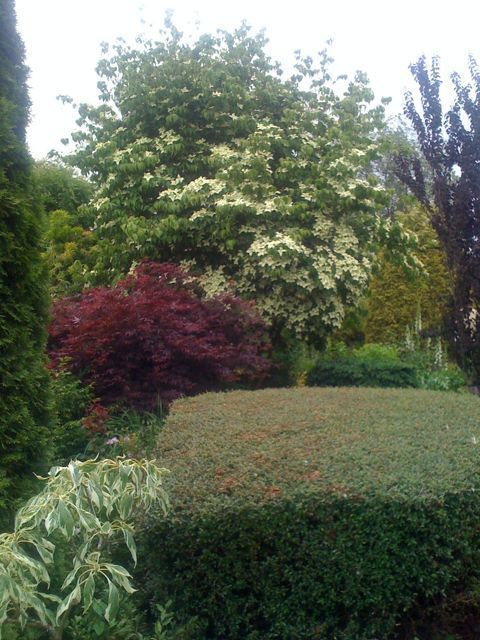
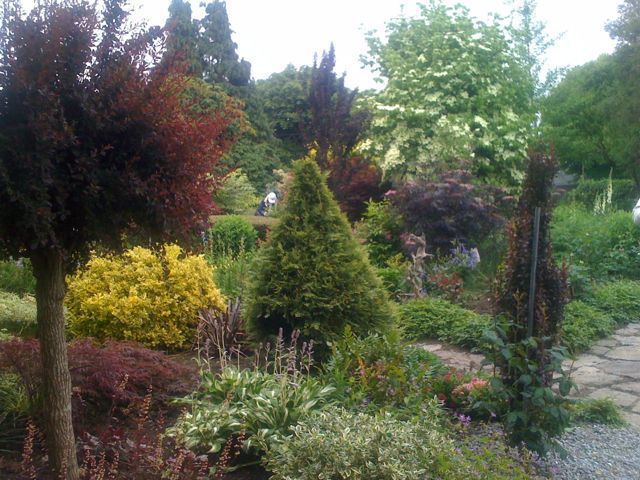
Each plant is grown to perfection, placed with precision and combines with it’s neighbour to produce perfect combonations. Conifers, trees and shrubs provide the bones of the structure, ferns nd foliage the flesh and flowers are the couture, jewellery and perfume. The result is a natural beauty, impeccably dressed.

Cornus kousa ‘China Girl’ created quite a stir amongst our group, the starry white flowers hiding it’s foliage. Clematis montana ‘Broughton Star’ flowered profusely beside The pink Rosa ‘Bantry Bay’. Everywhere there was something else to admire, a stunning view, a clever plant grouping or a perfect bloom.

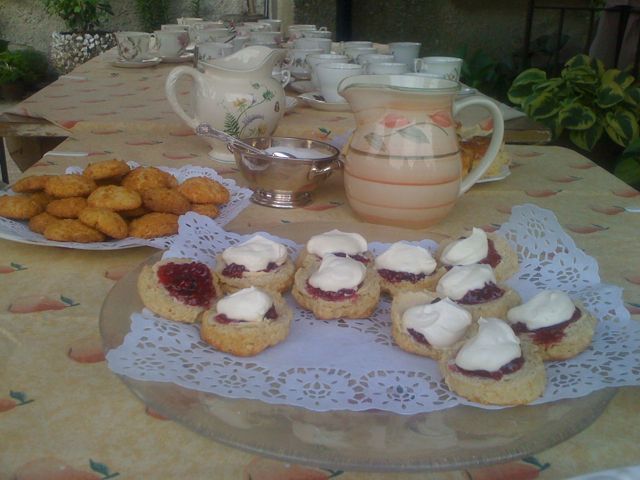
If the garden was not enough, we were treated to home baking, fresh scones with homemade raspberry jam and fresh cream, lemon drizzle cake cut into cubes and fruit cake. Some of the ladies asked for Mildred’s scone recipe, I wrote it down and will post it on the blog later. Killurney not only looked great but tasted great too.

Killurney Garden will be open for visitors on June 26th & 27th as part of the Tipperary Garden Festival. There will also be five other gardens open over that weekend, all entry fees will be donated to charity.

For information contact Mildred Stokes at 052 6133155 or rowswork@eircom.net

Photos below – from top:
Entrance to Killurney Garden; Hakenachloa macra ‘Aureola’; Erigeron karvinskianus grows on the steps by the front door; Cornus kousa ‘China Girl’ bracts close up; Cornus kousa ‘China Girl’; Clematis montana ‘Broughton Star’; Clematis with Rosa ‘Bantry Bay’; view through garden with structural plants; Mildred’s delicious scones.

For Finns

After leaving June’s garden we has a nice lunch in Russborough house. Then we travelled to Kilkenny and arrived to lovely sunshine. Still have not needed to put on my wellies on this tour.

We are staying in Hotel Kilkenny, the staff are friendly and helpful, the food is good but tonights menu caused chuckles from the Finns. Our tour guide wrote translations on the menu, understanding that the staff would photocopy them. But the ever helpful people at the hotel thought it would be better if they typed and presented the menu in Finnish. They obviously had trouble reading Anu’s hand writing and interpereting Finnish. The result was,apparently, a rather amusing if nonsensical menu. It is pictured here for our Finnish friends.

Photos from June Blake’s

More photos from June’s garden and nursery. www.juneblake.ie

Photos below- from top:
Gravel path with iron edging; group of pots; pine tree with hostas in planter; seat by sculptor Michael Calnan;water feature with reflection of Aralia; Hosta leaves with Stylophorum lasiocarpum flower; June’s pet dog “Poppy”; view to house with from meditative area created in memory of the poet John O’Donohue, stone work from meditative garden.

More from Huntingbrook

There is a wealth of plant treasure at Huntingbrook. This morning the conditions were less than favourable for photography, especially when using just a phone. So gems such as Dicentra ‘Ivory Bells’ or the new mottled white variegated Fatsia japonica ‘Spider Web’ can’t be shown here, I hope you enjoy some nice views from Huntingbrook.

Photos below- from top;
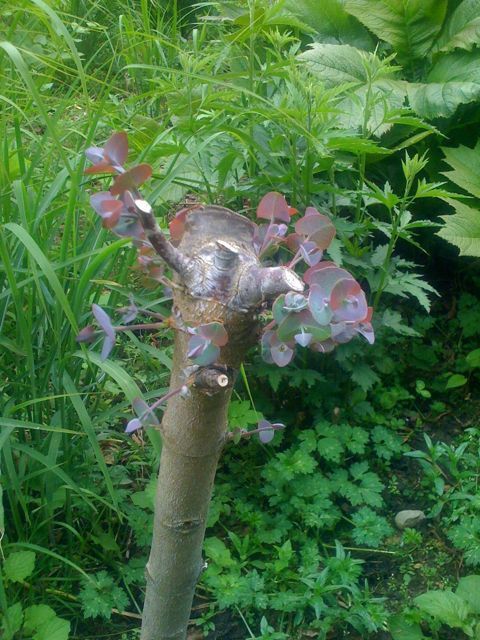
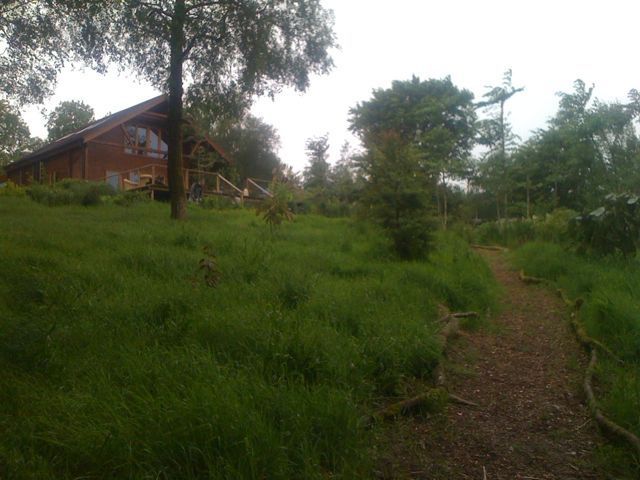
Edible green roof that covers the outdoor Cobb oven; wooden seat around a tree; path through the woodland; Pulmonaria ‘Diana Clare’; Eucalyptus sprouts back to life after pruning; path through meadow grass; Aralia echinocaulis in the deck; fancy watering can on the table.

June Blake’s Garden and Nursery

Some things run in families, madness is one. Salivating and shaking with excitement at the sight of a rare plant, obsession; all symptoms of being a gardening nut. June Blake shares a madness for gardening and plants with her younger brother Jimi. Their mother is a keen gardener too.

Her garden has undergone a transformation in recent times, in a state of constant evolution, the one thing that remains constant is June’s sense of style and a good designers eye.

Unusual plants, many propagated from seed provide the intricate detail to the greater composition that is her garden master piece. Although a young garden, it appear surprisingly mature. Steps formed with warped railway sleepers leads to a viewing mound, a feature added less than a year ago, provides an overall view of the formal layout.

When it comes to planting, formality is eschewed in favour of lush herbaceous perennials. Persicaria ‘Fire Dragon’ is a dark beauty, Persicaria polymorpha is big fluffy and white, while the oriental poppies are bright and blousy. Primula alpicola fragranced the air, bamboos rustled in it while the ornamental grasses moved with it.

One of June’s intricate details intigued some members of the tour, while it mystified me and the name escaped June, the label having gone a miss. Orange tubular flowers hung in clusters in this miniature plants whose leaves emit an obnoxious odour. I knew the plant from before but could not think of the name. Over lunch in Russborough House it annoyed me, the name still alluding me. Dessert helped me forget about it, the power of cake! When back on the bus a word entered my mind, glumicalyx. I googled it; Glumicalyx flanaganii is the mystery plant, I am relieved, I will be able to sleep tonight!

Photos below – from top:
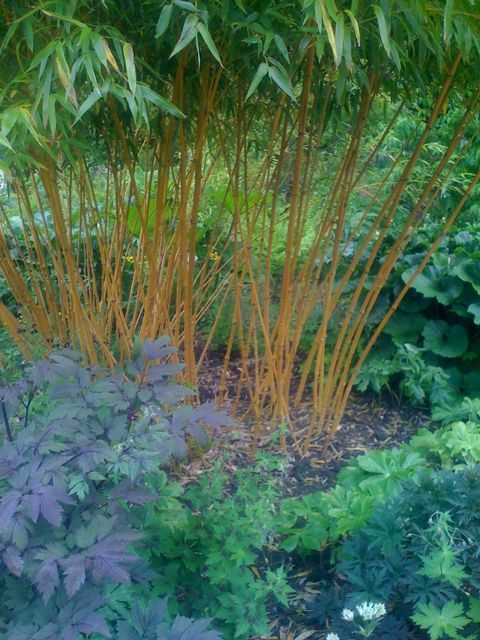
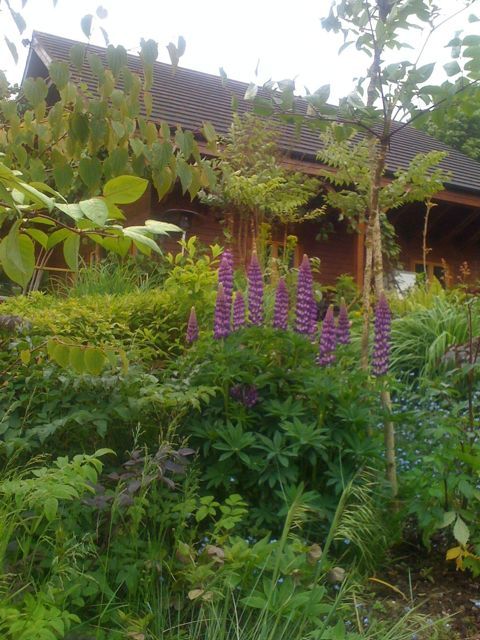
Buxus sempervirens hedge snakes through the border; the house ith oriental poppies (left) and red lupins; warped sleeper steps lead to viewing mound; view of garden from the mound; dark foliage of Persicaria ‘Red Dragon’; big fluffy Persicaria polymorpha; yellow stemmed bamboo with side shoots trimmed; Primula alpicola; Glumicalyx flanaganii.

Huntingbrook Gardens

Jimi Blake is a serious plantaholic, but I guess you can have worse and much more unhealthy addictions, and most of his visitors to Huntingbrook understand his affliction. The majority of those that make the trip up Lamb Hill at Tinode near Blessington, Co. Wiclow, are also seriously suffering from garden related addictions.

This is one of the best places for plant alcoholics to indulge their passion. Each time I visit, for I am also afflicted, Jimi always has something new, exciting and rare to show.

Our group arrived as the cloud hung low and a breeze blew down the hill. Gerry our driver parked the coach by the allotments and we walked up the road to the gardens. As soon as the first people entered they stopped to examine plants and ask the names, it is apparently an international condition, this plant obsession.

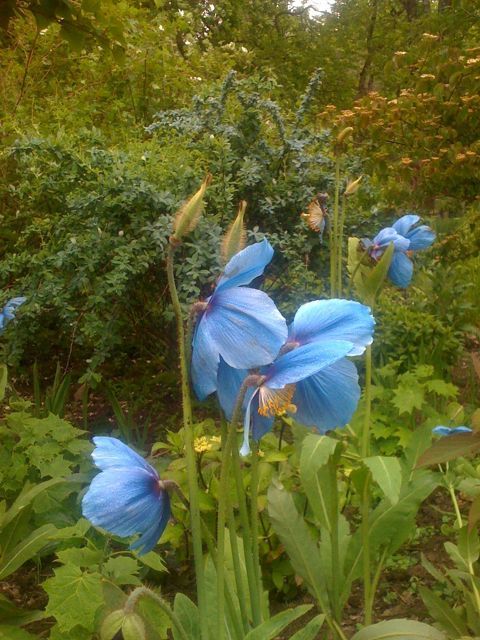
Jimi led us through the woodland garden, situated in a seventh century ringfort. Blue poppies, Meconopsis bectonicifolia, beautifully displayed against a background of glaucous foliage of Beberis temolaica, gathered much praise.

Aralia echinocaulis planted en-masse always looks stunning, the borders beneath them recently replanted are already full of colour and promise of later beauty. Dark foliage of Ligularia ‘Britt Marie Crawford’ contrasts with fresh green fern fronds in the adjacent border beside the house.

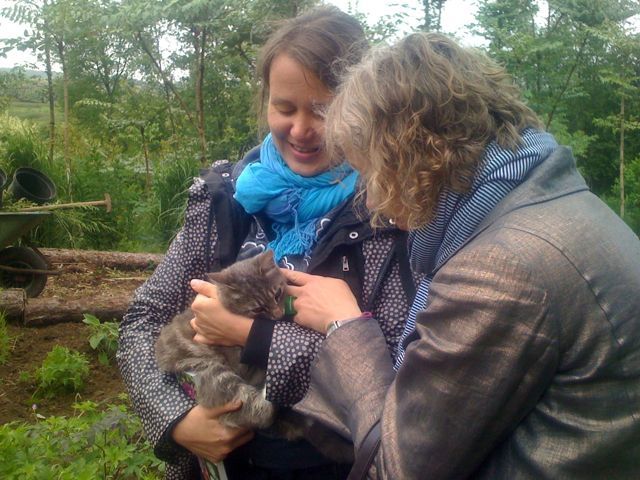
We were followed constantly by the cute and cuddly Minnie, one of Jimi’s brace of cats. She purred loudly as she was repeatedly picked up for cuddles. Fred, the dog looked on jealously.

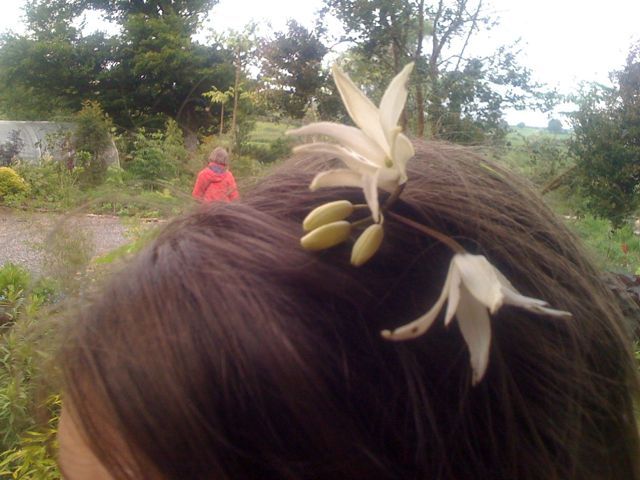
As we had tea and coffee in the conservatory, Jimi pointed to a climbing plant on a pillar outside. The evergreen leaves composed of numerous leaflets clothed the twining stems while ivory white bell flowers hung in clusters. Holboellia chapaensis is my new favourite plant. It has gone straight to my very long wish list. That always happens after a trip to Huntingbrook.

Photos below- from top:
Walking up Lamb Hill to Huntingbrook; Meconopsis bectonicifolia, blue Poppies, in front of the beautiful glaucus shrub, Bereberia temolaica; dark foliage of Ligularia ‘Britt Marie Crawford’ with ferns and lush green foliage; Minnie enjoying the attention of Hanna and Anu (our fabulous tour guide); ornamental grasses under Aralia echinocaulis; Holboellia chapaensis (HWJ 1023) a plant from the nursery Crug Farm in Wales, the flowers smell like cucumber!; Hanna wears Holboellia flowers on her hair; Lupins flower beneath Aralia echinocaulis.