Rub them on a nettle sting. Apart from that what are dock leaves good for? Well, for a long time I have struggled to find a reason to allow a dock leaf to exist in the garden. Rumex obtusifolius the broadleaf dock is a deep rooted perennial, a thick tap root that is almost impossible to dig from the ground without it breaking. Any portion that remains in the soil will regrow, causing annoyance for most gardeners. Their large oval leaves with wavy edges are not pretty, coarse and rugged, the flowers greenish brown on a ribbed stem that reaches 60-90cm (24 – 36in) high. The flowers each form a pod which turns a dark reddish brown. The wind shakes them free and into the soil they fall, a new dock leaf will grow.
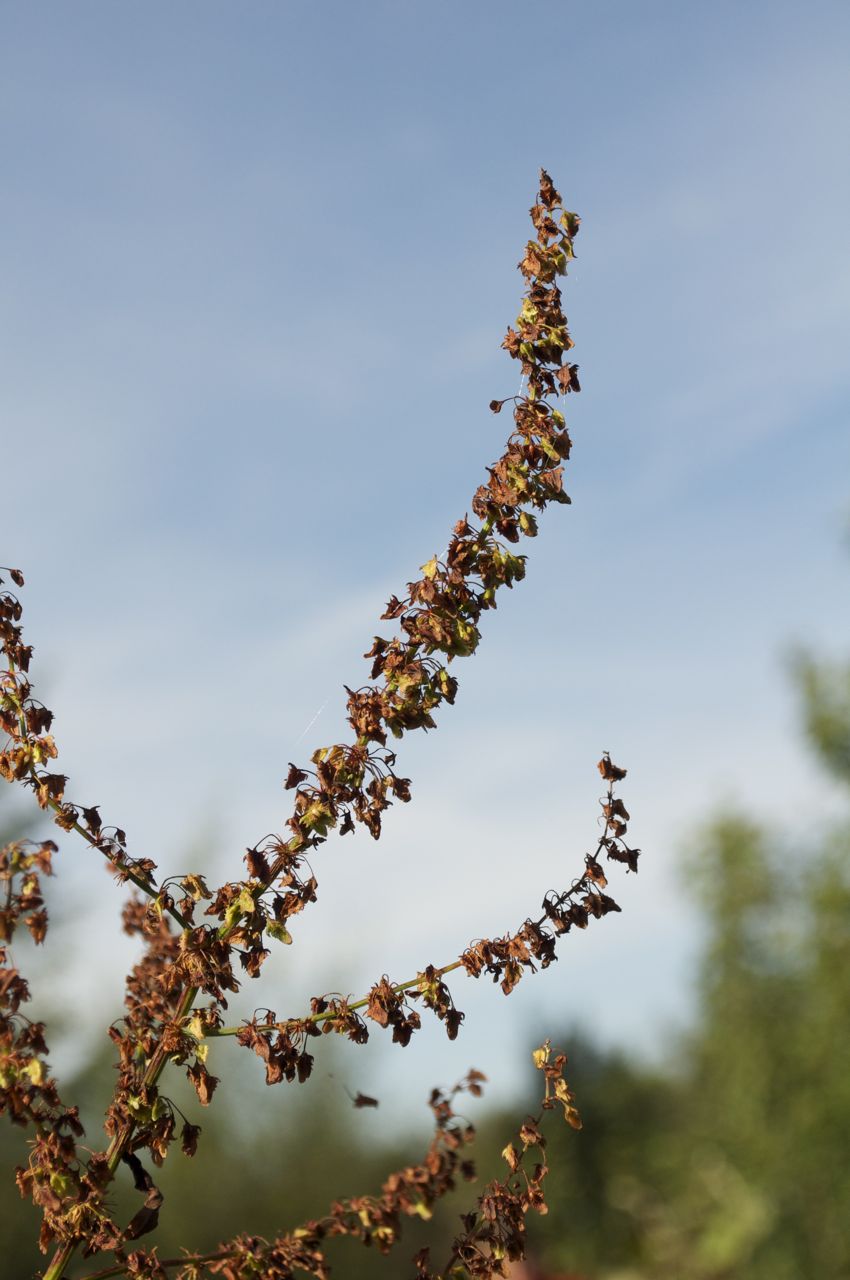
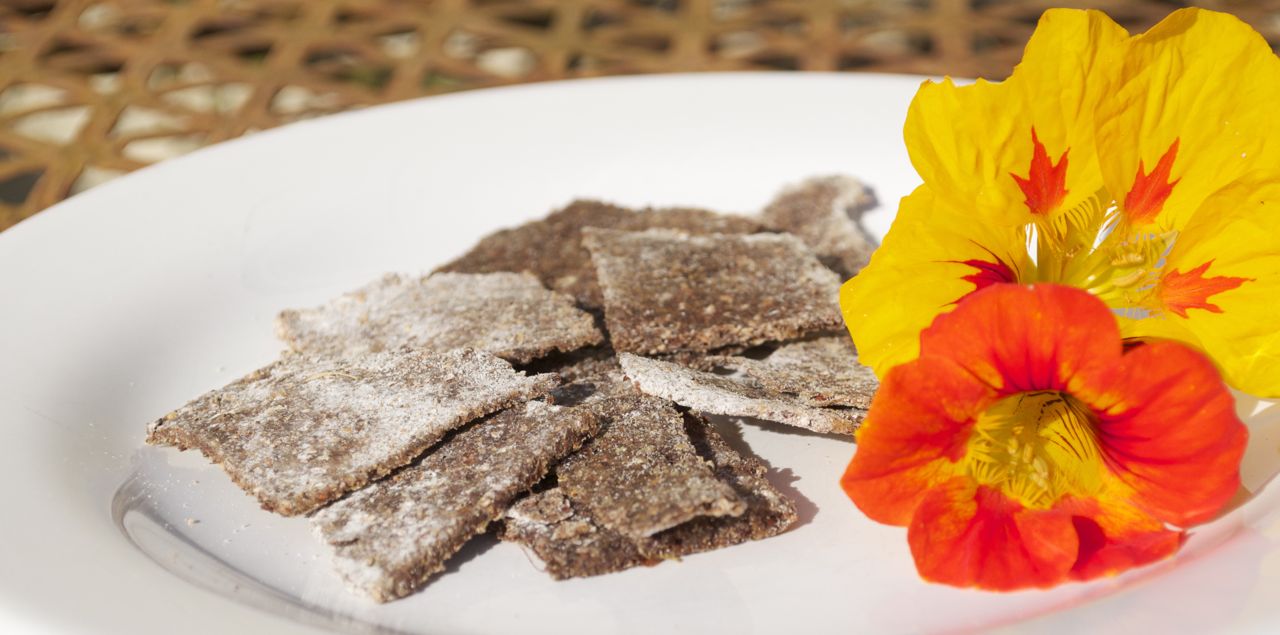
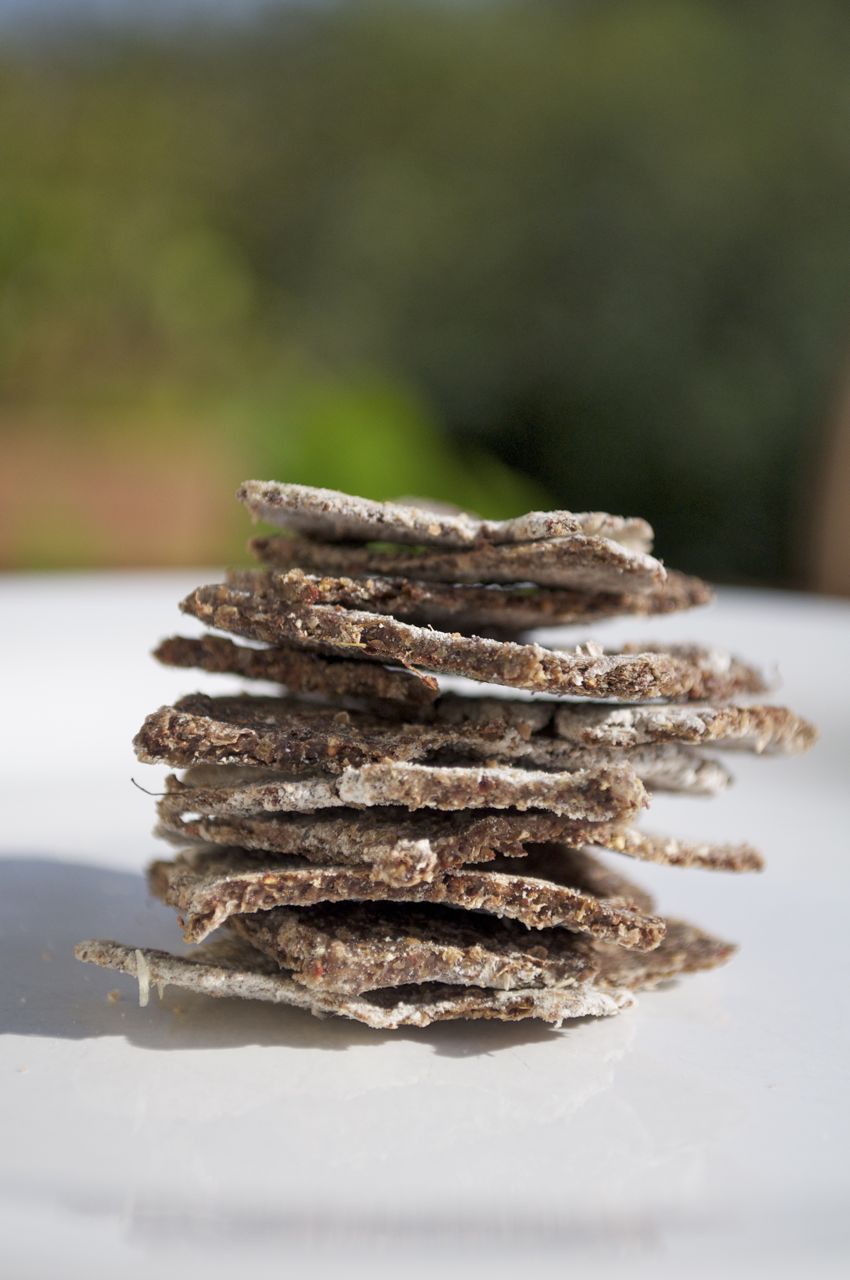
It is the seeds that have given the dock leaves in our garden a reprieve. Easily rubbed from the stems they can be ground up to make a fine flour. Mixed with spelt or heat flour they can produce a tasty mix, a crispy cracker to enjoy with cheese or pickled cucumber.

Harvest the dock seeds when they are dark brown. Make sure they are dry, best to collect them when the weather is dry.
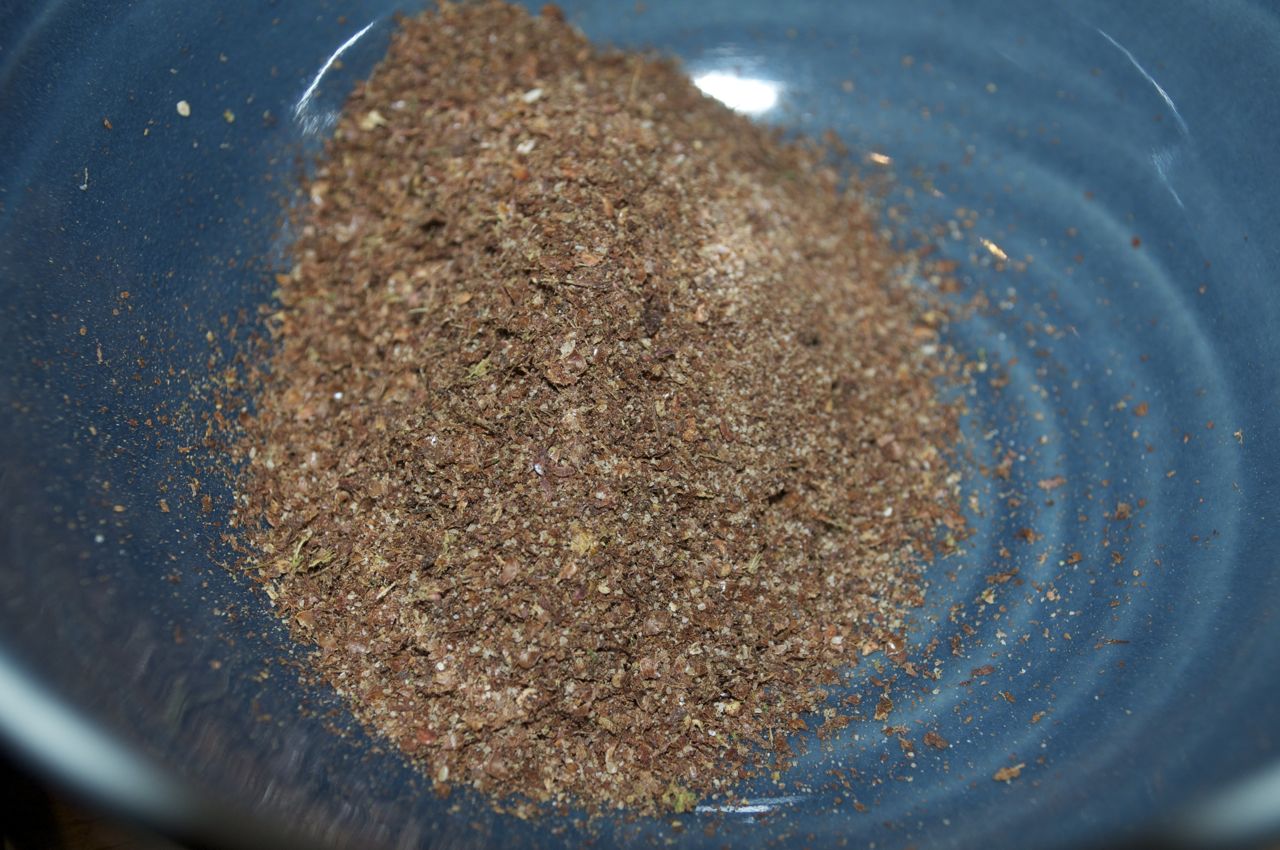
We first placed the seeds in a coffee grinder and then ground them finer using a pestle and mortar.
Dock Seed Crackers- Recipe
Ingredients
- 100ml dock seed flour
- 100ml whole meal spelt flour
- 1 – 2 teaspoon of mixed hedgerow spice:
- 1/3 hogweed seeds
- 1/3 wild carrot seeds
- 1/3 lovage seeds
- Water
Method
Mix ingredients to a dough that is not sticky.
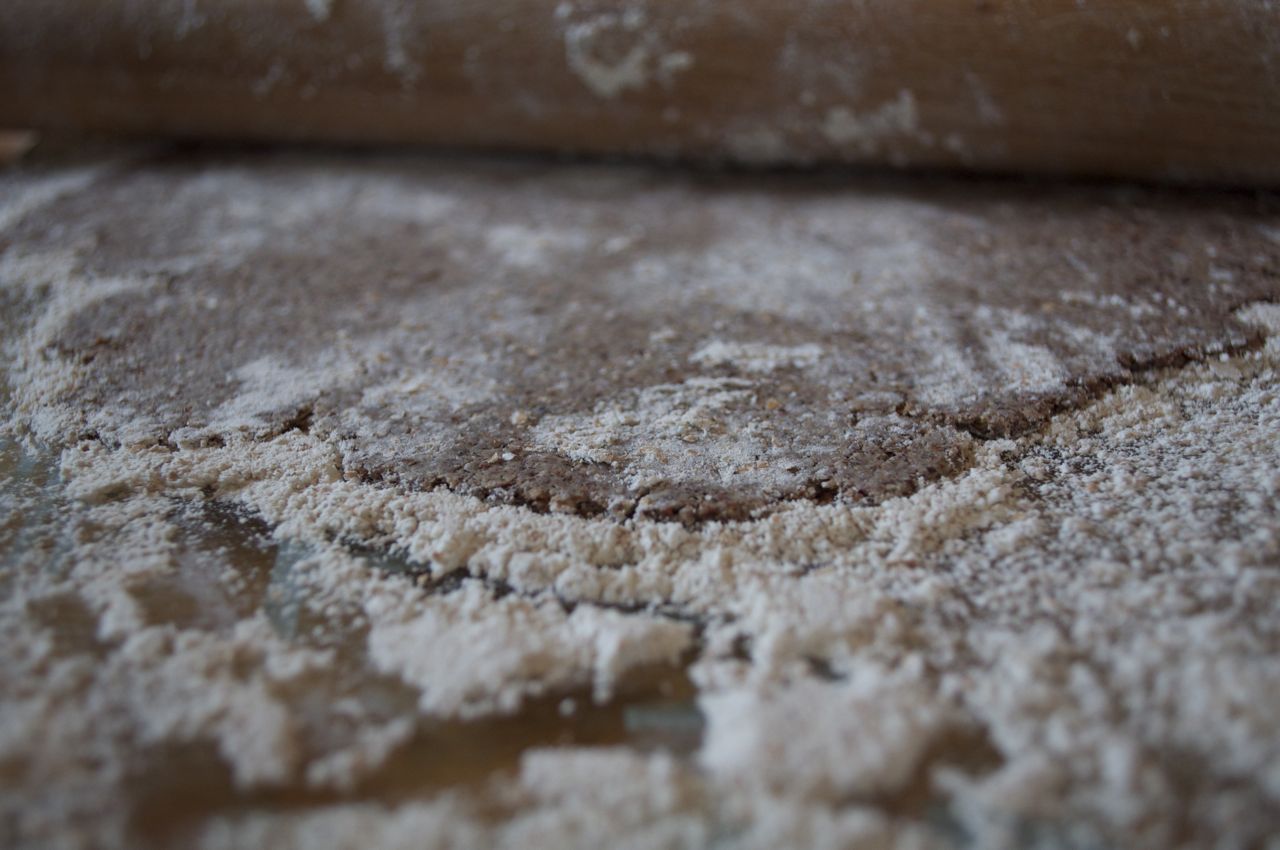
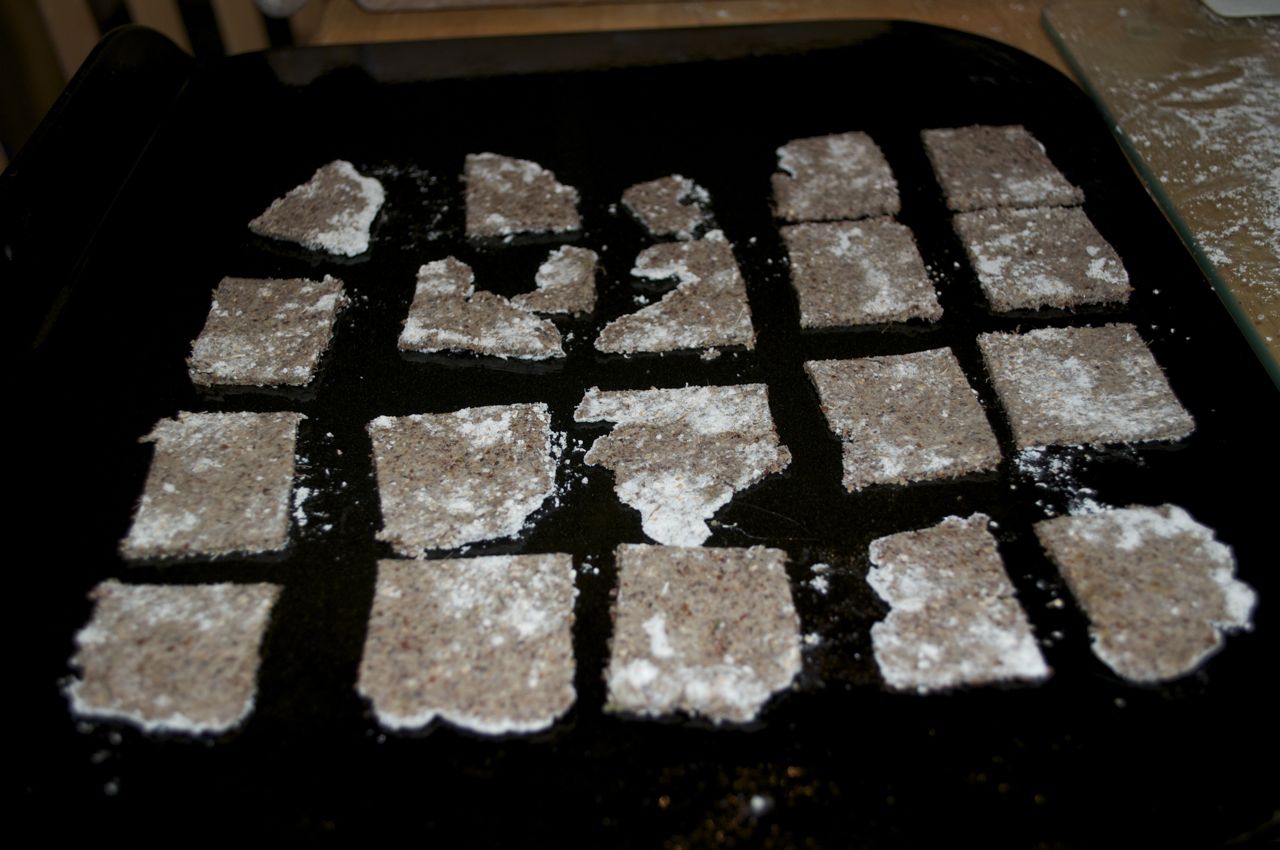
- Sprinkle some flour on a wooden or glass surface, and then roll the pastty very thin.
- Place on a baking tray, which has been rubbed with some oil
- Cut into squares.
- Bake in an pre-heated oven at 170 degrees Celcius for 12 minutes or until crisp.


 Ciaran The Gardener
This feels like a revelation to me! THANK YOU!!!!
I love the idea – what do they taste like?