Cashel House- The Final Day of the Course

COPYRIGHT CIARAN BURKE 2011

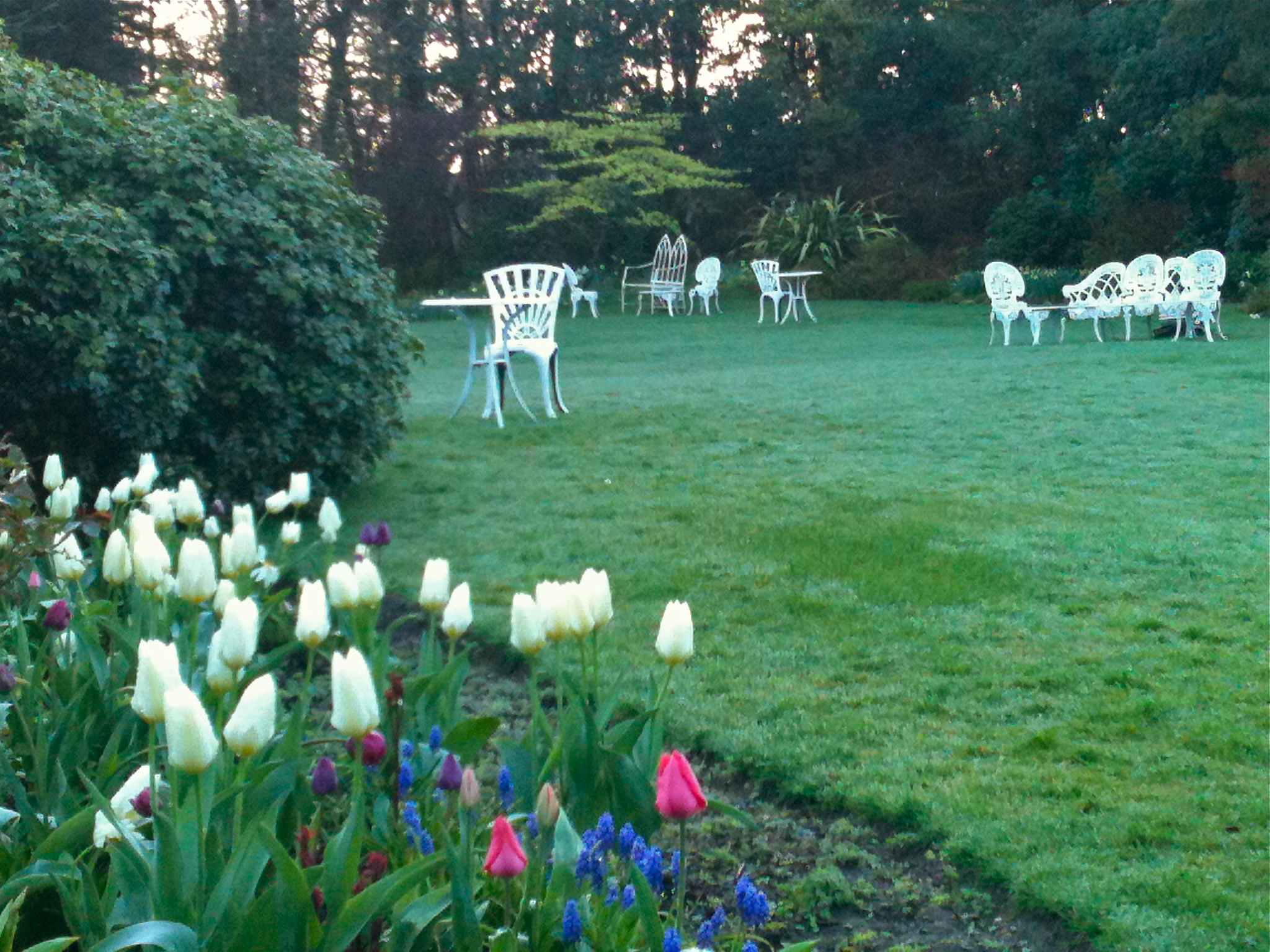
It was raining during the night. When we woke, Hanna pulled back the curtains, the sun light came flooding into the room. Through the branches of the tress in the secret garden it created twisted silhouettes and golden rays. We had just had an excellent night sleep, the quiet of Cashel Bay wraps your sleep in calm. We strolled outside onto the front lawn, the grass was moist and sparkling. The white tulips looked a little dishevelled, as if they had had a hard night, but still beautiful in their white petal gowns.
COPYRIGHT CIARAN BURKE 2011
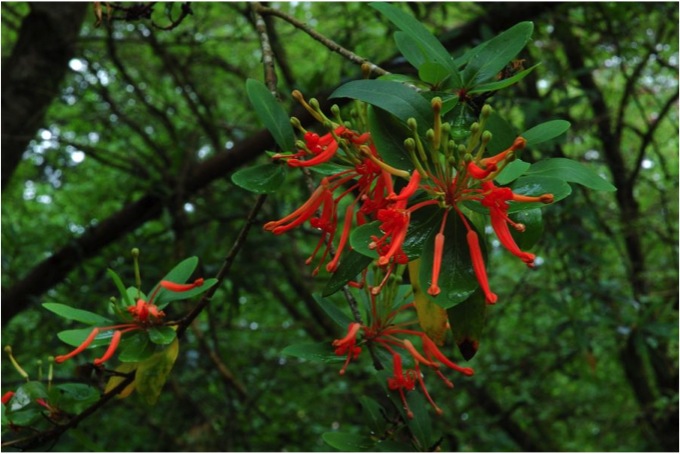
EMBOTHRIUM COCCINEUM FLOWER

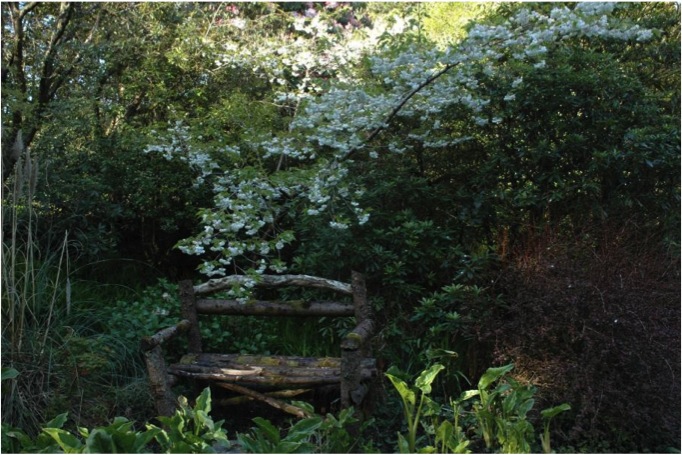
We walked to the Secret Garden, it was an orchard one hundred years ago. A previous owner had a greater desire for botanical curiosity than for home grown apples and now the low walled garden is a small woodland comprised of exotic specimens. We walked along the path, passing floriferous camellias, under the great Chilean flame tree, Embothrium coccineum, which in May is a blaze of red flowers. A great white Japanese cherry flowers above a rustic wooden bench. The big leaves of the American skunk cabbage, Lysichiton americanum, are growing in the wet, still in the infancy of spring they have not yet reached their dramatic summer size. Their yellow spathe flowers fill the air around the pond with a heavy odour. Further along the  lady’s matle, Alchemilla mollis, lies at the path side still dressed with last nights rain drops. We stop to wonder at the size and beauty of the huge Magnolia x soulangeana, the biggest I have ever seen. From Mary’s Garden you can see it mingle with and rise above other trees. We walk the upper path and see the last flowers and big paddle shaped leaves of Rhododendron macabeanum. We admire the large trunks of the tulip tree, Liriodendron tulipifera, still undressed, the branches not yet concealed with its unusual shaped leaves nor decorated with yellow tulip-like flowers, not till July will the flowers appear. Just before we exit the garden we have to bow as we pass under a stretched out limb of Persian ironwood, Parrotia persica. Another naked tree, the leaves starting to unfurl. The bareness reveals a wonderful structure of twisted and spreading branches. Soon they will be covered in green foliage that will burn red and orange in autumn.

COPYRIGHT CIARAN BURKE 2011
MAGNOLIA X SOULANGEANA PLANT IN SECRET GARDEN

There is nothing like a walk under botanical wonders to give me an appetite, so in we went for breakfast. After eating I set up for the day’s class. We continued the presentation on vegetable gardening. Some people had questions about some of the plants that we had seen on our walks in the garden. I showed them pictures of the plants, someone was curious about how the Embothrium flowers would look in May. Before the lunch we took a short walk through the gardens and I answered the group’s garden questions, there were many!

COPYRIGHT CIARAN BURKE 2011
LUNCH MENU
COPYRIGHT CIARAN BURKE 2011
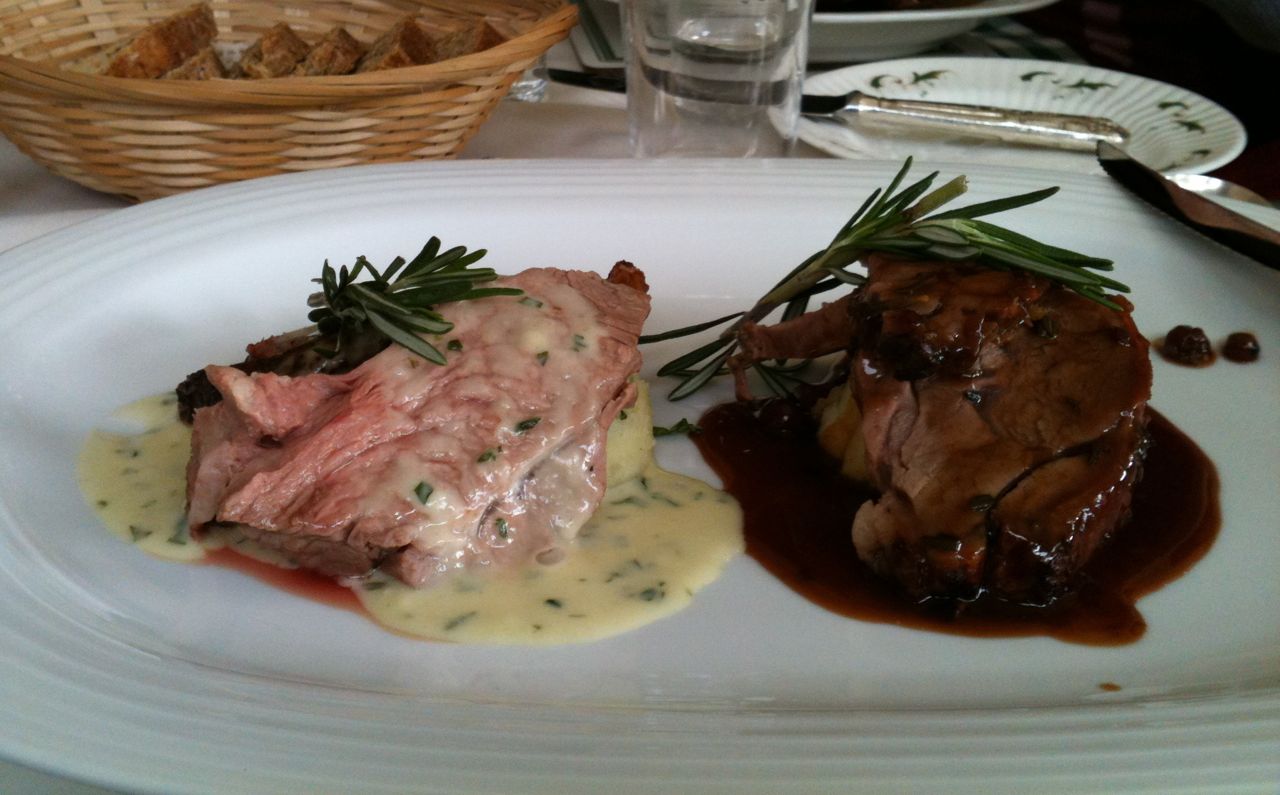
LAMB FOR LUNCH
COPYRIGHT CIARAN BURKE 2011
SPINACH ROULADE

We sat in the bar which over looks the garden. In comfortable laid back seats we ordered lunch. Once more we were spoilt for choice and the food as always was excellent. I had the lamb for main course while Hanna had the spinach roulade. Once we all had finished our dessert and coffee, we went back outside into the sunshine and walked up through the vegetable garden, pausing on the way to explain the origins of the Irish yew, Taxus baccata ‘Fastigiata’ Our class had been joined by two American guests staying at the hotel, gardeners from Washington D.C. When reaching the vegetable garden I demonstrated pruning, and then we pruned one of the apple trees. I explained the reasons and the method, demonstrating how it was done. The everybody had a go, each member of the party also pruning some branches of the apple trees.

When the day and the course was over we gathered for farewell tea and scones in the drawing room. I had enjoyed the weekend, talking about plants and gardening fills me with enthusiasm. Especially when I meet other people with an eagerness to learn. The weekends of our Cashel House Hotel courses always fly so fast. Its not just the fun of doing the course, the beautiful gardens and the delicious food. We feel that we always make new friends and as somebody from the garden class said, Cashel House is perfect for a gardening course; the garden, the company, the food and the atmosphere.
COPYRIGHT CIARAN BURKE 2011
JAPANESE CHERRY FLOWERING OVER RUSTIC WOODEN SEAT

See more information about Cashel House Hotel courses with Ciaran

Book a Course at Cashel House Hotel

This slideshow requires JavaScript.

Saturday at Cashel House Gardening Course

COPYRIGHT CIARAN BURKE 201
TABLES SET FOR BREAKFAST

The sun has been shining all day. The weather has been great for us at Cashel House, as usual. There has been days here in the past where we have had coffee and scones laden with home made jam and whipped cream while sitting on the front lawn and basking in sunshine while the rest of the country was under a deluge. Not just once that it has happened but many times. We would have been sitting at the end of an enjoyable day and people would phone home to various parts of the country and get  terrible weather reports while we sat in the sun. There really is something special about Cashel in Connemara.

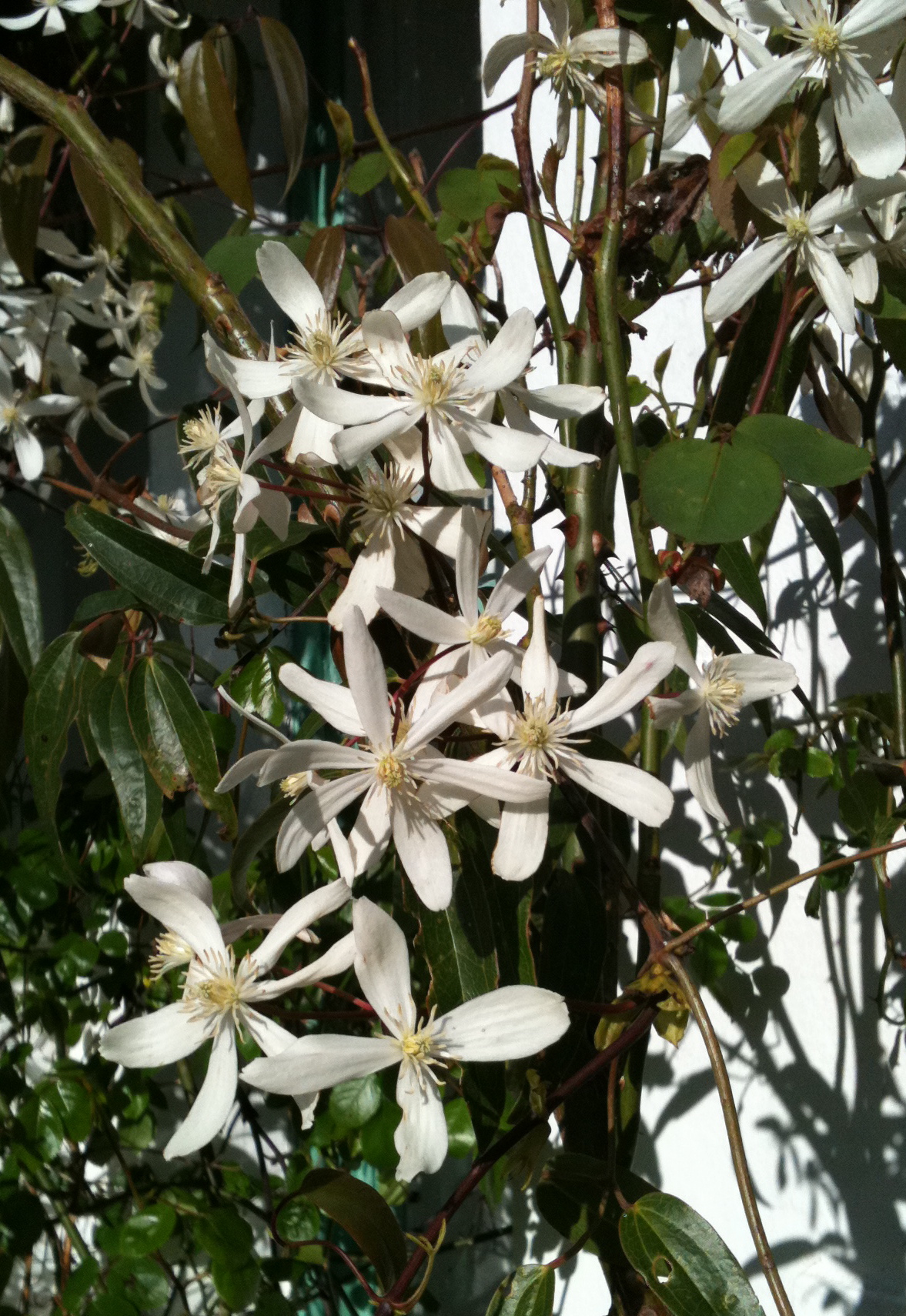
The ambiance is of laid back elegance, a refinement from a past age. One would not be surprised to meet Ms Marple sipping tea by the fireplace or see Hercule Poirot swinging his walking stick after a vigorous walk through the fine gardens.We woke this morning as the light filled the garden and took a stroll outside. The scent from the Clematic armandii rambling on the front wall was starting to fill the sun filled garden. The white tulips shook gently in the breeze and the cockrel crowed to greet the day.

COPYRIGHT CIARAN BURKE 2011
CLEMATIS ARMANDII FLOWERING ON FRONT OF CASHEL HOUSE
COPYRIGHT CIARAN BURKE 201
FRONT LAWN WITH WHITE TULIPS THIS MORNING
COPYRIGHT CIARAN BURKE 201
FRONT DOOR TO THE HOTEL

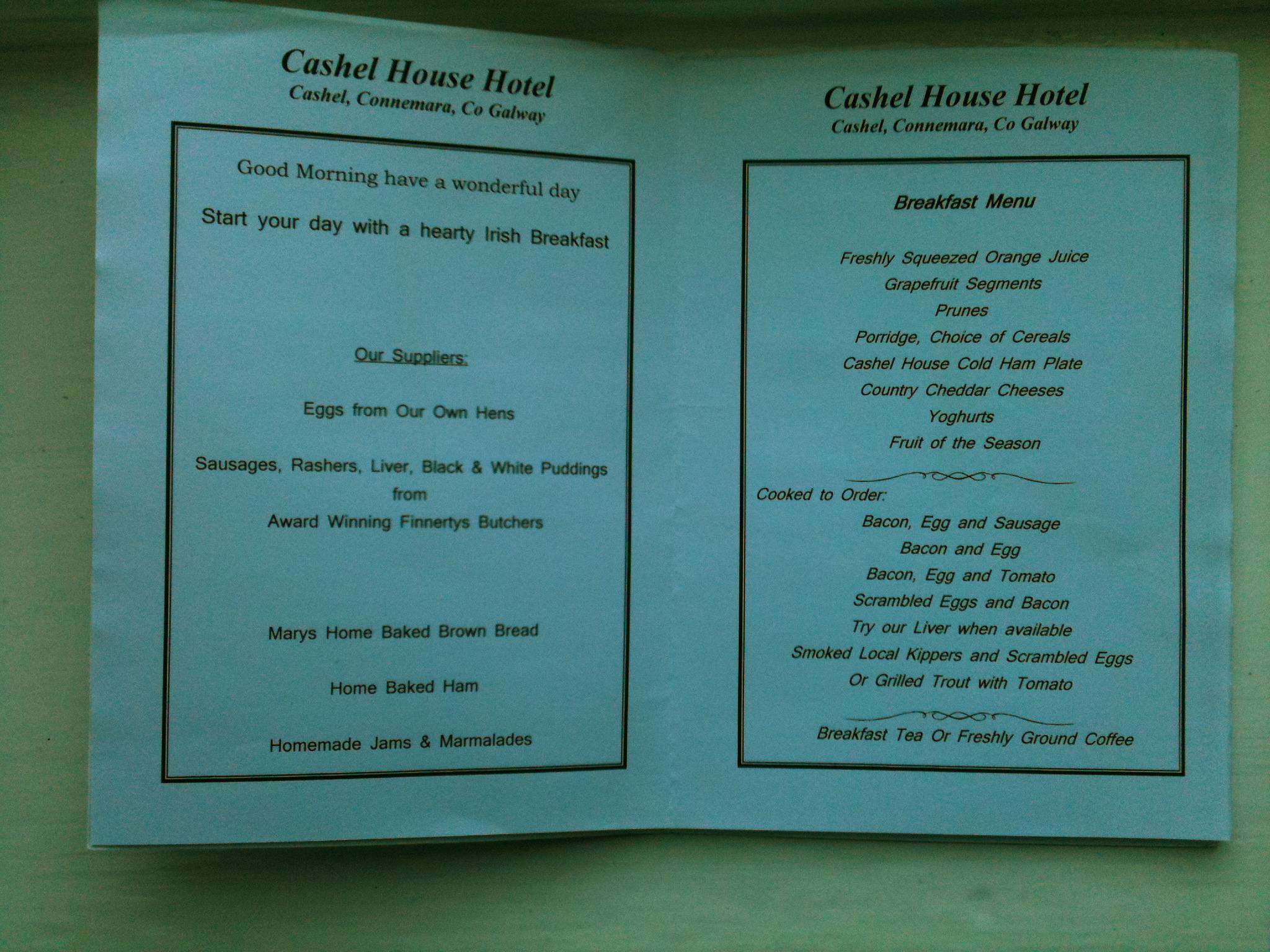
We had breakfast with the early risers ffrom the garden group. The breakfast menu is superb. Not many hotels can offer trout or kippers or possibly liver for breakfast. I stuck with srambled egg and locally sourced bacon and sausages and enjoyed freshly squeezed orange juice. Afterwards I stil found room to enjoy a slice of raisin bread with home made raspberry jam.

COPYRIGHT CIARAN BURKE 201
BREAKFAST MENU

After breakfast I set up classroom in the wooden building, admiring the floriferous Kerria japonica ‘Flore Plena’ as I unloaded pots compost, plants and other paraphernalia from the car. When the group had gathered we started the day with a slide presentation before coffee break which was followed by a walk in the garden, admiring magnolia and camellia trees and shrubs on the way. next was lunch, I enjoyed a dressed sorrel salad with parmesan shavings, Irish stew with garlic toastlets and delicious sauteed cabbage flavoured with caraway seeds. This was followed by strawberries and crushed merengue with whipped cream. Finely chopped mint leaves were mixed through the cream giving this dish an extra bit of delight.

COPYRIGHT CIARAN BURKE 201
CLEMATIS ARMANDII FLOWERS

After lunch we had a practical session where we sowed seed including Runner Bean ‘Painted Lady and Nasturtium ‘Tom Thumb’. Pricked out seedlings of Lettuce  ‘Cerbiatta’ and made pots from newspaper. We did some soil pH testing and took a walk up to the vegetable garden and nibbled on sorrel leaves, sniffed on lovage and I described how to prune apple trees. By 5 o’clock  all were ready for a cup of tea or coffee which we took by the fire in the drawing room and indulged in scones with jam and cream.

COPYRIGHT CIARAN BURKE 201
SOME OF THE GARDEN CLASS POTTING
COPYRIGHT CIARAN BURKE 201
POTTING UP THE SEEDLING IN A NEWSPAPER POT

Next we meet for a drink before dinner, more friendly chat, lots of laughter and then face the hard work of choosing from tonight’s great menu.  The garden course is such good value, all meals are included and the full menu is offered. One thing I know for sure, I am having rhubarb pie for dessert.Its seriously good rhubarb pie in Cashel House!


COPYRIGHT CIARAN BURKE 201
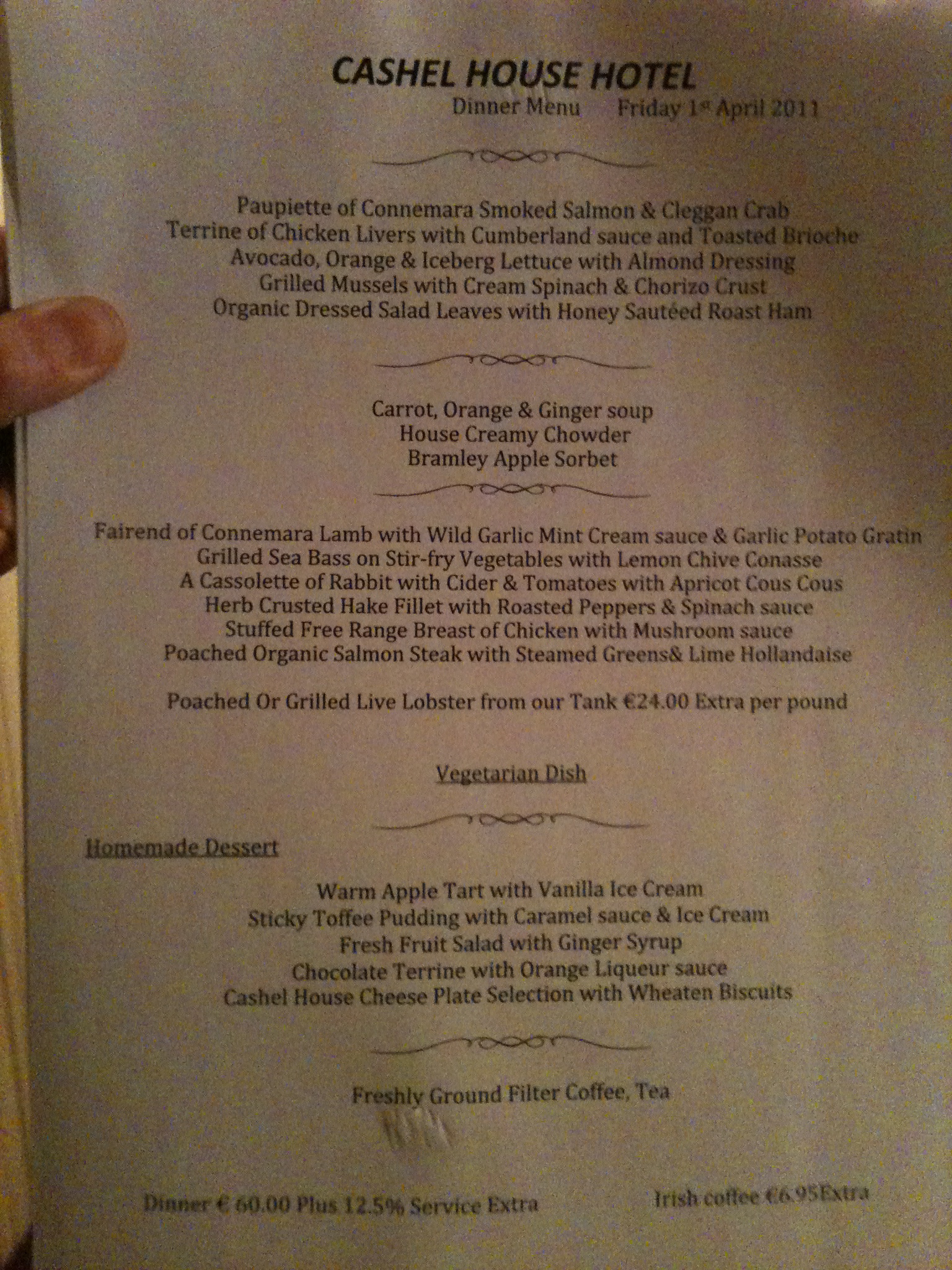
DINNER MENU SATURDAY 2ND APRIL 2011

INFORMATION ABOUT GARDENING COURSES IN CASHEL HOUSE HOTEL


This slideshow requires JavaScript.

Cashel House Hotel, Connemara- a weekend of blooms and food!

COPYRIGHT CIARAN BURKE
CASHEL HOUSE HOTEL AND GARDENS


Menu from Cashel House Hotel 1st of April 2011
I am so lucky that my work takes me to Cashel House Hotel in Connemara, Co. Galway. Situated in a picturesque bay on the Atlantic coast with mountain views and ocean waves, the grounds of Cashel House Hotel are home to a varied and unusual collection of plants. Sheltered from the Atlantic gales and salt laden sea spray, the gardens are lovingly tended by their owner Kay Mc Evilly.
We are here this weekend to give a course ‘Preparing and Planning the Vegetable Garden”. I am going to post updates over the weekend using my iPhone and camera to show you the beautiful plants, capture some of the magic atmosphere and tease you with the delicious menus.

We started the weekend course this evening in the drawing room meting the course participants with complementary pink champagne by the glowing turf fire. After meeting the garden group and introducing ourselves Hanna and I had a lovely evening getting to know the people in our party. This we did over a five course meal in the consevatory dining room and over coffee in the comfortable lounge.

DRESSED FOR DINNER

Tomorrow we start the day at 10am, with a presentation in the classroom and after coffee break we will take a walk through part of the garden. After lunch we plan on doing a practical class including seed sowing.  I will bring my camera and show you some pictures of the garden, I will also show you some of the delicious food.

This evening I had the delicious chicken liver pate, followed by Apple Sorbet,  Connemara Lamb and then Apple tart and Vanilla Ice Cream. The menu will be different tomorrow, if the rabbit is on it i will go for it, Hanna ordered the rabbit and it was delicious. It is a hard job, but somebody has to do it!

TIME TABLE FOR COURSE ON SATURDAY

Details of future courses at Cashel House –LINK

This slideshow requires JavaScript.

Beef Stock and Oven Chips in Beef Dripping

Copyright Ciaran Burke 2011
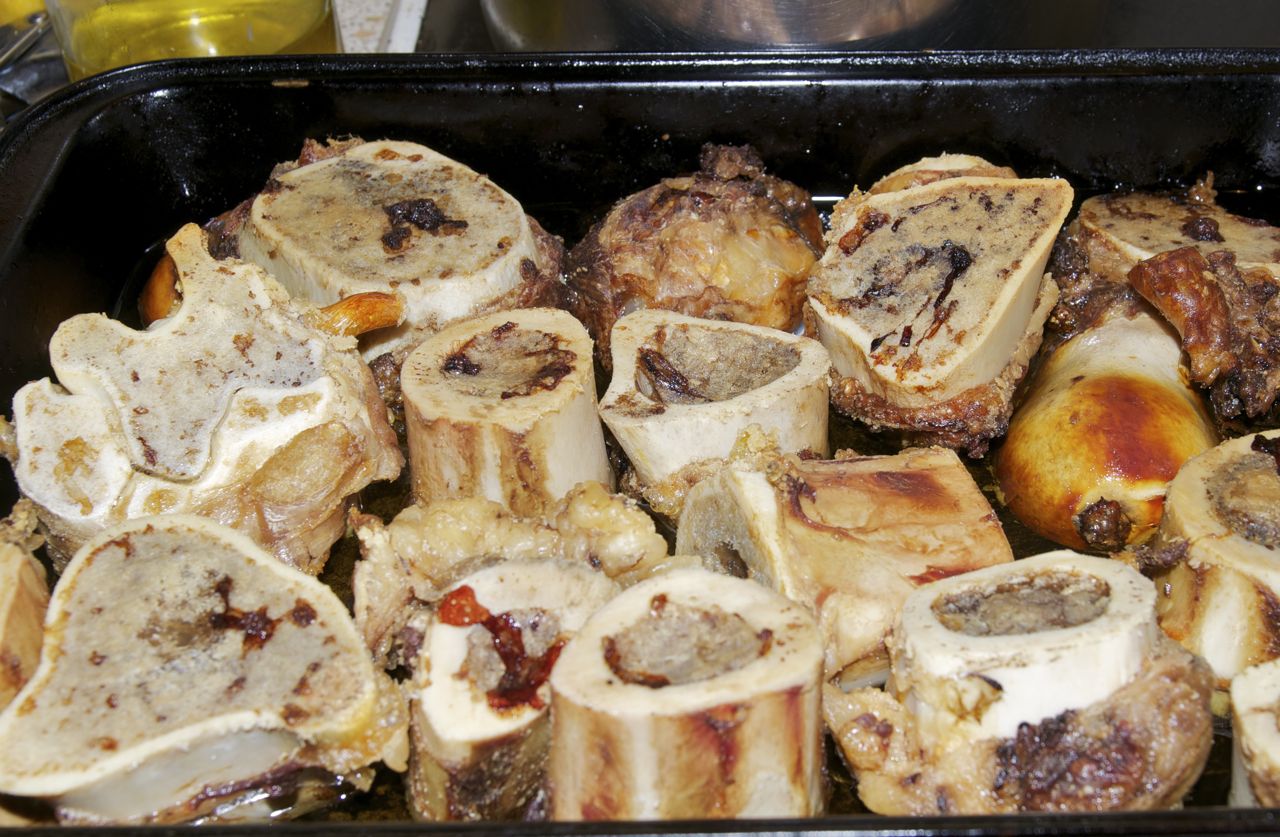
Roasted beef bones in roasting tin

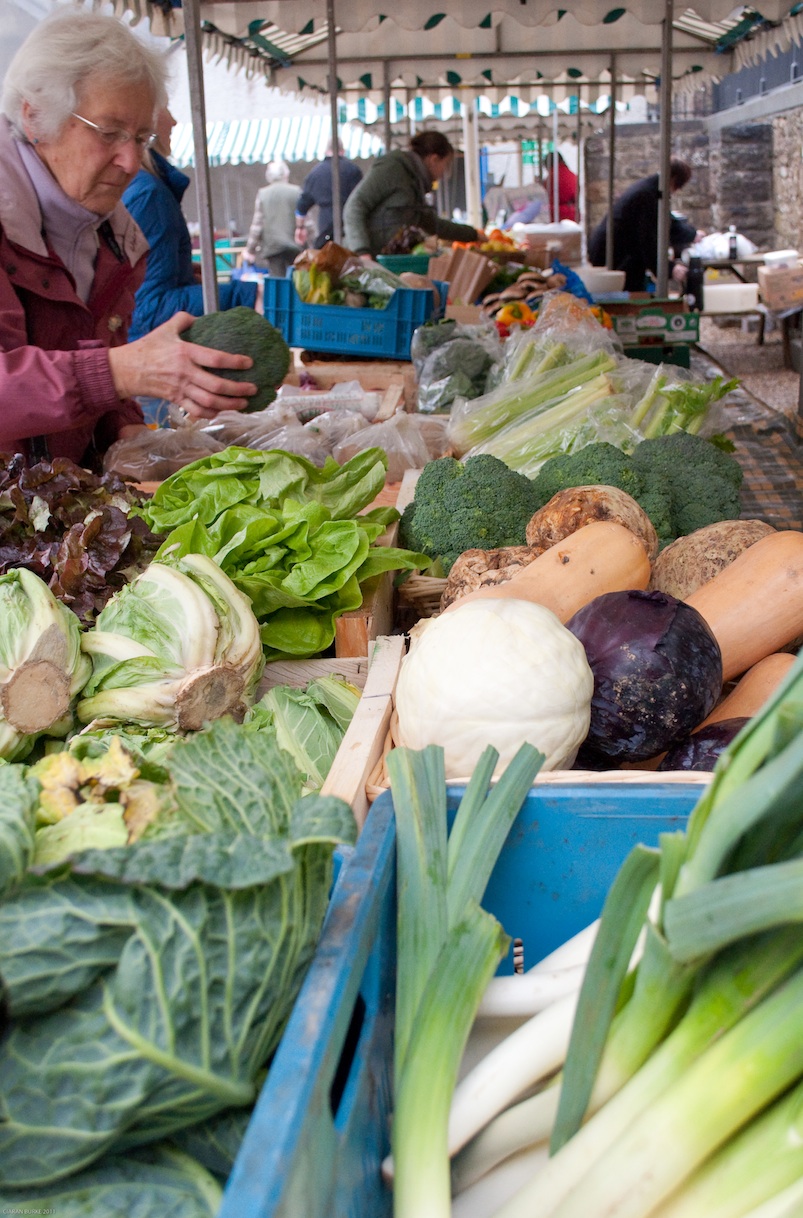
Last Saturday we made our weekly visit to the Farmers Market in Boyle, Co. Roscommon. My partner Hanna and I love to  do as much as possible of our week’s grocery shopping at the market. Dealing with stall holders in the grounds of the historic King House is such an uplifting and enjoyable experience, it certainly beats dealing with self service tills at a supermarket, or being ignored by bored uninterested, sometime rude, shop employees discussing their previous night’s social life adventures while mindlessly scanning our purchases. Yes, a friendly hello, a smile, costs nothing but is worth so much. The relaxed atmosphere of the market allows time for a chat, a bit of banter and always a smile and a few laughs. The produce is organic and top quality, and cost wise it is good value as we are dealing direct with the grower, the farmer, the baker the supplier. The packaging is a lot less too, much better for the environment.

There are other perks of having a regular supplier for your meat too. I texted Deirdre from Irish Organic Meats earlier in the week to ask if she could supply us with beef bones for making stock, “no problem ” was the reply. When we arrived at her stall there was the usual cheerful greeting and she had brought two bags of bones. Having your own supply of organic beef stock is a great thing when you want to make sauces, gravy and soups. We store the stock in plasctic boxes in the freezer, so handy to have, as so simple to make.

Copyright Ciaran Burke 2011
Beef bones ready for roasting

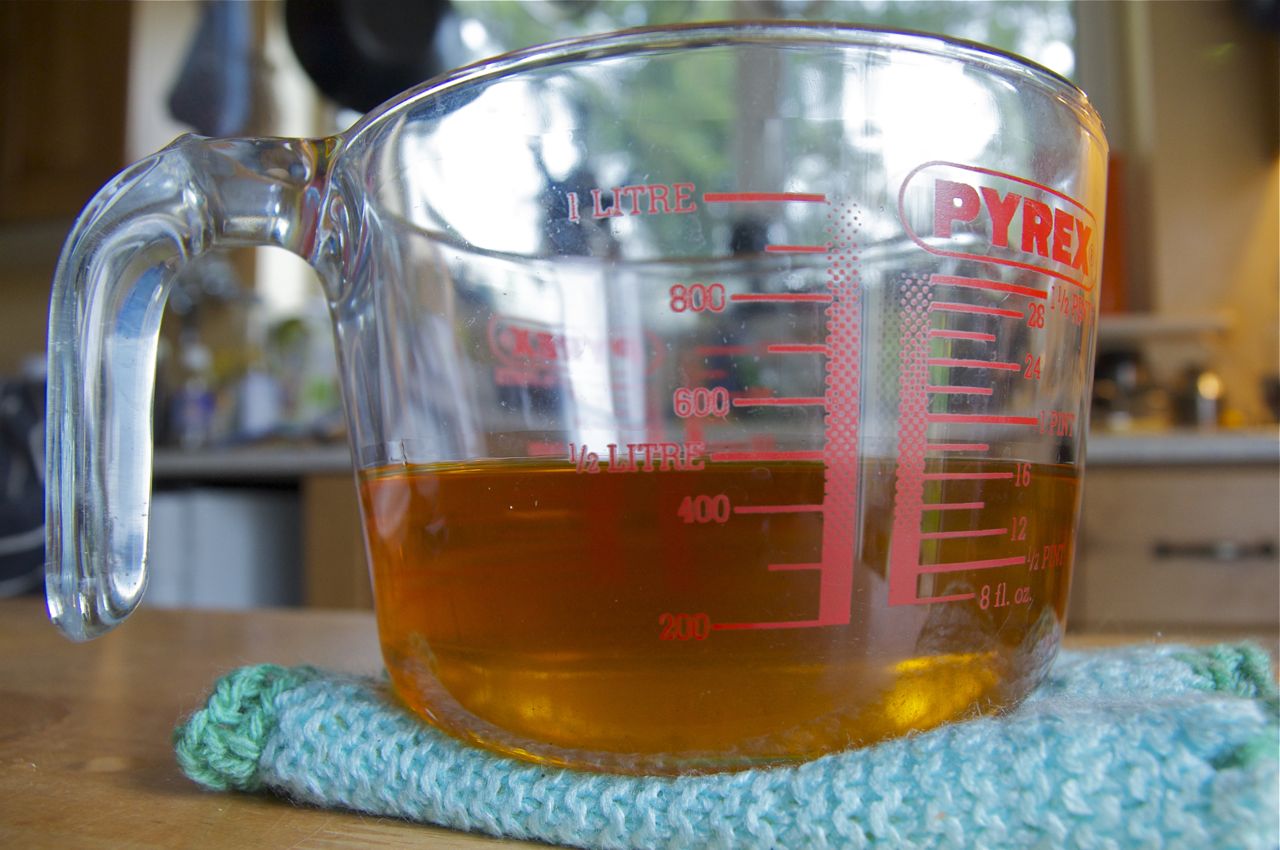
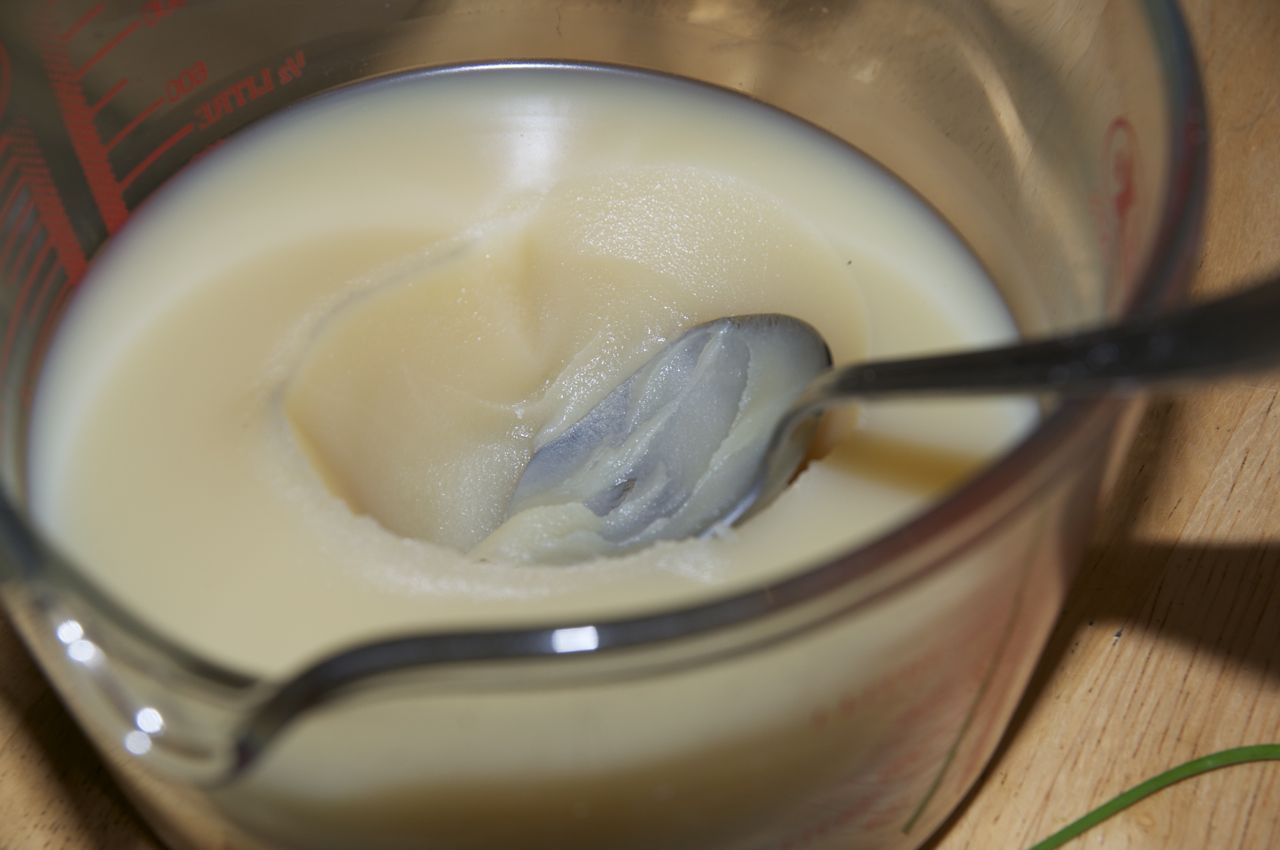
On Saturday afternoon we placed the bones in a baking tray and drizzled over a little rapeseed oil. We placed the tray in the oven set at 180 degrees Celcius and let the bones roast for about two hours. The smell was torturously delicious as it wafted from the open kitchen door while we toiled in the garden. We worked until dark which was well after seven. We were starving, a treat was ahead of us though. A great bonus of roasting the bones is that plenty of clear beef fat is released from the roasting bones. When this cools it becomes a cream toffee tinted colour and has the consistency of full fat butter, this is beef dripping.  The treat in store was oven chips roasted in deef dripping.

Copyright Ciaran Burke 2011
Beef fat from roasting the bones
Copyright Ciaran Burke 2011
One spoonful of beef dripping is enough to give a roasting tin full of chips a full flavour


Thick chunky chips, from potatoes that were dug from the garden only two weeks before. These were the last of the previous season’s crop. The varietry was ‘Tibet’, a late maturing variety, the tubers are ready only in October. It makes a tall growing plant with quite attractive dark purple blooms.

Potato 'Tibet' washed and ready to be peeled
Copyright Ciaran Burke 2011
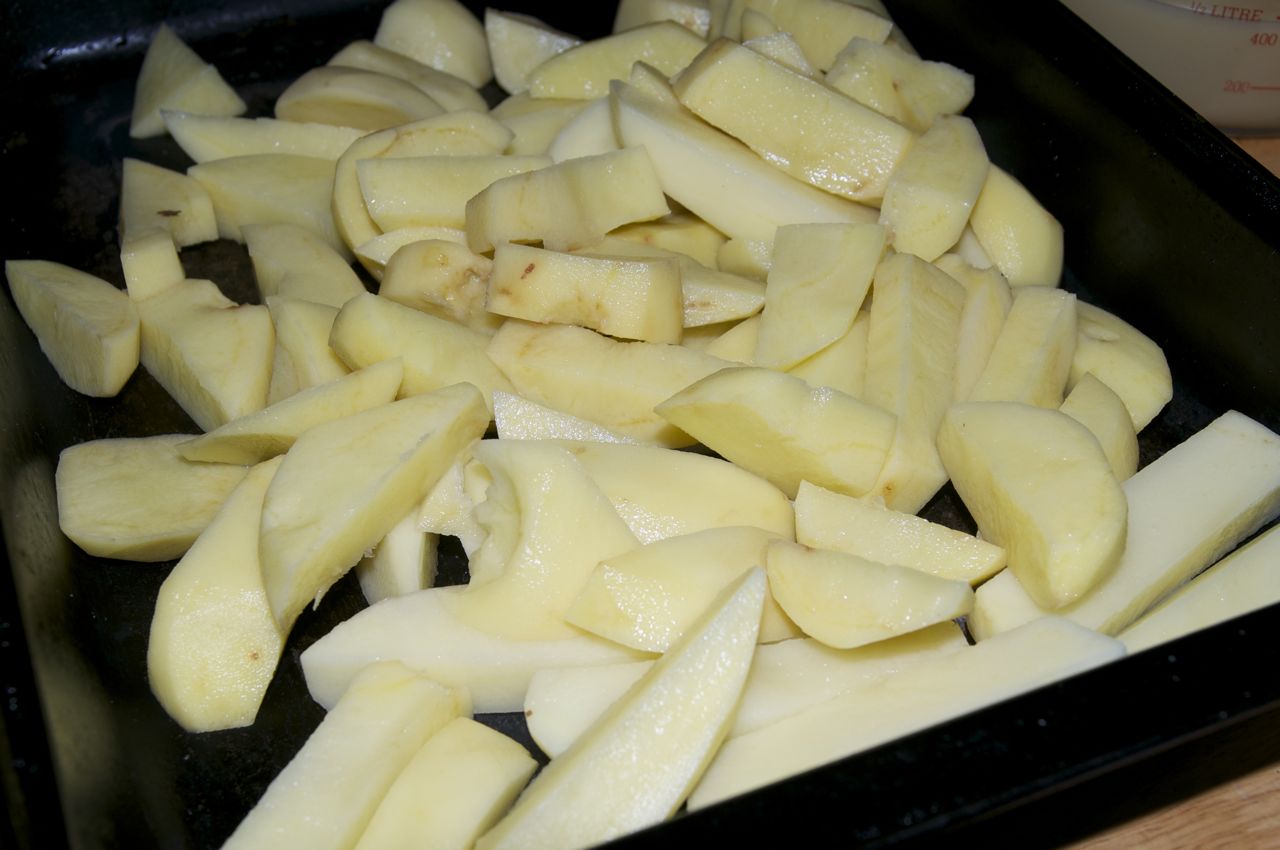
Thick cut potato chips ready for the oven


The tubers were washed of their soil revealing their red skins. After peeling and cutting the potatoes into large chips, a roasting tin with a good dollop of dripping was put in the oven until it was liquified and sizzling. The chips were then tossed in the hot fat and rolled around before being put in the oven. I set the timer for 8 minutes. When the beeps of the timer rang out I took the tin from the oven and moved the chips about making sure none were sticking and that all were coated in fat. Then into the oven they returned. This I repeated another time, the chips were ready in 24 minutes.

Copyright Ciaran Burke 2011
Oven chips cooked in beef dripping, sinfully delicious!

They were delicious sprinkled with salt, perfect food for after a hard day’s work in the garden.

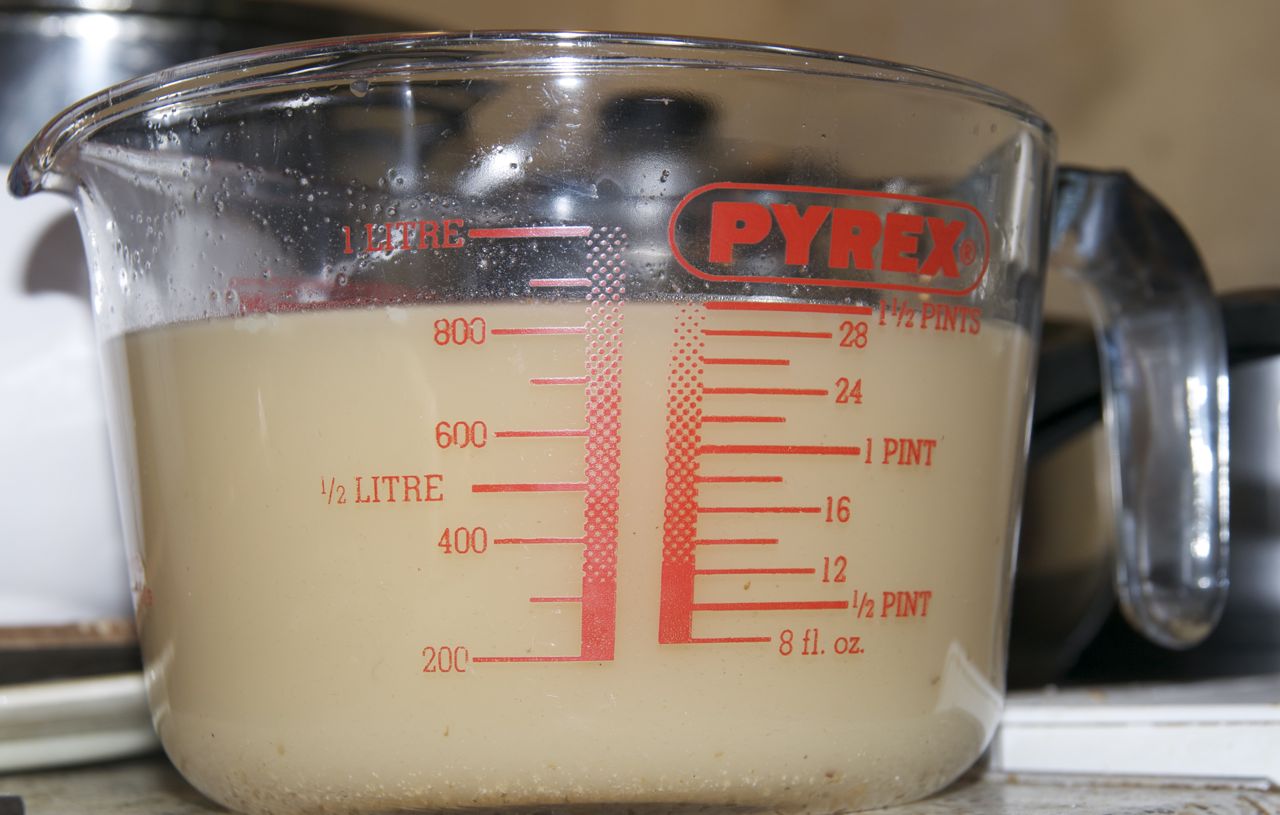
The next day, Sunday, we placed the roasted bones in two large saucepans and covered them well with water, about four litres in each pot. We brought the water to the boil and allowed them to simmer for about six hours while we worked all day in the garden. The water reduced down to below the height  of the bones. After it cooled for a few hours we packed into plastic containers, labelled them with dates and stored them in the freezer. Some we put aside and refrigerated to use the following day to make tomato soup for lunch.

Copyright Ciaran Burke 2011
Beef stock after water has reduced
Copyright Ciaran Burke 2011
Home made beef stock, rich and full of flavour, free from additives.


Beef dripping gives such a rich flavour to the chips and home made beef stock beats anything you can buy in the shops, made from organic produce, free from additives and full of taste. Chicken stock is also easy to make. We always boil the carcass of a chicken and get a couple of litres of rich stock, and the cats get a treat of the left over meat on the bones.


Copyright Ciaran Burke 2011
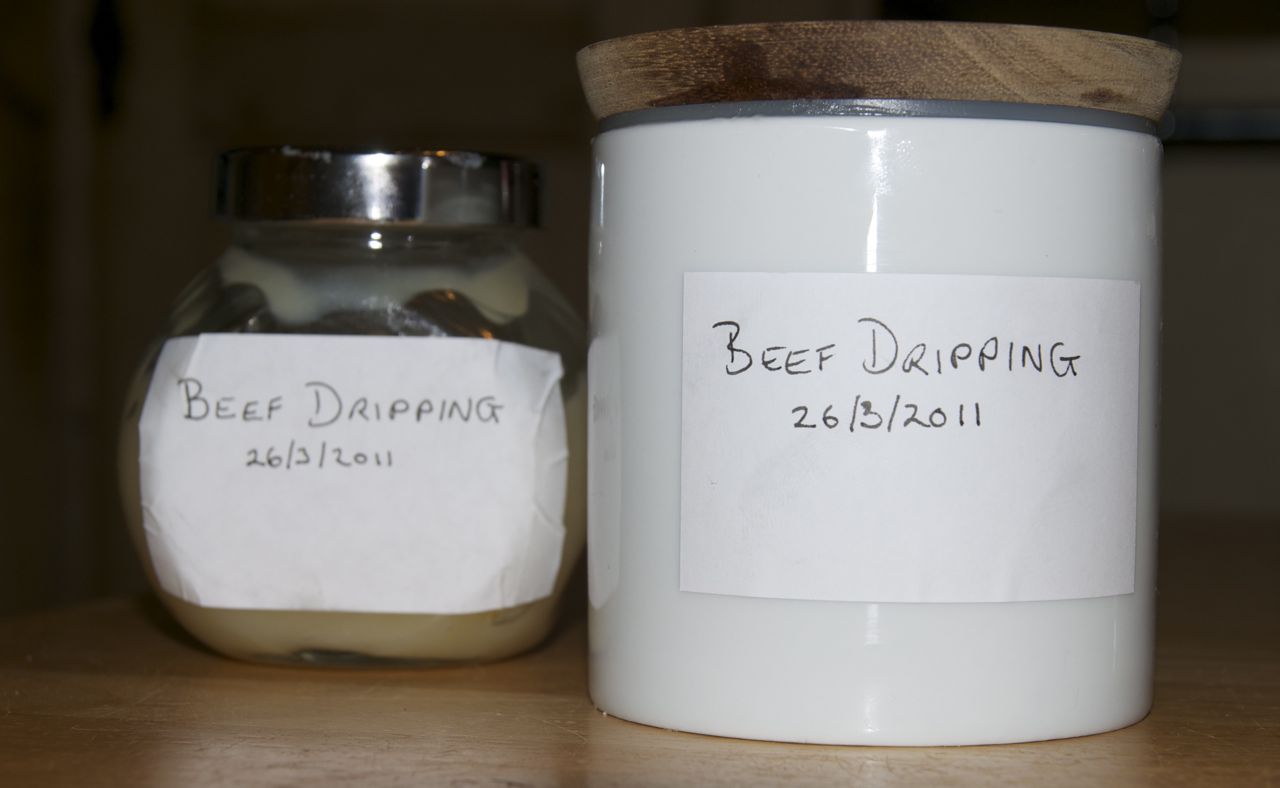
Beef Dripping will store for many weeks in the refrigerator

http://www.irishorganicmeats.com/

Boyle origin farmers market

This slideshow requires JavaScript.

Lamb Belly Rolled With Apple And Elderberry Preserve

Copyright Ciaran Burke 2011

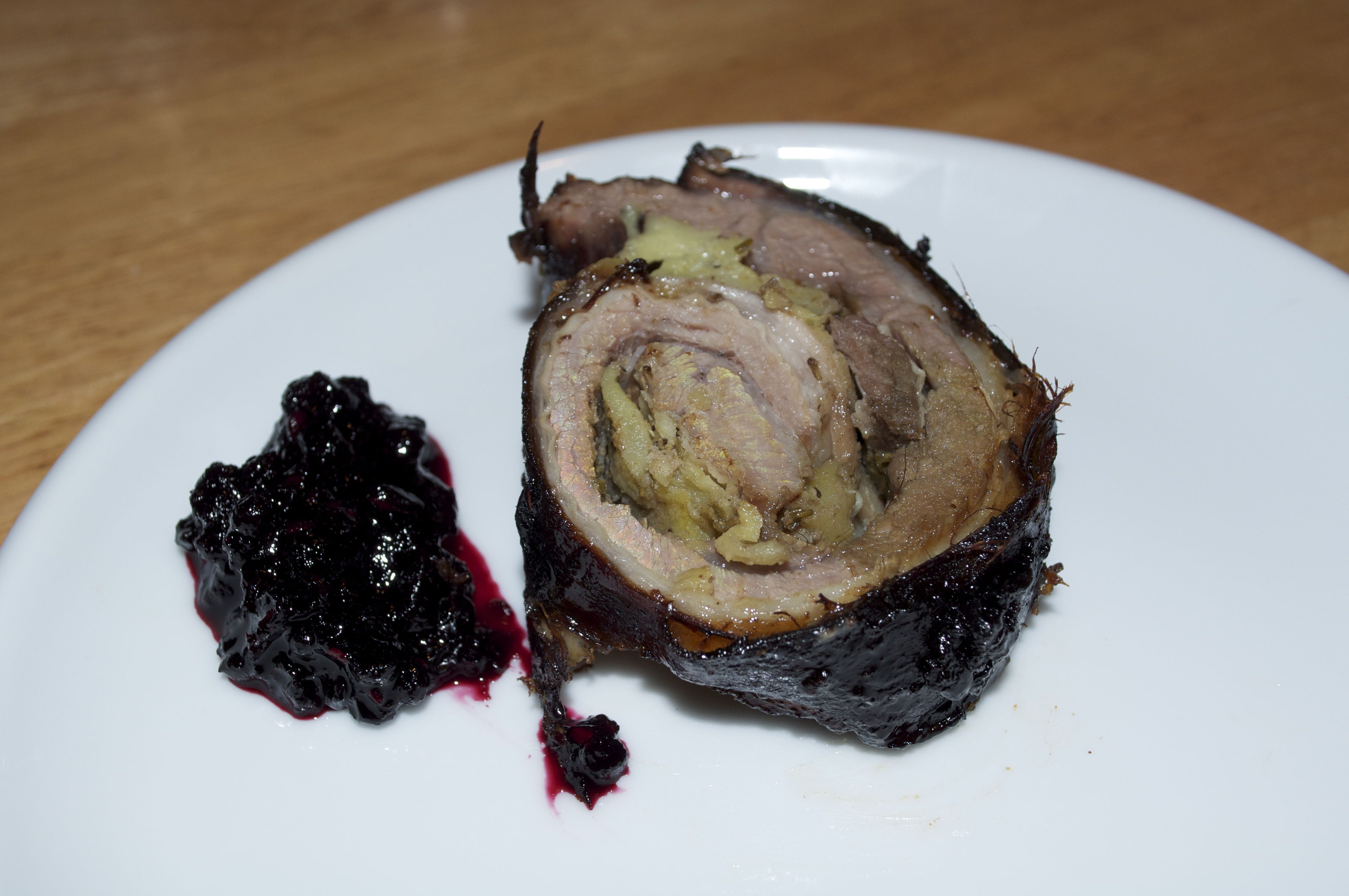
Lamb Belly Roulade with Apple and Elderberry Preserve

Last weekend the meat stall at the market has lamb belly for sale. As coincidence would have it I had for the first time ever tasted this delicous cut of meat at Cava Tapas bar in Galway the previous week.

Lamb belly has a bit more fat on it than say leg, but it is superbly flavorsome and when slowly cooked and served with a sweet condiment it is hard to beat. It is also an economic piece of meat with no wastage and cheaper per kilo than other so called prime cuts of lamb.

Copyright Ciaran Burke 2011

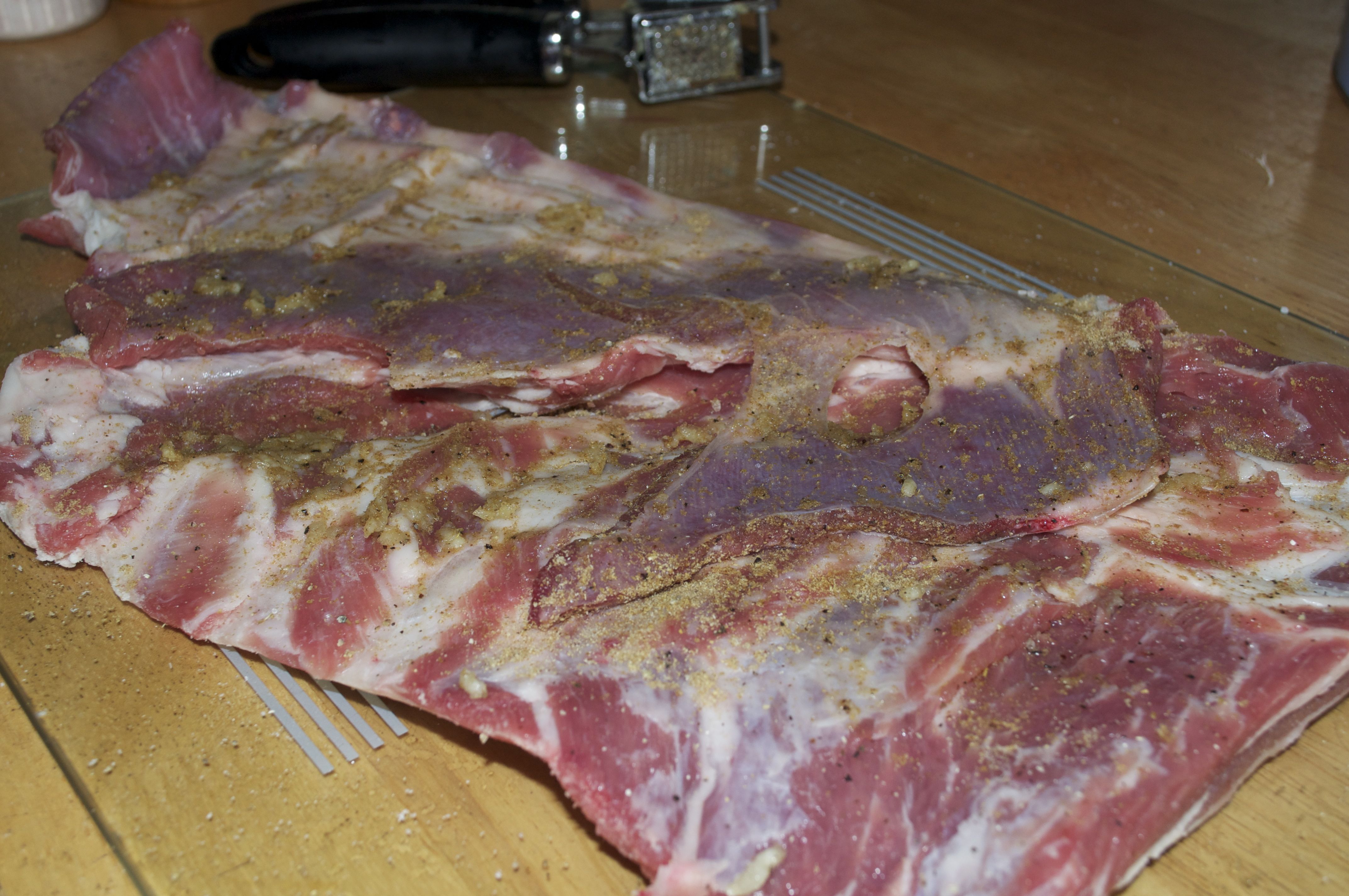
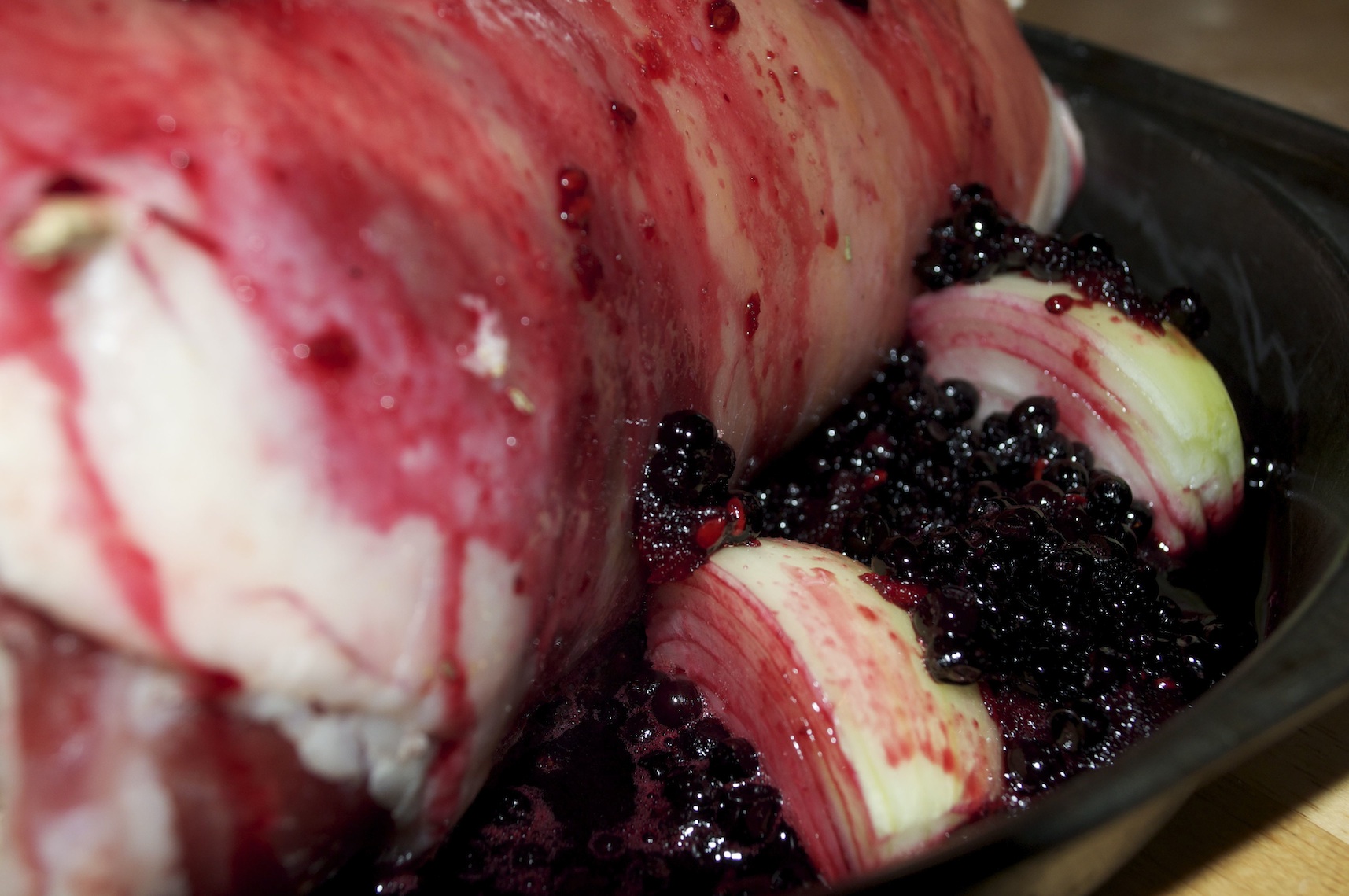
I laid out the belly cut on a chopping board and seasoned with cumin, coriander, salt and pepper. I crushed a couple of clovers of garlic and sprinkled with a good pinch of dried rosemary. I then placed apple slices along the length of the meat before rolling it and securing it with wooden skewers. I spread some elderberries over the rolled meat and placed a large onion quartered in the roasting tin.

Copyright Ciaran Burke 2011

Copyright Ciaran Burke 2011

The weight of the meat was about 1.5 kg, I roasted the meat at 160 degrees Celcius for just over two hours. After removing from the oven I allowed it to cool and then removed the skewers and carved into slices. I served it with elderberry preserve that I had made last autumn. Delicious.

Copyright Ciaran Burke 2011

This meat was also great when cold and made a great sandwich between slices of homemade spelt bread. Yum


This slideshow requires JavaScript.

Parsnips – sowing and harvesting in spring

Copyright Ciaran Burke 2011
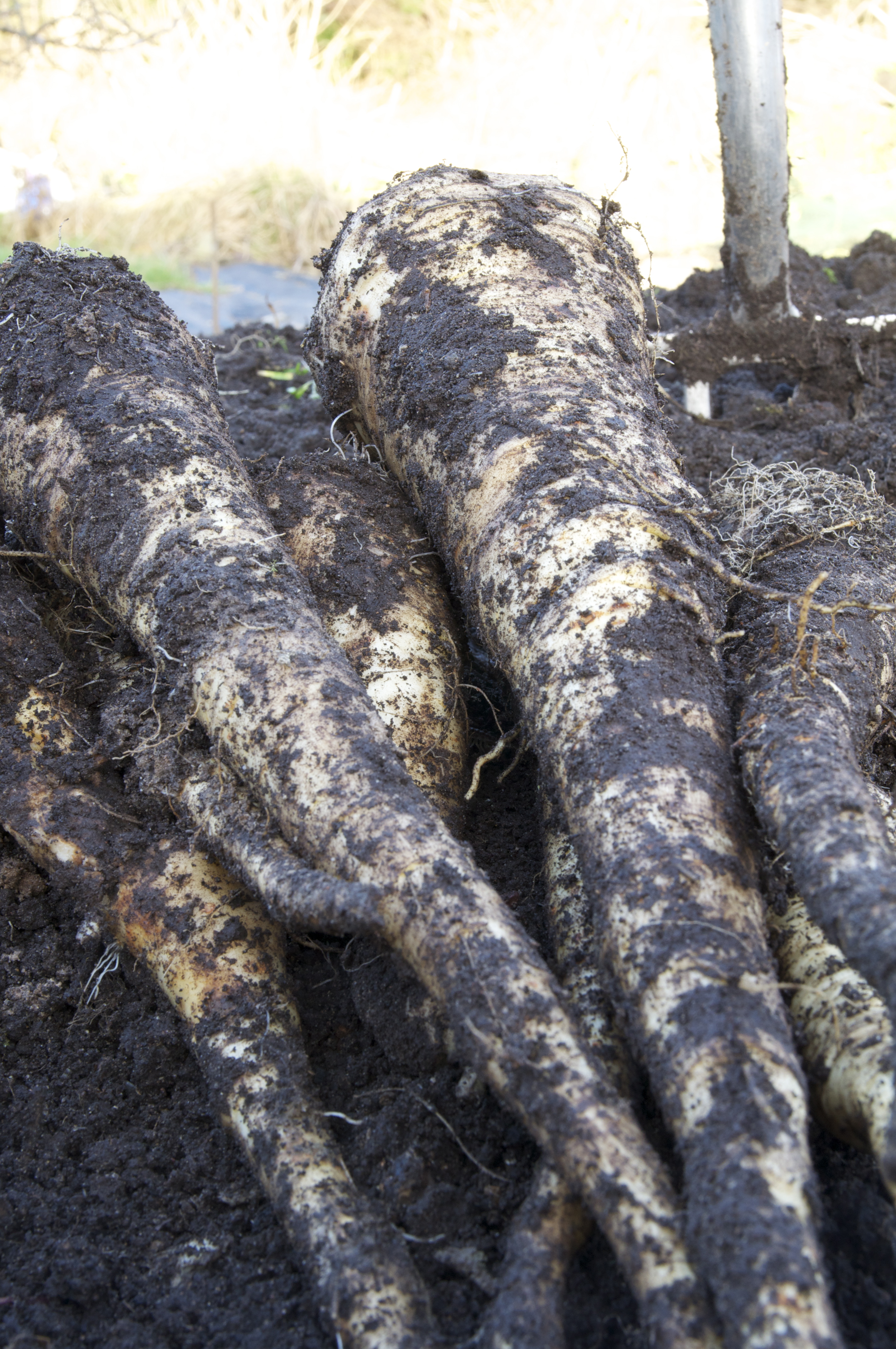
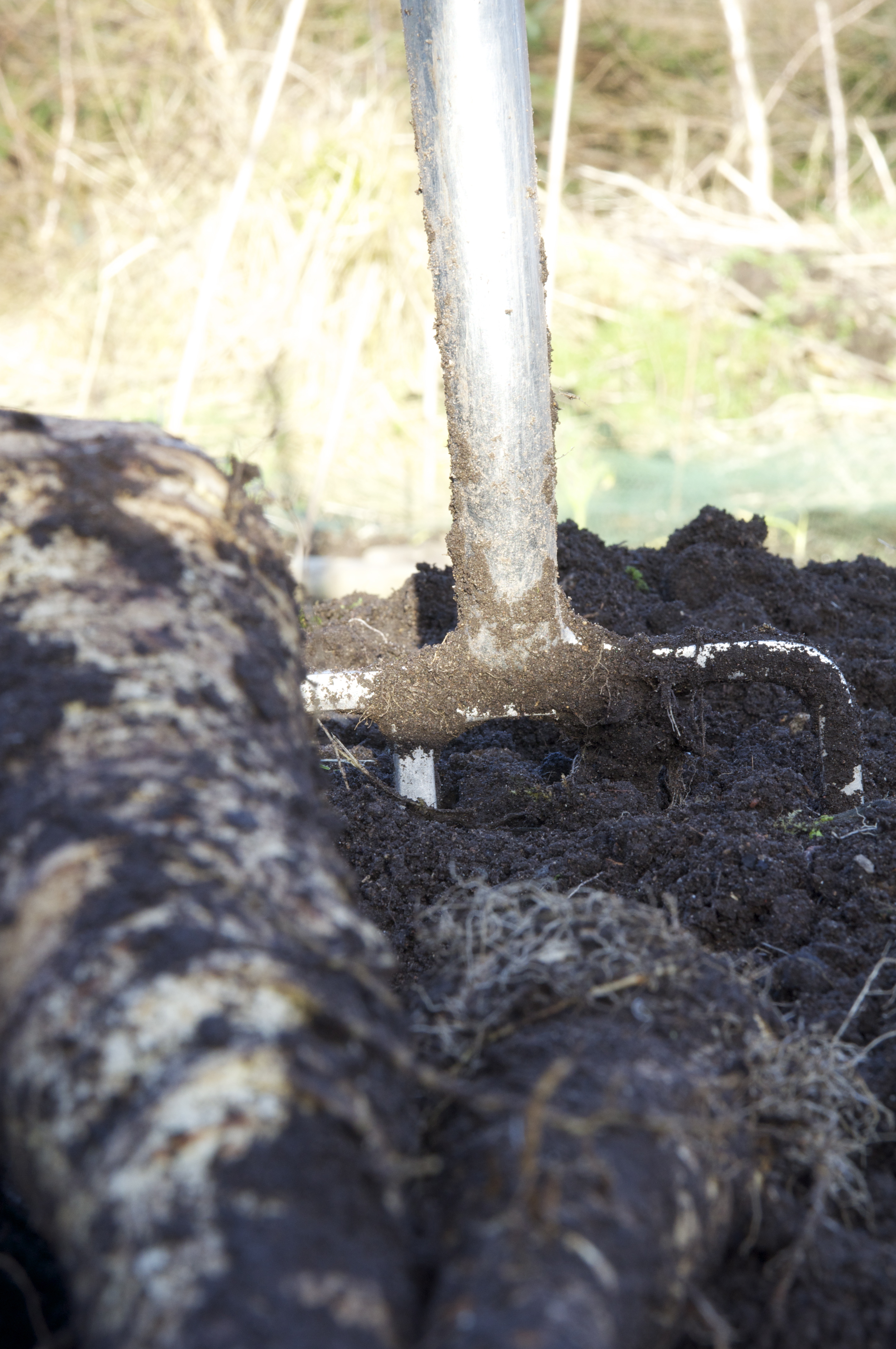
Over-wintered parsnips harvested the last week of February

Oh how I remember the fights, the complaints, there were even tears. A mushy mashed pulp, often served with potatoes, sometimes blended with carrot, always boiled. There was cajoling, efforts of convincing, extolling of their health benefits and even threats. None of it worked. I always left it on my plate, I hated parsnips. But I was young, times change and tastes change…

Many years later, in a restuarant, I don’t remeber which one or where. I had ordered some steak and it came with a garnish of parsnip crisps. I tasted them, frogetting that they were parnspis and I was amazed by the flavour. My long held opinion was about to change, by disregard of the long cream coloured tap root was to be reversed. A new view on parsnips.

Childhood memories, tastes and influences can stay with us as we grow older, even for ever. To me parsnips were always a smashed up mess, ugly and uninspiring. Sometimes it is the pressure from parents, the method of preparation and unflattering presentation that forms our opinon of certain foods. I really did not like parsnips. It was not until my experience with the thin crispy flavoursome garnish that my opinion changed.

Now Pastinacia sativa, parsnip,  is an important crop in our vegetable plot, taking an ever increasing area in our root crop beds each year. Roasted parsnip and oven cooked parsnip chips are the prefferred method of cooking, Chopped into wedges or chipped long and thin, we coat them in rapeseed oil and roast them for about 20 minutes, turning them ever 6 minutes. They come out sizzling, browned outside, tender with in. Bursting with flavour, seasoned with salt and freshly ground black pepper, they are simply delicious.

Last year I tasted parsnip cake, similar to carrot cake but flavoured with lemon, wow! Unforntuately the Cobblestones cafe in Galway is now gone, replaced by a hairdressers, we really miss Kate’s cakes when we visit the city.

Growing parsnips

We have sown our parsnips about two weeks ago, and there is still time to sow more. At the beginning of this week I also dug up the remainder of last years crop from the soil. Parsnips are exceptionally hardy and can be left in the soil over winter. It is said that the flavour is greatly improved after the cold. My roasted parsnip which I had for dinner last night was certainly flavoursome.

Always use fresh seed, as old parsnip seed does not germinate. We sowed the variety ‘Tender and True’ last year and we are sticking with it this year again. Parsnips like stone free soil and do not dig in fresh manure prior to sowing. They are sown in-situ as they do not trasplant, the roots get broken if you try.

Sow seed 2cm deep in rows 30-45cm apart. When seedlings are 5cm tall thin them so the plants are 20cm apart. Parsnips are easy to grow, keep the beds weed free and water during very dry spells. The crop is ready to be harvested by mid-autumn.

If leaving parsnips in the ground over winter, mark the rows clearly so that you can find them. Lift roots from the ground in early spring before they start growing again.

Parsnips are a great winter crop, easy to grow, simple to store and delicious to eat.

Copyright Ciaran Burke 2011

Bergamots

Lovely Bergamots and limesBergamot and lime fruits

“Can I photograph your bergamots?” I innocently enquired. “I have never been asked that before” the lady replied. Her husband enquired if I wanted to photograph his, I declined. It was all quite innocent, I was asking the friendly couple who run Kinnedan Organic Farm stall if I could photograph their strange and bitter sweet fruit.

Kinnedan Organic Farm stall at Boyle Farmers' market

It looks a bit like a lemon, but its not. It has segments like a grapefruit, but its small and yellow. It is a citrus fruit, Citrus bergamia, and its best known use is for flavouring Earl Grey tea.It is often confused with the herb bergamont which is Monarda didyma, an unrelated herbaceous perennial plant. My first taste of bergamot was in Italy, where it is known as chinoto. A soft drink is sold using the name Chinoto, it looks like cola but has a totally different taste, not as sweet, more aromatic. That was many years ago.

bergamot fruit
Bergamot Fruit cut in half with grated rind

My more recent encounter with bergamot fruit was at Kinnedan Organic farm stall at the Origin farmers market in Bolye, Co. Roscommon. In a basket the plump yellow fruits shared the space with ripe green limes. I mistook them for lemons but once you smell them you are left in in no doubt that this is something different. Citrus-ey and aromatic, the oily tanginess fills your nostrils, you know this is going to be something special.

Most of the world’s bergamot production seems to take place in Reggio-Calabria in the south of Italy, although they are also grown in Ivory Coast. The trees can grow up to 3 metres and have a bossom typical of citrus, white and fragrant. Bergamot fruits are mostly available in winter.

When I got home my mind was racing, my tummy was rumbling and mouth was watering. The possibilities were endless. First thing I tried was chicken marinated in bergamot juice, grated rind with chili and salt. Thinly sliced chicken breast left to marinade for about twenty minutes then fried and served with stir fried vegetables and brown basmati rice (all organic). It was simply delicious.

After having a savory dish I wanted to have something sweet, so I made both lime curd and bergamot curd. Both are equally delicious, super spread on fresh brown spelt bread or try adding some to natural yogurt, delish!

BERGAMOT CURD

(substitute limes for bergamots for lime curd)

Ingredients:

320g Organic Raw Cane Sugar

Juice of 2 Bergamot (or lime) fruit

2 table Spoons of Bergamot (or lime) grated rind

4 eggs

230gm unsalted butter

Method:

  1. Wash jam jars, dry well and place in cold oven. Heat to 100 degrees Celcius.
  2. Whisk eggs and sugar together for a few minutes until mixture smooth
  3. Add the bergamot rind and juice.
  4. Transfer to sauce pan and heat the mixture on medium setting, stirring constantly until mixture is thick, about 7 – 10 minutes.
  5. Remove from heat and stir in butter, a small amount at a time.
  6. Transfer to sterilized jars and cover with lids straight away.

Store the curd in a cool place or refrigerate, use within 3 weeks.

Make sure to clean outside of jars with a clean damp cloth and apply labels with date.

Ingredients for making curd
Adding the butter, a little at a time, stirring constantly

This slideshow requires JavaScript.