Time to Get A Sugar Rush

Sugar Rush Series

a new compact wallflower for longer flowersing season

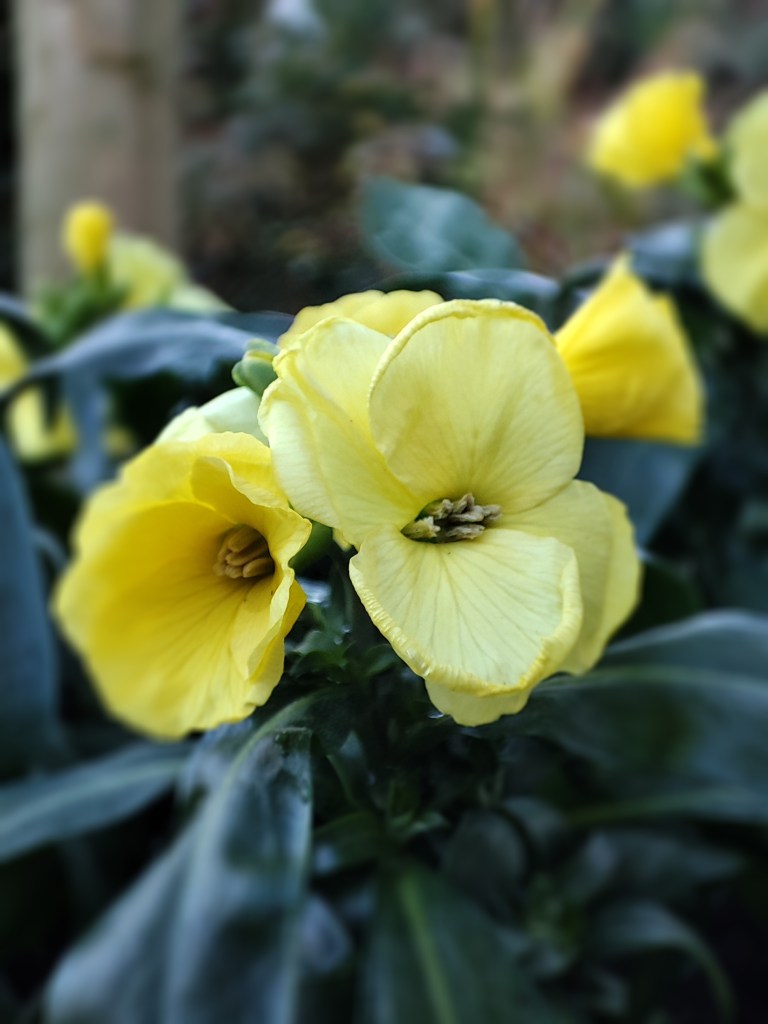
It’s time to try something new in the garden this year and the Erysimum cheiri Sugar Rush Series of wallflower is the perfect choice. This new variety of wallflower was bred for those who crave color, fragrance, and a longer flowering period. The plants are of compact size, making it a great choice for small pots and window boxes. It displays a profusion of fragrant flowers over a much longer flowering season than its predecessors. The flowering time is further lengthened with regular deadheading.

Breeding this wallflower was a collaborative effort between two renowned breeders, one in France and another in the UK. The Erysimum cheiri Sugar Rush Series is a great choice for people who want a reliable and attractive early-season burst of flower in their garden.

Longer Flowering

Erysimum Sugar Rush Series is a F1 Hybrid that requires no cold period to initiate flowering ( a thing called vernalization) so they start to flower as early as 9 weeks after sowing in autumn. For gardeners this means that the plants have a far longer season of flowering, starting in autumn and flowering through Spring.

Hardier

It also boasts increased hardiness, making it a great choice for cold climates.

Scented

What’s more, the new Sugar Rush Series wallflower has a wonderful scent that makes this plant an absolute joy to have in the garden. I am planting them in pots outside the patio doors with some dwarf tulips, I tried to do it this morning, but everything is still frozen!

Compact

It’s compact in size and will comfortably fit into small spaces, making it a great choice for patios, window boxes, and balcony gardens. Its increased hardiness makes it suitable for a much wider range of climates too. Whether it’s in a corner of the garden, a window box, or a container, this wallflower will make a stunning highlight in any garden this season.

Available Now

Look out for this exciting new variety, it has a range of colours, yellow, primrose, orange, purple, and red. I think it will change the way we use wallflowers in pots and planters, being able to appreciate their beauty and fragrance for many months from autumn through to spring. Plants are available from Johnstown Garden Centre (in-store only)

Repeat planting in the Pylon Garden –

In the video above, I explain how I use two different plants with similar shapes to unify different areas. The two plants are Viburnum plicatum ‘Watanabe’ and Nipponanthemum nipponicum.

To see information on the plants see their plant profiles in The Plants section of the website.

Plant profile -Viburnum plicatum ‘Watanabe’

Plant profile – Nipponanthemum nipponicum

It’s not too late…

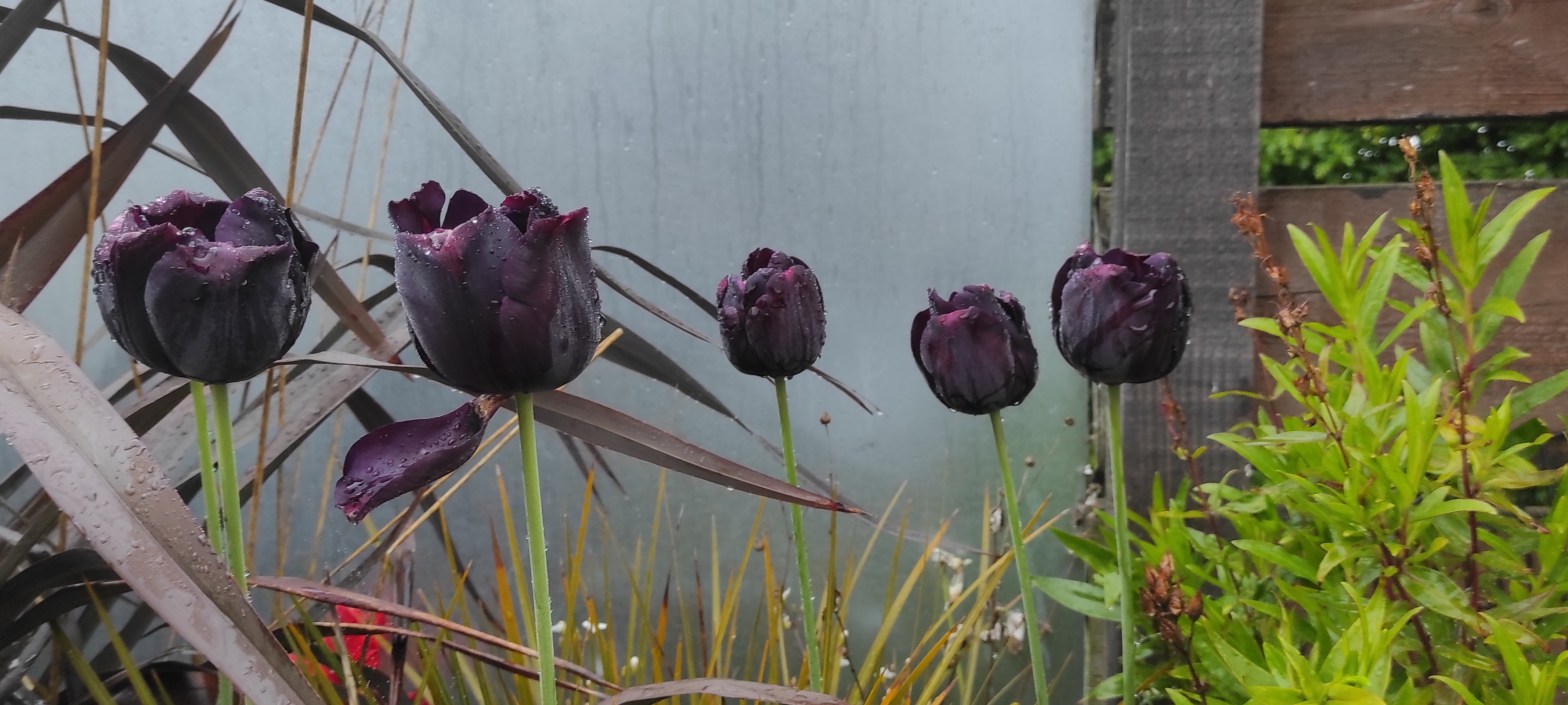
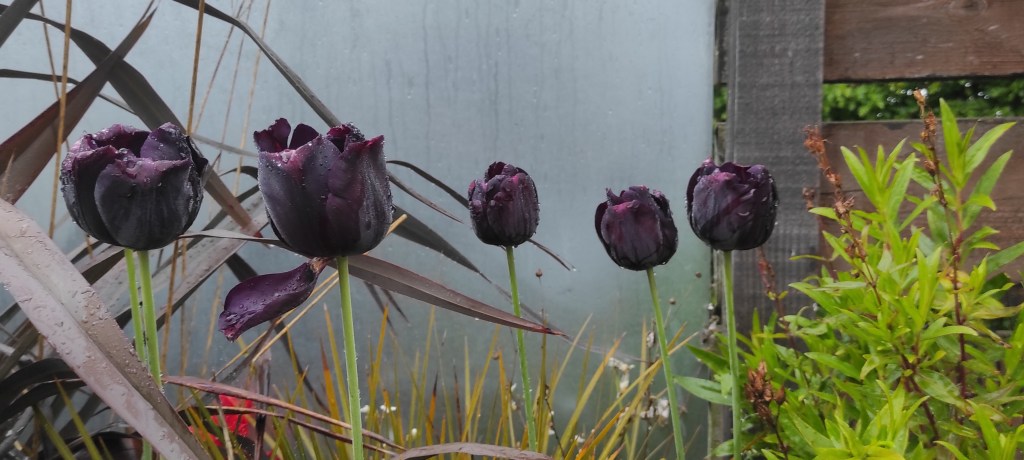
Tulips ‘Paul Scherer’

There is still time to plant flower bulbs for Spring and early summer colour.
Late autumn is the perfect time to start thinking ahead and plan for a vibrant and colorful garden in the upcoming spring and early summer seasons. Planting bulbs during this time ensures that you’ll be greeted with stunning blooms once the warmer weather arrives.


Timing
Late autumn is the ideal time to plant bulbs, between October and November. This ensures that the bulbs have enough time to establish their root systems before the ground freezes.

Preparing the Soil
Prepare your soil by removing any weeds, rocks, or debris from the designated planting area. Loosen the soil to a depth of approximately 20 cm (8 inches) to allow for proper drainage and root development. Adding compost  will improve its fertility and enable better bulb growth.


For some bulbs such as Fritillaria, addition of horticulture grit or sand to improve drainage can help establishment, but for most bulbs it is not necessary, as long as their is reasonable drainage.

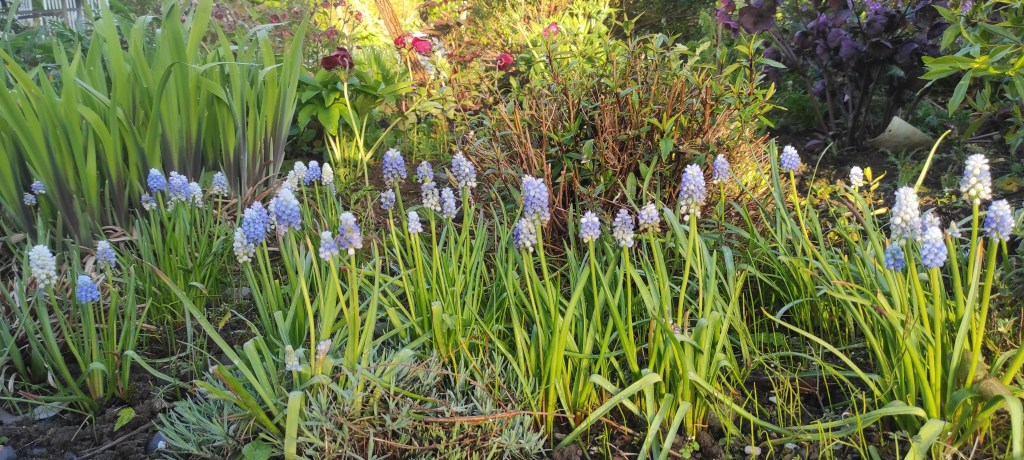
Muscari ‘Ocean Magic’


Planting Depth
Different bulbs require varying planting depths. As a general guideline, most bulbs should be planted at a depth that is two to three times their own height. Here are some common bulb planting depths in both metric and imperial measurements:

– Daffodils and Tulips: Plant at a depth of 10-15 cm (4-6 inches).
– Hyacinths and Crocuses: Plant at a depth of 7-10 cm (3-4 inches).
– Snowdrops: Plant at a depth of 5-8 cm (2-3 inches.


Positioning
When planting bulbs, consider their sunlight requirements. Most bulbs thrive in full sun to partial shade. Ensure that the planting area receives at least 6 hours of sunlight each day to maximize the plant’s growth and flowering potential.


Some bulbs such as Bluebells will be happy in dappled shade.

Spacing
Provide enough space between bulbs to allow their foliage to grow and avoid overcrowding. As a general rule, leave a gap of two to three times the bulb’s width between each planting hole.


Watering and Mulching
After planting the bulbs, there is usually no need to water. Most bulbs will push their way through bulky organic mulches that are subsequently applied to soil surfaces.

Allium ‘Metallic Shine’ with self-seeded red geum.

Spring and Summer Bloom
As temperatures begin to rise in spring, you’ll be rewarded with vibrant blooms. There is usually little need for irrigation, except for bulbs on pots. Addition of fertilizer high in potassium after flowering can help bulk up the bulbs and improve flowering for the following year.


Most bulbs can be left on the soil over summer and will increase in numbers over the following years, Tulips are often the exception and are often treated as annual plants by gardeners.

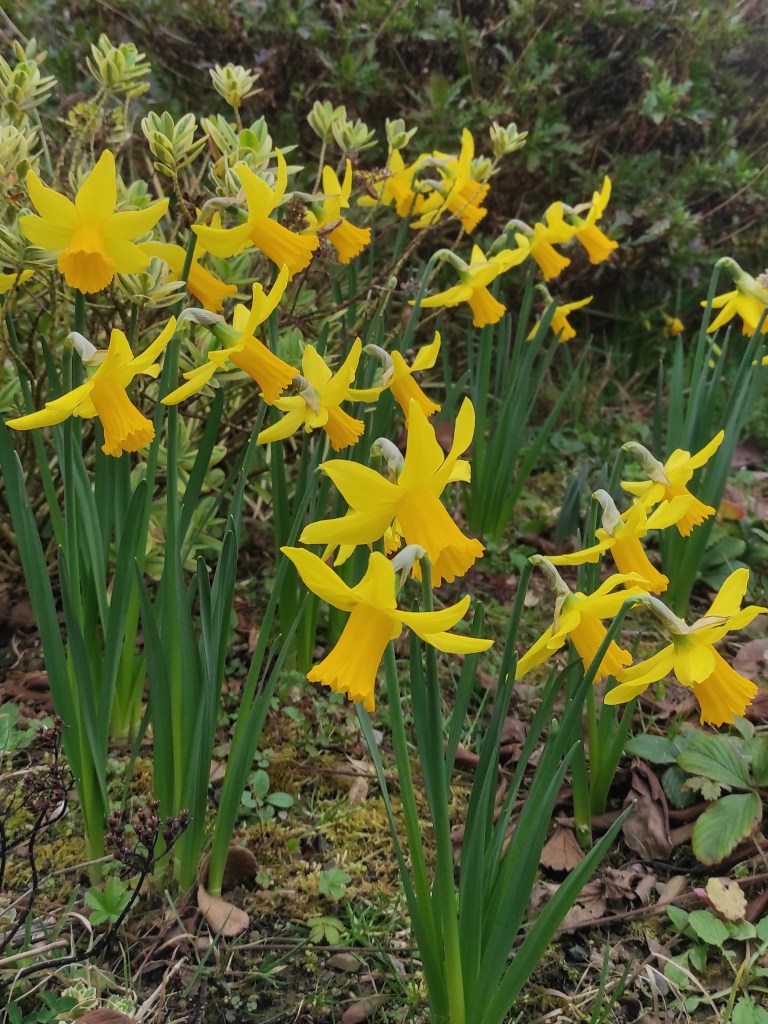
Narcissus ‘Sailboat’ – leeave the foliage after flowering.


Do not remove the foliage from the bulbs after flowering, this is important as food produced by the leaves will be stored in the bulb for flower production the following year.
By planting bulbs in late autumn, you are setting the stage for a colorful and beautiful garden in the following spring and early summer. Remember to choose firm healthy bulbs, prepare the soil correctly, consider planting depths and spacing. Soon, you’ll be enjoying a garden filled with the breathtaking colors and scents of nature’s blooms. Happy gardening!

Muscari armeniacum looks great in drifts amongst perennials and shrubs


My Tip!
Plant smaller bulbs amongst perennials and under deciduous shrubs, not just at the front of the border, but throughout the whole depth of the border. This will create a layer of colour in Spring and draw the eye into the border. Perennials will grow over the foliage of the bulbs after the bulbs have flowered, thereby disguising the dying foliage of the bulbs in later Spring.

Get Moving – A Guide To Moving Shrubs

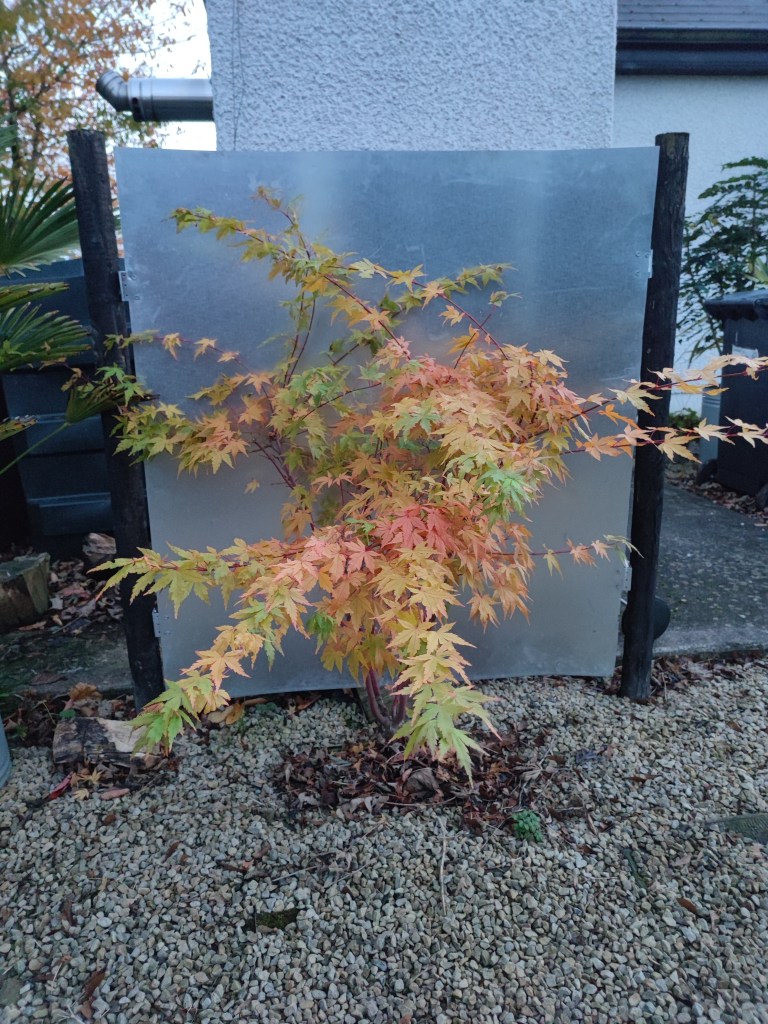
A Japanese maple that I moved a year ago.

Here’s a step-by-step guide on how to move a shrub and ensure its successful transition:

1. Timing: The best time to move a shrub is during its dormant season, which is typically in late autumn, winter, or early spring. Avoid moving it during extreme weather conditions or when the ground is frozen. With deciduous plants this is when the leaves have fallen away.

2. Preparing the new location: Choose a spot with similar sunlight, soil conditions, and drainage as the shrub’s current position. Dig a hole that is twice as wide and just as deep as the shrub’s root ball. Loosening the soil in the hole will help the roots establish more easily.

3. Watering: Several days before moving the shrub, thoroughly water it to hydrate the roots and minimize stress during the transition. This may not alway be practical, but always ensure that the plant is not dry.

4. Pruning: Trim back any excessive foliage or branches to reduce stress on the root system after transplanting. Leave some foliage intact to aid in photosynthesis.

5. Digging the shrub: With a sharp spade or shovel, carefully dig around the shrub’s drip line*, creating a wide root ball. Try to keep as many roots intact as possible. Lift the shrub using the root ball while minimizing any damage to the delicate roots.

6. Transplanting: Place the shrub in the prepared hole, making sure it sits at the same depth as it was previously. Backfill the hole with soil, gently firming it around the roots. Avoid air pockets by watering periodically while filling in the hole.

7. Watering and mulching: After transplanting, thoroughly water the shrub to settle the soil and encourage root establishment. Apply a layer of organic mulch around the base, leaving a gap around the stem to prevent rotting.

8. Aftercare: Monitor the shrub closely in the weeks following the move. Water regularly, keeping the soil evenly moist but not waterlogged. Apply a 5cm depth of mulch around the base of the plant but maintain a mulch free area close to the trunk. Shield the shrub from extreme weather conditions or direct sunlight until it shows signs of new growth.

Remember, every shrub is unique, so it’s essential to research specific care requirements for the species you’re moving. Some plants such as Californian Lilac, Ceanothus, tend not to move easily. Proper planning and meticulous execution will increase the chances of a successful shrub transplant.

*The “drip line” is an imaginary line marking the outermost reach of the foliage or branches. It represents the area where rainfall or irrigation water drips off the leaves and falls to the ground. The drip line typically corresponds to the edge of the tree’s canopy or the outermost branches of a shrub. When digging around a shrub or tree, it’s common to use the drip line as a guideline to ensure that the root ball is excavated properly and helps maintain the integrity of the root system during transplantation.

To Cut, or not cut.

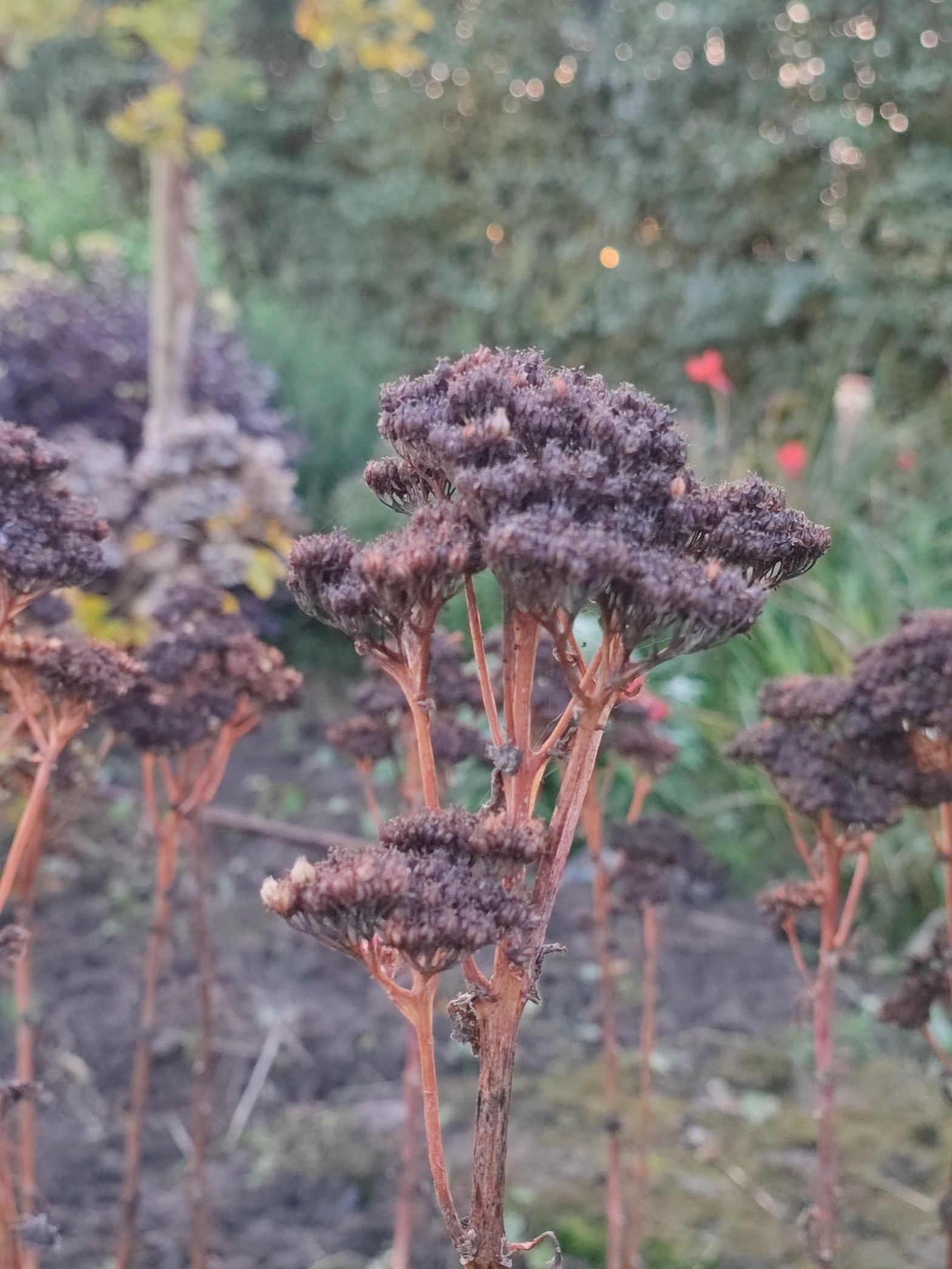
Sedum can look good even after the leaves have gone.

When I was studying horticulture way back in the twilight years of the last century, the autumn cut back was the the start of putting the garden to bed for the winter. A habit that had been carried out by gardeners since the Victorian era. These days such practices are still carried out, however, the approach is changing, becoming more nuanced, and gardeners are leaving more plants uncut until the onset of spring.

The reasons are not laziness, but rather a growing appreciation of the attractiveness of seedheads and brown leaves of plants that possess a pleasing form, Thalictrum and Miscanthus grasses are two examples.

Another important reason to leave seedheads is that the seeds themselves can be a valuable source of food for birds, Gardner’s have a growing awareness that we share out garden spaces with species other than our own.

Seeds of Sedum are eaten by birds

Below are a few key points of guidance to help you chose what to cut, and what not to cut.

Time it right: It’s important to time your pruning carefully. Wait until the plants have finished flowering and the foliage has started to die back naturally. This ensures that wildlife has had ample time to benefit from the plants’ blooms and that the stems provide winter interest.

Leave some seed heads: Many herbaceous perennials produce seed heads that provide food for birds and small mammals during winter. Consider leaving some seed heads intact, especially those with appealing shapes and textures. They can add visual interest to your garden and provide a food source for wildlife.

Cut back selectively: Instead of cutting back all plants uniformly, selectively prune some perennials while leaving others untouched. This way, you can create a varied and visually appealing winter landscape while still providing habitat and food for wildlife.

Create wildlife shelters: As you cut back certain plants, leave them in place to create natural shelters for insects, spiders, and other small creatures. Hollow stems and decaying foliage can provide valuable nesting sites, protective cover, and overwintering spots for various wildlife.

Mulch and nourish the soil: After pruning, don’t forget to mulch around the plants and provide them with a layer of organic matter. This will help protect the roots during winter, retain moisture, and nourish the soil, ensuring your perennials emerge healthier in the spring.

Remember, when it comes to pruning, it’s important to strike a balance between tidiness and creating a welcoming environment for wildlife. By following these tips, you can curate an appealing garden while fostering biodiversity.

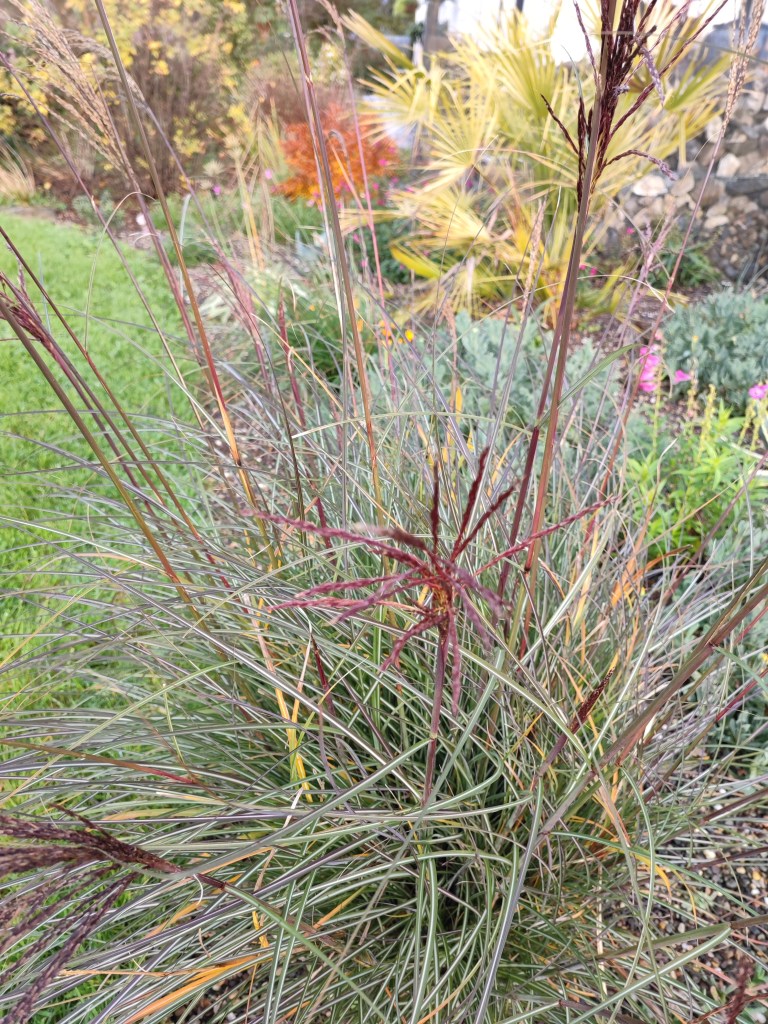
Seedheads of many grasses will still look good until February