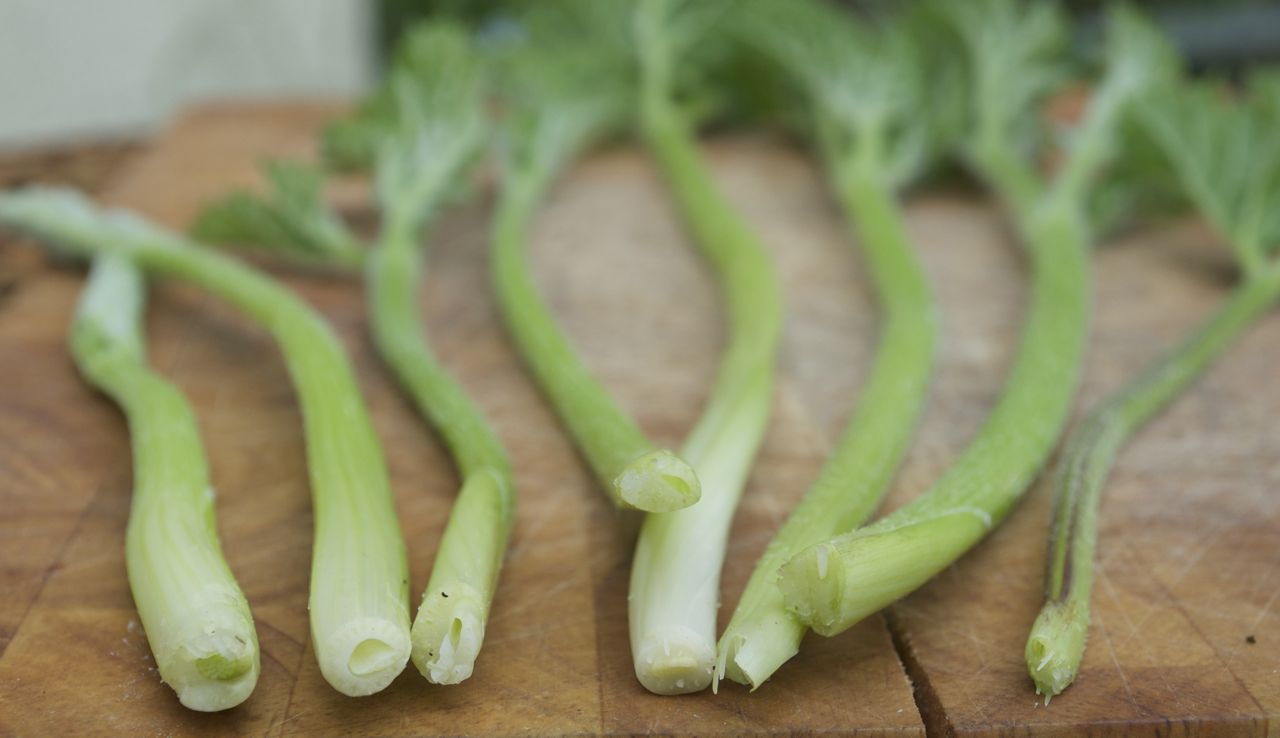
Hogweed, not the giant one grows in our garden, close to where the spruce trees tower and cast shade over the dwarf rhododendrons, dwarf Podocarpus and assorted conifers in what we refer to as the office garden. My view from the computer desk looks out on to this area, well part of it, the hogweeds lurk to one side, just out of view. When I first saw the shoots appear from the ground in Spring I intended to dig them out. It can be quite a vigorous grower and prolific self-seeding plant. But luckily I procrastinated; other jobs took priority. I say it was good fortune because late one evening I was flicking through the pages of Wild Food by Roger Philips, he enthuses about eating the shoots of the hogweed. Of course I was intrigued.

I have to admit I was a little skeptical, but such was Roger’s praise for the new shoots of Heracleum sphodylium, he says that is one of the best vegetables that he has ever eaten, that I just had to try it. Before harvesting the new shoots growing from the base of the plant I made double sure to check that the plants growing in our garden were indeed the hogweed, H. sphodylium, and not another plant from the Parsnip family once called Umbelliferae but know named Pastinacaceae. Many members of this large plant family could be easily confused and the wrong plant harvested, which could have disastrous results, some are poisonous. The related H. montegazzianum is a much bigger plant with monstrous leaves and over sized infloresences, the sap of all parts is a severe irritant.

Identifying Hogweed- some tips
As always with foraging wild food be very sure that you know what you are picking, take care to identify the plant correctly. If in doubt leave it out. Consult a wild flower guide or get advice from someone who knows for sure.
H. sphodylium grows 1-1.5m high, has pinnate leaves (divided into opposite leaflets); the leaflets are pinnitafid- leaves with pinnate lobes that are not discrete, remaining sufficiently connected to each other that they are not separate leaflets. leaves which are downy (fine hairs) on the underside. The stems are ridged, hairy and hollow. The infloresences are compound umbels of white flowers with between 15 and 30 stalks radiating from the centre of the infloresence. The outer petals of each flower on the umbel are enlarged. The fruits are oval and flattened.


Harvesting, preparing and cooking hogweed shoots
Only use shoots where the leaves have not fully unfurled, I pulled the shoots upwards and they came out easily.

After washing the shoots in cold water I cut them into lengths of about 15cm and steamed them until they were getting tender.

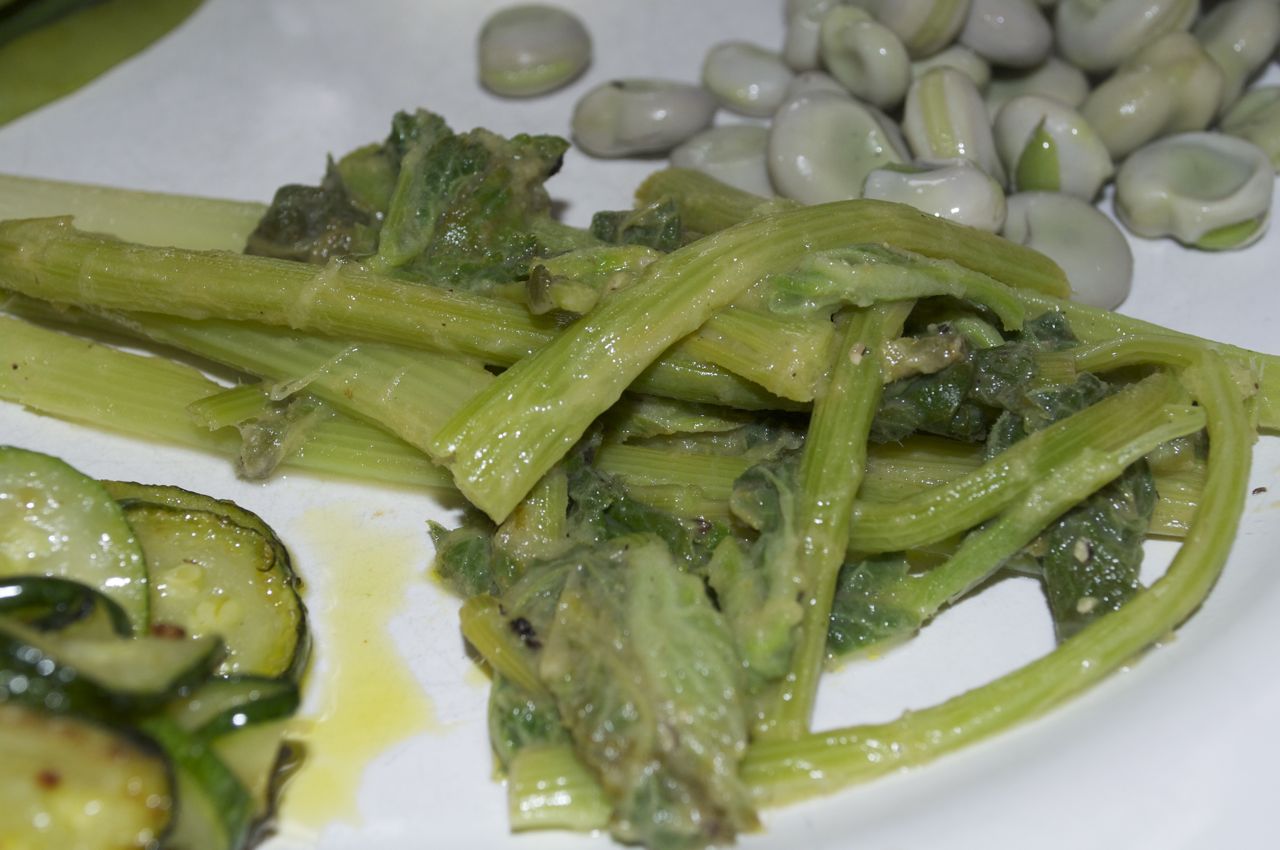
I removed them from the steamer after 4 minutes and finished them on a pan with a generous knob of butter and some salt and black pepper, about 2 minutes. We enjoyed them for our dinner with vegetables from the garden including broad beans, potatoes, French beans and a nice fresh salad.

The Verdict
The flavour of the hogweed shoots was somewhere between the better side of angelica and fresh Florence fennel, unique and quite tasty, strong and distinct. On their own perhaps too strong but with salad leaves they were good. I will definitely try them again, perhaps with a good stake or as part of a pie or quiche. I recommend you to try them too…

 Ciaran The Gardener
Hi Ciaran, I eat nettles all the time, but I haven’t braved Hogweed yet!
Give them a try Denise, they are good, they have their own unique taste!
obviously up in your neck of the woods not a lot of spraying happens but to be sure you’ld be “taking life in hands” if you were to pick them around these parts!
No spraying done in our garden Ena!