I originally put together this short video featuring these hardy herbaceous perennials a few weeks ago. They are all still blooming well, thanks in part to the mild weather, no frost as yet.
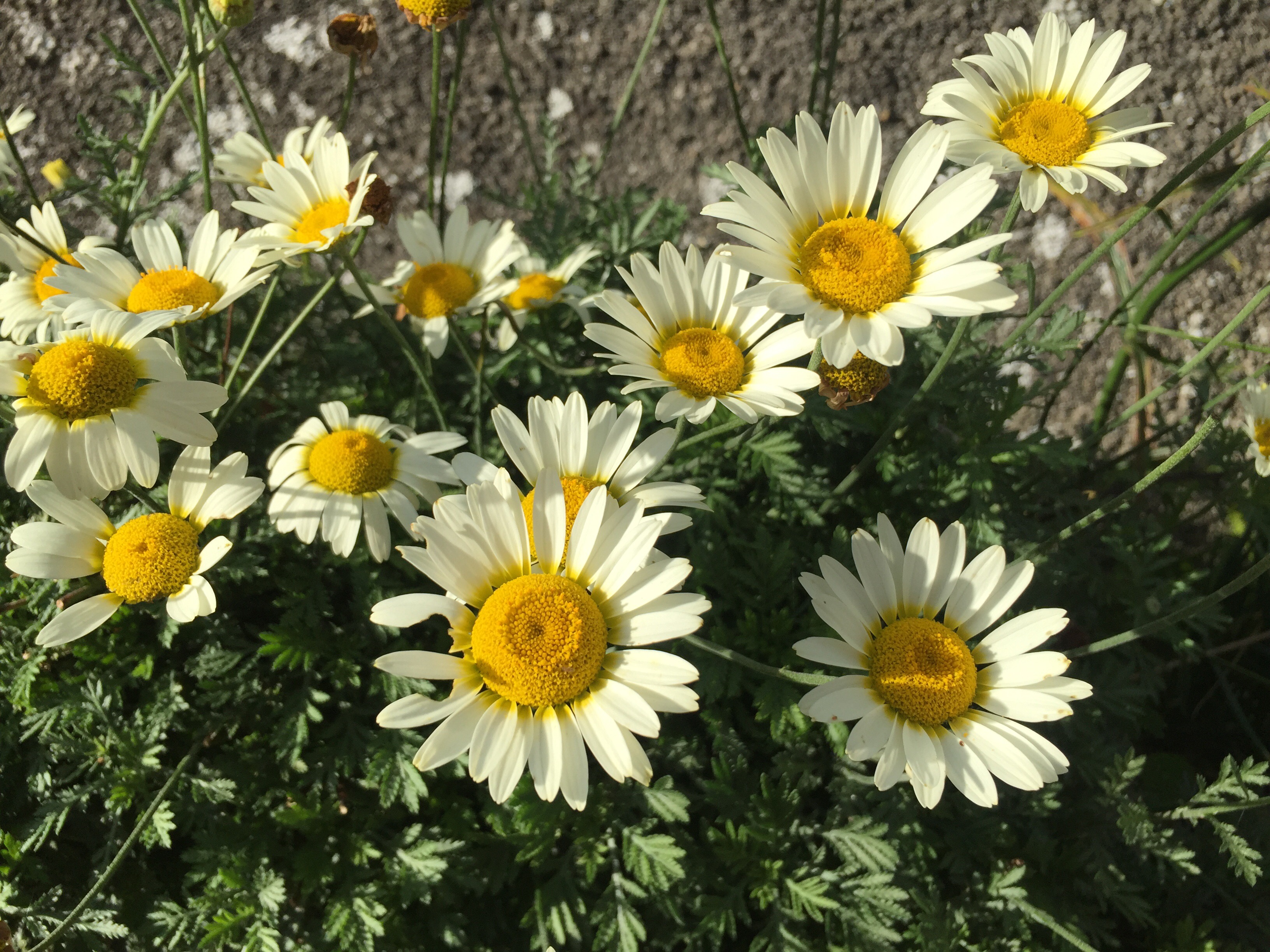
The plants featured were photographed in two locations; our pot garden (Anthemis ‘Sauce Hollandaise, Verbena bonariensis, Erigeron karvinskianus) and where I work with The Garden School at Marlay Park.
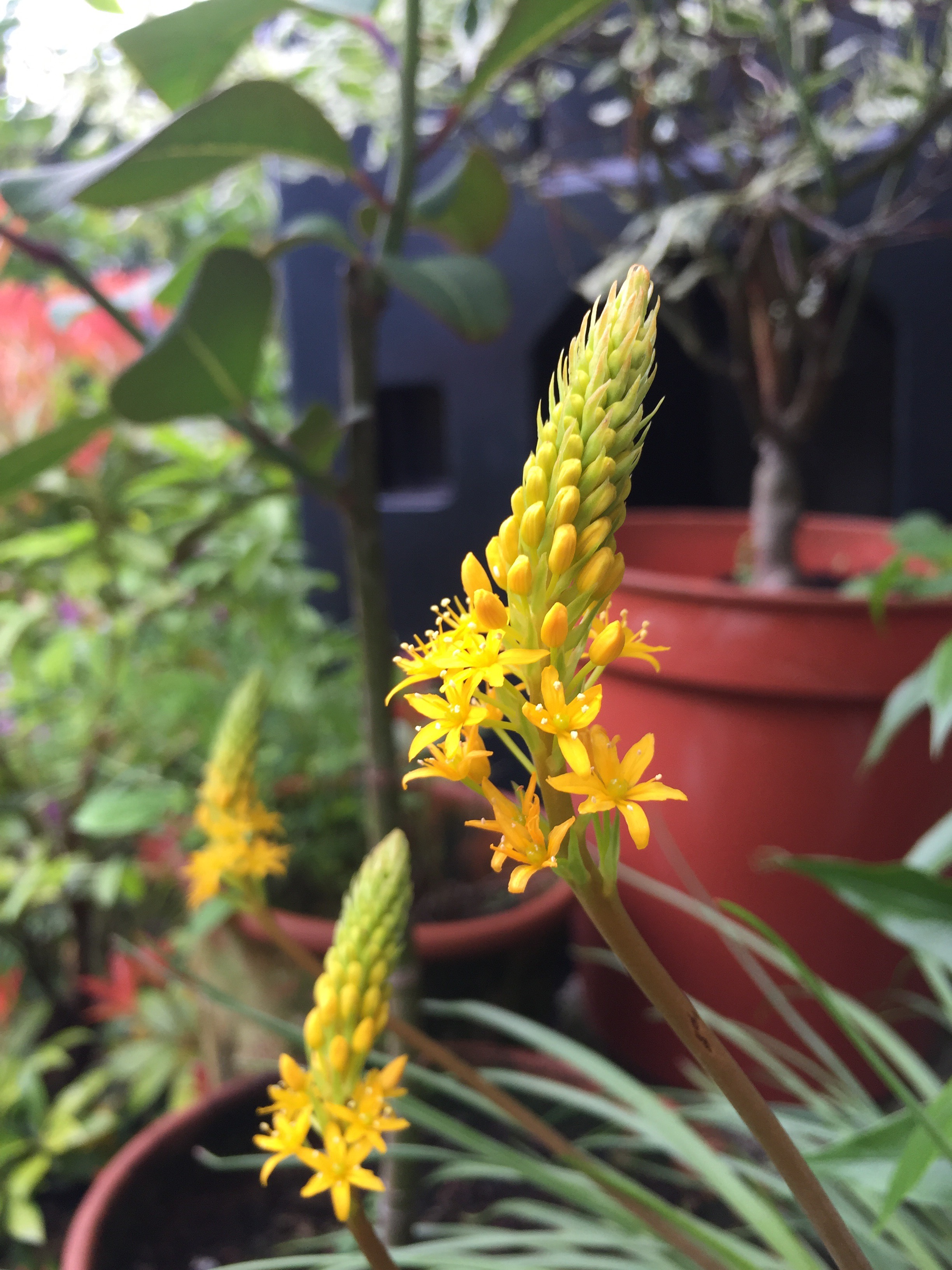
Bulbinella hookeri Bulbinella hookeri, an unassuming clump of short grassy leaders emerged in the centre of the pot in Spring. There is no label, I study the leaves, a minute passes as I try to recollect, then it comes back to me,”the yellow lad from South Africa”. Bulbinella hookeri, the name returns to me, this is a yearly spring ritual which ends with me saying that I must label it.
Now the flowers are almost over, the pot still unlabeled, and I have enjoyed the understated elegance of this beautiful bulb which is native to South Africa.
This plant has travelled with me from my first garden in Dublin, it travelled west to Mayo, in both places it was happy growing in well drained soil in a sunny position. Now it resides in a pot in Kildare, sitting on a garden table, cheerful and happy, a cheer that is infectious, making me smile with admiration. Admiration for its beauty, resilience and grateful for its willingness to survive without much attention. It seems all it needs is some praise and affection for its blooms when they appear in summer.
Foliage adds interest often otlasting the comaparable fleeting presence of flowers
As the blooms open and fade, early summer blooms give way to the later summer show. While the often fleeting beauty of blooms enthrall us, foliage can command our attention over the seasons. New growths of Pieris japonica burn bright and cool to smoldering bronze before the green calm of green returns for winter.
Pieris japonica seedling
In our collection of pots, this Pieris japonica combines with other foliage plants to provide a foliar screen of an oil tank and together their colors and shapes mingle to create a leafy composition of beauty through the spring, summer, autumn and in some cases winter too.
Cornus alternifolia ‘Variegata’
The silver variegated foliage of Cornus alternifolia ‘Variegata’ creates a soft fuzzed backdrop, it’s potis placed on a garden table to elevate it so that it distracts the eye from an ugly oil tank. A beautiful large growing shrub will take time to achieve its full height of 4-5 meters.
Salix magnifica
I love the big leaves of Salix magnifica, it is so unlike most willows. The bluish green leaves can be as big as rhododendron or magnolia foliage. It’s new growth is reddish tinged. It is a vigorous plant that can grow into a fair sized tree. Like other willows it responds well to hard pruning, so we should be able to keep its size manageable.
Pyrus communis seedling
The pear seedling is one of two, this one is the less vigorous of the pair of pears, both have attractive copper new growths and shiny leaves. We await the first flowers, but that may still take a number of years.
Malva sylvestris, grown from seed, a free packet from Thompson and Morgan last year. A beautiful plant that will flower for a long time. I just love the dark markings on the petals.
Bulbinella hookeri, I have had this plant for years. It has travelled with me from garden to garden and now it is happy in a pot. Nice foliage too.
Philadelphus X erectus, this is a cutting from a plant that we originally bought in a garden centre in Finland where it is widely grown, so we know it’s hardy! One of the hybrids bred by the French nursery Lemoine in the late 19th century. Superb fragrance and a compact growth habit.
Philadelphus microphyllus, another cutting, this time from my late mother’s garden. Tiny leaves and small nodding flowers with a nice scent on a compact plant.
Lupinus X polyphyllus, considered an invasive weed in Northern Europe, this North American plant can be seen along roadsides in Finland. We love it and bumble bees love it too. This is a clump of two year old seedlings that have been flower for the last number of weeks. Like the Malva mentioned above, it grows in a gravelly soil at the base of a wall opposite our apartment.
We have been planting lots of plants along the wall, in addition to our pot plants it makes the area feel like a garden and they provide lots of food for the bees.
The space beneath trees and shrubs trained as standards offers the opportunity for gardeners to add an extra layer of colour and interest. In our collection of pots that form our garden, I look upon these spaces with great interest, an opportunity not just to squeeze in more plants, but to select plants that will complement the primary ten want of the container.
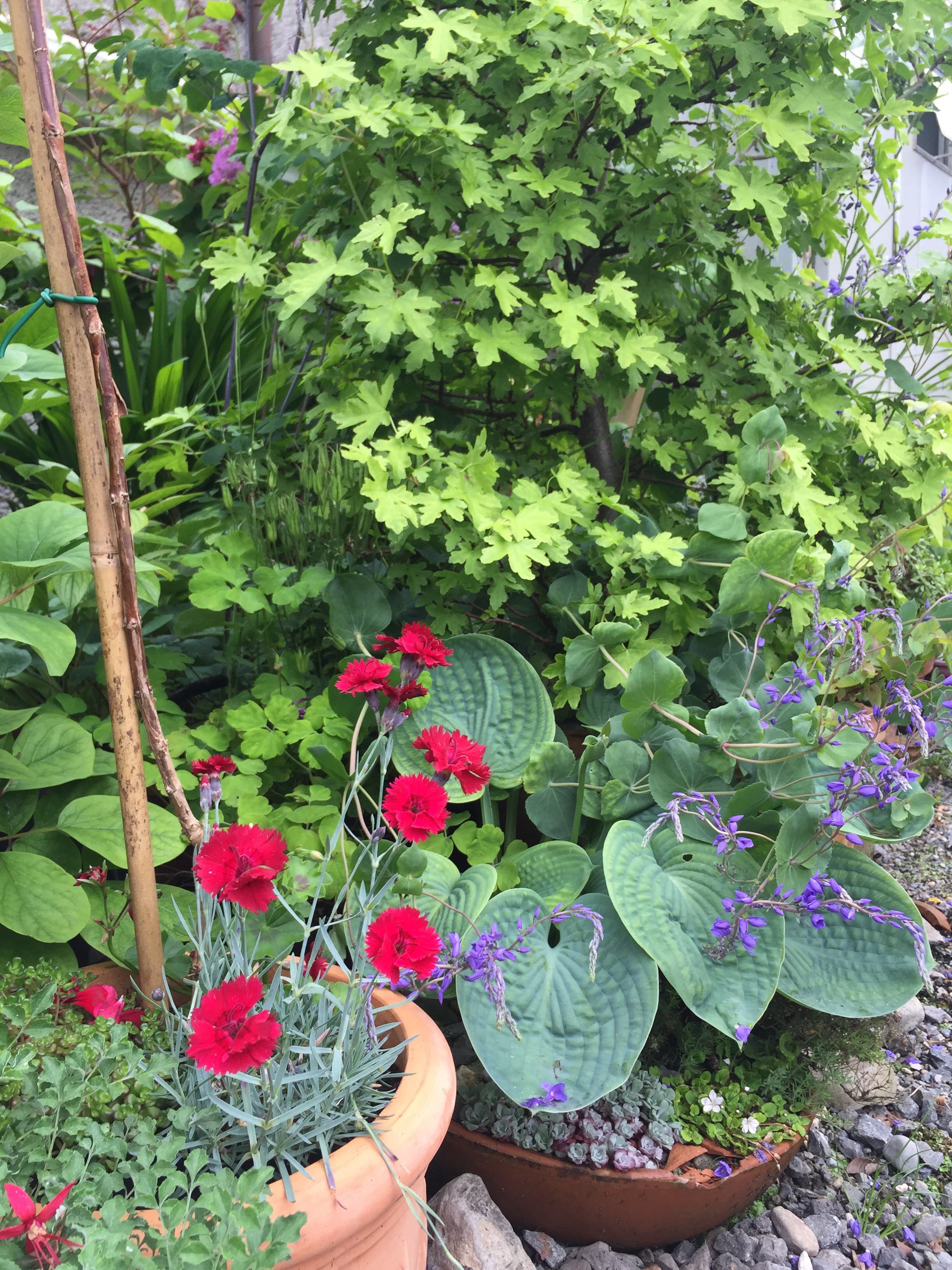
Recently I brought home from my work a Fuchsia magellanica that I had trained into a standard. After planting it in a terracotta pot and carefully placing it, the bare compost that was the plants new home demanded my attention and I had to find a few more plants to fill around the bare base of the newly planted shrub. While at Johnstown Garden Centre in Naas I picked up the very attractive Dianthus ‘Fire Star’; nicely fragrant and the deep red flowers were a perfect compliment to the red sepals of the fuchsia flowers. A small potful of Sedum oreganum joined it, the reddish tinge of its foliage the reason for its selection and then an unnamed Pelargognium, a trailing variety with dark red flowers. Now the picture was complete.
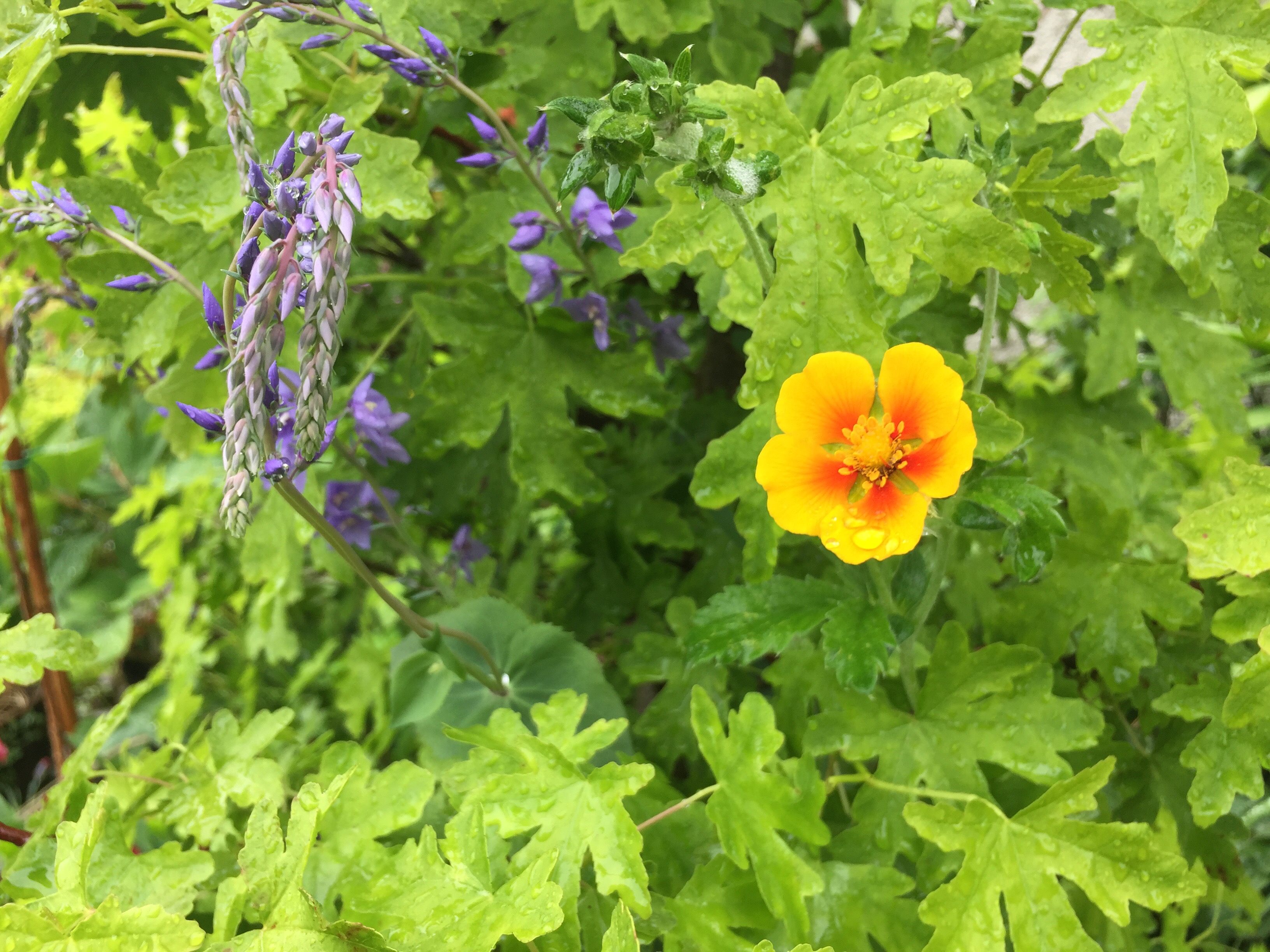
In another a pot a combination from a couple of years ago continues to entertain;nth rough the dense foliage of a Liquidambar orientale a cheerful Potentilla scrambles without a care while the ever curious and intrepid stems of Parahebe perfoliata wander to explore every empty centimeter of the compost. The beautiful blue flowers dangle freely from the foliage of its larger pot cohabitant.
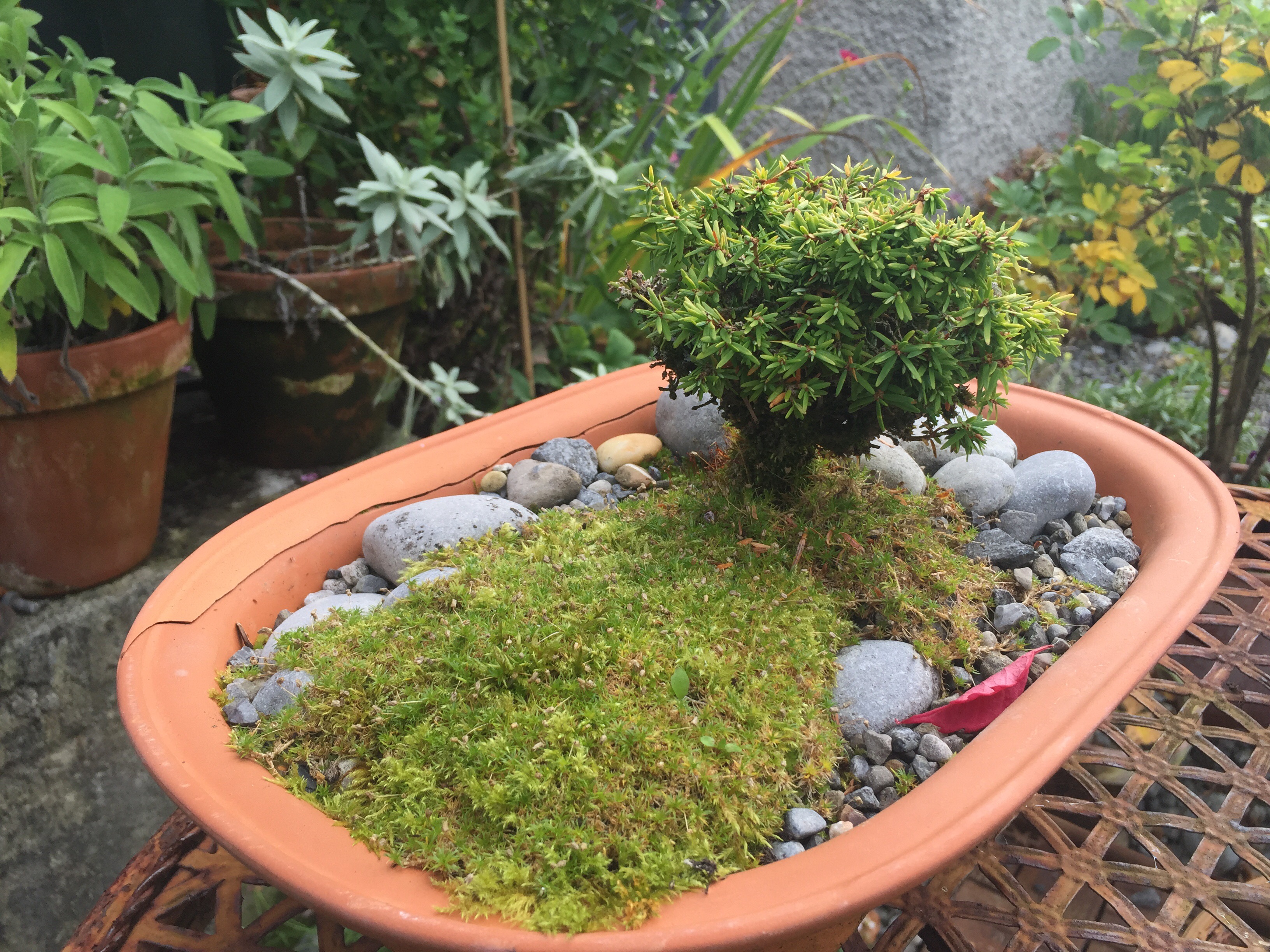
Even in the smallest of our pots there can be a chance to combine. On a table is plant of Tsuga canadensis ‘Minuta’, it grows in th lid from a terracotta roasting dish into which I drilled drainage holes. Covering the compost is a miniature lawn of Sagina subulata that gets studded with tiny and dainty white flowers in summer.
Under planting also provides benefits such as reducing weed growth and can actually reduce water loss from the compost by evaporation, the plants act as a mulch. Gardeners often need to find a place for just one more plant, have a look at your pots, there maybe plenty of space waiting to be filled.
I love trees, and the feeling of being surrounded by plants with their cooling foliage is one that stirs something deep within. A gentle stirring, that emulsifies thoughts and emotions into a delicious sweet custard, of serenity and calm.
In a small garden, or in our case, a 20square meter piece of hardcore gravel led farm yard, the possibility of planting out arboreal retreat does not exist. One great gardener paraphrased from another; even the smallest garden should have an arboretum! So drawing in the wisdom of others when we started potting our plot, some trees were included. A couple of trees in large pots and dappled shade and leafy embrace.
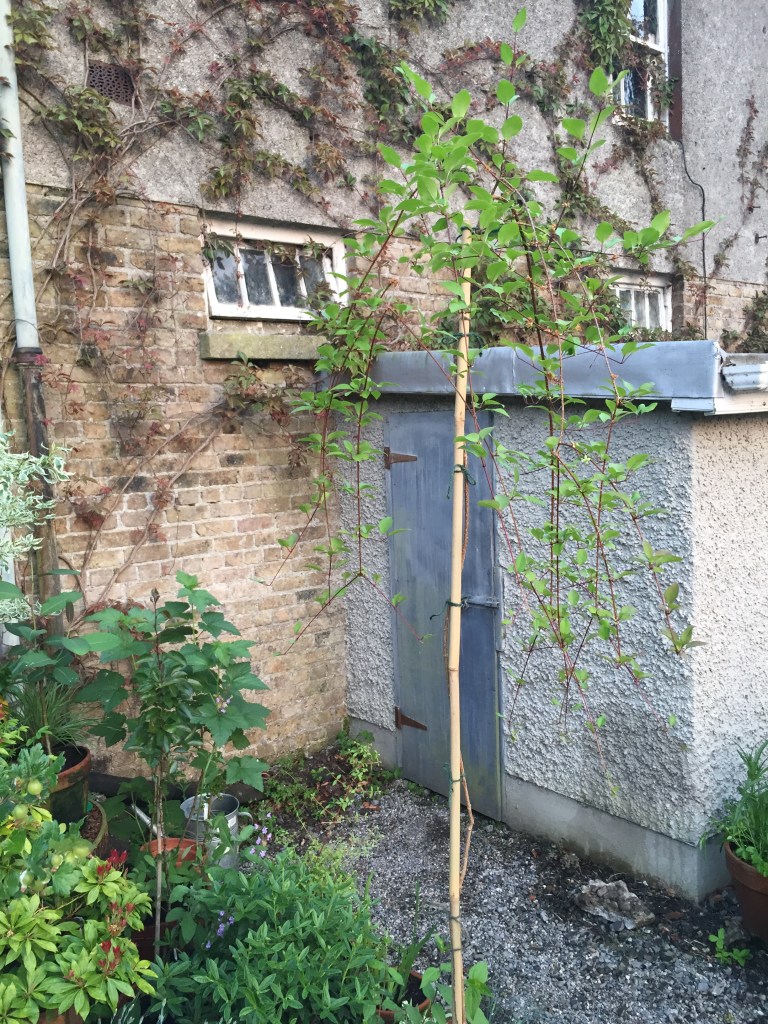
To add the extra height to our collection that surrounds our IKEA wooden slab decks, we have trained a number of shrubs as standards. This involves removing the side shoots from the main stem that is initially trained to grow straight on a bamboo cane. When the main unbranded stem has reached the desired height a head of 4 – 6 branches is allowed to develop and the leading shoot pruned.
The result is a clear stem and a crown of branches, a shrub that looks like a tree!
One of the first was a Gooseberry seedling, from seeds collected in my mother in-law’s garden in Finland, it produces the sweetest fruits, we have named it ‘Pirkko’
Lonicera nitida ‘Bagessen’s Gold’ with its bad hair day growth habit is left more or less unpruned, to impose a tidy haircut onto this free spirited shrub would be a crime. It stands sturdy and proud with a dense carpet of wild strawberries at its base.
Gooseberry ‘Pirkko’
The red stems of dogwood, Cornus alba are a common sight along motorways and in large landscape planting schemes. Although willow trees are often trained as standards and managed by pollarding, I have never seen C. alba used in such a manner. Not until I trained one myself, now I can enjoy the red shoots in winter and the white blossoms in May.
Cornus alba flowering
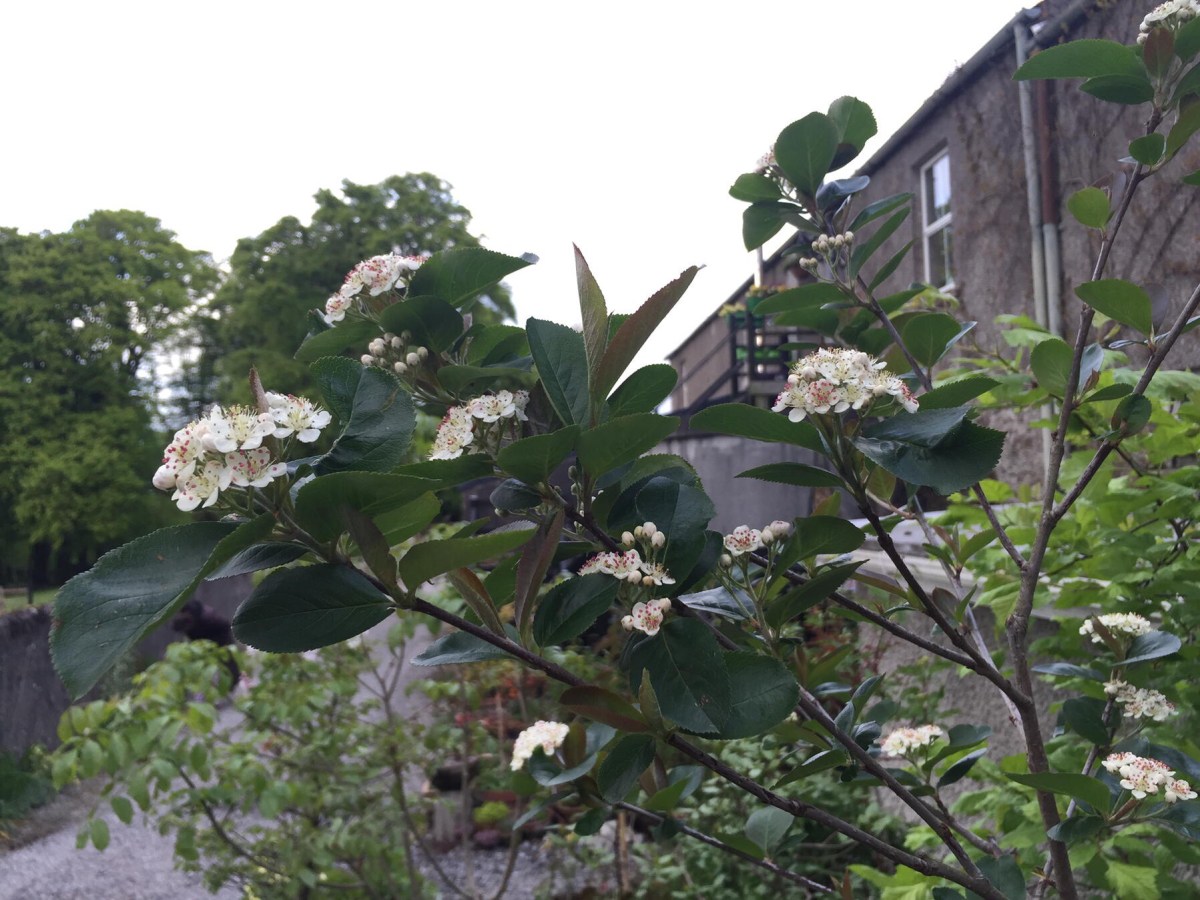
Then came Aaronia melanocarpa, inspired by a planting in a Finnish nursery where I was impressed by the drooping clusters of large edible black fruits in Autumn. The foliage will turn to hot orange and red before falling and the dainty clusters of white flowers are a joy in May.
Aronia melanocarpa
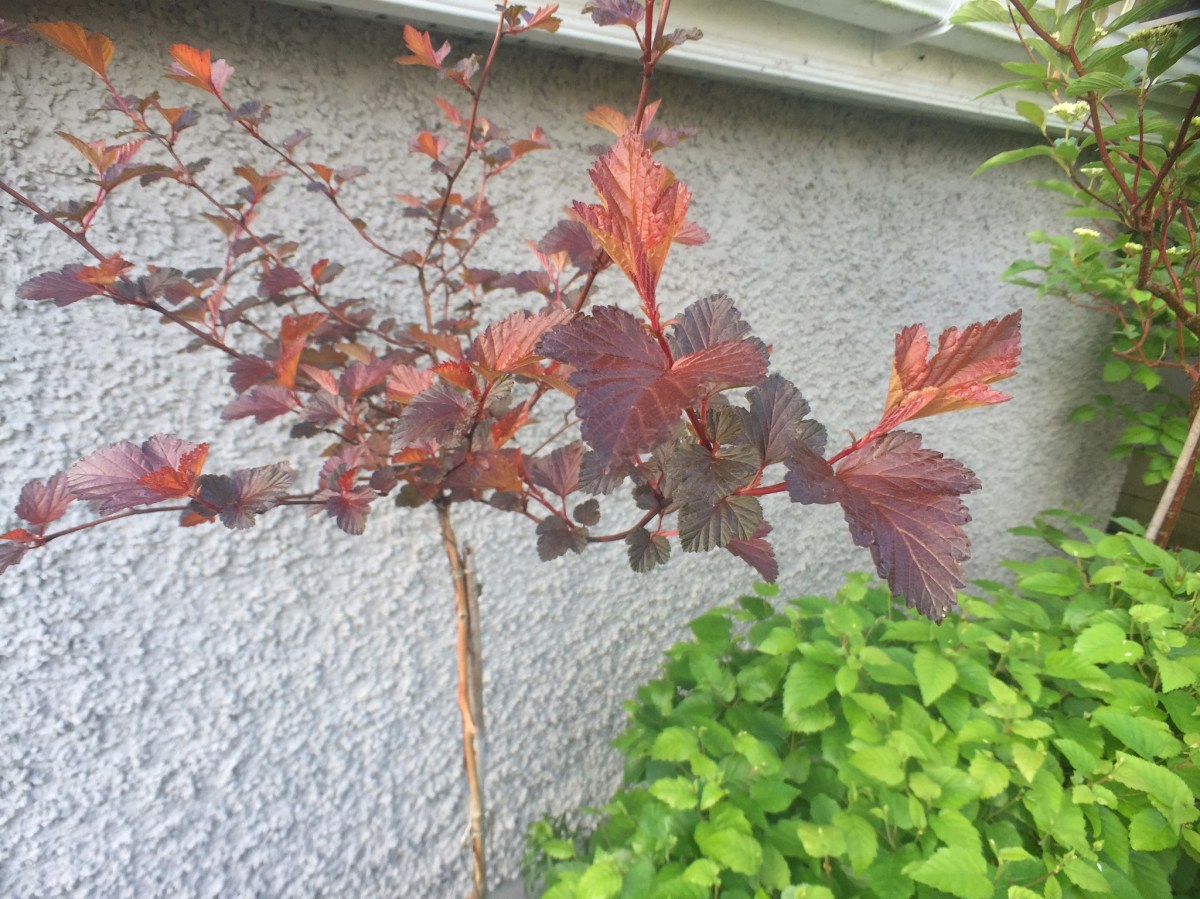
Physocarpus opulifolius ‘Diable D’Or’ is a deciduous shrub that has dark foliage tinged with soft Amber tones in new growth. Trained as a standard it add depth and height to our plant composition.
Physocarpus opulifolius ‘Daible D’Or’
The latest additions are Fuchsia magellanica and Forsythia suspends. Fuchsia magellanica, is the hardy fuchsia seen in Irish hedgerows. Standard Fuchsias for sale in garden centers are usually the tender cultivars with bigger cloudier blooms than F. magellanica. I think that the simplicity of the species sits better with our collection and should survive cold Kildare winters.
Forsythia suspensa is a handy shrub with a lax growth habit of drooping stems that are covered in pale yellow flowers in Spring before the leaves emerge. I thought that it would make a fine weeping tree if given the standard training treatment. It had been growing in a poky theme tunnel over the last few years and is now sturdy enough to be planted out, the crown of weeping stems is starting to thicken.
Forsythia suspensa
In a more confined space standard trained shrubs give the height and structure that a tree lends to a bigger garden. Around the base there is opportunity to plant herbaceous plants or bedding. I love the process involved in taking a young plant and training it. Plans are to try Piptanthus nepalensis and my standard Chaenomeles is coming on well. Standards are the perfect way to get high in a small garden.
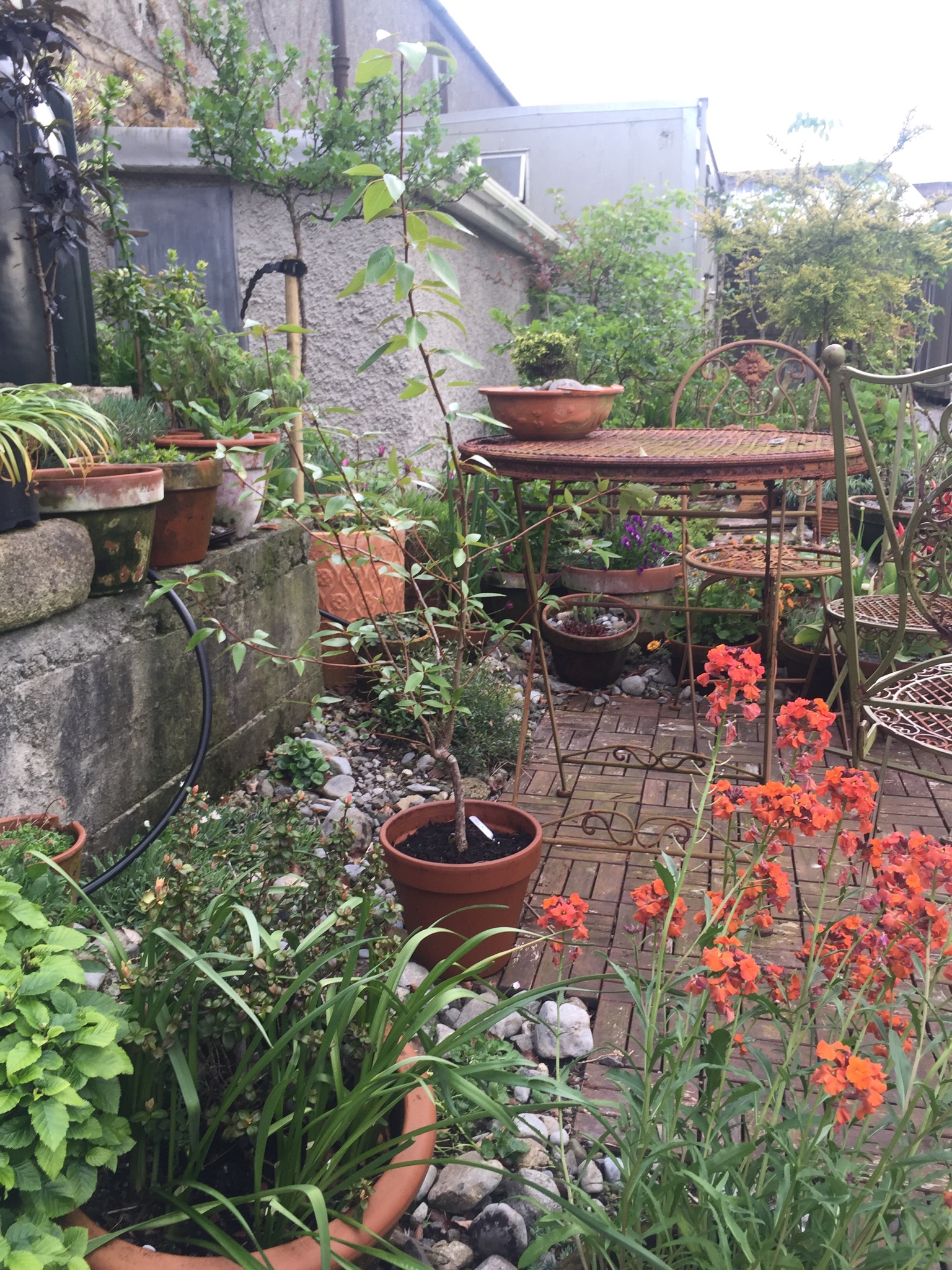
In our 20 square metres we have over 170 pots. It is a refuge, a place that defuses tension and refuels the soul.
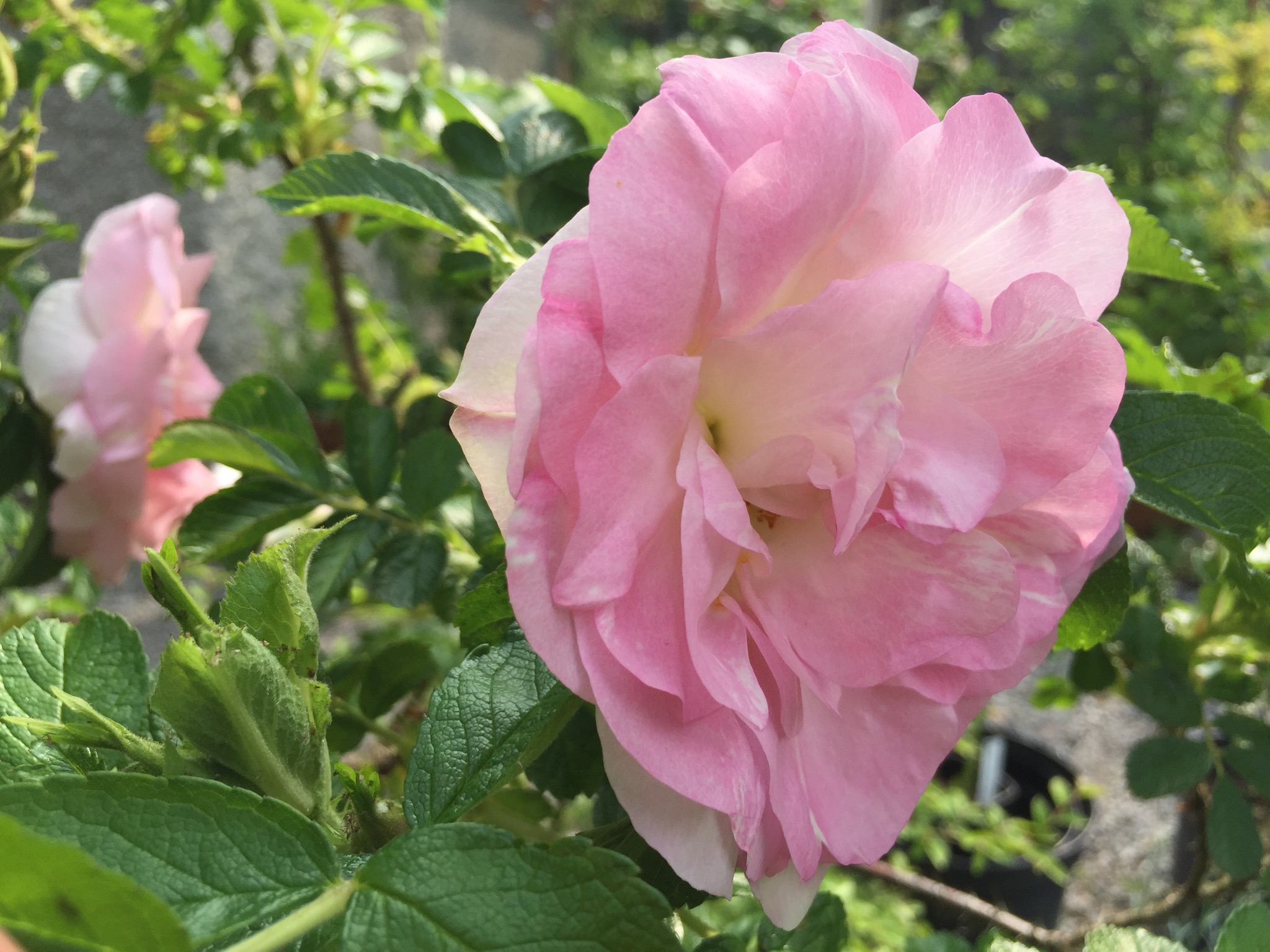
In the last couple of days Rosa ‘Ritausma’ started to bloom.
It is a gorgeous double pink rose with a moderate fragrance, a rugosa hybrid. It never gets disease and is hardy.
It originated in Latvia in 1963 and is relatively unknown in Ireland. We bought the plant in a nursery in Finland a few years ago.
Originally it was planted in our garden in Mayo, when we moved it was dug up and potted. Now it is thriving in a 37cm diameter terracotta pot. It is watered regularly and I applied an organic fertiliser about 6 weeks ago along with some mychorizal fungi.
Last night as I was watering I could get the sweet scent in the air, a real beauty for the eyes too.








 Ciaran The Gardener