Deck the halls with boughs of Holly – Christmas Wreath Workshop

_DSC0309-cropped

Not just holly! Laurel, redwood, ferns, hawthorn, spruce, cotton lavender, ivy, heather, artichokes, alder, willow, spruce and many, many more.

Getting it just right....
Getting it just right….

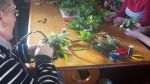
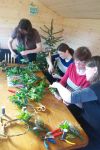
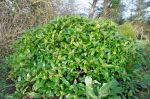
Take a sprig of laurel, no ordinary laurel, Otto Luyken’s low growing one. Add a spray of a bronze  leaved conifer wearing its winter clothes, darkened from summer green, Microbiota decussata from Vladivostok. A spruce shoot or two from the felled trees from behind the house and a plump bunch of creamy green flower buds from the fragrant spring flowering Skimmia x confusa ‘Kew Green’. Tied with tender care and lovingly crafted into a Christmas wreath. Take a break, sip some hot glögi, a Finnish Christmas punch, have a nibble on a mince pie or Tunisian orange cake and back to work. Creativity filled the air, mingling with the warm chatter and yummy smell of home baked cakes. Just the way a Christmas Wreath workshop should be.

A finished wreath
A finished wreath

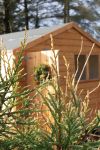
This was the first workshop to take place in our newly built classroom. Over the last two weeks my Dad and myself have been busy hammering and sawing. The wooden building had been installed, it was our job to insulate the structure, wire it for electricity and finish off the inside with tounged and grooved wood panelling. We had a deadline to meet. 1st of December and Hanna’s Christmas wreath workshop.  We finished on time, ahead of time, last Thursday we had our first class, the RHS Level 2 course took place there, and on Friday a Christmas tree was added, decorated with lights and Hanna’s advent wreath was placed on the table. We were ready.
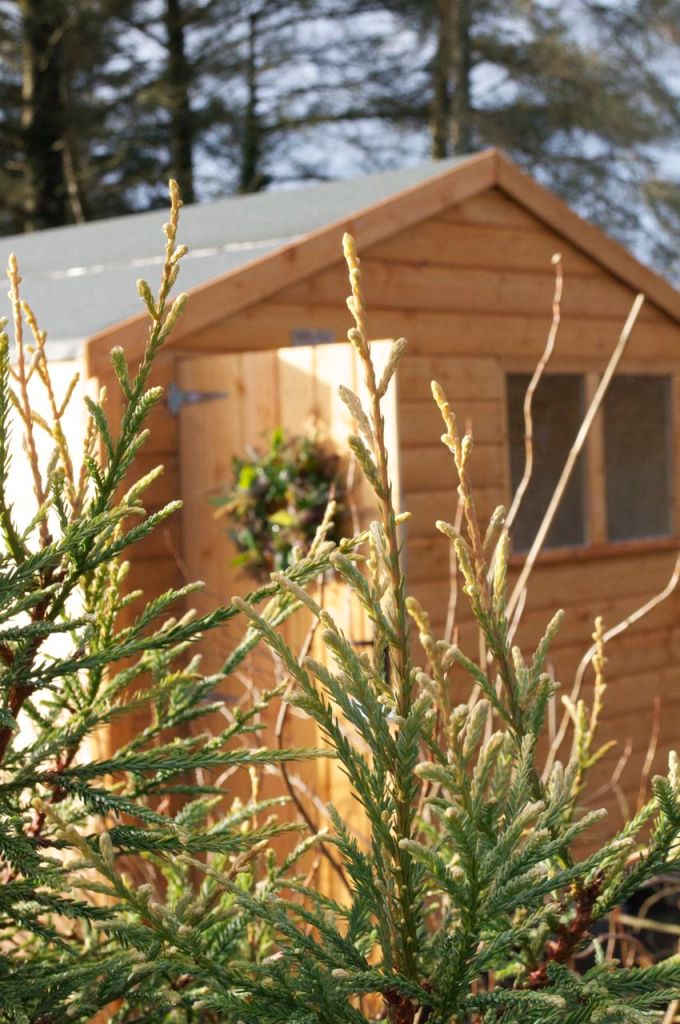
Sequoia sempervirens 'Adpressa'
Sequoia sempervirens ‘Adpressa’

The workshop was about making Christmas wreaths, using plant material from the garden and hedgerow, there were also cakes and Christmas punch, glögi a Finnish spiced grape drink. Homemade mince pies started the day with tea and coffee, later there was cranberry and orange tart, Tunisian orange cake and Finnish style Christmas pastries filled with delicious prune jam. Our classroom was filled with happiness, a vibrant buzz and by the end of the day everybody had created a beautiful Christmas wreath to bring home with them. Thank you to all the wreath makers for making this a memorable 1st of December and bringing good cheer to our classroom.

Links to recipes for cakes and glögi
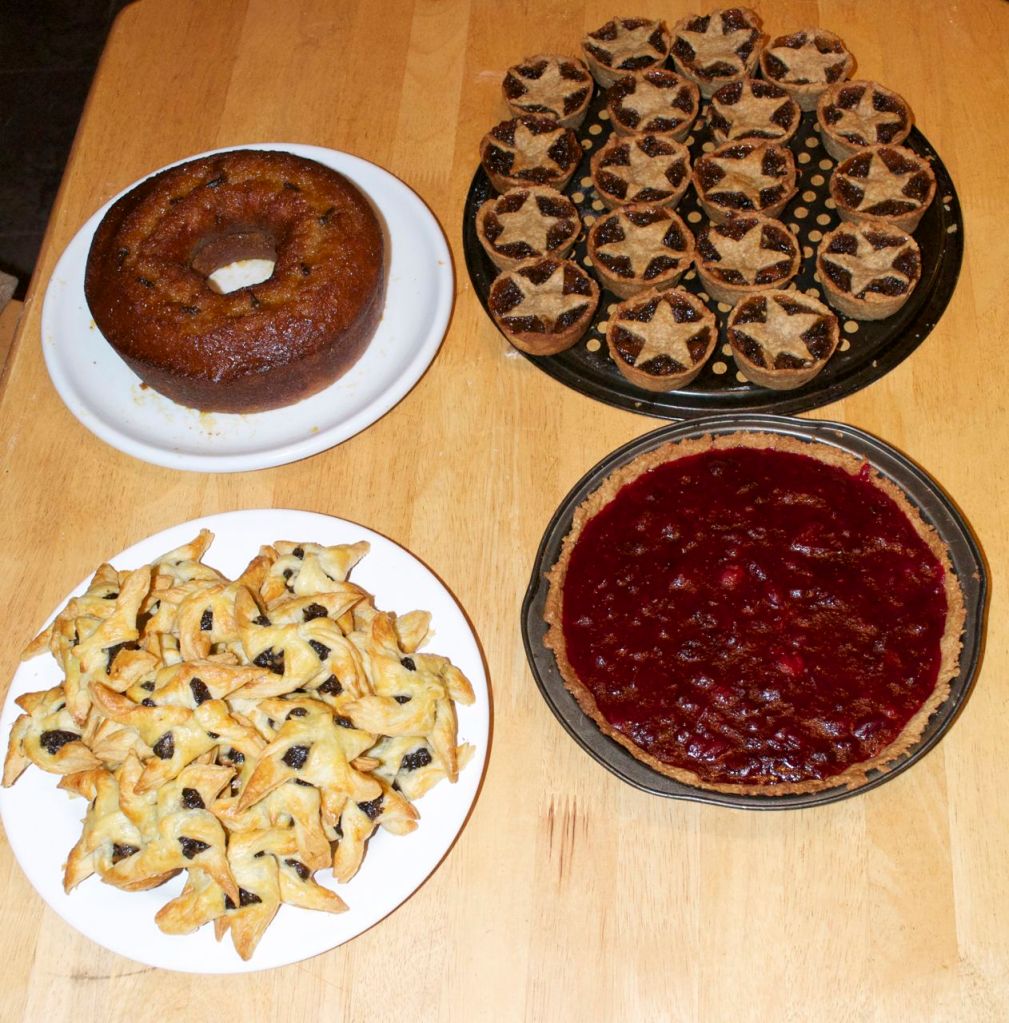
Cakes for the workshop


In the gallery below are photos from our christmas wreath workshop and also some photos of some of the plants that were used in the making of the wreaths.


Glögi – a Finnish Christmas drink recipe

_DSC0339

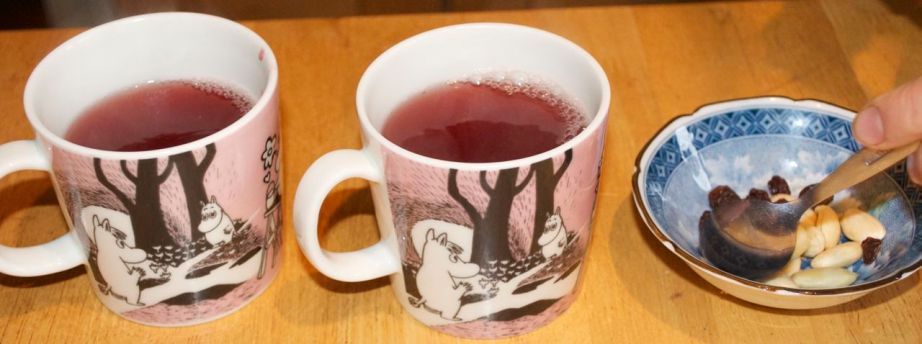
Glögi is a Christmas drink based on grape juice and flavoured with spices, served hot with raisins and almonds. it does not contain alcohol but if a Finn wants to perk it up with extra with booze they will add red wine and vodka! In our Christmas wreath workshop we had this delicious hot drink, without the booze!

Here is a link to the Christmas Wreath Workshop

Glögi – Recipe

Ingredients:

  • 1 litre red grape juice (we used home made grape cordial)
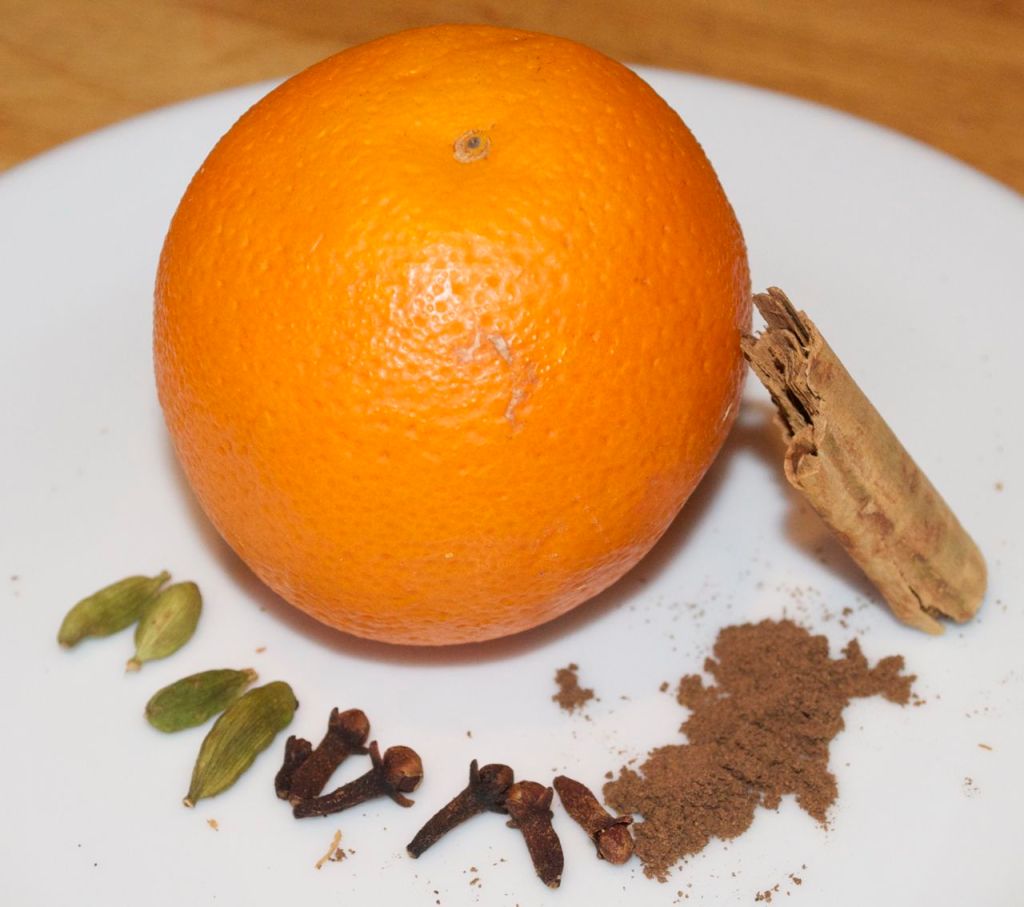
  • A few strips of organic orange peel
  • 1 Cinnamon stick
  • 6-8 whole cloves
  • 4 cardamon pods
  • 4-6 whole all spice corns (or 1/4 teaspoon ground allspice)

_DSC0335

Method:

  1. Put all the ingredients into a saucepan and bring to boil
  2. Leave to simmer on a low heat with lid on for 10 minutes
  3. Leave to cool
  4. When cooled sieve to remove the spices
  5. Re-heat and drink, or dilute with hot water to taste
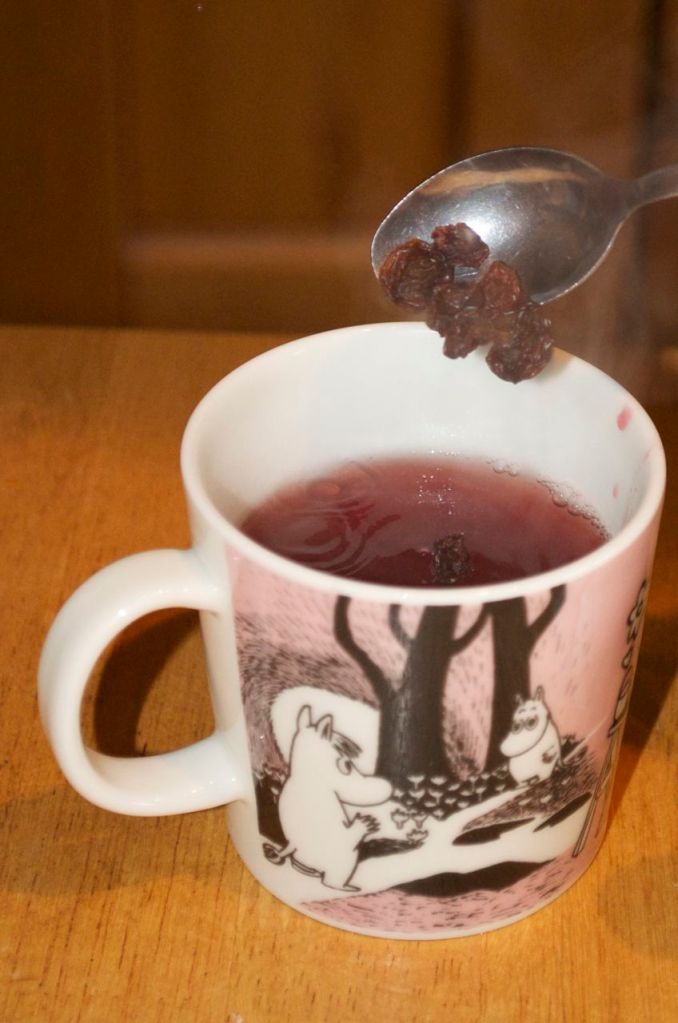
  6. Serve with a teaspoonful of raisins and a few skinned whole almonds in each cup

_DSC0341

You can use other juices instead of red grape. Try using white grape, apple, cranberry or elderberry.

Joulutortut (Finnish Christmas Tarts) – Recipe

_DSC0331
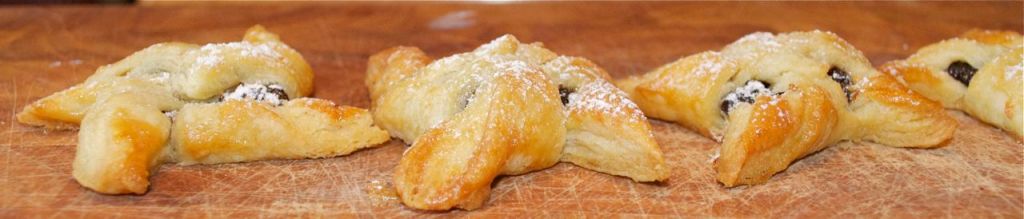
Joulutortut (Finnish Christmas tarts)This is a traditional Advent and Christmas bake. When prepared the pastry needs to stand overnight before rolling. Here is Hanna’s recipe for these delicious pastries. This is one of the lovely cakes that we enjoyed during our Christmas Wreath Workshop on 1st December in The Garden School.
Here is a link to the Christmas Wreath Workshop
Pastry
Ingredients:

  • 200g butter
  • 200ml whip cream
  • about 2cups (European cup=250ml) flour (I use white spelt, but mostly people use wheat of course)
  • 1/2tsp. baking powder

Method:

  1. For the pastry: mix by hand the room temperature butter with 1,5 cup of flours and baking powder until even.
  2. Whip the cream thick and add into the flour mix. Fold together.
  3. Sieve in the rest of the flour. Mix and form the pastry into a ball.
  4. Wrap with baking paper and leave overnight in the fridge.

Filling:

Ingredients:

  • about 200g stoneless prunes
  • piece of cinnamon stick
  • some orange grind slices
  • 2-3tbsp. brown sugar
  • 1 egg for brushing

Method:

  1. To prepare the filling, put the prunes into a pot with some water and the sugar and spices. Cook until soft, and the water has boiled away.
  2. Take out the cinnamon stick and orange grind slices.
  3. Mix smooth with mixer.

Baking the pastries

  1. Take the cooled pastry from the fridge and roll it with some flour on the table to the thickness of ¼ of an inch or so. Fold back together with three or four folds and roll flat again. Repeat this three or four times.
  2. Then roll the pastry as square as possible again to the thickness of ¼ of an inch or little less. Cut with pastry cutter (or pizza cutter of knife) into even squares about 4X4inches.
  3. Cut all the corners open in diagonal to the centre IMG_0451
  4. Put about 1tsp. of the filling into the middle of each square. Fold every right half of the corner up to the centre onto the top of the filling. (It should look like a 4-armed star). The folded corners hold better together if you keep tipping your fingers into the water while folding, so that the pastry is always moist where it comes together.

Place the stars onto a buttered and floured baking tray, and brush well with slightly whisked egg. Bake for 10-15min. in 200°C. Before serving sprinkle with icing sugar.

_DSC0329_DSC0330

Cranberry and Orange Tart – Recipe

Cranberry and orange tart

Cranberry and Orange Tart Recipe

This is one of the lovely cakes that we enjoyed during our Christmas Wreath Workshop on 1st December in The Garden School.

Here is a link to the Christmas Wreath Workshop

Pastry

Ingredients:

  • 2 cups of porridge oat flakes
  • 2 cups of whole grain spelt flour
  • 100g butter
  • 4 rounded dessert spoons of light brown sugar
  • Water

Method:

  1. Place oat flakes in a food processor and blend until they are like a coarse flour
  2. Add spelt flour and sugar to the oat flour in the processor and process for a minute to mix well
  3. Add the butter a little at a time while processing until the mixture becomes crumbly and slightly moist to touch
  4. Add a couple of dessert spoons of water and process for a minute
  5. Remove pastry from processor and wrap with grease proof paper , leave the pastry for an hour in the fridge.
  6. Roll out to fit a 20cm buttered tart tin.
  7. Press the rolled pastry into the tin and trim away the excess from the edges
  8. Place and fit some grease proof paper onto the pastry in the tin and pour some rice or dried peas onto to the paper to weigh it down.
  9. Bake in the oven at 180° Celcius for about 25 minutes or until the pastry is properly cooked
  10. Then remove the paper and let cool
Cranberry and orange tart

Filling

Ingredients:

  • 500g cranberries
  • 350g sugar
  • 250ml water
  • grated zest and juice of two organic oranges

Method:

  1. Place all the ingredients in a large saucepan
  2. Bring to the boil and then simmer for about 15 – 20 minutes
  3. The jam will be sticking to a wooden spoon
  4. Allow the jam to cool a bit, a skin will form on top
  5. give the jam a stir and then fill in to the pastry base
  6. Allow to cool at room temperature  until the jam is set

Tunisian Orange Cake Recipe

Tunisian Orange Cake

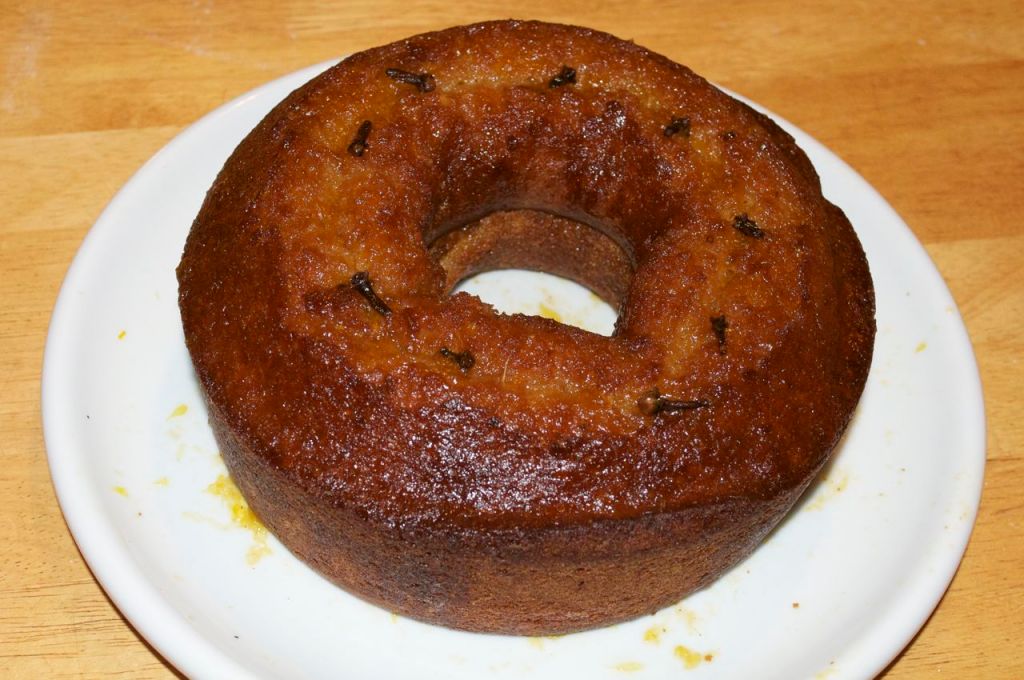
Tunisian Orange Cake – Recipe

This is one of the lovely cakes that we enjoyed during our Christmas Wreath Workshop on 1st December in The Garden School.

Here is a link to the Christmas Wreath Workshop

INGREDIENTS

  • 200g light brown sugar
  • 200g ground almonds
  • 50 g white spelt flour ( or wheat flour)
  • 1.5 tbsp baking powder
  • 5 eggs
  • 50ml extra virgin olive oil
  • 150ml sunflower oil
  • zest of two organic oranges
  • zest of one organic lemon

for syrup

  • juice of one lemon
  • juice of 2 oranges
  • 75 g light brown sugar
  • 1 stick of cinnamon
  • 6 whole cloves

METHOD

  1. Mix well the ground almonds, flour, sugar and baking powder in a large bowl
  2. In another bowl whisk together the eggs and oils
  3. Add the almond and flour mix to the egg mixture and mix well
  4. Add orange and lemon zest and stir in
  5. Pour the mixture to a buttered and floured cake tin
  6. Put the cake into a COLD oven
  7. Turn the oven on to 180 degree Celcius
  8. Bake for 40 – 45 minutes
  9. WHile the cake is baking make the syrup; add the ingredients into a saucepan and bring to boil and then let simmer for 30 minutes
  10. When the cakes is baked, remove from the tin, then pierce it a few times with a fork
  11. Spoon the syrup over the cake while the cake is still hot
  12. Let it too cool before serving, the wait is the hardest part!

VARIATION – LEMON AND CARDAMON CAKE

The method and ingredients are the same except:

For the cake mixture:

  • Use the zest of two lemons and leave out orange entirely
  • Add 1 teaspoon of ground cardamon seeds and a pinch of salt

For the syrup:

  • Instead of orange juice use the juice of 3 lemons
  • Replace cinnamon and cloves with 6 cardamon pods
  • Sugar quantity is the same

The wait is just as hard!

Karjalanpiirakat – Karelian Piroques – Recipe – a Traditional Finnish Savoury Pastry

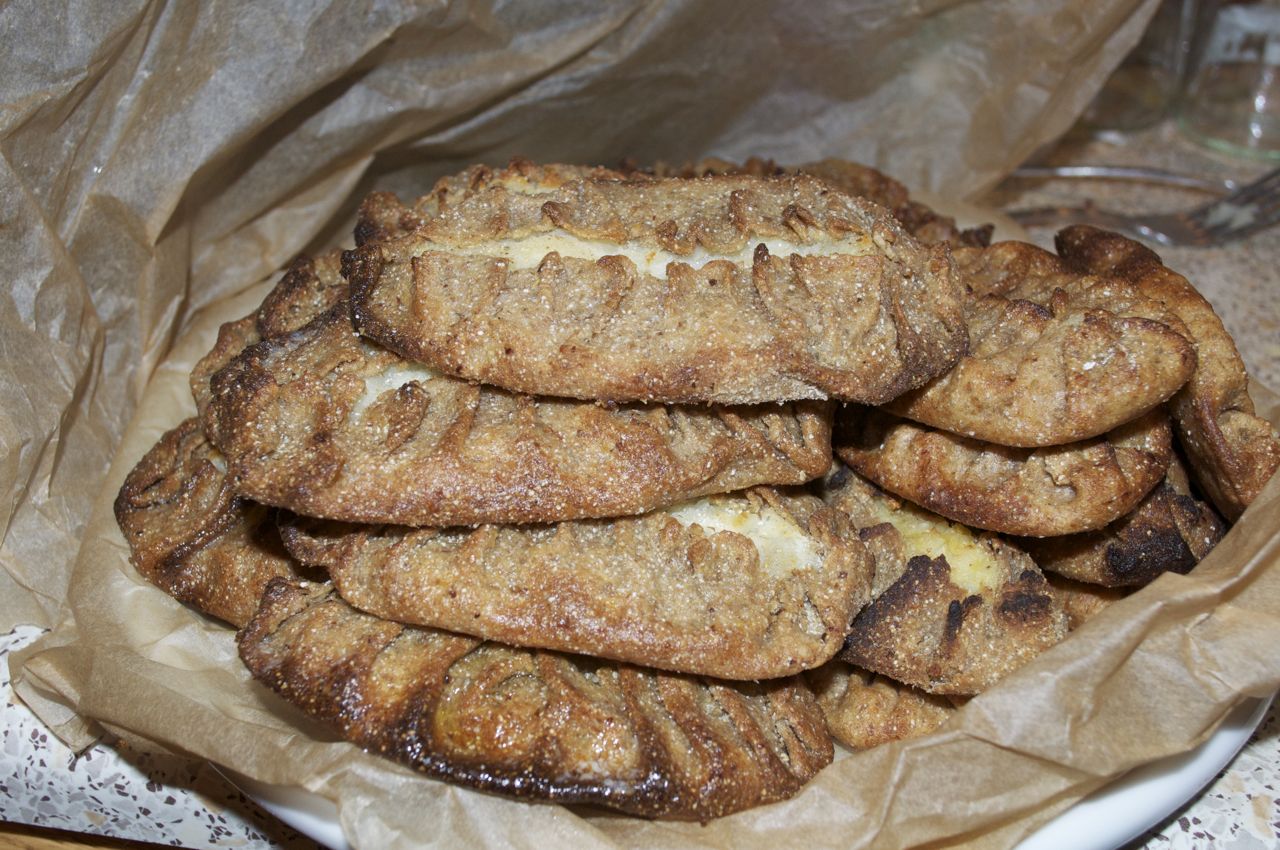
Karjalanpiirakat – Karelian piroques ready for eating…

Karelian Piroques are a popular Finnish pasty, originating in the east of Finland, Karelia. Every visitor to a Finnish house will be served these tasty savoury pastries. Home made ones are the best, variance occurs. Hanna’s grandmother taught her how to make them, the authentic Karelian way, and of course everybody’s granny makes the best ones! Otherwise known as Helsinki granny, she was a Karelian native who moved to Helsinki after the war when a large part of Karelia was given to Russian as part of a peace treaty in 1945.

What makes a real Karelian piroque authentic is that the rye based pastry is rolled really thin. The filling is added, the pastry folded and pinched to make pleats and then cooked in a really hot oven. The pastry cooks hard, but upon removal from the oven, melted butter is brushed on top of each piroque. The melted butter soaks into the pastry, leaving it soft and tasty. Karelian piroques are best served warm and an ample dollop of egg butter on top.

The traditional fillings were either barley porridge or mashed turnip. These days the most common filling is rice, like rice pudding but savoury. Potato is also commonly used. My favourite is turnip, but other fillings could be used such as beetroot or pumpkin. There is plenty of chances to experiment, sweet potato and butternut squash are two alternatives and there is no reason why one could not add spices to the mix.

Hanna decided it was time to pass on her familial recipe and technique to me, to share the tradition of Karelia with her Irish man. The real skill is mastering the pulikka, the rolling pin used for Karelian piroques. After a couple of odd shaped attempts were produced, i started to get the hang of it, and after the batch was completed Hanna reckoned Helsinki granny would be proud of my effort, that there was a happy granny looking down from the heavens.

Wrap the butter piroques with greaseproof paper and leave for 10 minutes so that they soften. If you make too many, they freeze well.

Karelian Piroques – Recipe

Ingredients

Pastry:

  • 200ml water
  • 1tsp. salt
  • 450ml rye flour (It has to be rye. You can get in health stores)
  • 100ml white spelt flour (or wheat)
Rice, potato and turnip fillings

Filling:

1)   potato mash

OR

2)   turnip mash

OR

3)   Rice porridge

For the potato mash:

  • 10 potatoes
  • 1tbsp. butter
  • salt


For the turnip mash:

  • 1kg turnip
  • 1tbsp. honey or syrup (mixture of golden syrup and black treacle 2:1)
  • pinch of ground ginger
  • salt and pepper

For the rice porridge:

  • 300ml rice (short grain like for rice pudding or follow instruction on package for amount of rice to milk)
  • 1, 5 l milk (or soy milk)
  • salt

For brushing: quite a bit of melted butter

Fillings – Method

  • Make first the porridge or the mashes. For the porridge: boil the rice in milk until soft and thick (porridge). Add salt. Let cool.
  • For the potato mash: peel the potatoes and cook in salty water until very soft. Take care that they don’t become watery. Mash and mix with butter, add salt to taste. Let cool.
  • For the turnip mash: peel the turnip and cut into small cubes. Cook in salty water until very soft. Try to cook all the water away, not to pour it away. Mash and add the honey/syrup, ginger, salt and pepper. Let cool.
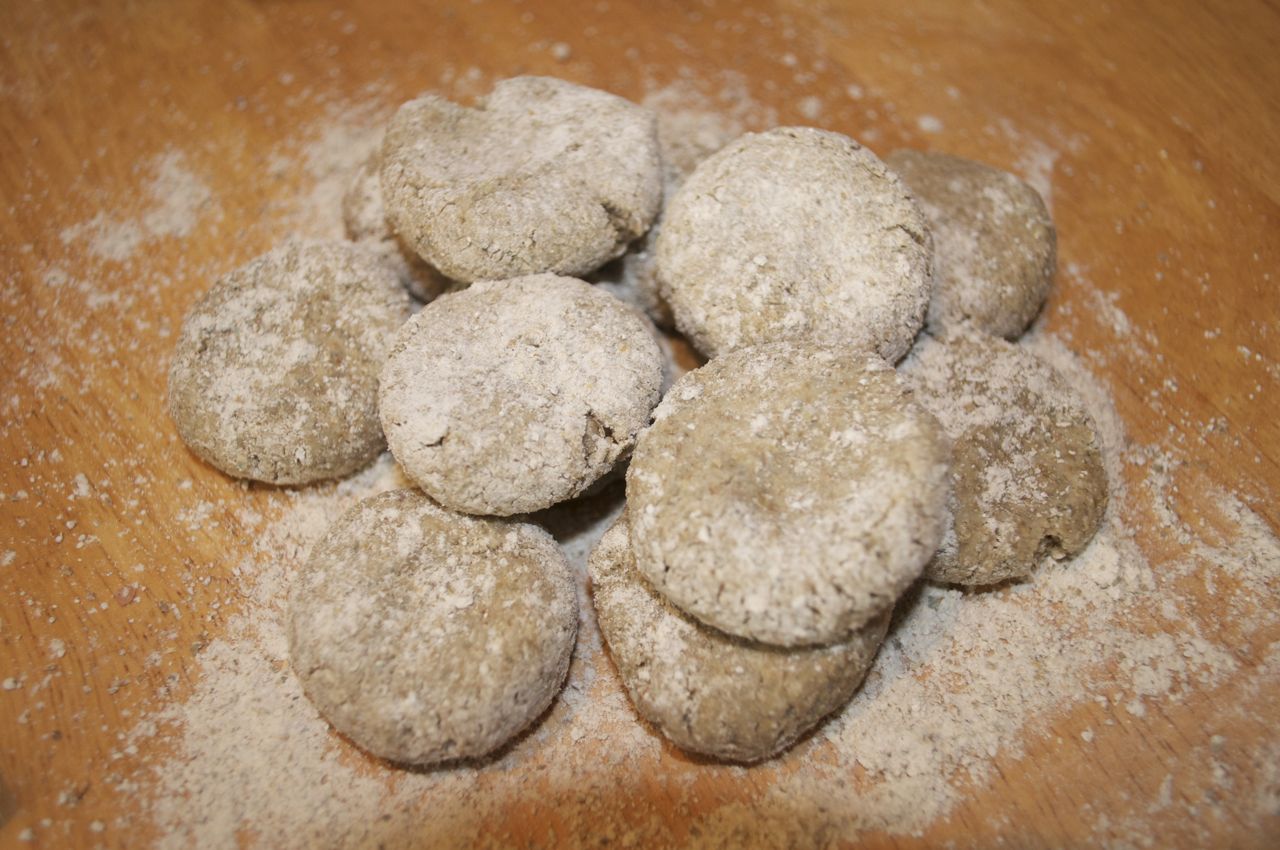
Kakkara – the Finnish name for Karelian piroque pastry balls

Method for the pastry:

  1. Mix flours, water and salt with hands until you get flexible pastry.
  2. Make a ball and roll it into a fat sausage. Then cut into 25-30 pieces.
  3. Cover with some flour to stop trying.
  4. Put the oven to heat as hot as you can. Ideal would be 300°C, but most of the modern ovens heat only upto 250°C.
  5. Take then the pastry pieces one by one, clean excess flour off, roll between your hands to a ball and flatten against table. These are called kakkara.
  6. Cover each formed kakkara with some flour  to stop them drying.
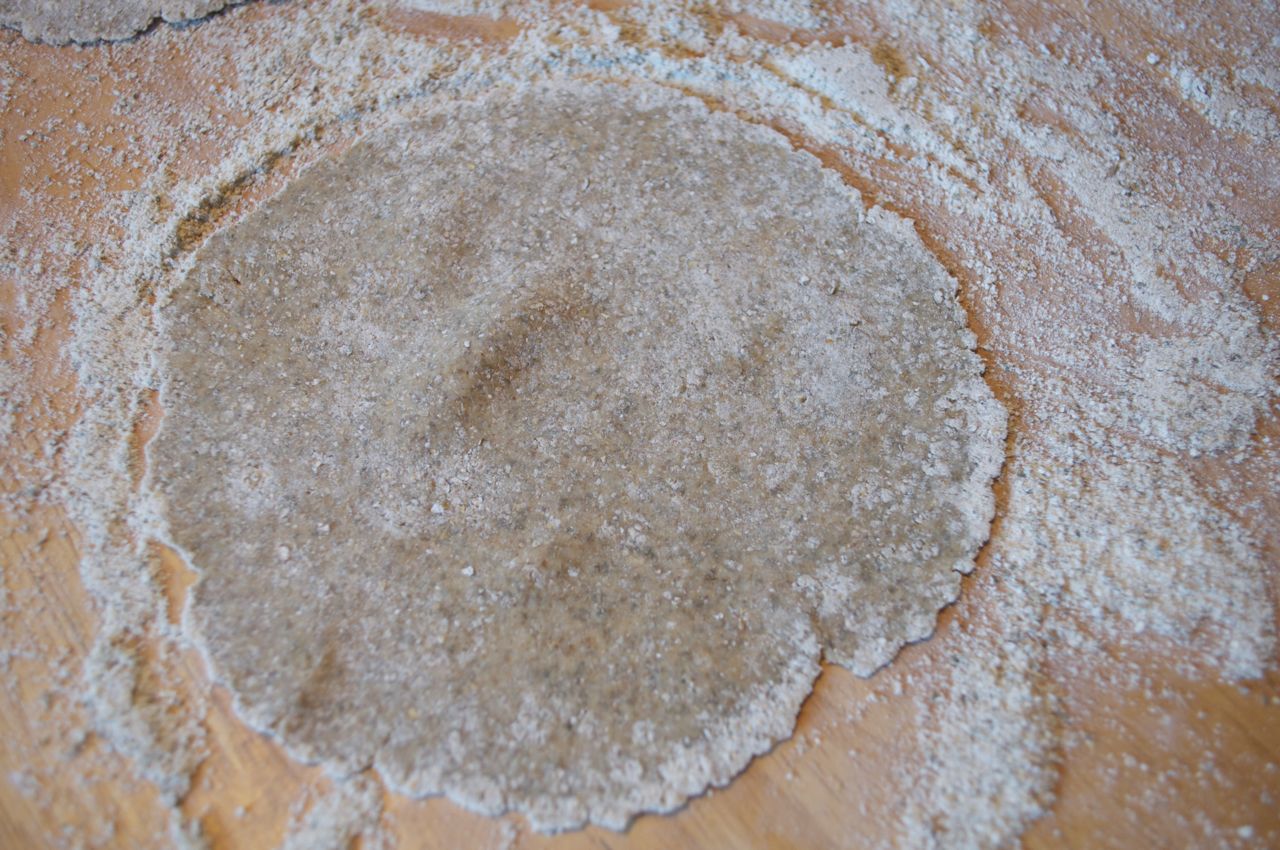
  7. Take kakkaras one by one. Brush of the excess flour and roll with rolling pin on a floured table to very thin circles. The thinner the better.
  8. Finnish rolling pin for these type of pastry is pulikka, a piece of wood which gets thinner towards both ends. While rolling the kakkara should turn under the rolling pin in circle. This might need a bit of practice… In fact most of the Finns don’t know how to do this, so roll whatever way you want as long as the kakkaras get thin.
  9. Lay rolled kakkara aside and cover with flour. Lay next kakkara when rolled on the top of the first one and cover with flour as well. Continue like this until you have all the kakkaras rolled, and a pile on flat round pastries.

Rolled pastry

Filling – Method

  1. Take the one on the top of the pile. Brush carefully off all the excess flour from both sides. Lay on the table and put filling in the middle along the whole diameter of the pastry circle.
  2. With your fingers pinch the pastry up on both sides of the filling to form pleats. The pastry should be now oval in shape and in the middle a filling stripe should be visible. Put on a buttered oven tray.
  3. When all pastries are prepared put them in the oven and bake for 12- 15min at highest setting.
  4. Remove from oven and  brush with melted butter while they are still hot.
  5. Wrap into baking / greaseproof paper to soften for 10min.
Tray of piroques ready for the oven, use a pastry brush to remove excess flour

Eat when still warm. If you eat them later they are better to be heated up. Traditionally they are eaten with butter or eggbutter.

Karjalanpiirakat – Karelian piroques ready for eating…

Eggbutter:

  • 3 eggs
  • 50g butter
  • salt

Method

Boil the eggs hard and mash roughly with fork. Add the butter and salt to taste and mix well.

This slideshow requires JavaScript.

Lemon and Rosemary Tartlets – Recipe

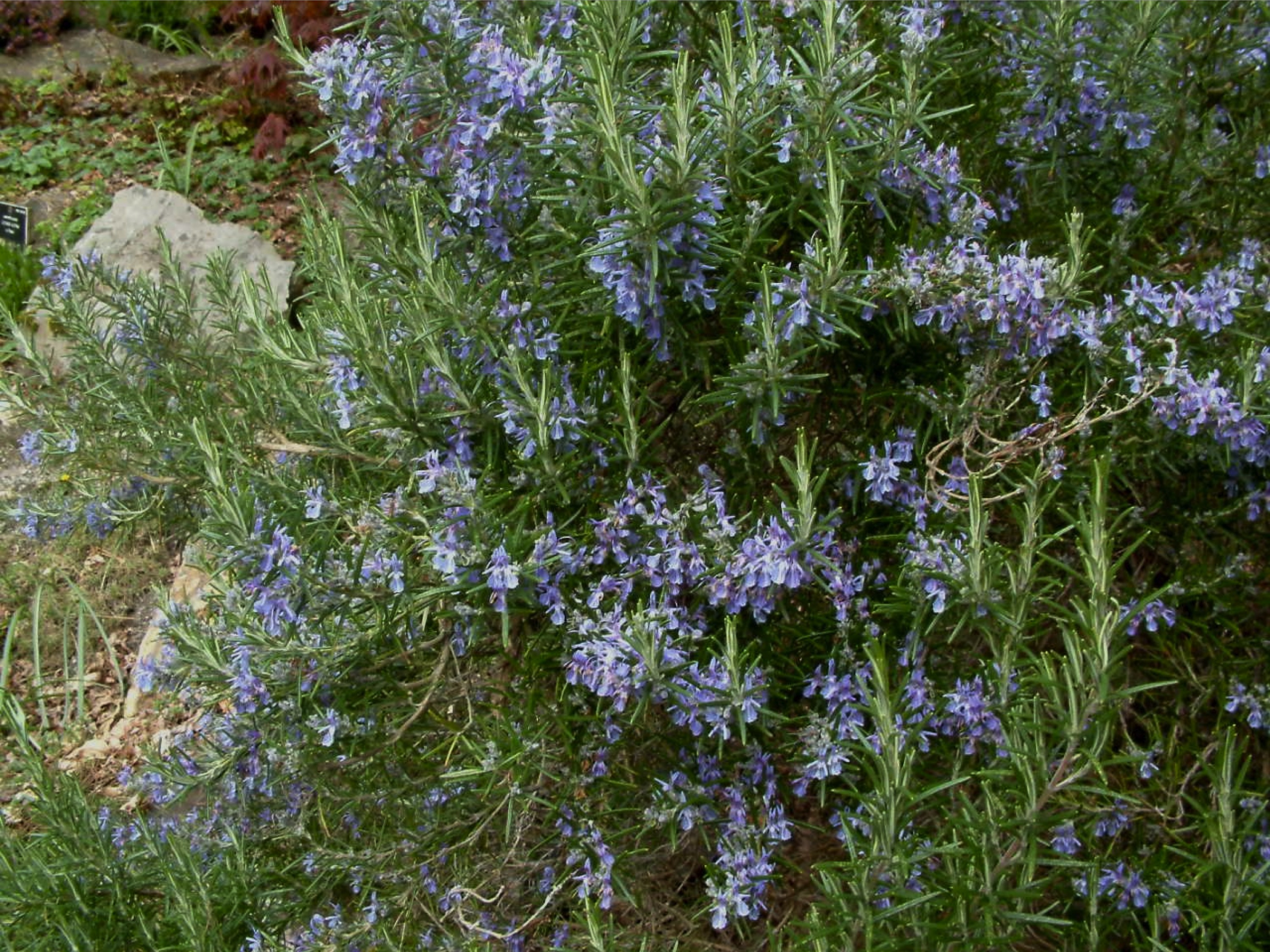
Rosemary is both a handsome shrub for the garden and a delicious flavouring in the kitchen. Rosmarinus officinalis, as it is named botanically is an evergreen shrub that grows to about 1.2 metres (4ft) and produces bright blue flowers in late Spring. Although it was killed by the hard winter a couple of years ago, it survive most Irish winters without harm. It is ideal fro pot cultivation and when growing it in the garden give it a postion with a good sunny aspect and a soil that is well drained.

The foilage when crushed releases its aromatic oils and the gastronomic mind sends rapid messages to the taste buds, the mouth starts watering. The mind usually summons up images of slow roasted lamb, pork steak or a pasta dish. One of my favourite ways of cooking freshly dug potatoes is to scrub the skins thoroughly and cut the tubers into thin lengthwise slices of about 2cm thick. Toss the sliced potatoes in some oil, olive or rapeseed oil, and then roll them in freshly chopped rosemary. Sprinkle with salt and cook in the oven for about 40 minutes at about 200 degrees Celcius. Serve with anything savoury, they are a delicious meal by themselves, make a garlic and yogurt dip, and prepare to stuff yourself, you wont be able to stop eating them.

Rosmarinus officinalis var. prostratus is a low growing rosemary with a spreading growth habit

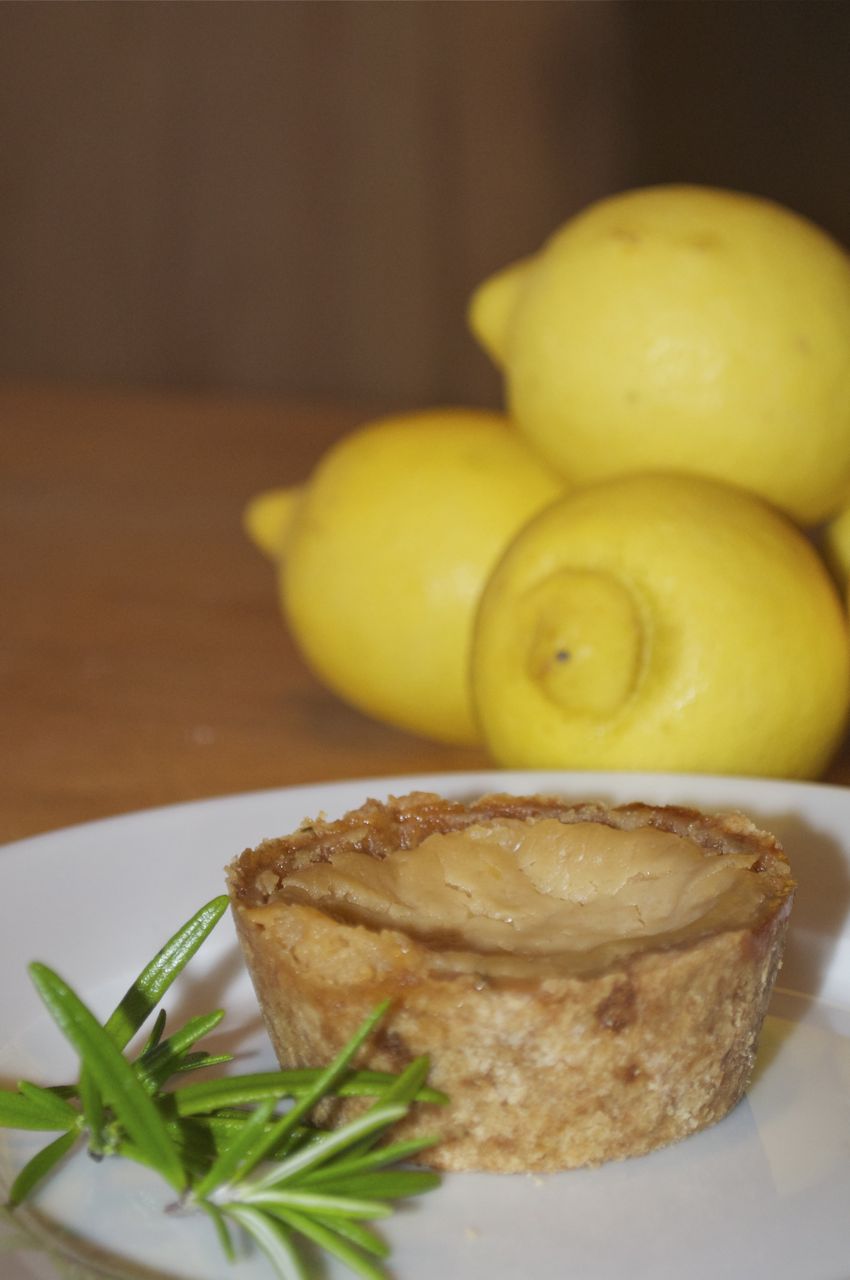
But rosemary as an ingredient in a dessert is less usual, and when Hanna proposed baking lemon and rosemary tartlets I immediately said yes. The rosemary adds an aromatic flavour to the sweet lemon filling. This is a combination of flavours that works so well. The soft texture of the lemon filling melts on the tongue while the molars crush the pastry, rosemary sneaks up to surprise you while you are transported to taste bud heaven…

Lemon and Rosemary Tartlets Recipe (makes 9 tartlets)

Ingredients:

Pastry

  • 11/3 cup of  Spelt flours (1:2 whole grain : white)
  • 2 tbsp Muscavado Sugar
  • 1 tbsp Finely chopped rosemary
  • Pinch of salt
  • 1/3 cup of cold butter
  • 1-2 tbsp cold water

Filling

  • 1 cup of yogurt
  • 1/2 cup light brown sugar
  • 2 eggs
  • 1/2 cup lemon juice (freshly squeezed)
  • 1 tsp grated lemon zest

Method

  1. Preheat oven to 170 degrees Celcius
  2. Lightly butter tart pan
  3. Mix/crumble the pastry mixture together, only add the water at the end
  4. Press the pastry into the forms in the tray and bake for 15 minutess. Let cool before filling
  5. Mix the yogurt and sugar well
  6. Add the eggs one by one and the lemon juice and zest
  7. Mix well and put into the pastry
  8. Bake for 25 – 30 minutes
  9. Allow to cool before serving