The New Growth Project – The Seed is Growing…

The days can be long. The days can be lonely, boring, and hopeless. It is a different world when you are unemployed, time moves slower, shops are more expensive, the cloud has no silver edge.

One afternoon in January I had an idea. This happens sometimes, especially when I garden. Digging a vegetable bed, pulling some weeds or chopping brambles, it gives you time to think. Often a simple solution springs from the earth as you tug at a dock root, sometimes the ideas are fantasy, but this idea was good, it was something new, something I had to do. It would involve doing something for nothing, something for someone, something with our garden. It was only the start of an idea, but it was growing fast. I did not know how it would be when fully formed, I had to let it grow before I could tell my wife.

That was a Sunday. The following Friday I was driving to Castlebar when I got a call. I had just parked at a garden centre and I answered the phone, my wife Hanna had an idea! During her lunch, she had been watching Sinead O’ Shea’s documentary about Ireland, the collapse of the Irish economy and its social effects, depressing stuff. But it planted an idea in her mind, the same idea that sprung from the earth and into my head the previous Sunday, The New Growth Project.
The idea had not yet got its name but basically we had the same starting point. Why not give a course in our garden, a couple of days a week, for a small group of people who are unemployed. Teach them about gardening, how to grow food, propagate plants and care for a garden, simple.

When I got home we talked about our shared idea: how we would do it? Two days each week, use the garden as a classroom. Would we get funding? Maybe, maybe not, but we would do it anyway. We gave it a name, I envisaged a logo, Hanna gave it form. We printed posters, we stuck them in shops, we e-mailed newspapers, one of them responded. We talked about it to our friends, we got encouragement. The applications came in, too many, we could only take four people. Telling unlucky applicants the bad news was hard. Then on a wet Tuesday morning at the start of March we welcomed our first four participants on The New Growth Project. Every Tuesday and Wednesday for the next twelve weeks they learnt how to sow seeds, prick out seedlings, plant plants, prune plants, move plants, about plants to eat, plants to weed, plants to admire. We studied flower structures, examined leaves and dissected seeds. We talked, we solved problems of the world, we had many laughs.
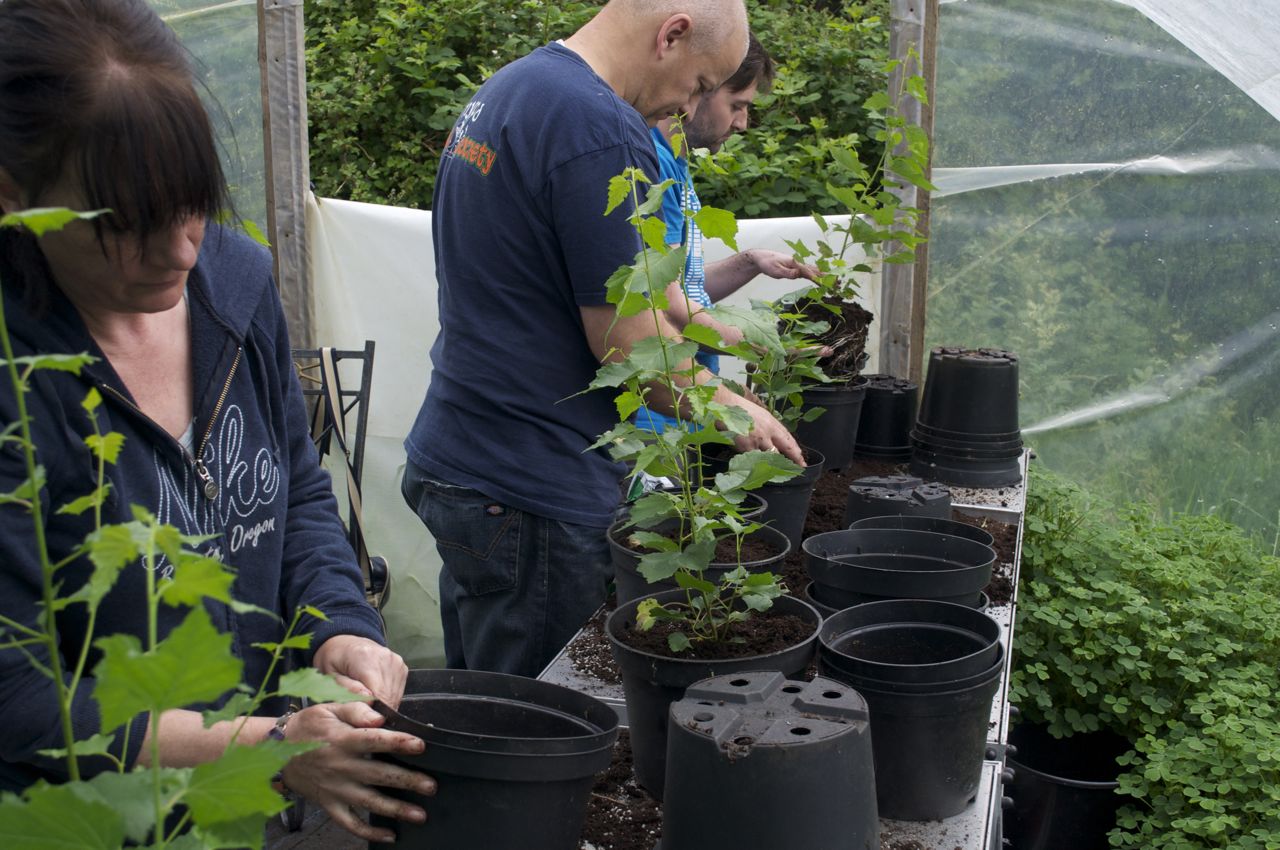
“I will miss the course next week”, he said on the last day. 9 months unemployed, the hardest part was not the lack of money but the lack of worth, the nothingness that fills the day, but now he had his garden to do. Although he would miss the course, he had been lifted by the experience, had made new friends, he could see breaks in the clouds. Sunny days will come, we are starting small but we are going to grow. Our hopes for the future; to develop further training programmes, to provide employment through social initiatives, to grow as individuals and help people to learn skills that enhance their chances of finding work.

Gardening is a cure, my grandfather often said, “the answer is in the earth”. From the cold dark earth in Spring, new shoots emerge seeking light from the sky, warmth from the sun, and can grow into beautiful things. Sharing our garden, having people come to learn, has brought a great reward for us. A positive energy, an inspiration, a purpose for our place. Our one acre plot down a country lane is now not just our garden, it is The New Growth Project.
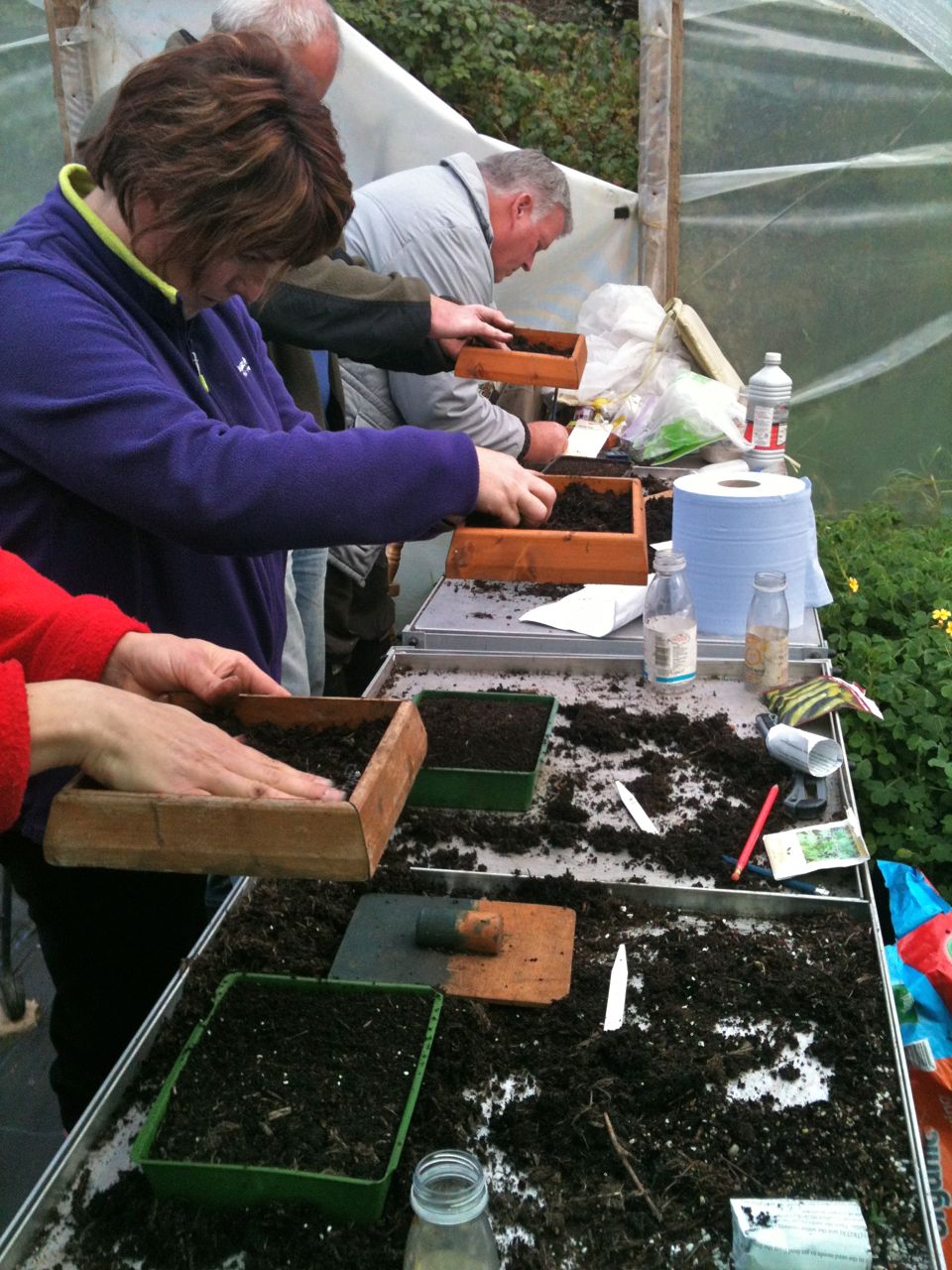
Yesterday we started our third course of The New Growth Project with six new participants. We recently received a grant of €1,500 from Mayo County Council through the Local Agenda 21, which will help us to continue running the project. The next plan is to build a shed which we can use as a classroom, to raise the money for it and source cheap, free or recycled materials.

Noel, one of the participants on our first course of The New Growth Project told us about his experiences on the course one sunny day in March, watch the video

See what a typical week on The New Growth Project course involves

More information about The New Growth Project

The documentary “Collapse of the Celtic Tiger” by Sinead O’Shea can be viewed on the Al Jazeera English Webpage LINK

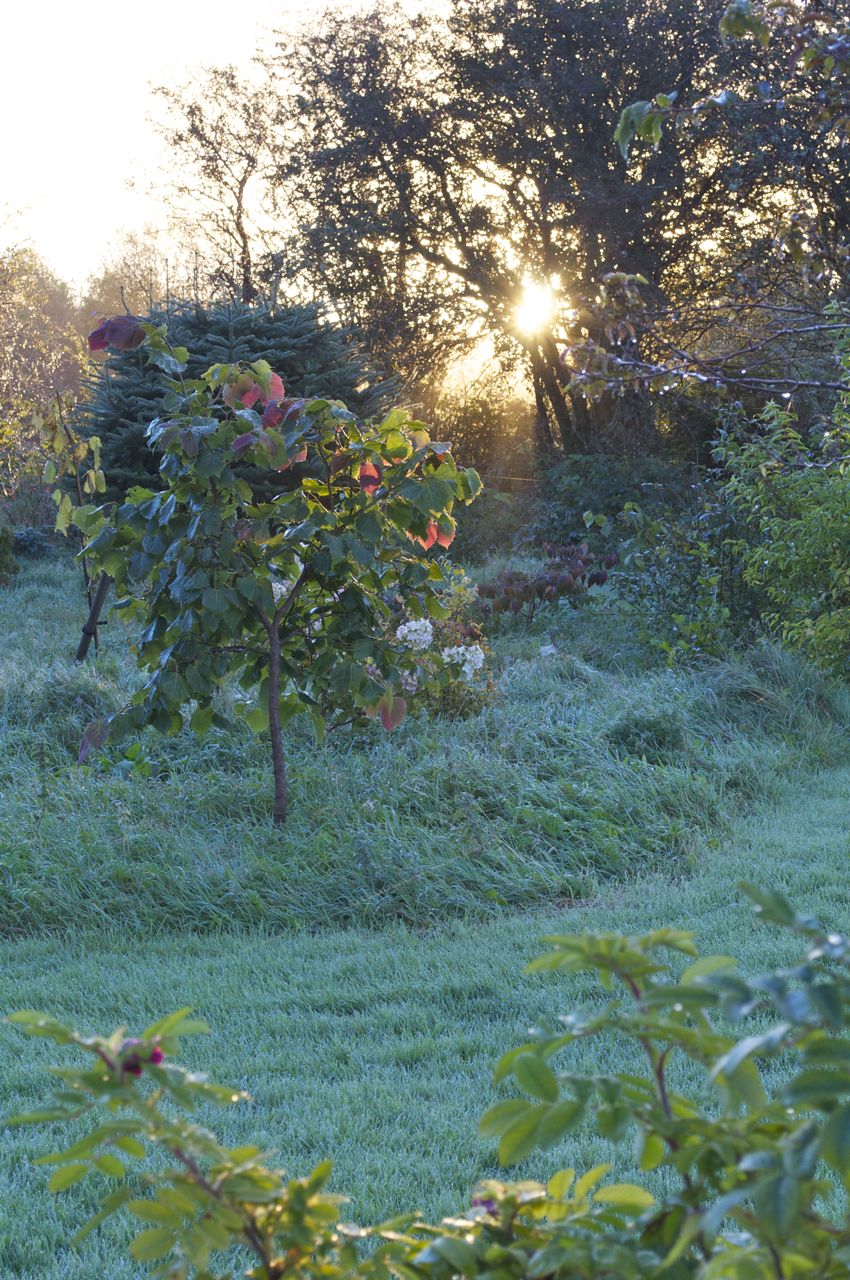
Autumn Fire – early autumnal morning in our garden

Image

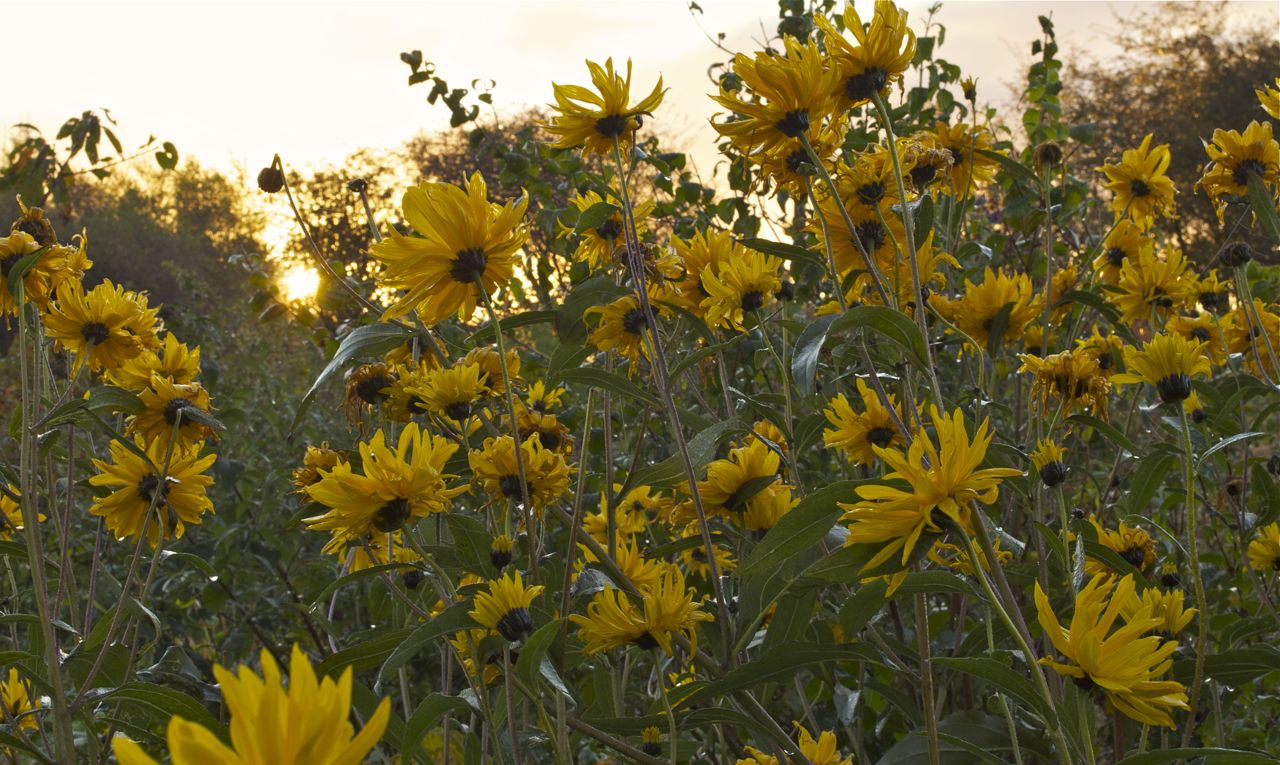
A cool start, a foggy dawn. The mellow light tinted the milky haze of fog rising from the earth, too beautiful for even the wind to disturb. The usual west of Ireland wind stayed respectfully still and silent. As the sun sleepily woke and rose over the horizon the fog dispersed to the air, leaving a residue of pearl droplets over the grass and foliage. In the most sheltered corners the grass crunched, a frost beneath my feet. A perfect morning to enjoy the autumnal splendour, late flowering Helianthus, H. ‘Miss Mellish and H’ Lemon Queen’, sun flower relatives facing to the east, awaiting the sun, helios worshippers waiting for the apparition of a sunny morning.

Helianthus ‘Miss Mellish’
Tilia henryana in the morning light

White berries of Sorbus koeheniana, dripping  wet pearls, precious beauties. Cercidiphyllum japonicum, its leaves scenting the air with burnt sugar aromas and Aronia shrubs burning with beauty.  Then arriving through the kitchen door, fresh scones steaming, straight from the oven… you cant start a day much better than that!

Sorbus koeheneana berries
Aronia arbutifolia
Cercidiphyllum japonicum
Home made scones

This slideshow requires JavaScript.

The New Season Starts Now- 5 things to do in the garden now…

Traditionally autumn is the harvest festival, apples have been picked, the jams made and as the nights get longer and the days cooler, we gardeners may be tempted into hibernation. Yet, there is lots to do in the garden. October is time to start planing and planting for next year’s harvest.

Five jobs to do in the garden now to ensure early and plentiful harvests next year

  1. Take a pH test of your soil
  2. Plant autumn onion sets
  3. Sow over wintering salad onions
  4. Sow broad beans
  5. Sow winter/spring lettuces

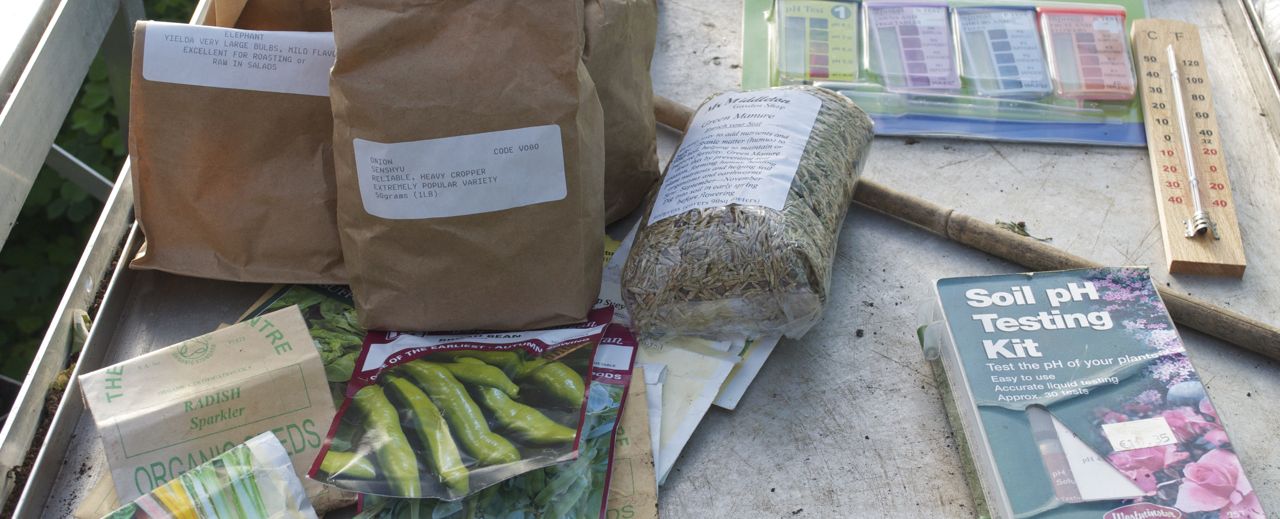
Autumn is the ideal time for taking pH readings of the soil. pH is the measurement of alkalinity or acidity of substances and for gardeners it is important to know the pH of your soil. pH readings tell us a lot about the soils ability to make nutrients available to plants. Autumn is the ideal time to do this; if your soil is acidic you should add garden lime to raise the pH. Most vegetable crops prefer a neutral to slightly alkaline pH. The effects of lime on a soil pH are due to a chemical reaction which takes a number of weeks to achieve. Autumn applications of lime will mean that your soil will be right by the time spring arrives.

Autumn planted onion sets will produce an earlier harvest compared with spring planted sets. Different varieties are used now; we planted Electra, a red variety and Senshyu a yellow variety. We have had success with these varieties in the past, even during vey cold winters. Autumn  planting varieties are not good for winter storage.

Onion ‘White Lisbon Winter Hardy’ seeds can be sown now to produce tasty green onions next spring.

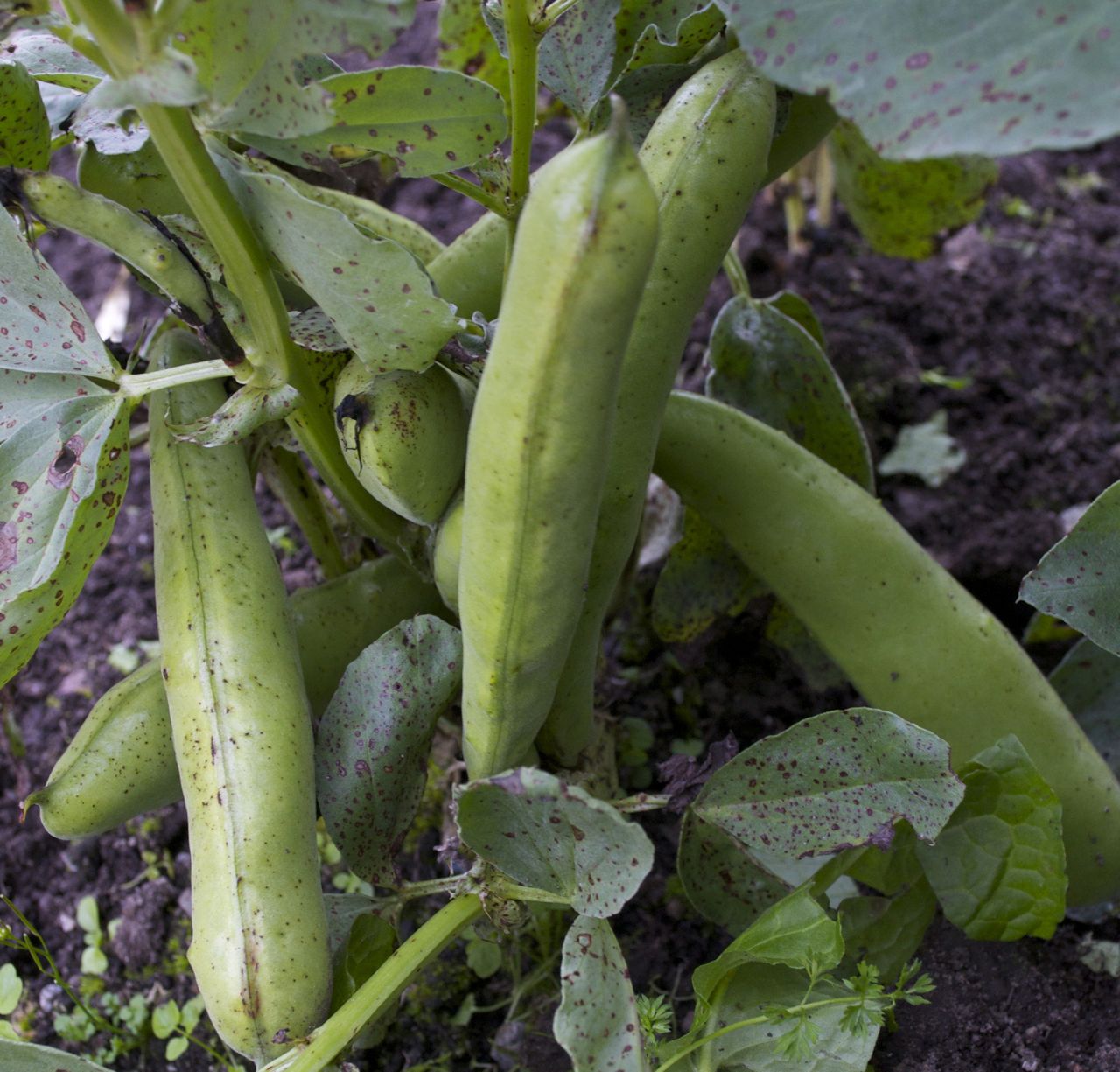
Broad Bean Pods

I love broad beans. They are a very hardy crop and if sown in October, ideally the plants should be 2.5cm (1 inch) or higher before the onset of winter. Sow the seeds of a suitable variety such as ‘Aquadulce Claudia’ at a depth of 4-5cm (1.5-2in). Broad beans like well dug, manure enriched soil.

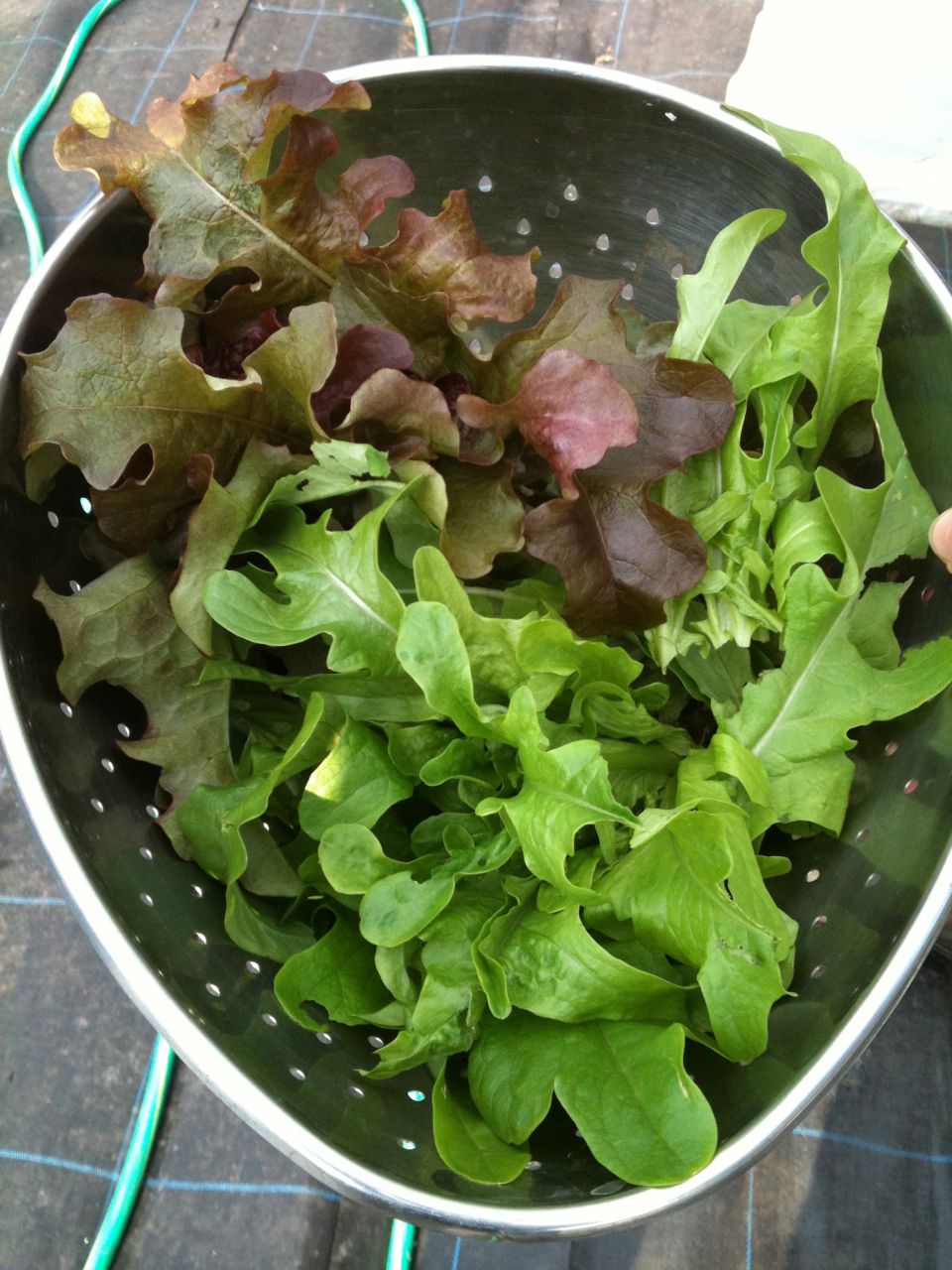
There are many varieties of winter lettuce suitable for sowing now and over wintering. Ideally they should be given a degree of protection; in a polytunnel, under a cloche or covered with fleece. the green varieties ‘Valdor’ and Erika are ideal and the red leafed ‘Roger’ have all done well for us in previous years, proving to be very hardy even when frozen for a few weeks in the tunnel during a very cold winter.

Over the next week or so I will post more detailed information for each of these tasks.


Wild Carrot Seed Spice Cake – Recipe

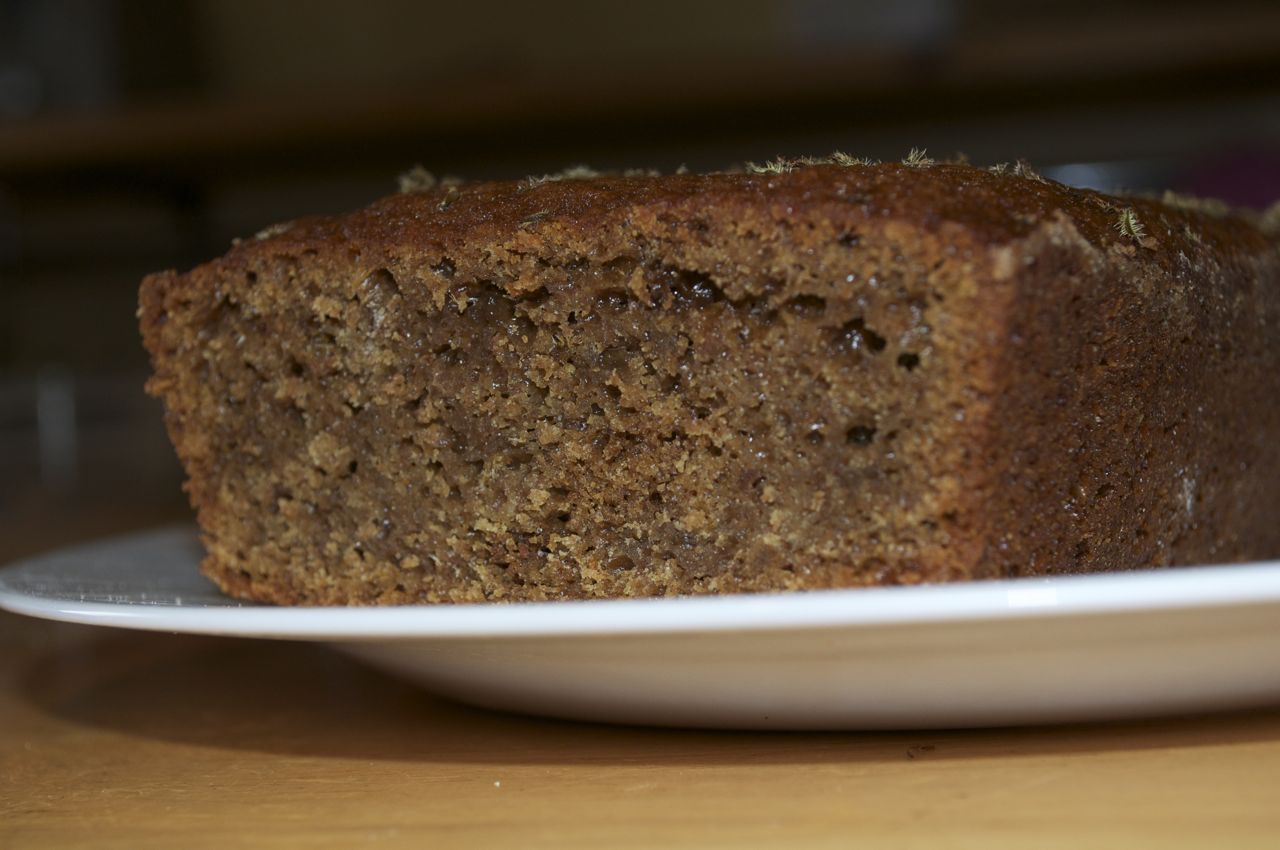
Wild Carrot Seed Spice Cake

We have collected quite a bunch of wild carrot seeds from along the bog road that leads to our house. It is a quiet road which does not have much traffic travelling along it. The concave seed heads make them easy to identify and they are quick to pick. Harvest them when dry and remove from the infloresence. Store them in a box in a cool dry place.

Hanna baked a delicious cake using the seeds.


Wild Carrot Seed Spice Cake – Recipe

Ingredients:

  • 125g Butter
  • 1 Cup of dark muscavado sugar
  • 1 Egg
  • ½ tsp of baking soda
  • ½ tsp of baking powder
  • 150ml of kefir (or buttermilk)
  • 200ml of wholemeal spelt flour
  • 1/2tsp ground cloves
  • ½ tsp of cried ginger
  • 3tsp of ground wild carrot sed
  • pinch of salt

Method

  1. Melt Butter and sugar
  2. When cooled ad spices and kefir
  3. In a separate bowl mix the flour with soda and baking powder with pinch of salt then whisk in the egg.
  4. Add the flour mix to butter mixture.
  5. Fold in the flour.
  6. Put into cake tin, sprinkle some whole wild carrot seeds over the top and bake at 175 degrees Celcius for about 50 minutes.
Wild Carrot Seed Spice Cake

Kefir is a fermented milk  originating in the North Caucasus region where it was commonly used by shepherds. Traditional kefir was made in animal skin bags that were hung near a doorway where by it would be knocked against by anyone entering, this would ensure that the milk would be mixed well with the kefir grains. The kefir grains are produced during the fermentation process, a small amount of kefir acts as a starter for the next batch. Luckily you don’t have to be a shepherd or have an animal skin bag to have kefir. It is sold in Polish and Eastern European food shops. In the recipe above kefir can be replaced with Buttermilk.

Daucus carota- Wild carrot seed heads on our road

Wild Carrot Seeds- Spice up your life!

Daucus carota- Wild carrot seed heads on our road

Adventure, variety and spice. Black tomatoes, orange tomatoes, red brussels sprouts, red onions, blue french beans, just some of the variety of vegetable that we grew in the garden this year. We let two fruit develop on our white fruiting red strawberry, admired the pink flowers on another variety, it is always nice to try something a little bit different.Gardeners are adventurous, always looking to try new varieties of vegetables, different shapes, odd colours and new crops. How about a white carrot?

Daucus carota – wild carrot

Carrots are in the same family as parsnips and celery, Apiacacea, named Daucus carota by the botanists. They grow wild by the sides of the road leading to our house, they have attractive white flower heads and soft ferny foliage. We gathered some seeds a few years ago and sowed some in the garden, they flowered in their second year and then died. Now we have a new batch, self sown and green leaves. Next year they will die. Carrots are biennials, they food that they make in their first growing season is stored in their tap root. The food stored in their roots is high in sugars, that is why we find them tasty. The reserves of food is then used in the following growing season when the plant flowers and makes it fruit which contains the seed, reproduction is hard work.  Such is the biennial cycle, short glorious lives and an abundance of seed is produced which scatters on the wind, ensuring that a new generation of Daucus carota will continue the survival of the species.

The roots of the wild carrots are white, they are smaller than cultivated varieties but taste very similar. Carrots of medieval times were off white like our wild ones and it was during the 16th and 17th centuries that they were bred bigger, fatter, longer and orange. The breeding of bigger orange carrots was apparently carried out in Holland. WIld carrots are quite inferior to the modern varieties  when it comes to harvesting their tap roots, the seed of the wild carrot is however quite a nice spice, like spiced orange.

Flowers of wild carrot

A couple of weeks ago we collected a number of seed heads along our road. Before doing this we took care to ensure the identity of the plants. As always when foraging wild plants it is always essential that you know your plants and with members of this family it is vital that you are 100% sure. The flower heads, or infloresence, are in umbels, often composite umbels and many of the species look quite similar, many of the species are also very poisonous. Fools parsley and hemlock are deadly even in small quantities. So it was armed with a book, Irish Flora by Dr Webb, that we used the botanical key, looking for presence, or absence of brats, hairs on the stems and counting the numbers of flowers that we ensured that we were definitely harvesting wild carrot seeds.

Wild carrot has solid stems and are glabrous, meaning hairless.The flowers are borne in umbels with long numerous bracts which are pinnately divided. When the seeds have formed the flat flower heads the umbels contract into a concave structure.

Harvested wild carrot seed heads

We gathered some handfuls of the wild carrot seeds. Their flavour is unique fruity and spicy, not hot. Hanna used some seeds to bake a cake, it was delcious. Today we decided to use them to flavour our dinner; vegetables in tomato sauce with rice. A trip to the tunnel yielded green and yellow courgette and a handful of tomatoes of various sizes and colours.  Walking through the vegetable garden, some broad beans were picked and an onion pulled. Flavoured with garlic, dried chillis and wild carrots seeds, it was quite delicious.

Vegetables in Tomato and Wild Carrot Seed Sauce.

Ingredients

5 medium tomatoes – chopped

2 cups of courgettes, sliced thinly

  • 1 cup of onion- diced
  • 1/4 cup of broad beans
  • 2 cloves of garlic
  • pinch of dried chilli
  • 2 tsp of whole wild carrot seed
  • 1 tsp of ground wild carrot seed (grind with pestle and mortar)
  • Salt
  • 1 Tbsp Rapeseed oil
Courgettes cut into slices

Method

  1. Remove the broad beans from pods and steam for about 5 minutes, until the skins start to crack. Cool the beans by running in some cold water and remove the skins.
  2. Put the oil in a sauce pan and add the whole wild carrot seeds, cook them on a medium heat for a few minutes.

    Removing the seeds
  3. Add the onion and sauté until softened
  4. Crush the garlic and cook for a minute then add the courgette slices, cook for five to seven minutes, until a bit tender
  5. Add the chopped tomato, add the chilli, tea spoon of crushed wild carrot seeds and a pinch of salt. Add some water, about 1/3 of a cup.
  6. cook for about 15 minutes until the tomatoes have reduced and made a nice sauce.
  7. Serve with some boiled brown basmati rice.
Courgettes in tomato sauce with wild carrot seed

We toasted some pumpkin seeds on a frying pan to sprinkle over the top when serving.

Rustic Italian Grape Cake -Recipe

Image

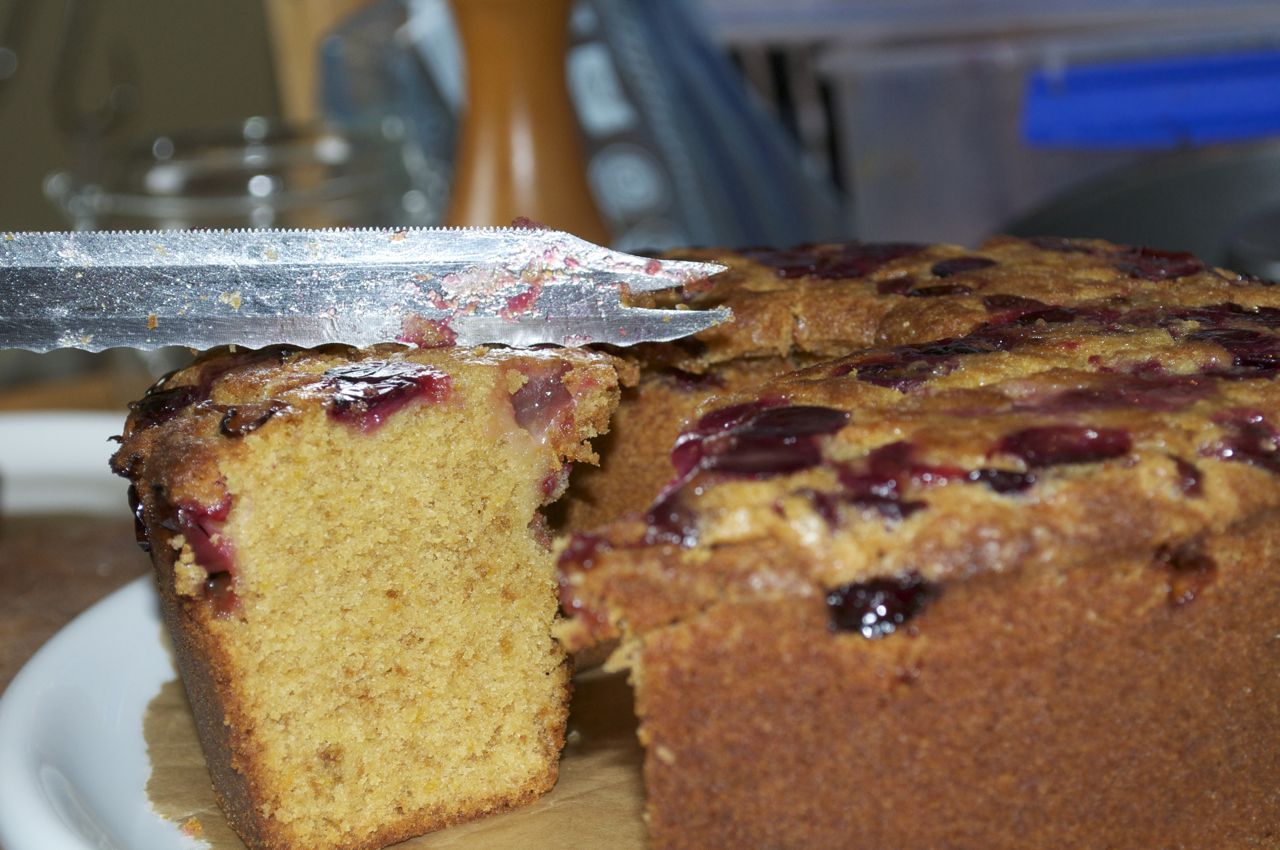
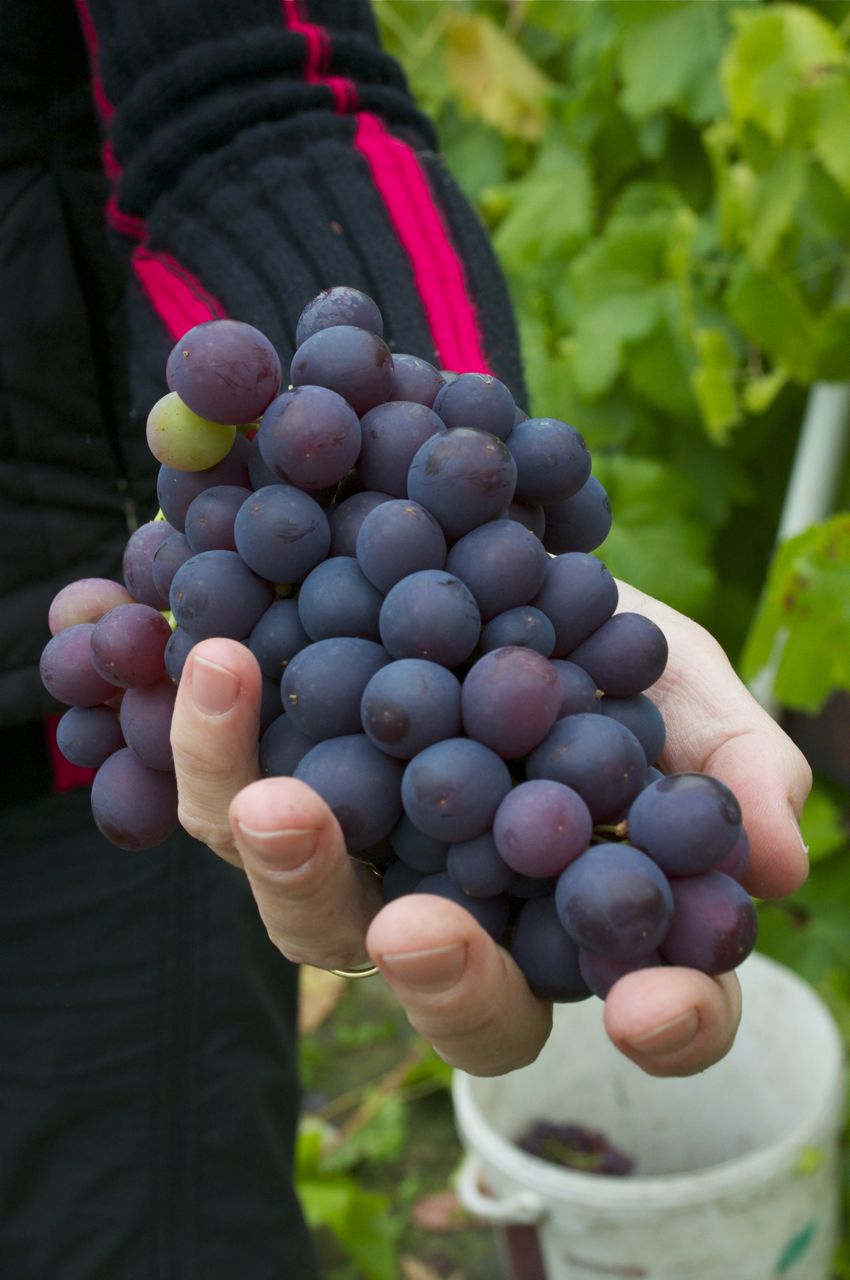
24 pots of jam have been made from our haul of grapes, also nearly four liters of grape cordial Hanna made a delicious cake from an Italian recipe replacing sweet wine with white port. YUM!

THE RUSTIC ITALIAN GRAPE CAKE

Ingredients

  • 225ml dessert white port wine
  • 200g light muscovado sugar
  • 100g softened butter
  • 3 eggs
  • zest 1 orange
  • zest 1 lemon
  • 175ml extra-virgin olive oil
  • 225g plain flour , plus 1 tbsp for dusting
  • 1 tsp baking powder
  • 175g grapes , halved and seeded
  • 4-5 tbsp demerara sugar
Method

  1. Pour the wine into a pan. Bring to the boil and keep simmering until reduced down to 85ml – will take some 5-10 mins. Leave to cool.
  2. Heat oven to 180C.
  3. Beat together the sugar and butter. Add the eggs, one at a time. Then stir in the zests.
  4. Mix baking powder and flours.
  5. Mix together the cooled wine and olive oil and pour some into the cake mix. Stir well, then fold in about third of the flour mixture. Keep alternating between adding the liquid and flour until everything has been mixed in.
  6. Spoon the mixture into the oiled and floured baking tin, smooth the surface with a spoon.
  7. Scatter the halved grapes over the top. Sprinkle with demerera sugar.
  8. Bake for about 50 mins or untilwell baked.
Enjoy! I certainly did…
Image

Fruit of the vine- a gift of grapes means lots of grape jam

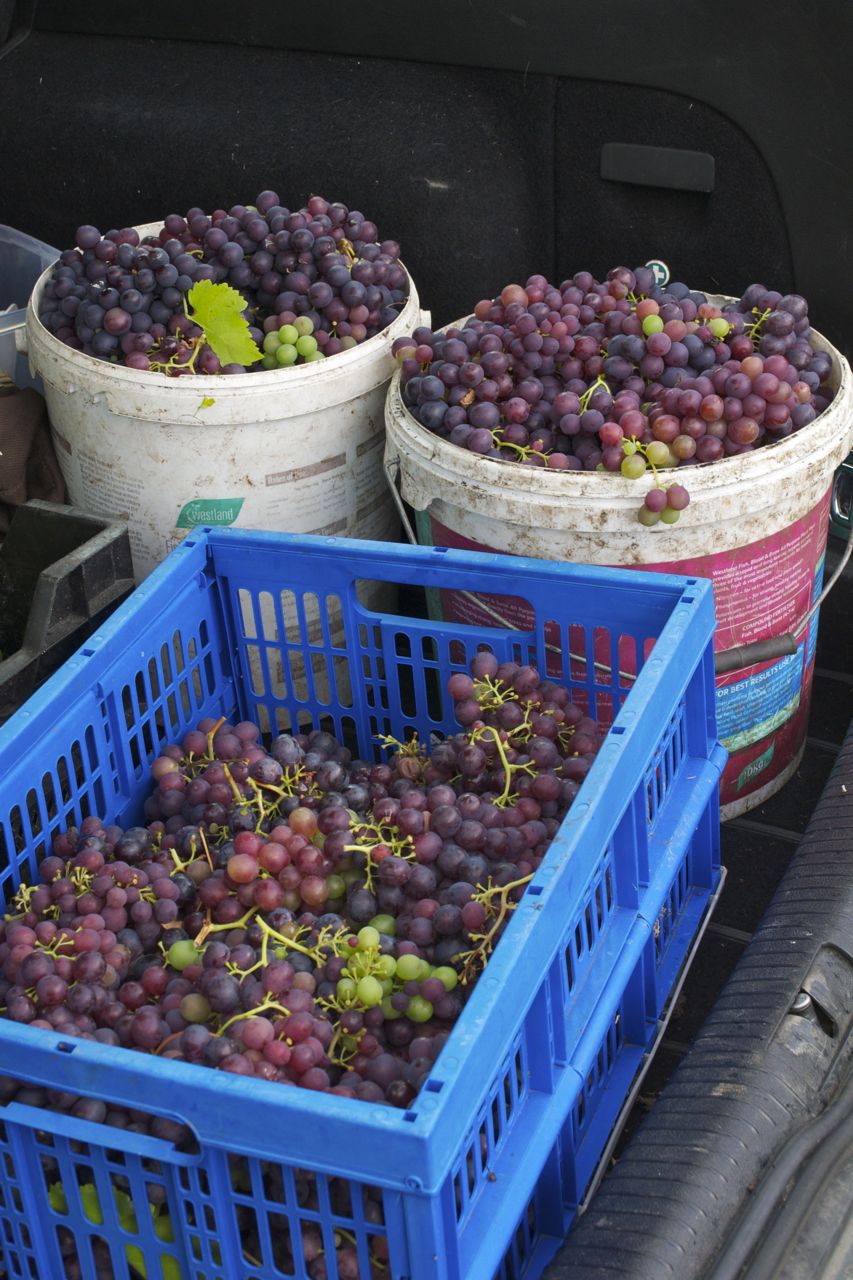
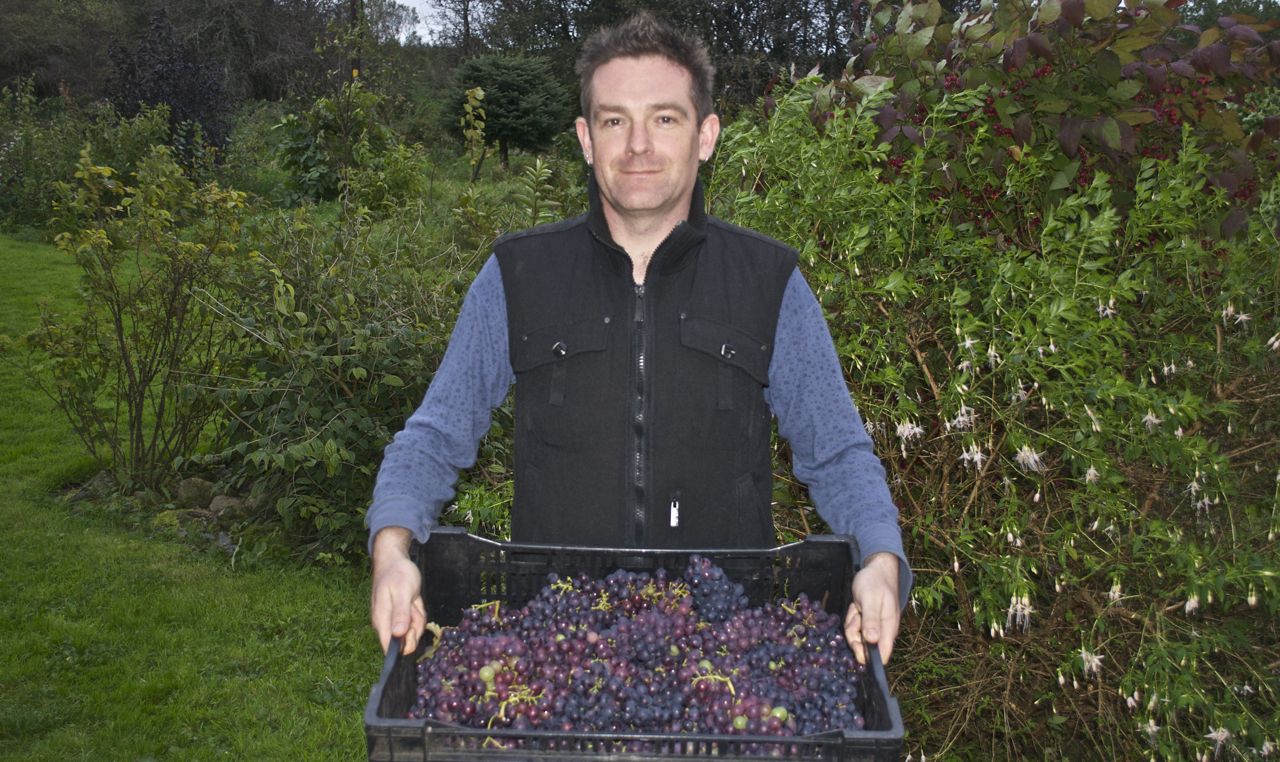
I got the call on Sunday morning,” I have friend of a friend who has a grape vine…”. The vine grower now lives in France, but the vine in question grows in Sligo. Nobody wanted the grapes, the caller thought of me, “would I like the grapes?”  Yes, definitely. We arranged to meet on Tuesday morning, we were told there were lots to pick, but were not sure how much that was. So we packed a couple of buckets and off we went to Tubbercurry, Co. Sligo, a short drove from our home.

We arrived at the vacant house, a west wind blew damp and fresh, the garden overgrown, the grass long and weeds invading the driveway. We followed our friend Mary to the tunnel, a stunning sight greeted us. The vine had started to wander, side shoots stretched out like tentacles, reaching into the air, looking for something to grab. The main body of the vine was supported on a homemade support sytem of wood and steel, winding stems looked ancient, older than their years. They twisted along the suports from the far end of the tunnel. Almost the entire length of the structure was filled by its fruitful presence. The large leaves tried to hide its bounty from our view. We gently eased back foliage to see the large clusters of grapes revealed. We got busy with out scissors, our buckets soon overflowed, luckily I had a crate in the car, the harvesting could continue.

Grape vines are easy to grow, the west of Ireland climate does not provide good ripening conditions, a protected structure such as a greenhouse or plastic tunnel over comes the disadvantage of our location. Each end of the tunnel had plastic netteing for doors allowing good ventilation, essential for vines so as to reduce the incidence of powdery mildew, which can be menace for Vitis vinifera.

So what to do with all these grapes? First of all jam. We have also made cordial and my wife Hanna baked a delicious rustic Italian grape cake. All the recipes are on their way, but first the jam!

Grape Jam Recipe

Grape jam takes a little work to prepare. The work involves removing the pulp from the grape and separating the skins. Then the pulp is cooked and sieved to remove the stones. While the pulp is cooking you blend the skins with a food processor or hand blender. The skins are then added to the sieved pulp, then cooked slowly for about 30 minutes. Then add sugar and boil like mad for about another 30 minutes until the jam is setting. A good set can be achieved without the addition of pectin. I try to limit the sugar quantities to a minimum, partly for healthiness but I also prefer the jam to taste of grapes and not be too sweet.

Ingredients

  • 4kg of grapes
  • 500ml of water
  • tbsp of lemon juice
  • 1.5kg of sugar

Method

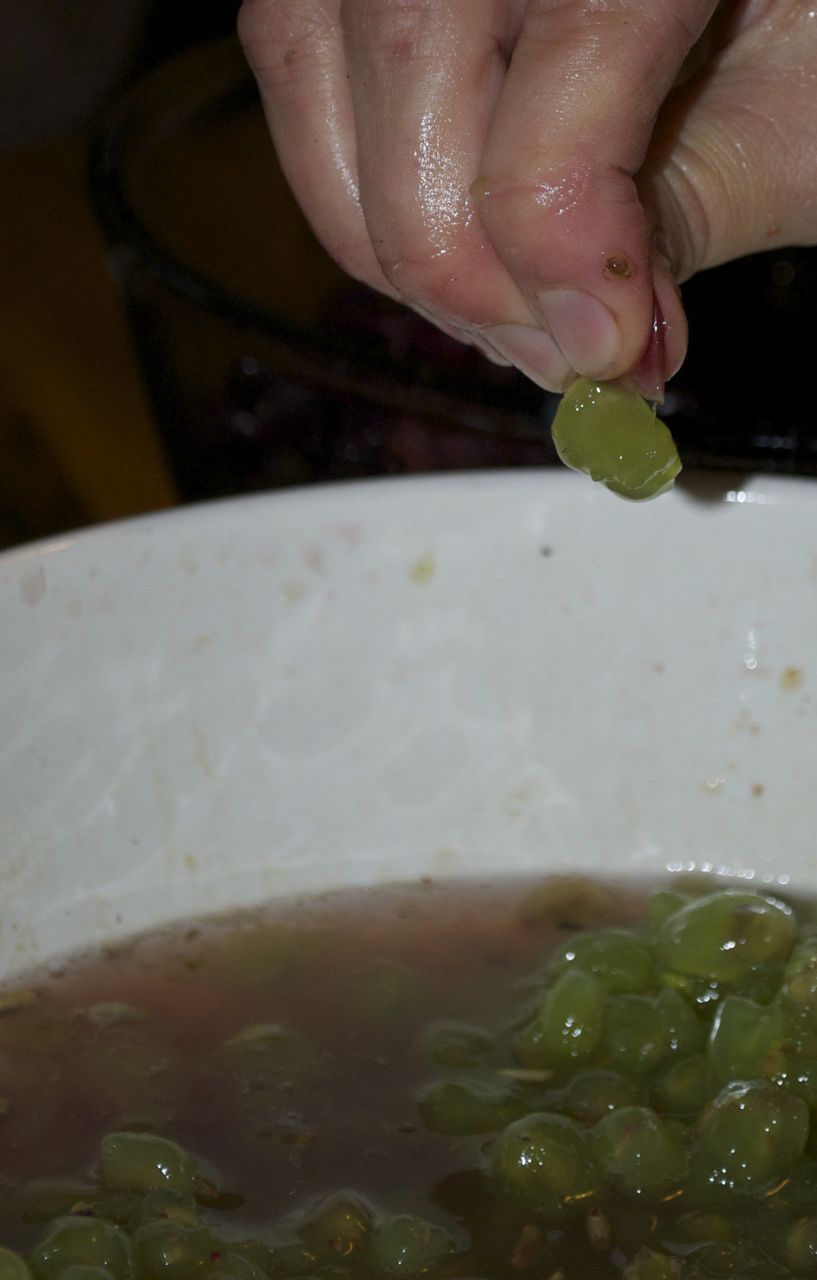
  1. Remove the skins. This is easy, just squeeze the fruit so that the inner pulp and seed ejects from the opening where the fruit was attached to the bunch. Put the skins in a separate bowl. Two people doing a 2 kilos took about 30 minutes
  2. Put the pulp containing seeds to cook, when they start to boil reduce heat to simmer for about 10 minutes
  3. Meanwhile chop up the skins using hand blender or food processor
  4. Sieve the grape flesh to remove the seeds, a coarse sieve will do, I used a colander with small holes
  5. Retutn the grapes to the saucepan and add the puled skins. Add the lemon juice and water and bring to boil
  6. Reduce the heat to simmer the fruit for 30 minutes, cooking slowly releases the pectin
  7. Slowly add the sugar and then turn up the heat
  8. The jam will boil heavily and keep the temp up high. It took about 30 minutes for the jam to start thickening.
  9. When it is starting to set, fill the jam into sterilized jars.

This amount made 13 8oz jars. When making jam stir the fruit occasionally to make sure it does not stick to the sauce pan, never leave it alone as it is sure to boil over and burn as soon as you turn your back.

This slideshow requires JavaScript.