Finding our bog

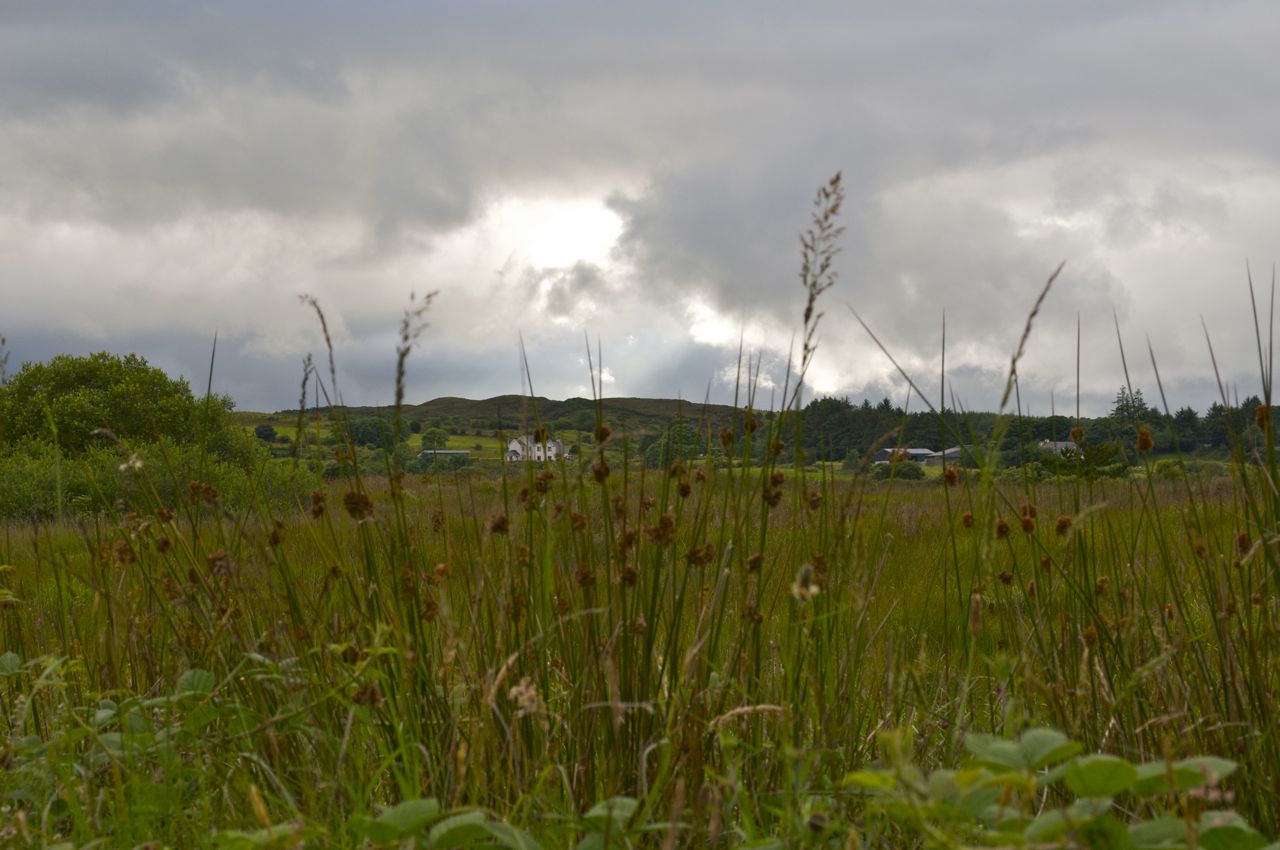
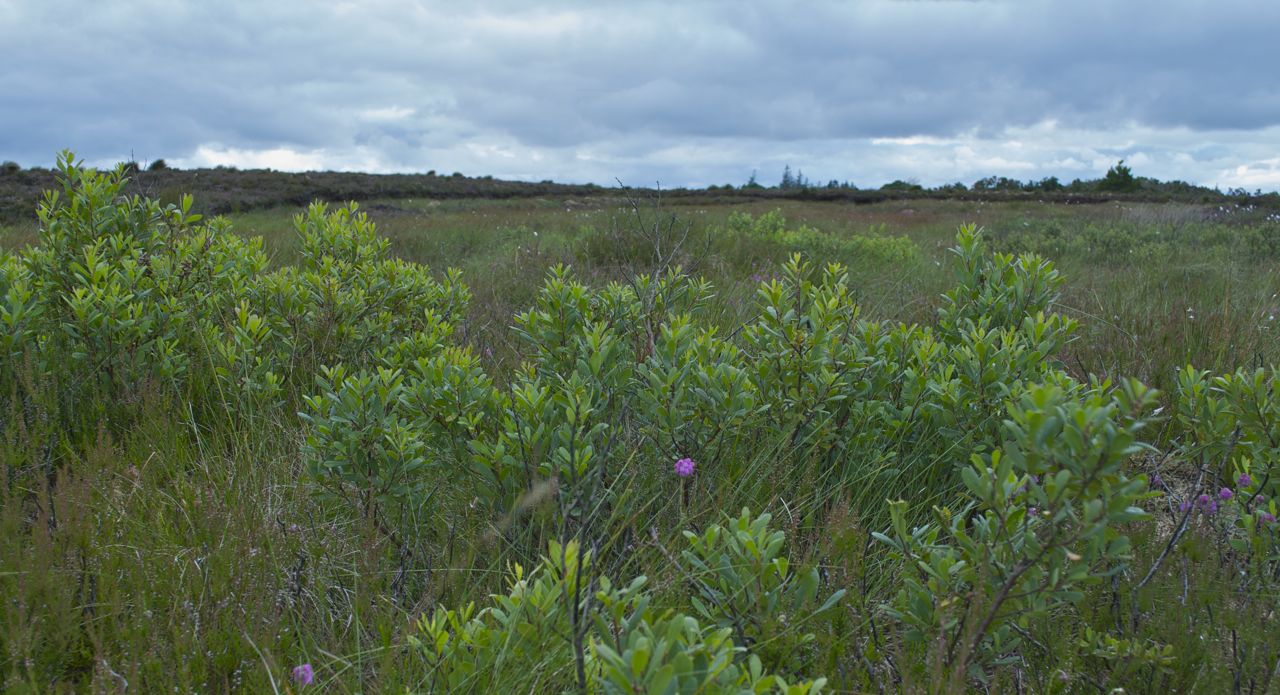
View of our plot of bog

“Samhradh, samradh, bainne na ngamhna, thugamar féin an samhradh linn…” Hanna was singing while walking down the road, she wore her heavy winter coat. It certainly was not the weather that inspired her performance, but more a plea to the gods to bring the summer weather, “summer, summer, the honeysuckle, we brought the summer with us”. I hope they were listening. The sky above was grey but had not yet released it watery blessings, just as well, for we were walking down Askey Road, on our way to look for our plot of bog.
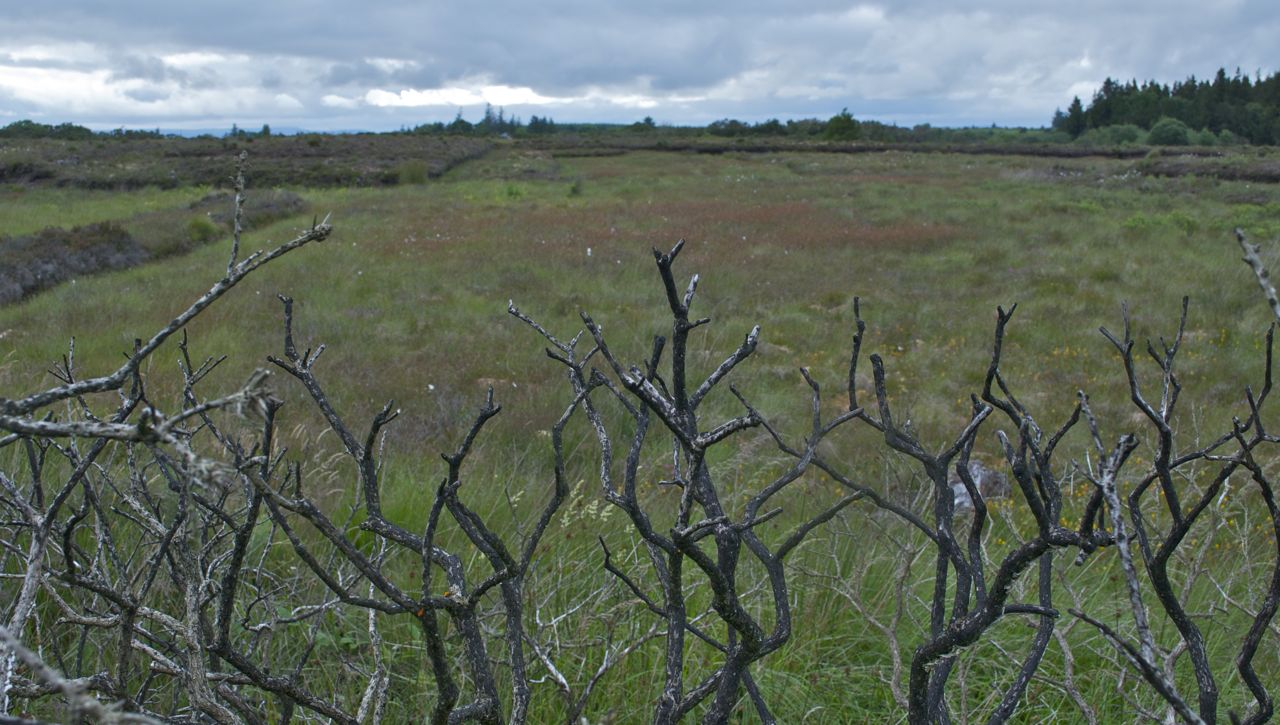
Burn stems of Ulex europeaus- Aiteann gallda- gorse, whin, furze,

Many of the old houses in the west of Ireland come with turvery rights. For the last eleven years I have known that we have a plot of bog from which we can take peat from a plot of the bog for use on our property. For generations people in rural parts of Ireland have been cutting turf to use as fuel. It has been the cause of trouble recently as areas of bog are under protection due to EU rulings. We do not intend to cut turf from our bog plot, but I wanted to eventually locate our plot, I knew whereabouts it is, but there is a difference in knowing its out there and actually standing in your own bog. I deliberately say “in” and not ‘on” as bogs can be wet and soft, you definitely stand in a bog and not in it.

It is the wet conditions that prevail in this part of the world that actually give rise to bogs. Our bog is a raised bog, formed thousands of years ago. Peat forms in the bog where old plant material does not fully decompose, mosses contribute the majority of the plant material. Here is the conflict; it takes thousands of years for the bogs to form, they are home to unique flora and fauna, yet they are traditionally a source of affordable fuel to local populations, but it is a finite resource that requires habitat destruction in order for the material to be exploited. Bord na Mona, the semi-state company exploits large tracts of bogland for supply to turf burning electricity generation stations, manufacture of peat briquettes and for use in the horticultural industry. Small scale turf cutters and individuals cutting turf for their personal use feel aggrieved that they are not allowed to continue cutting their plots while the large scale operations continue. Compensation schemes are offered, but they will say that their is an emotional attachment to a plot of bog that has been the source of fuel for their ancestors.

Cut bog

One can stand on the outside looking in and be cold and rational and come to the conclusion that any exploitation of bogs is habitat destruction, and point to the fact that removal of turf from the bog contributes to global warming as carbon dioxide is released as peat is extracted. An it is true that peat from Irish bogs will not last forever, it will run out, just as oil is doing and coal has in many regions. But does that mean that large parts of the country are to be left to nature and never be used? I want to reduce my use of peat by my horticultural practices, more and more we are using peat free composts, we do not plan on cutting turf but having found our plot of bog I can understand the attachment that generations of ownership can develop, it felt good standing, or more accurately, sinking, in my own bog.
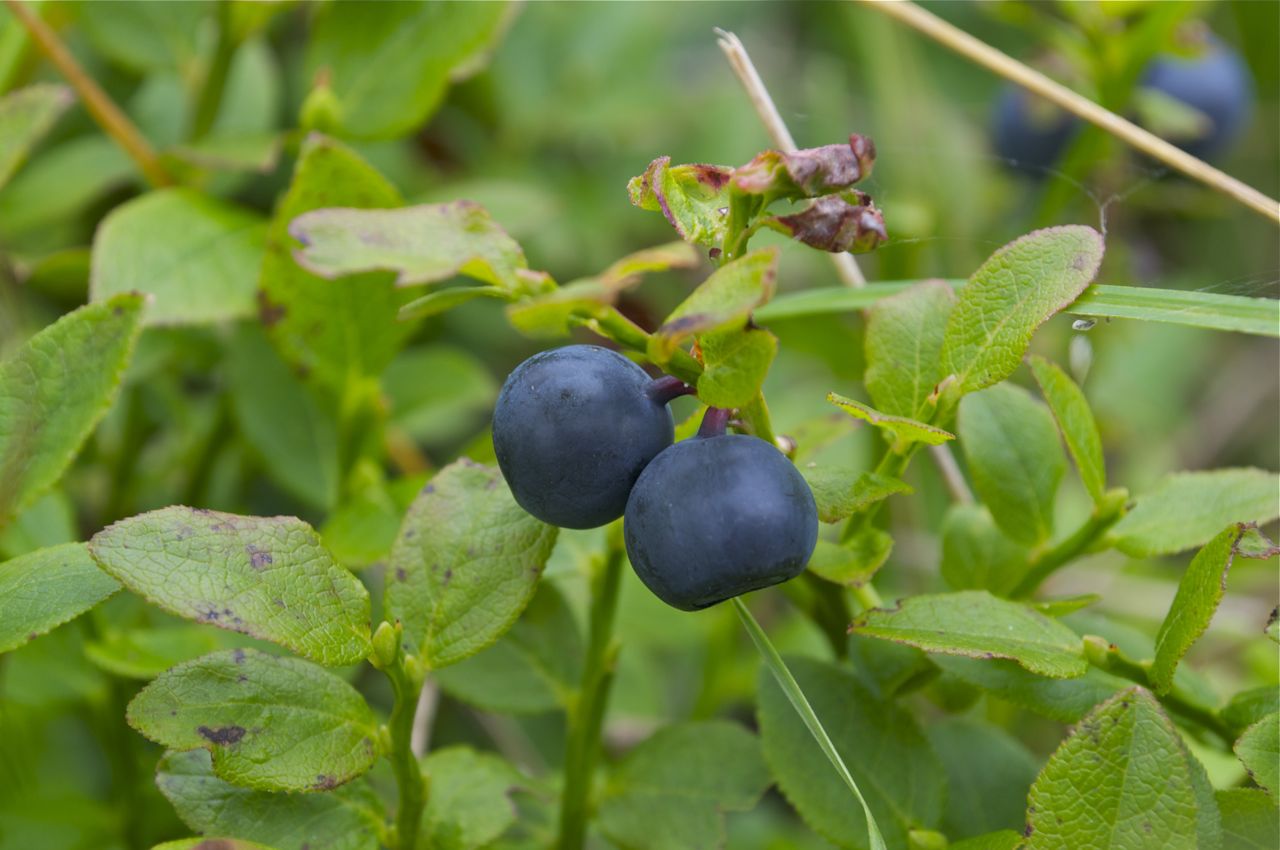
Vaccinium myrtillus – Fraochán – billberry, wild blueberry

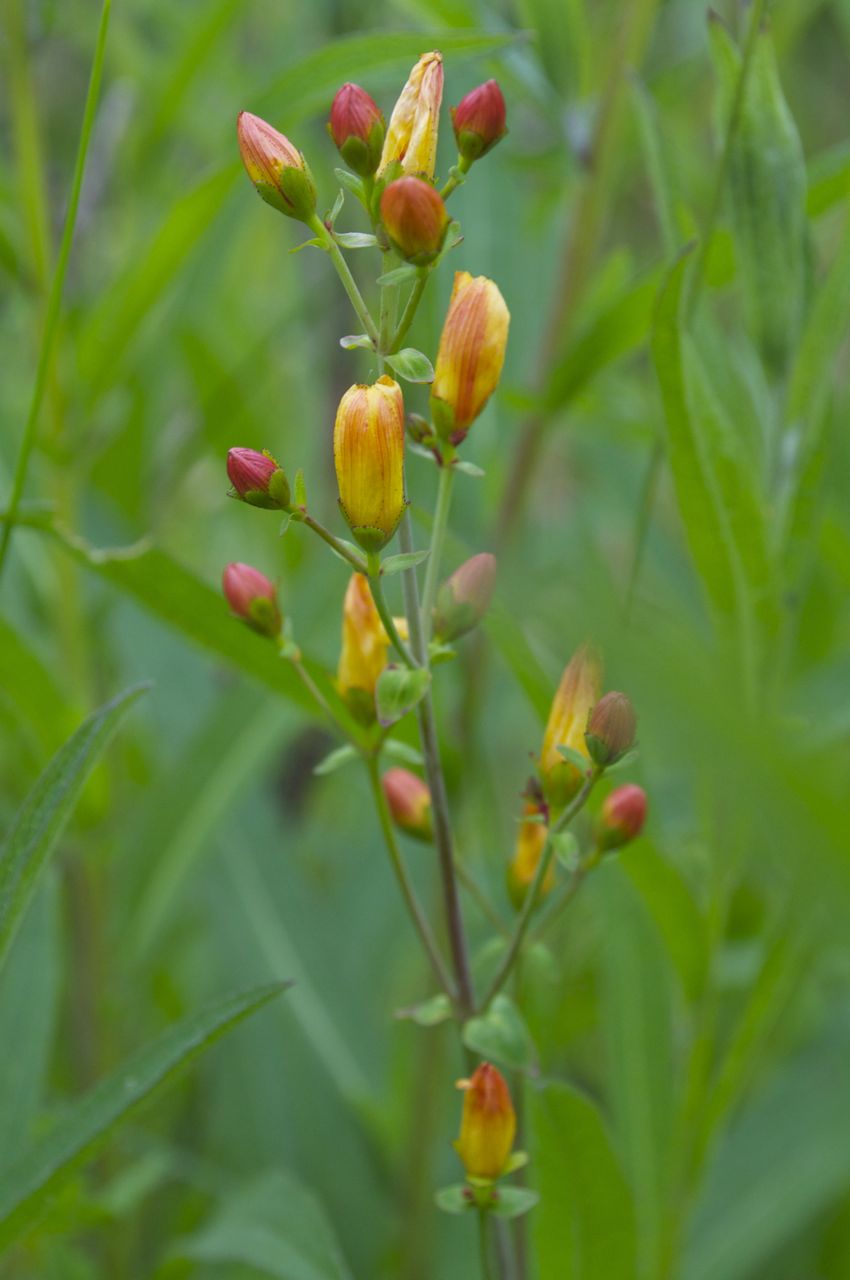
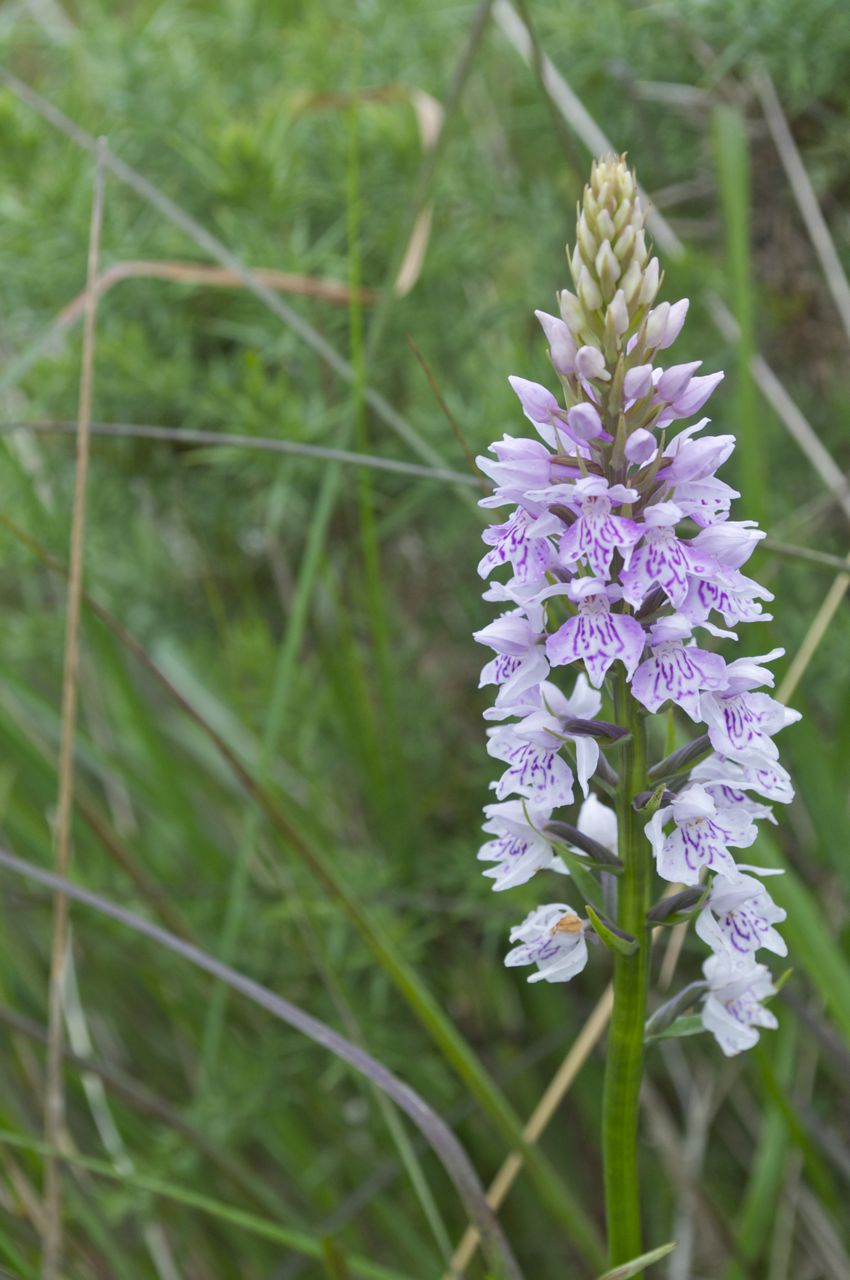
We walked along the tarmac road where the vegetation attempts to reclaim the paving from the centre and the edges. On the ditch we picked a handful of Fraochán berries, the fruit of Vaccinium myrtillus otherwise known as billberries. We turned to the track, preserved as passable by the occasional tractor that drives along it. Along the centre spotted orchid flowers blossom in the long grass, different colour variations of Dactylorhiza maculata. The red buds of a St John’s Wort, Hypericum pulchrum known as Beathnua baineann in Irish, flowered to the side of the path. I heard  a squeaking sound behind me, an all too familiar noise. One of our cats, Danzig, decided to follow us, he came bounding along the tyre tracks stopping to whizz on the odd orchid along the way.
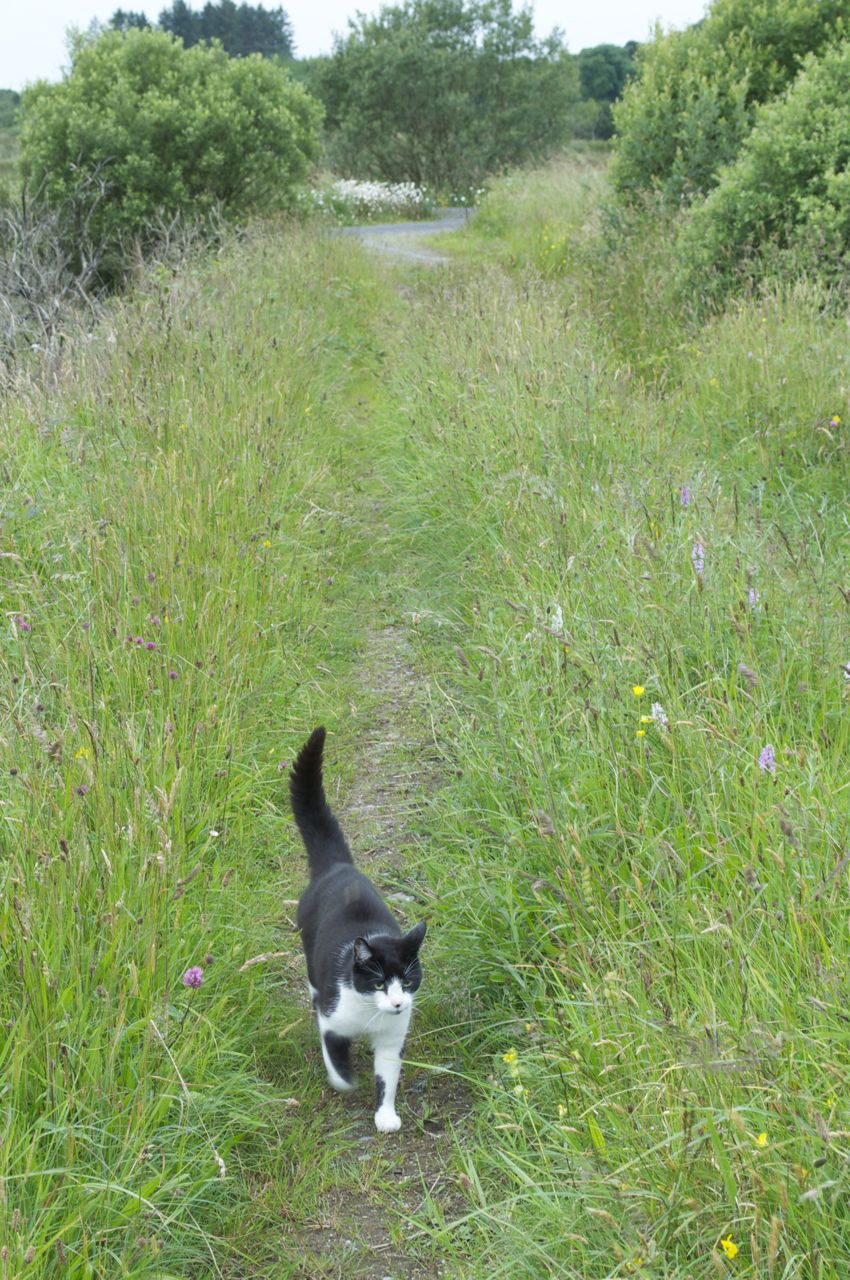
One of our cats, Danzig, joins us on the path to the bog…
Dactylorhiza maculata – Na Circíní- heath spotted orchid
Hypericum pulchrum – Beathnua baineann – flower buds

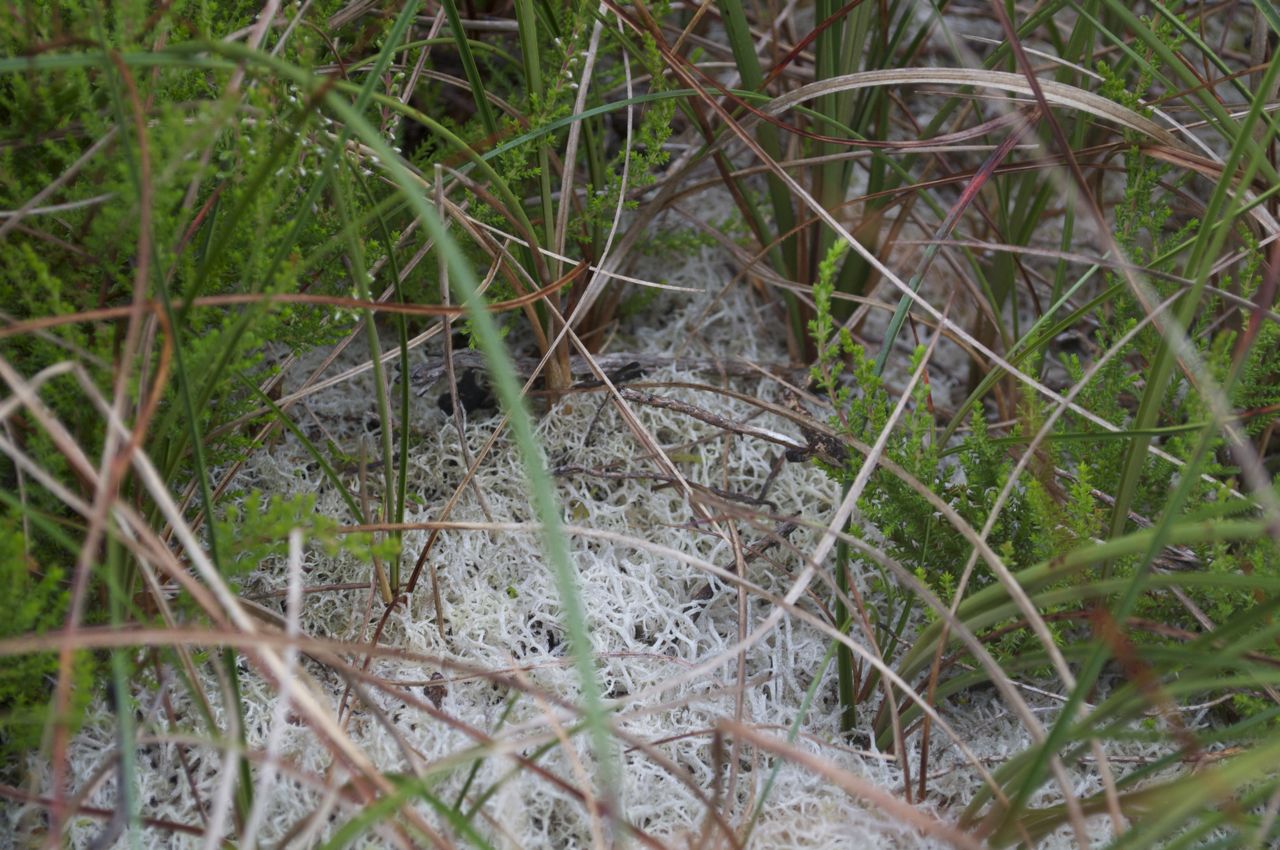
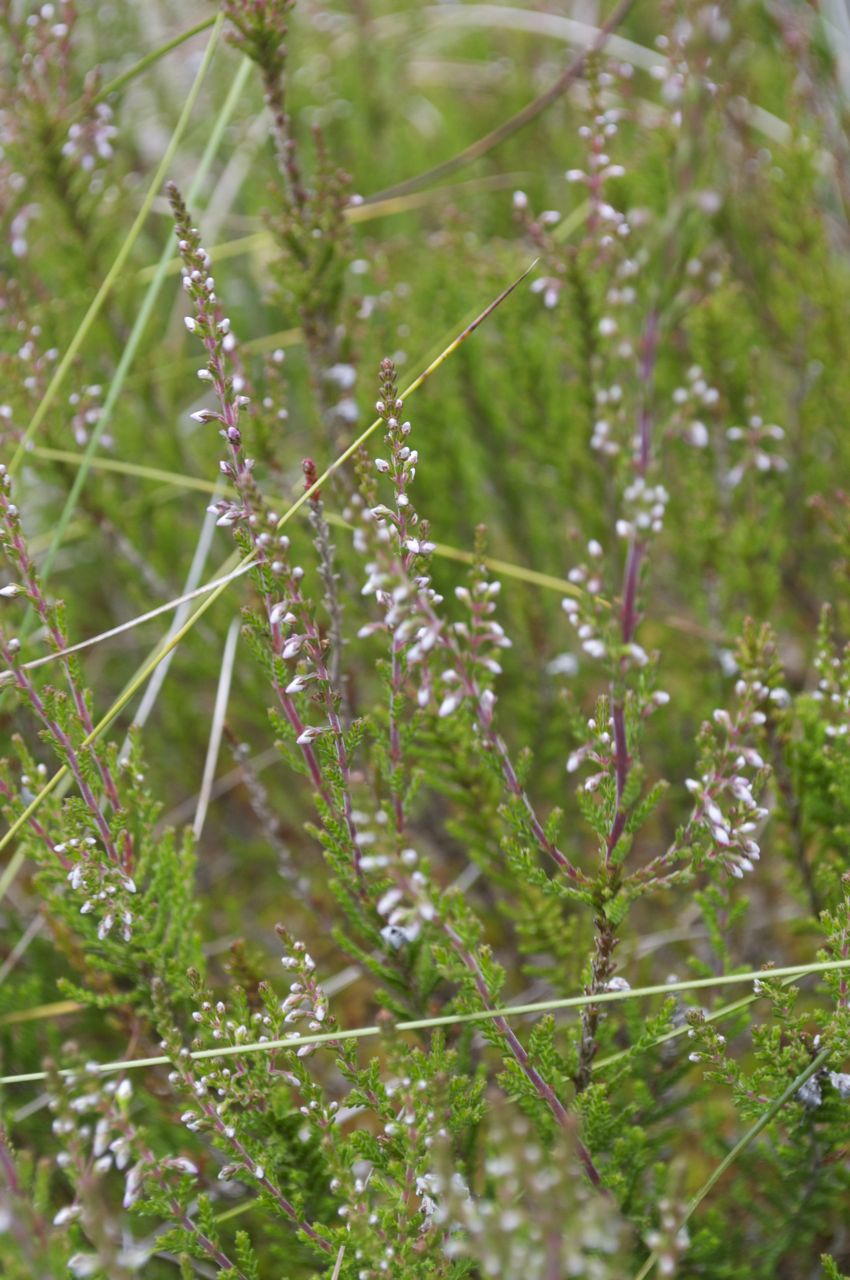
Grasses, Molinia caerulea, heathers, Erica tetralix and a multitude of mosses are thriving, here and there the blackened sculptures of burnt gorse, Ulex europaeus stems reach out, evidence of the bog fires that cleared the vegetation just over two years ago. We were consulting a map, one which accompanies the deeds for the house. On this map, clearly marked in thick lines, the boundary of our plot. Not so clearly marked, the boundaries of our plot on the bog. We think we have found our plot, assuming that the map is to scale and looking at the uncut ridges that seem to define old plots. It is a long time since anyone has cut turf on this are of bog. Fifty years ago there were eleven houses on our road, the population a thriving 68 souls. Now there are 5 permanent residents in three houses, not many people are left to cut turf.
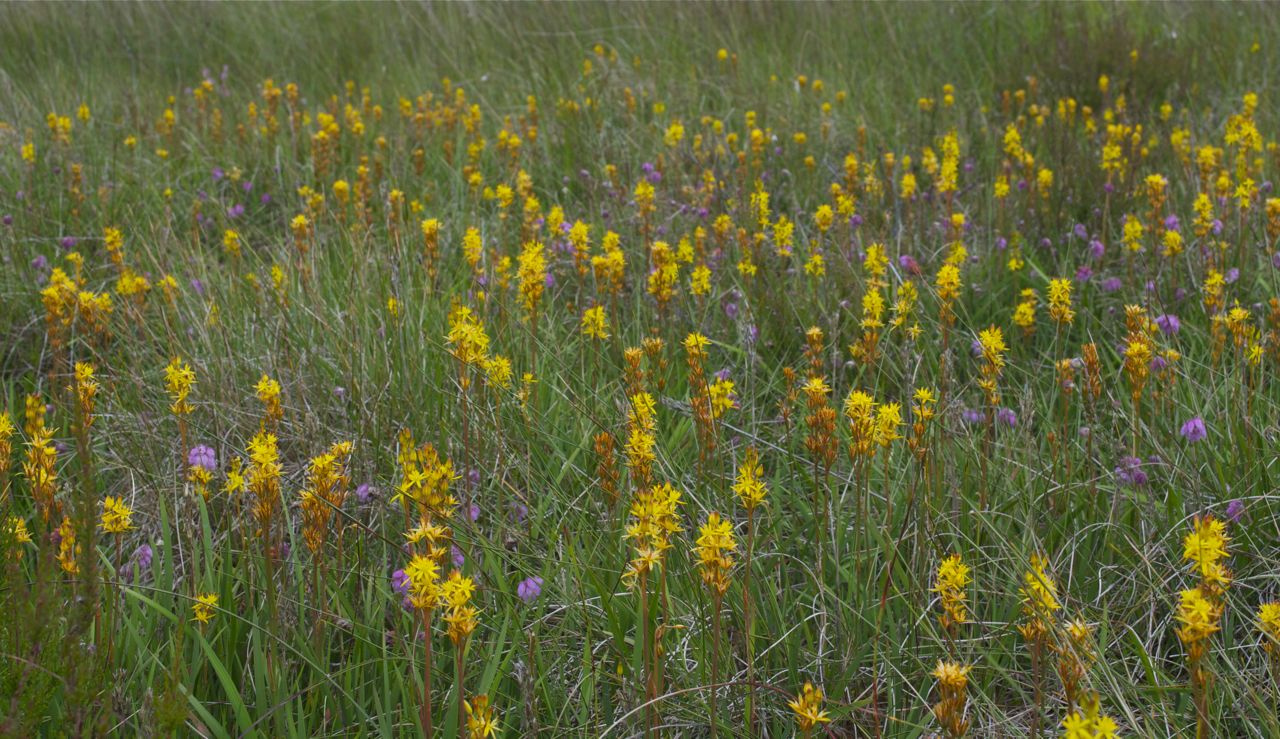
Narthecium ossifragum – Sciollam na móna – bog asphodel flowers on the bog

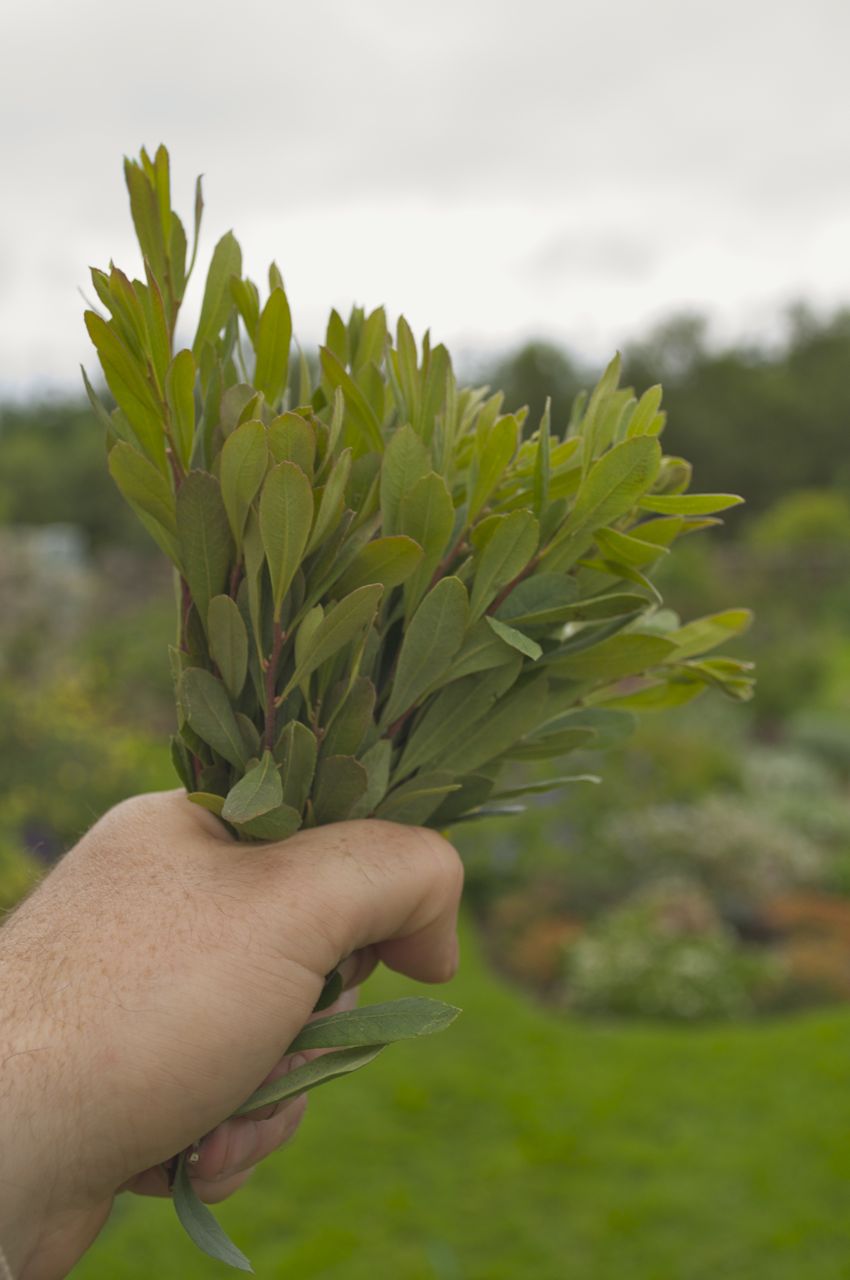
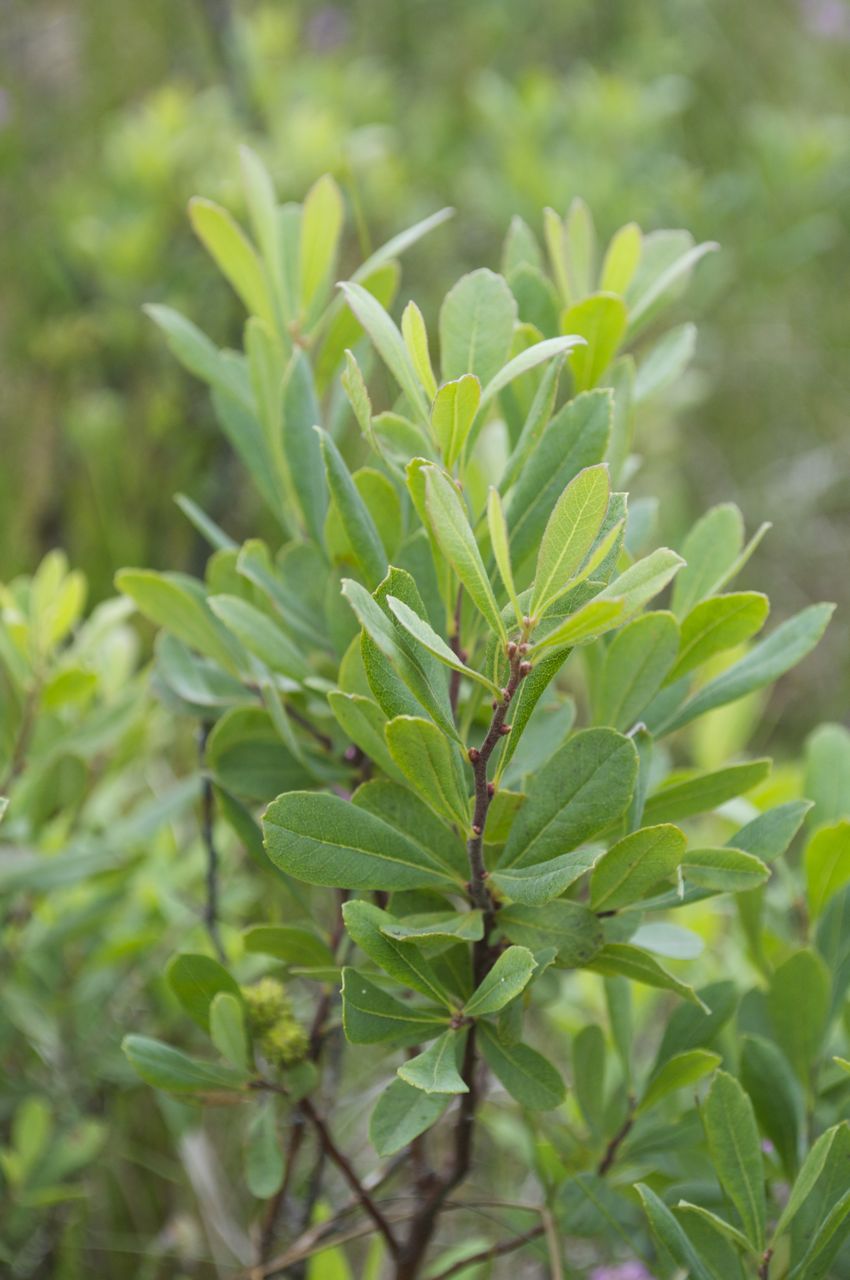
We found a way over the ditch, walking carefully so an not to trample the orchid, Listera ovata, with its conspicuous pair of round leaves and inconspicuous tiny green flowers. The bog myrtles, regenerated after the inferno, fragrance the air, some of the sweet aromatic foliage collected to flavour a mead which I made when we got home. Red sphagnum moss forms a deep pile above the wet peat, our boots sinking with each moment spent stationary. We had to keep on the move!
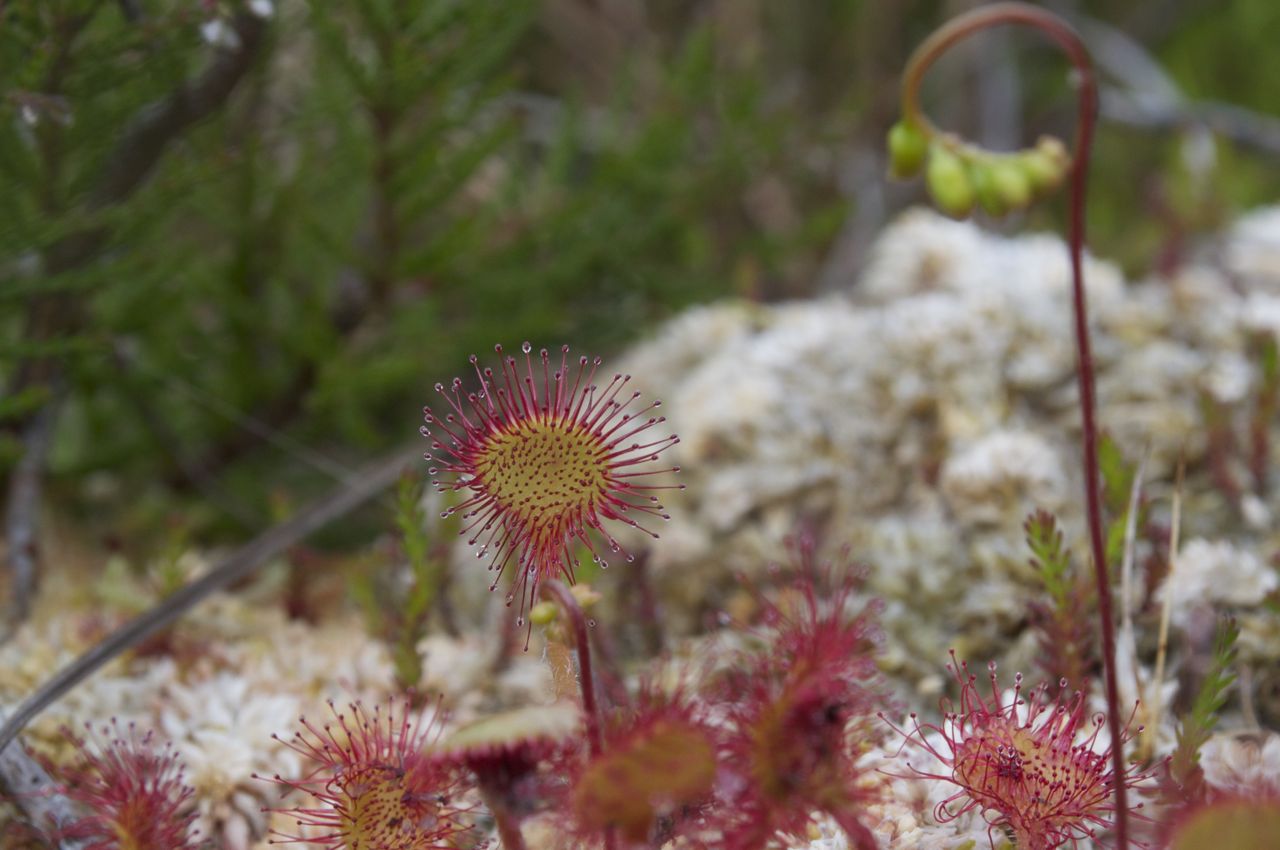
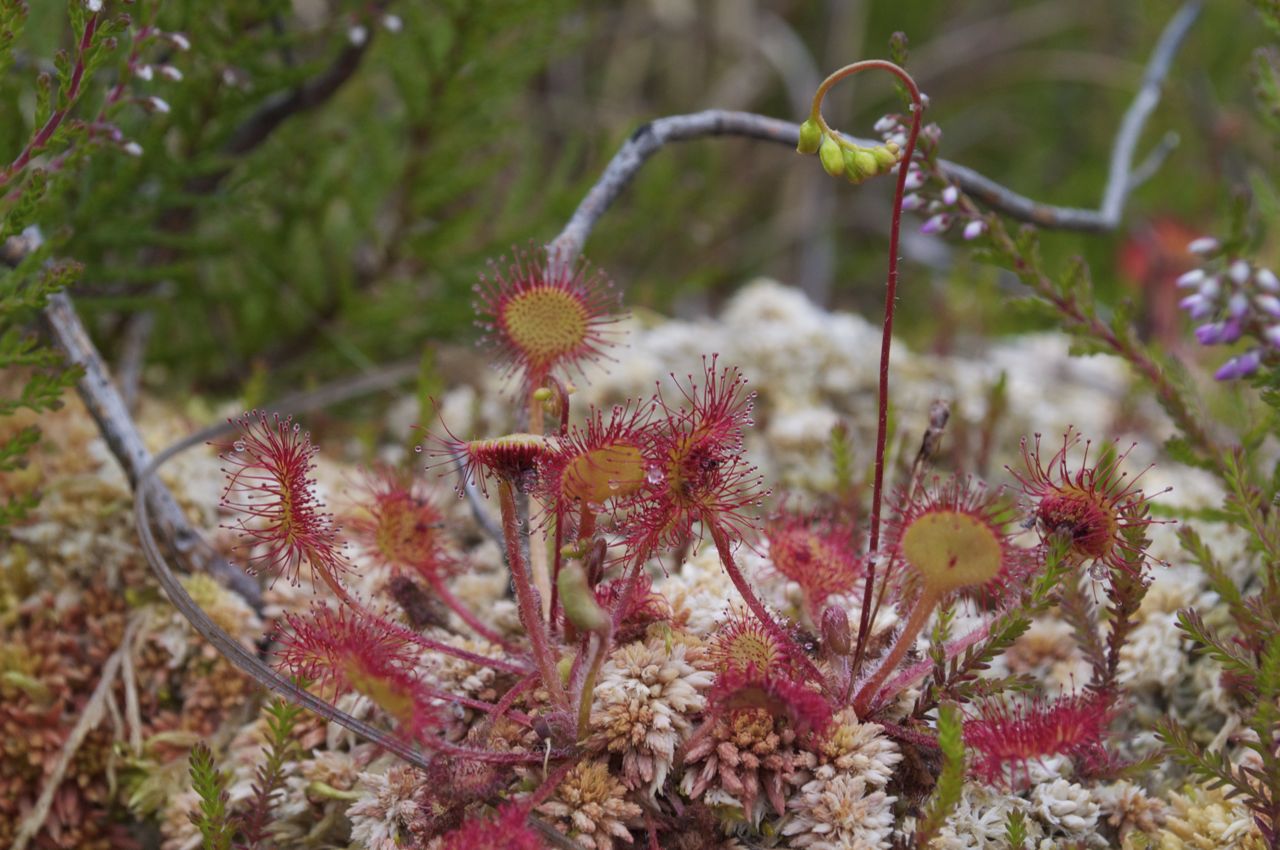
Drosera rotundifolia – Drúchtín móna – sundew

Three species of heather, two species of Erica flowering, a Calluna with its buds, deer grass, Trichophorum cespitosum and swathes of the tiny yellow bog asphodel, Narthecium ossifragum were amongst the plants that caught our immediate attention. Almost buried amongst the red sphagnum was the real little gem, the insectivorous sundew, Drosera rotundifolia. This carnivorous plant traps insects on it’s sticky leaves and then releases an enzyme which digests the nutrients from the insect. One old belief was that the sundew could be used as a love charm due to the little plants ability to lure and entrap other creatures. Well, our bog lured us, and we love it. We will make frequent returns and observe the flora and activities of the fauna. Danzig our cat might return too, although he was quite tired walking home and did not object in the slightest to being carried by Hanna for the final leg of the journey.

Tired from his trip to the bog, Danzig is carried home…

This slideshow requires JavaScript.

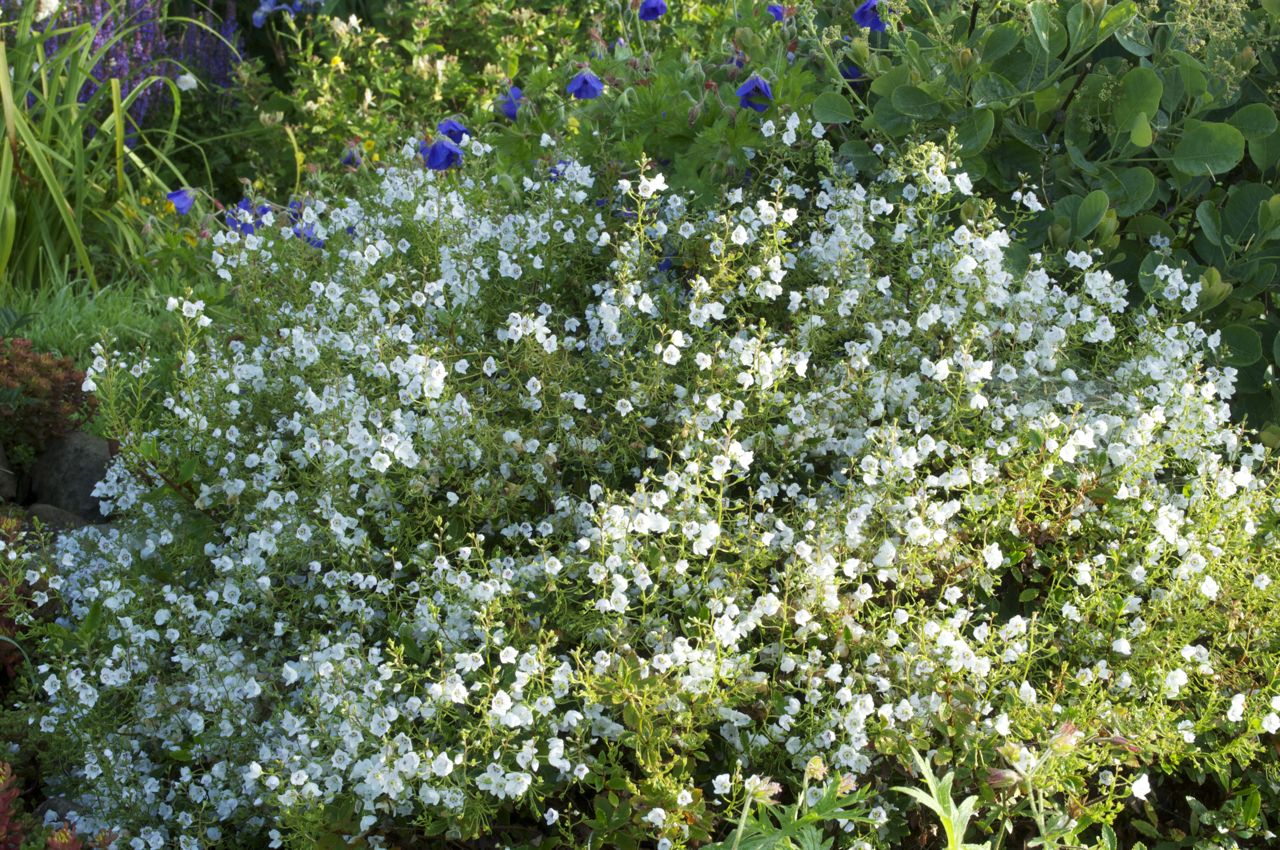
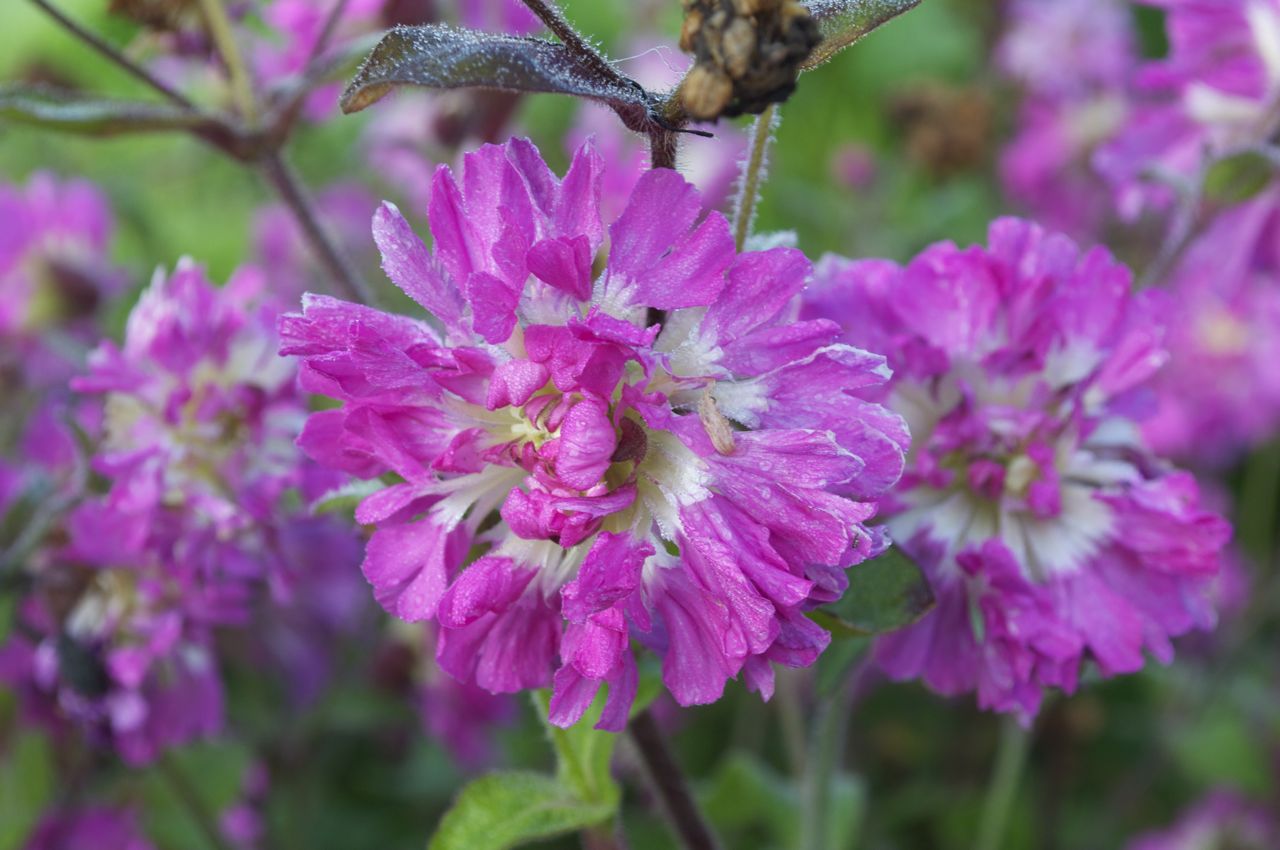
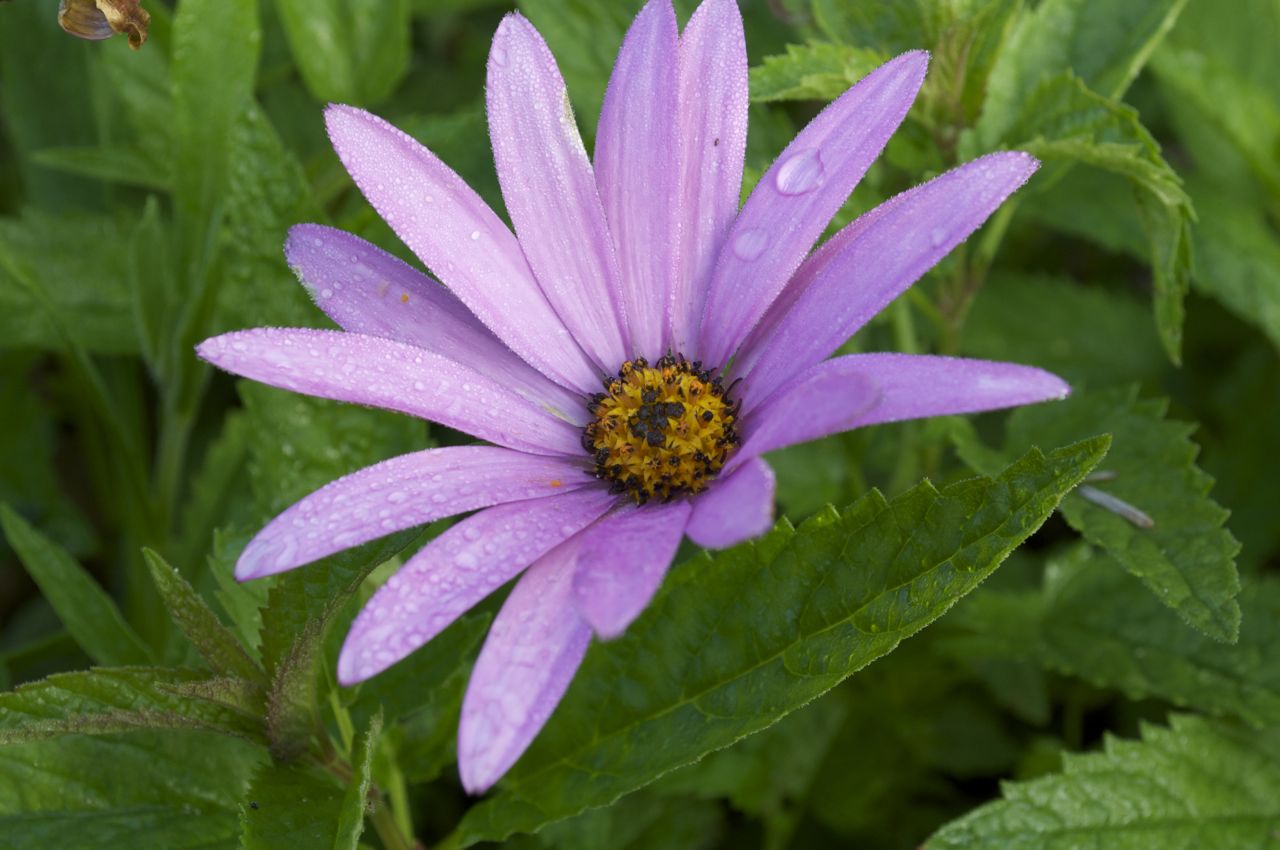
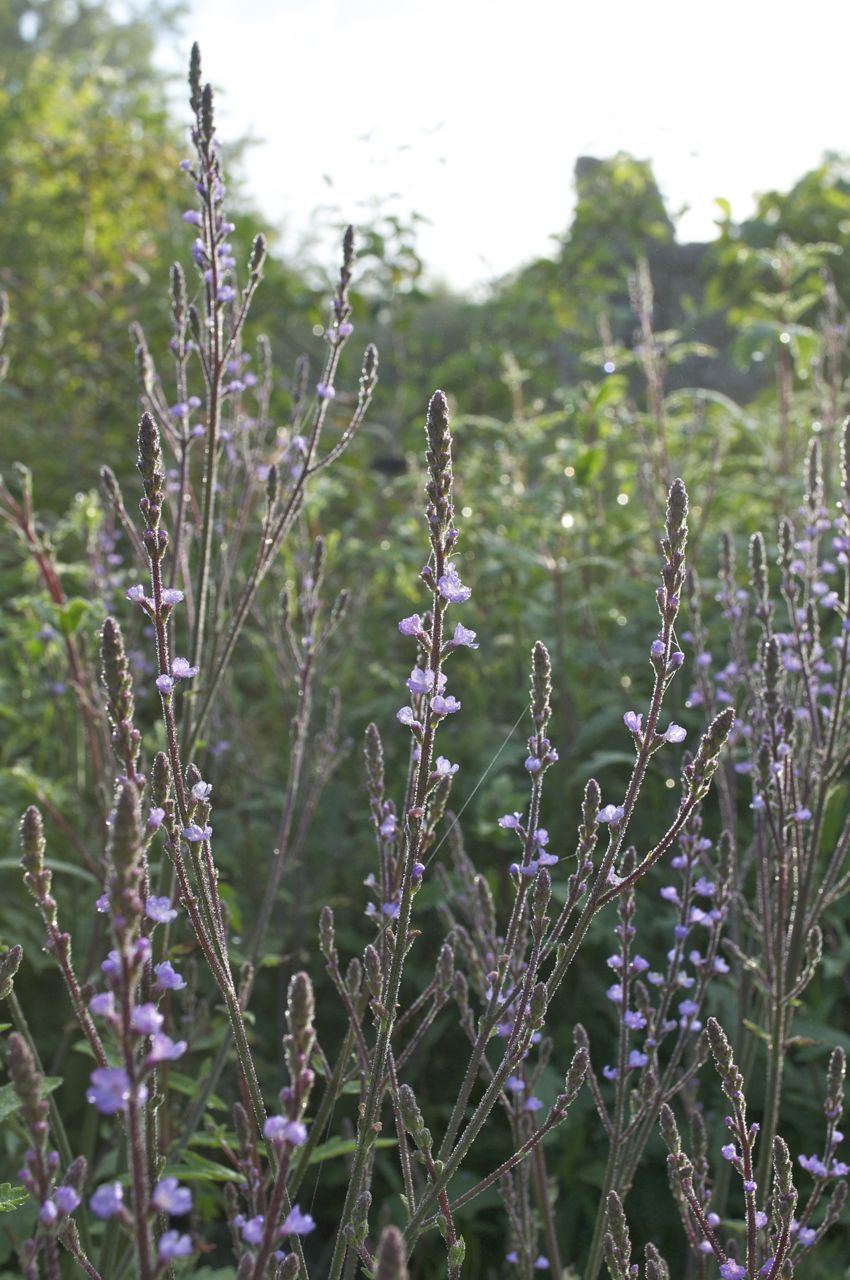
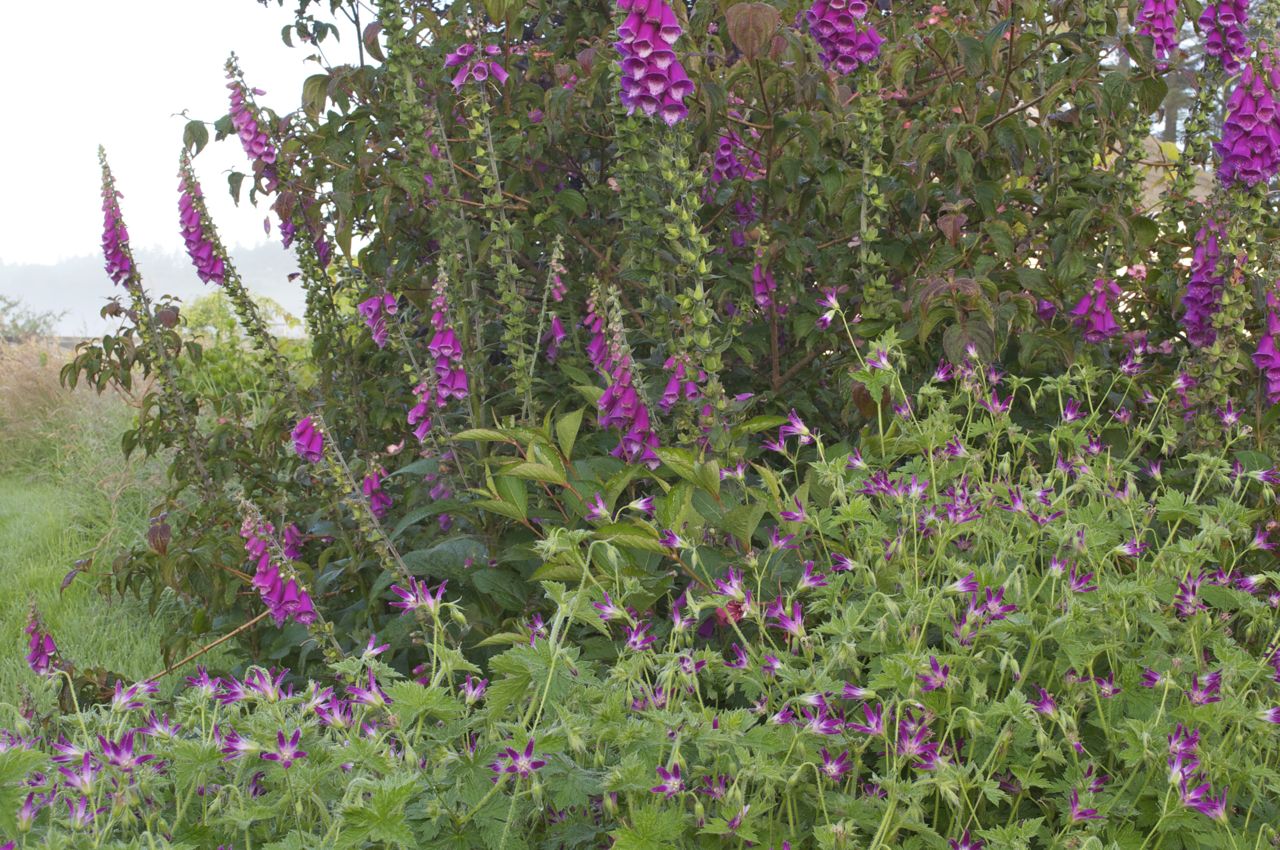
Early morning in our garden in Co. Mayo – July 2012

Summer, oh where is the summer? This morning was a rare sunny start and I was up early to see the fog lifting its damp veil from around our plants. There is a saying in Ireland, “sun before seven is gone by eleven”. You really do have to get up early to get the best of the day. I was out with the camera at just after 6am, I had started working on a garden plan but the light was fabulous and there was not a breath of wind, to good a moment to miss… I hope you enjoy my photos of some of my favourite plants in the garden at the moment.
This slideshow requires JavaScript.

Eating hogweed shoots- Heracleum sphodylium, collecting and cooking.

Hogweeds- tender shoots are harvested before the leaves have fully unfurled

Hogweed, not the giant one grows in our garden, close to where the spruce trees tower and cast shade over the dwarf rhododendrons, dwarf Podocarpus and assorted conifers in what we refer to as the office garden. My view from the computer desk looks out on to this area, well part of it, the hogweeds lurk to one side, just out of view. When I first saw the shoots appear from the ground in Spring I intended to dig them out. It can be quite a vigorous grower and prolific self-seeding plant. But luckily I procrastinated; other jobs took priority. I say it was good fortune because late one evening I was flicking through the pages of Wild Food by Roger Philips, he enthuses about eating the shoots of the hogweed. Of course I was intrigued.
Hogweed, Heracleum sphodylium in flower in our garden

I have to admit I was a little skeptical, but such was Roger’s praise for the new shoots of Heracleum sphodylium, he says that is one of the best vegetables that he has ever eaten, that I just had to try it. Before harvesting the new shoots growing from the base of the plant I made double sure to check that the plants growing in our garden were indeed the hogweed, H. sphodylium, and not another plant from the Parsnip family once called Umbelliferae but know named Pastinacaceae. Many members of this large plant family could be easily confused and the wrong plant harvested, which could have disastrous results, some are poisonous. The related H.  montegazzianum is a much bigger plant with monstrous leaves and over sized infloresences, the sap of all parts is a severe irritant.

Flowers of hogweed – Heracleum sphodylium

Identifying Hogweed- some tips

As always with foraging wild food be very sure that you know what you are picking, take care to identify the plant correctly. If in doubt leave it out. Consult a wild flower guide or get advice from someone who knows for sure.

H. sphodylium grows 1-1.5m high, has pinnate leaves (divided into opposite leaflets); the leaflets are pinnitafid- leaves with pinnate lobes that are not discrete, remaining sufficiently connected to each other that they are not separate leaflets.  leaves which are downy (fine hairs) on the underside. The stems are ridged, hairy and hollow. The infloresences are compound umbels of white flowers with between 15 and 30 stalks radiating from the centre of the infloresence. The outer petals of each flower on the umbel are enlarged. The fruits are oval and flattened.

The infloresence of Heracleum sphodylium grows 1- 1.5 metres in height
Heracleum sphodylium- has compound leaves, the leaflets are pinnitafid and downy underneath

Harvesting, preparing and cooking hogweed shoots

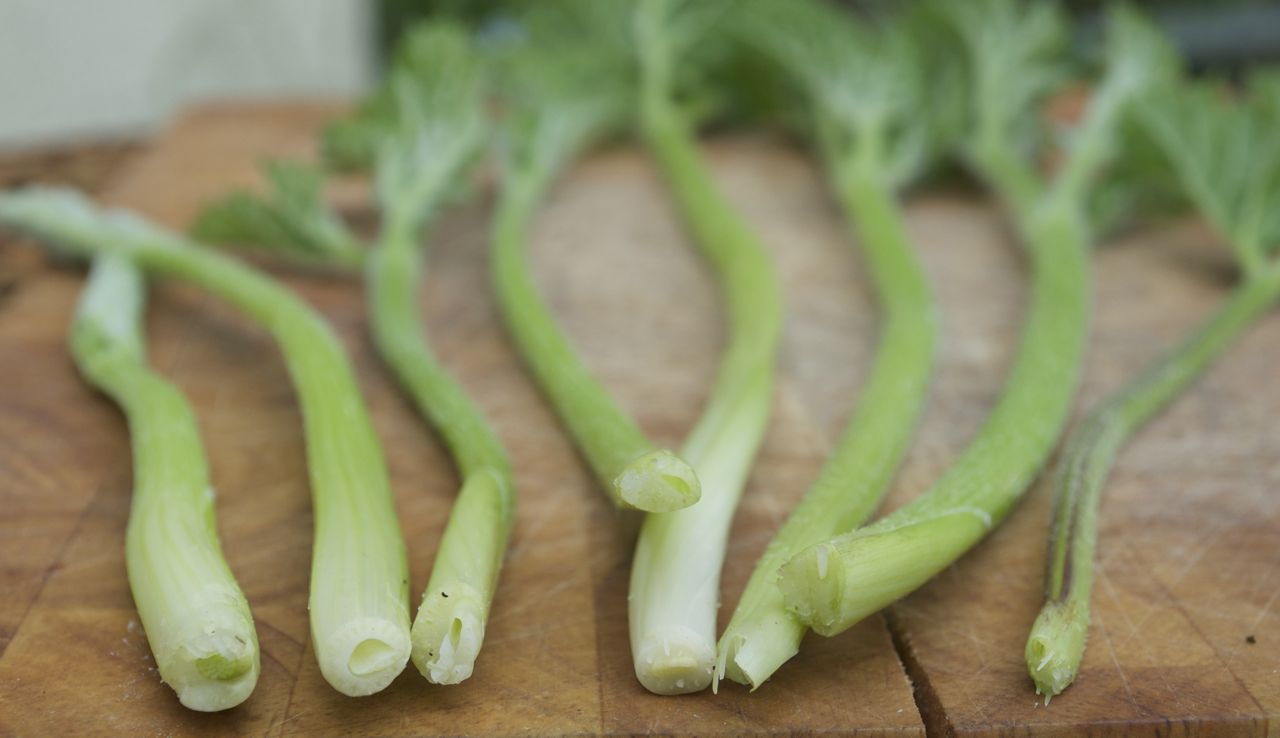
Only use shoots where the leaves have not fully unfurled, I pulled the shoots upwards and they came out easily.

Heracleum sphodylium – harvest the tender young shoots of hogweed before leaves fully develop

After washing the shoots in cold water I cut them into lengths of about 15cm and steamed them until they were getting tender.

Shoots of hogweed- harvest before the leaves are unfurled.

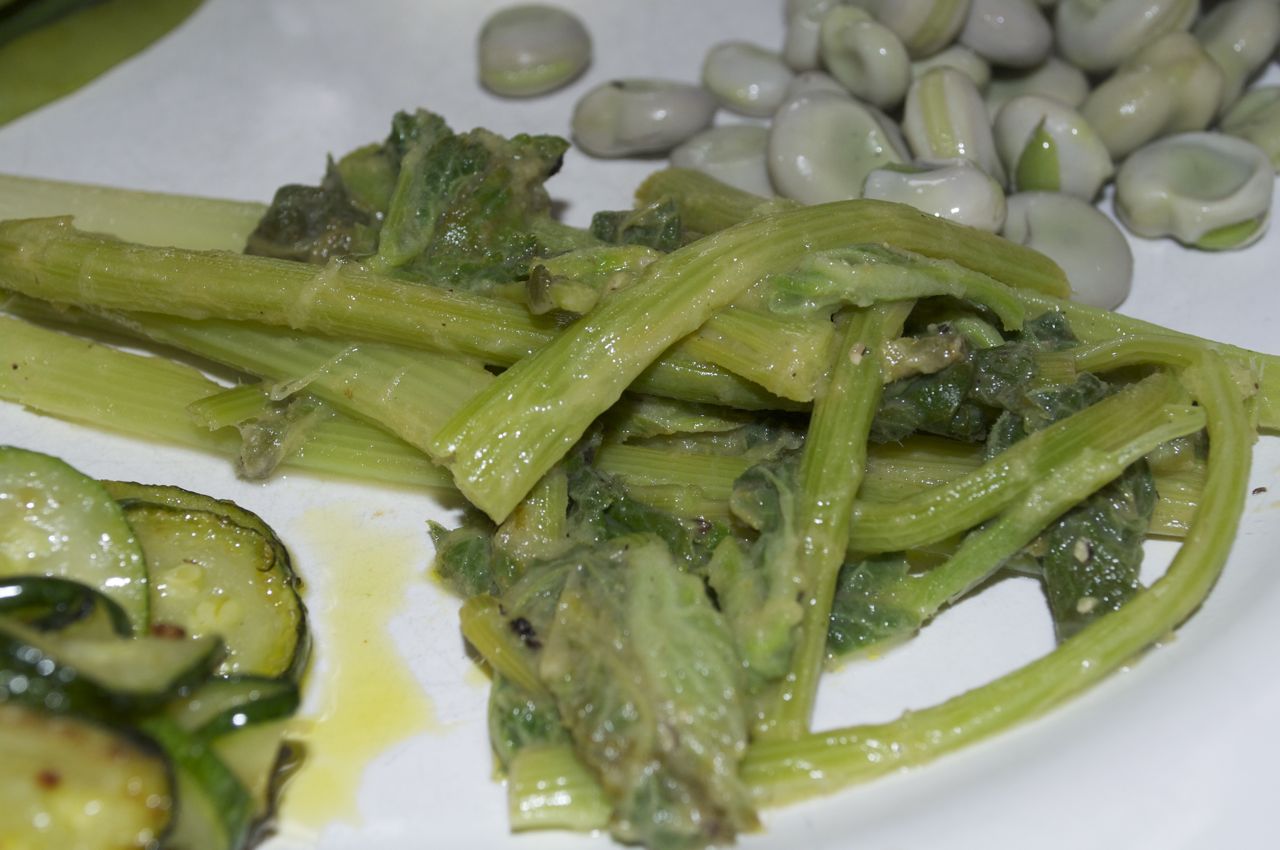
I removed them from the steamer after 4 minutes and finished them on a pan with a generous knob of butter and some salt and black pepper, about 2 minutes. We enjoyed them for our dinner with vegetables from the garden including broad beans, potatoes, French beans and a nice fresh salad.

After steaming for a few minutes toss the shoots in butter seasoned with salt and black pepper and cook for a couple of minutes more.

The Verdict

The flavour of the hogweed shoots was somewhere between the better side of angelica and fresh Florence fennel, unique and quite tasty, strong and distinct. On their own perhaps too strong but with salad leaves they were good. I will definitely try them again, perhaps with a good stake or as part of a pie or quiche. I recommend you to try them too…

Hogweed shoots sautéd in butter on my dinner plate

This slideshow requires JavaScript.

Well done to the rare un-staked! – Herbaceous Perennials that stand up for themselves…

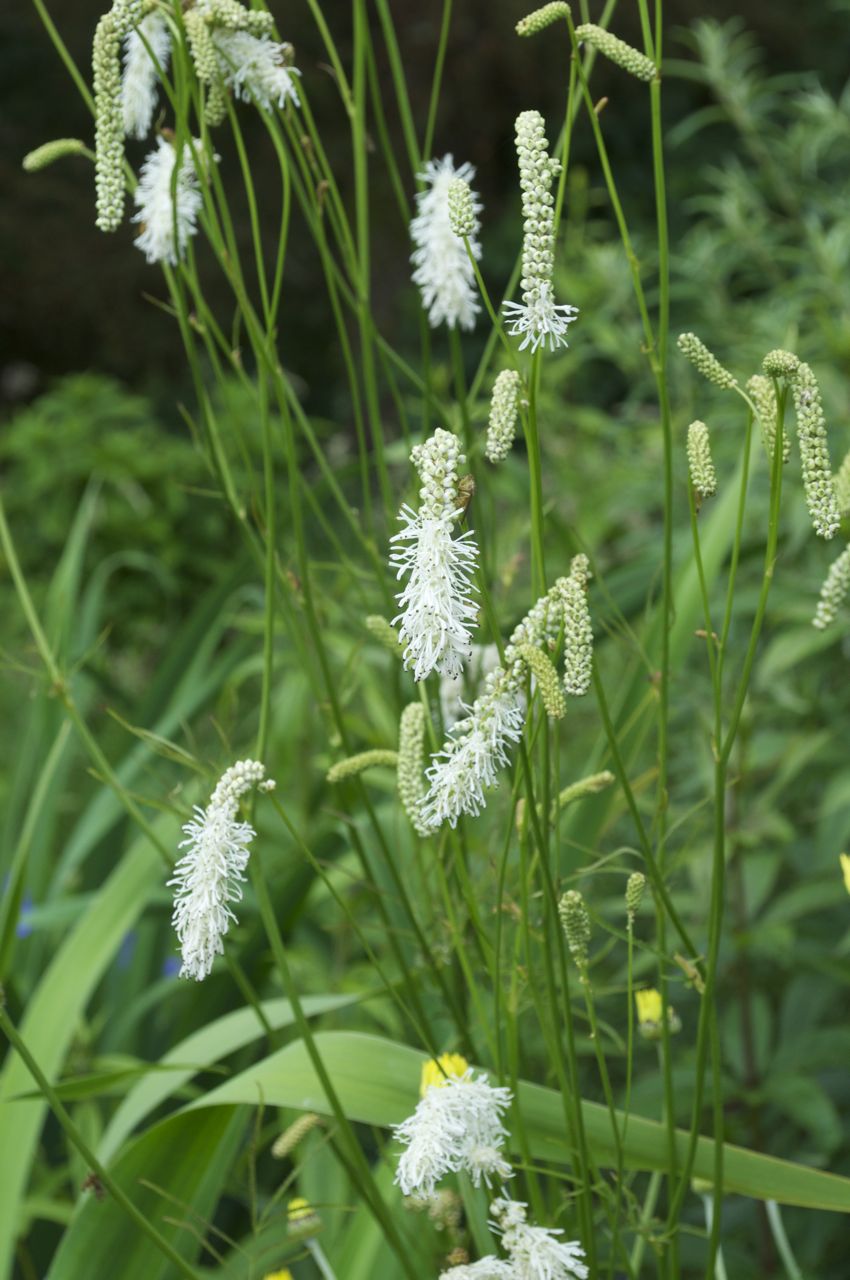
Sanguisorbia tenuifolia ‘Pink Elephant’

I love gardening but there are some jobs that are laborious and feel like a waste of one’s good time if they have to be done too often, cutting the grass is one such task, staking herbaceous perennials is another. The former job is reduced by having less grass areas and more plants, and in my own case my wife is quite keen to mow the grass. With grass area reduced the planting area increases and so too do the number of herbaceous perennials that find their way into our borders where they mingle with shrubs, trees and bulbs.

Many herbaceous perennials have a tendency to flop, even more so in the west of Ireland than in other parts of the world. The frequent strong winds play havoc with Delphiniums and combined with high rain fall that encourages lush soft growth, many plants that are recommended in books by authors from parts of the world that enjoy hot summer days do not perform well without staking in our garden. Many plants that for them do not require staking end up as a sorry tattered, broken and flopping mess in a Mayo garden. We have to choose carefully, only the sturdiest growing perennials are going to remain upright and un-bowed.

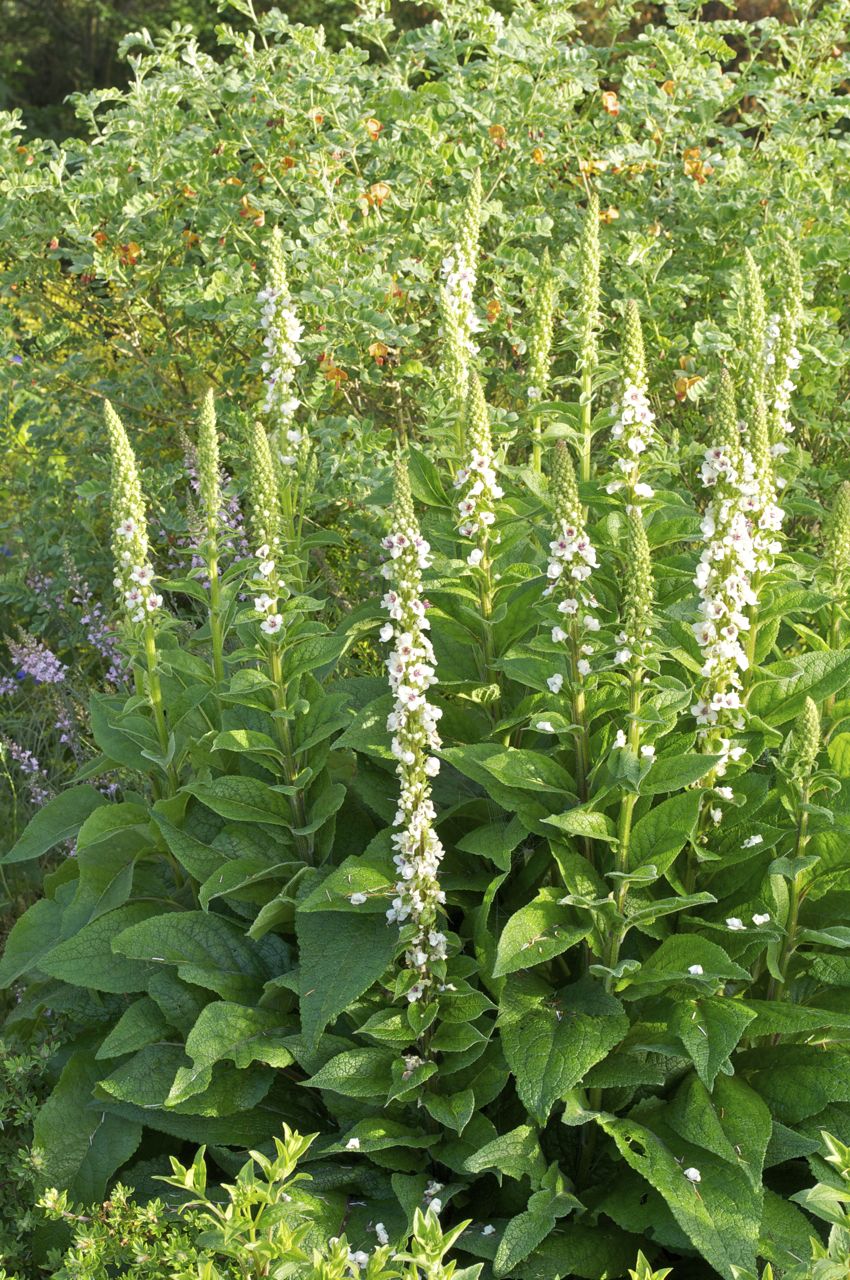
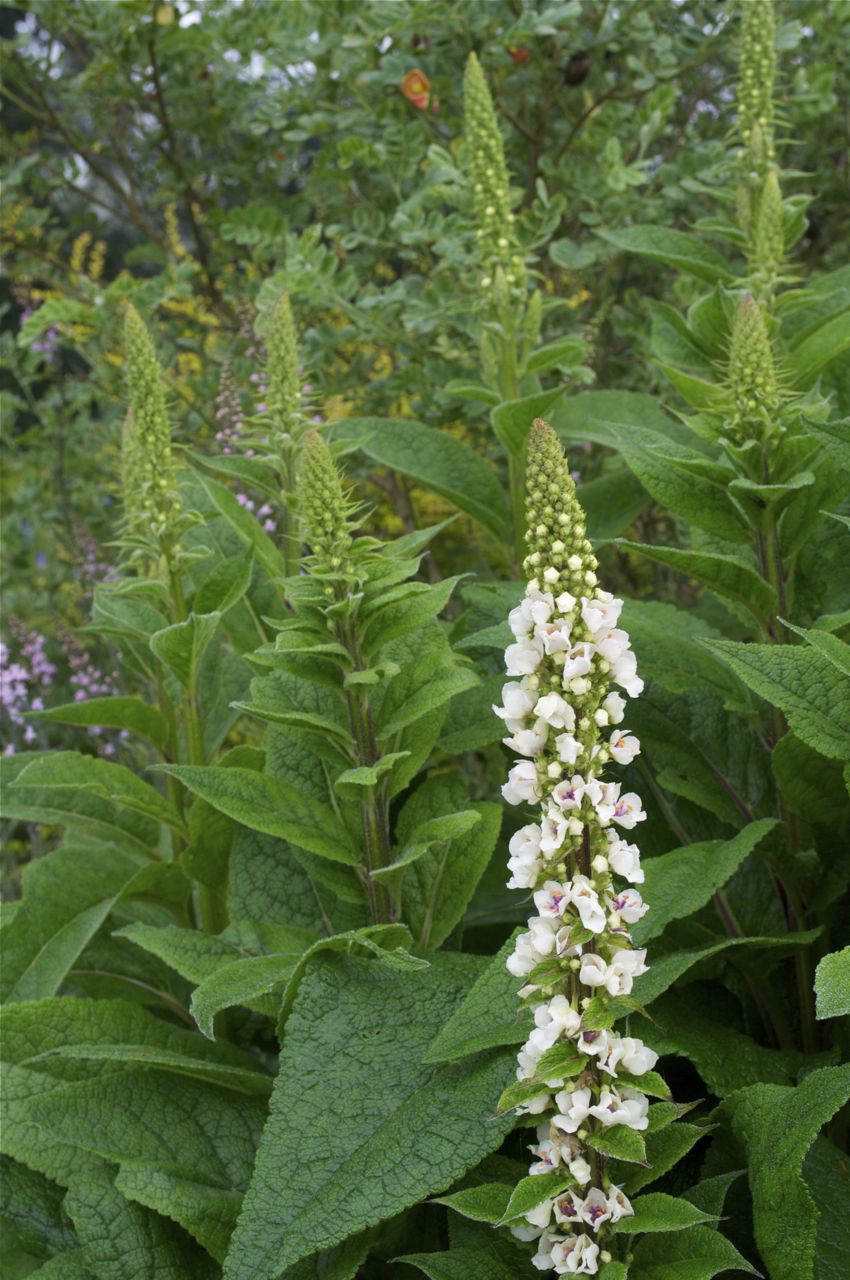
Verbascum flavum, V. ‘Elin’ and Persicaria polymorpha in our garden 6-July-2012

It is not that I am totally adverse to doing any staking, I have no problem each spring to insert a couple of metal herbaceous plant supports around a fine clump of bluish leaves of Thalictrum flavum. Each year it taunts me, making me think that at last I have managed to get it right, then a day of wind and rain in the middle of June shakes it and throws it around. Despite my endeavours it always ends up looking like a drunkard slumped over a bar on the morning after while its bent flower stems lie wet and bedraggled over its carefully placed plant supports. So it was with great joy that I found Thalictrum ‘Elin’ at Camolin Potting Shed nursery a few years ago. I was ensured it would stand tall and proud over 2m high without the need to stake it, and it is true. Some stems wave and even waver, but they do not break and the whole clump is a breezy cloud of white stamens and tiny pink petals on strong and wiry dark stems.

Thalictrum ‘Elin’

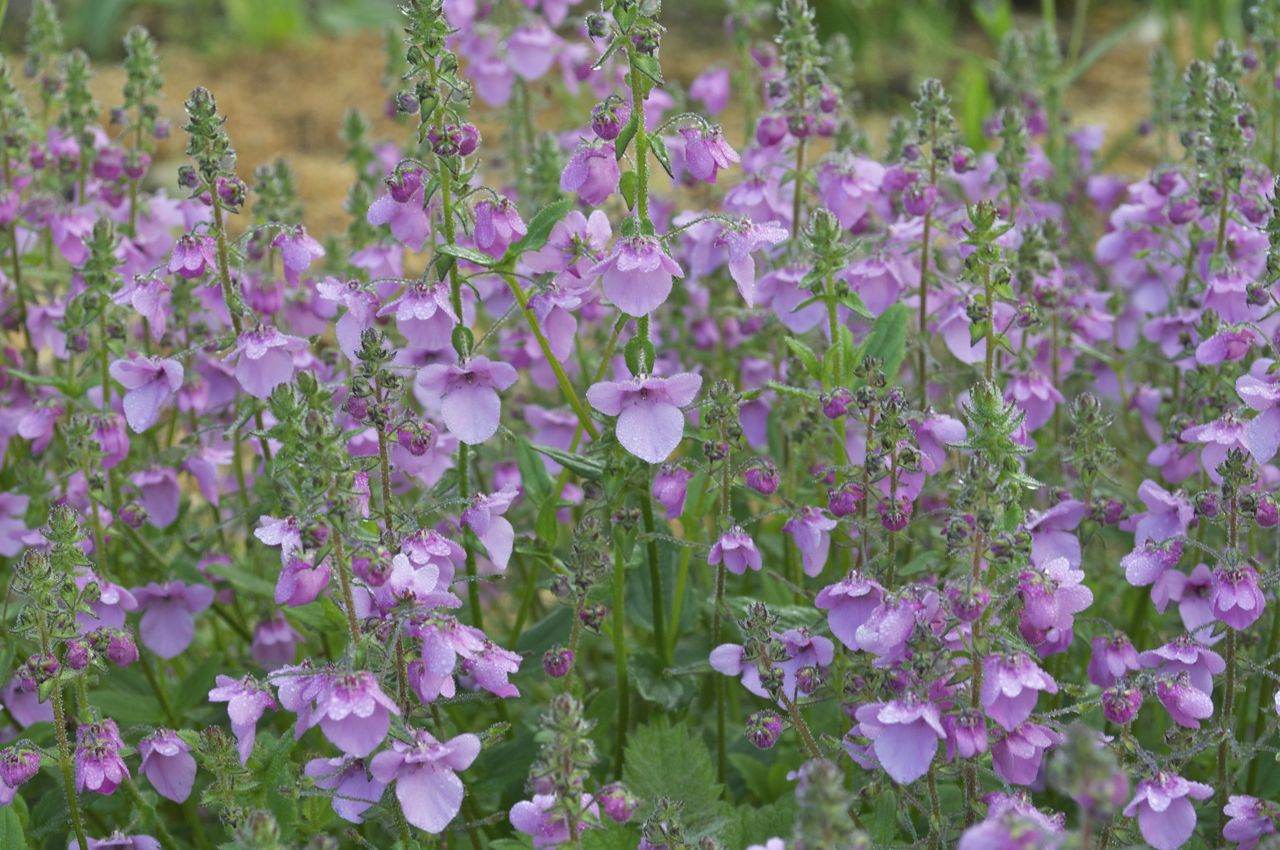
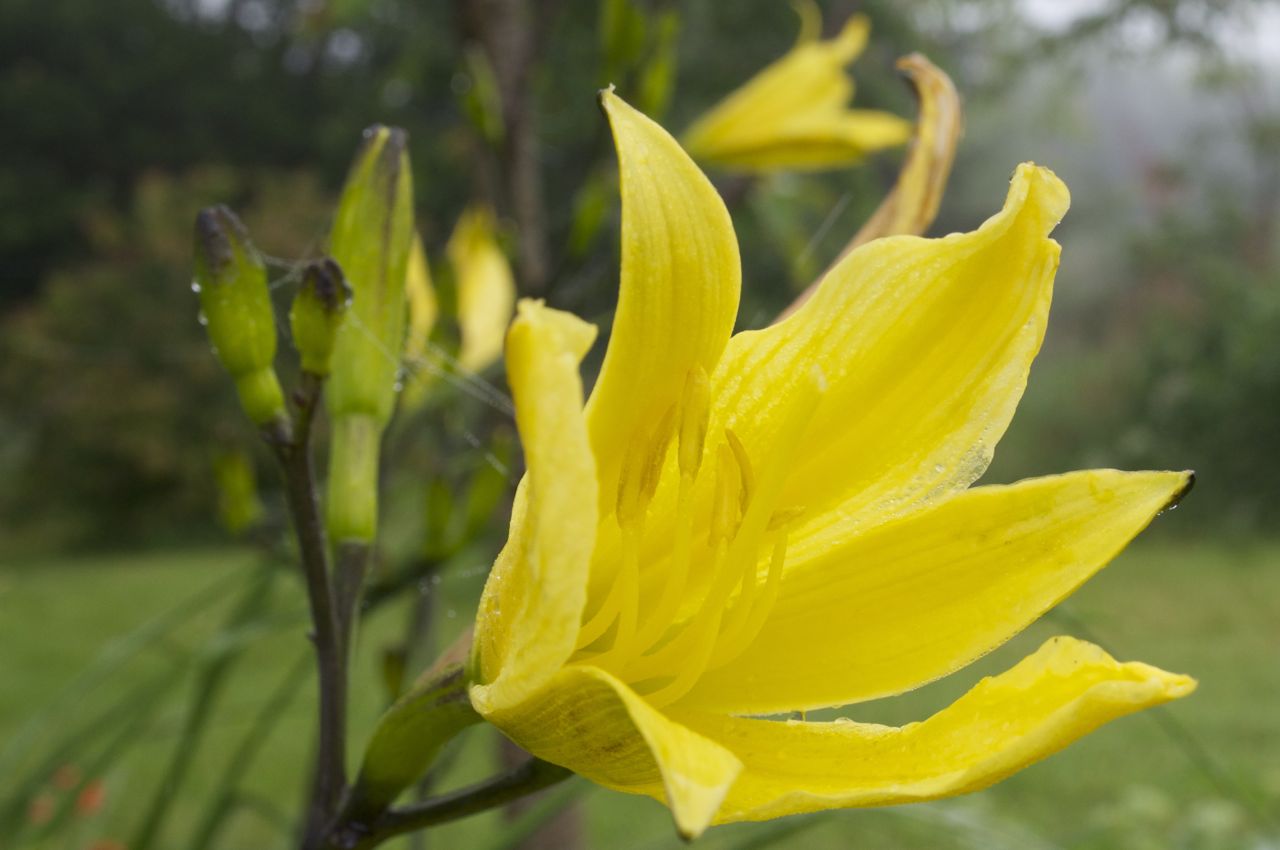
There are others that stand well in our garden; Sanguisorbia tenuifolia 1.5 metres of drooping fuzzy infloresences, Verbascum chiaxii ‘Album’ conical heads of pink centres white flowers above sturdy leaves; the beautifully scented nocutrnal flowering Hemmerocallis citrina whose blooms open in the evening carried on dark almost black stems and the giant white fuzz of white flowers that is Persicaria polymorpha which is 2m high and wide, resolute and defiant even in a howling storm.

Sanguisorbia tenuifolia ‘Alba’
Verbascum chiaxii ‘Allbum’
Hemerocallis ‘Elin’
Persicaria polymorpha

This slideshow requires JavaScript.

Honey Berry, Siberian Blue Berry – Lonicera caerulea var. kamstchatica

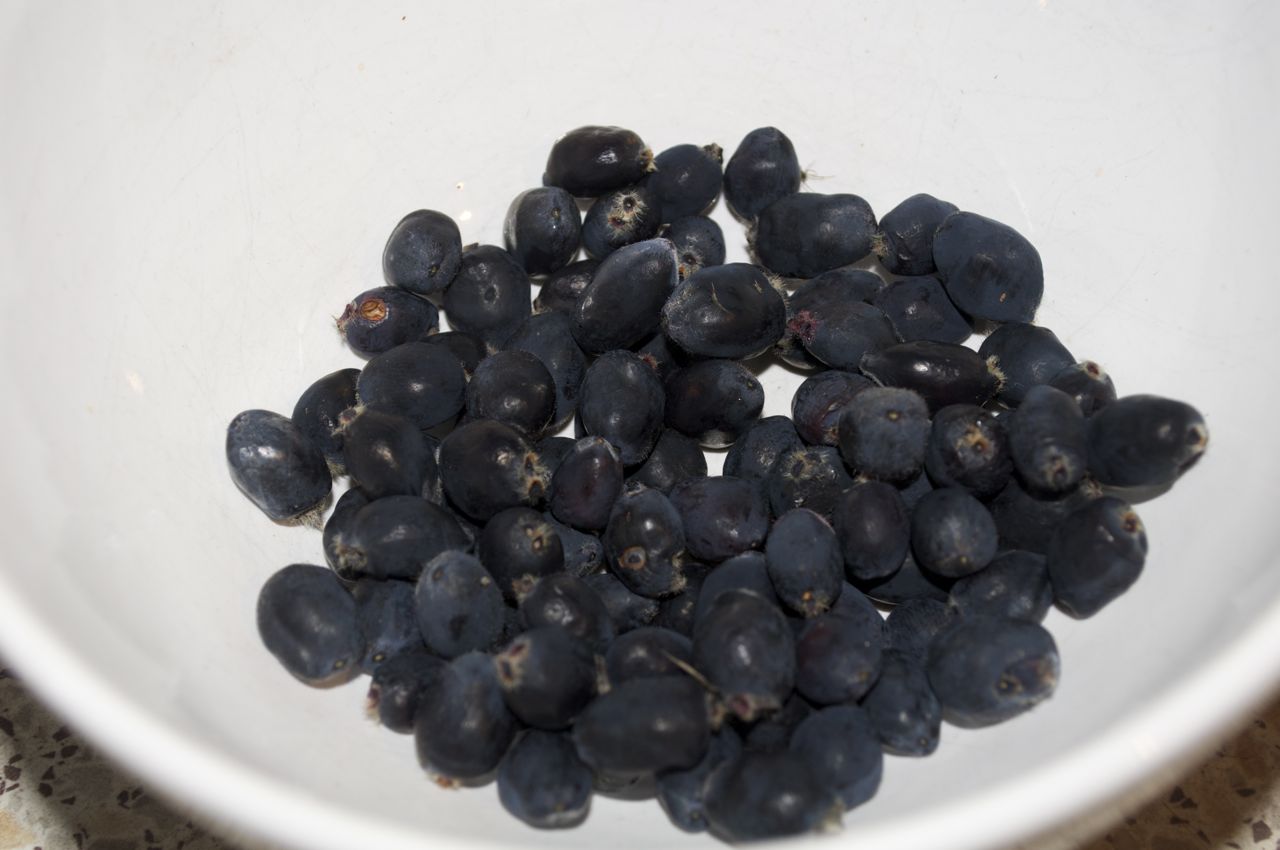
Lonicera caerulea var. kamstchatica – berries in a bowl

This morning before I left to supervise the Royal Horticultural Society examinations taking place in our Galway centre today, I enjoyed a bowl of muesli topped with berries of Lonicera caerulea var. kamtschatica- it is so uncommon in gardens that there has yet to be a common name adopted for it; honey berry, blue honeysuckle and siberian blueberry.

Whatever you wish to call it, this is a berried plant to get excited about. The fruits have a taste similar to blueberries and are packed with Vitamin C, and unlike blue berries it will grow in alkaline soils! ANother great feature of this shrub is that the fruits ripen very early in the year, before such fruit bushes as black currants.

Lonicera caerulea var. kamstchatica – fruit on bush

Home for Lonicera caerulea var. kamtschatica is Kamtschatka Penninsula in north east Siberia. The plant can survie minus 40 Celcius and the flowers which are borne in Spring will tolerate frosty conditions as cold as minus 8 Celcius.

I first came across the plant in Finland, or rather in a book written by a Finn, Lief Blomqvist. In his book Puutarhan marjat (Garden Berries) he inspires me with his amazing range of edible berries which they grow in Finland. The book is written in Finnish, my wife Hanna translates for me. He also runs a nursery north of Vaasa, which apart from stocking perennials and shrubs, stocks old, rare and winter hardy (in mid-Finland) apple varieties and unusual fruit and berrying plants. We visited his nursery last summer and were amazed by the range of plants on offer, especially the fruits.

Each summer when we return from Finland, we do so with a few plants in our suitcases, we usually have to post home dirty laundry! The first time our luggage contained two sea buckthorns, Hippophae rhamnoides, ‘Rudolf” and ‘Raisa’, male and female. Despite being stripped of their rootball clothing of potting compost they established well and last summer after three years, we enjoyed out first crop of berries.

Varieties of  mock orange Philadelphus ‘Erectus’, sand cherry, Prunus pumila and of course Lonicera caerulea var. kamstchatica have been among the many to make the southern journey in August every year since. The Lonicera has started to fruit well this year. It produces fruits about 1cm long hidden amongst the foliage. The fruit ripen early, before any of the other bush fruit and the taste similar to blueberries.

The plants grow about the same size as black currants, about 1.5m and live for about 30 years, although it is said that their peak production is on plants that are between 7 and 15 years old. Cross pollination between two cultivars, like blueberries, provides larger crops. Unlike blueberries, this relative of the honeysuckle does not require acid soil conditions. They grow best in a sunny position and any soil that is not very wet.

Apart from their excellent flavour, the fact that they fruit early is a hugely positive characteristic, they fruit at the same time as strawberries, before currants and gooseberries. We have one plant without a cultivar name with hairy foliage, the first that we purchased. The following year we got L. caerulea var. kamtschatica ‘Duet’. L.’ Duet’ has not fruited well as yet, there was an issue about weed competition, but the other unnamed plant has fruited quite well. The latest addition is L.’Gerda’ which is said to have really big fruits, we wait patiently for its large sized bounty next year. About five weeks ago I took some cuttings of a plant from my mothers garden, an un-named cultivar and they have rooted well.

Lonicera caerulea var. kamstchatica – fruit on bush

The flowers are small, borne in pairs in the leaf axils and are in bloom very early in the year. Although cross pollination is said to produce better crops, our plants are flowering at different times, perhaps this is the reason that ‘Duet’ is not producing well. Next year with L. ‘Gerda’ for company and plants raised from cuttings we should have the flowering seasons well covered and we can look forward to bumper crops…maybe enough for jam, honey berry jam, sounds nice!

Lonicera caerulea var. kamstchatica – mashed and sugared , a fresh jam on home made bread – delicious!

Nasturtium Oatotto (risotto made from oats) -Recipe

“Oatotto” – low food miles version of Risotto

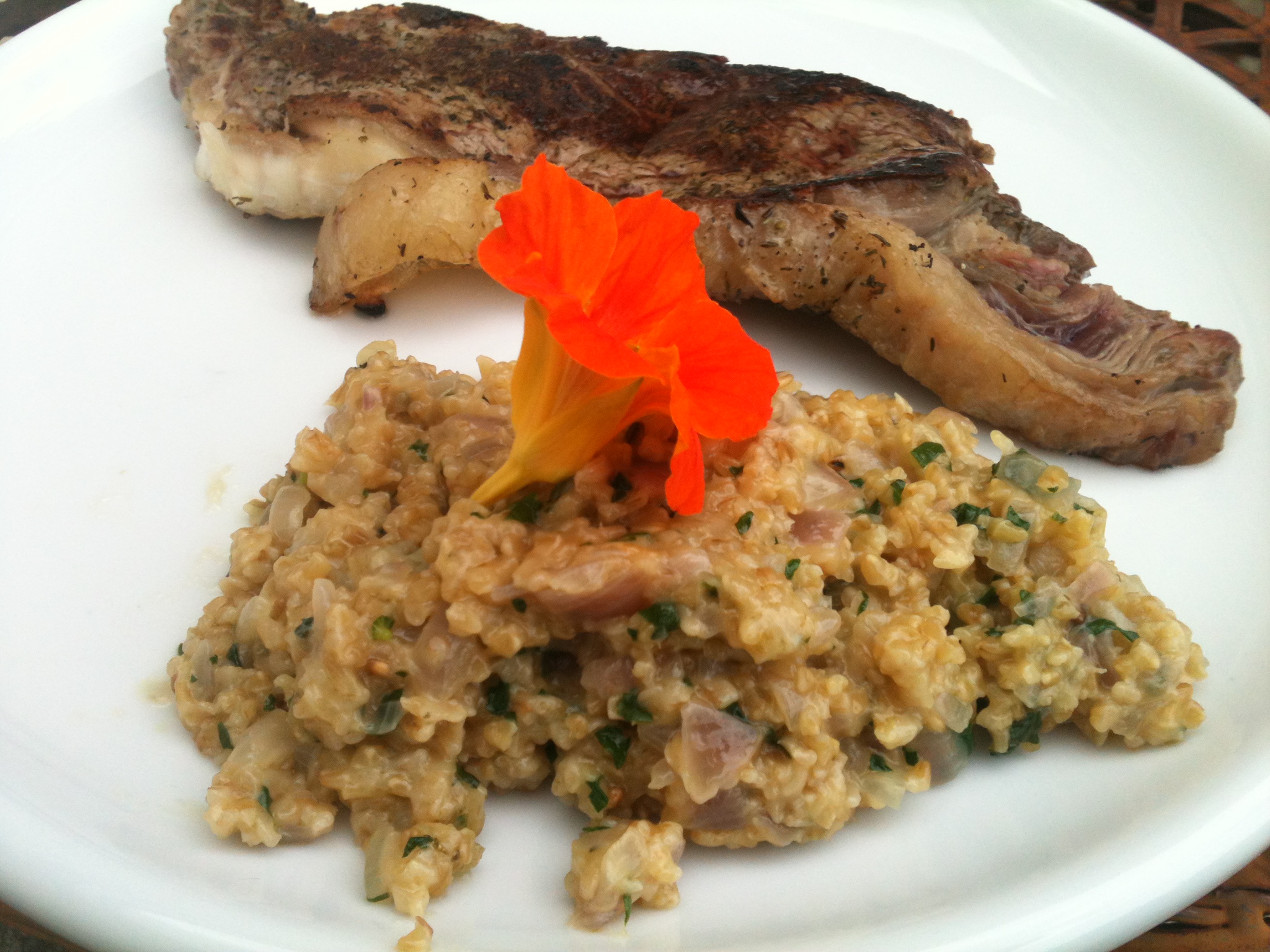
Nasturtium Oatotto with strip loin steak

This is a low food mile version of Risotto using nasturtium leaves. We replace the arborio rice which is used for risotto with pinhead oats, this reduces our food miles. We can’t call it risotto if we don’t use rice so we call it Oatotto! This is something we have been experimenting with recently and we love it. Rice cannot be grown in Ireland but oats are. Pinhead oats are not as common as oat flakes but are available from health stores. As with risotto, the possibilities are endless…

Pinhead oats are also called steel cut oats in the United States, they are whole grain oats, the inner kernel of the oat that has been cut into pieces. Apparently they also known as Irish oats, but they are relatively uncommon in Ireland, perhaps they are more widely used in Northern Ireland as they are in Scotland. Pinhead oats have a slightly nuttier flavour than oat flakes, they are high in fibre and contain iron.

Pinhead oats can be used for porridge producing a coarser texture, they do, however, take longer to cook, as much as 35 minutes, making them ideal for “Oatotto”  I think they could be more widely used in cooking…

Nasturtium Oatotto Recipe

Ingredients:

  • I cup of pinhead oats
  • 2 cups of chicken stock
  • 1 red onion –finely chopped
  • 1 clove of garlic crushed
  • 20 Nasturtium leaves – chopped
  • ½ cup of finely grated Mature white cheddar cheese
  • Oil for frying
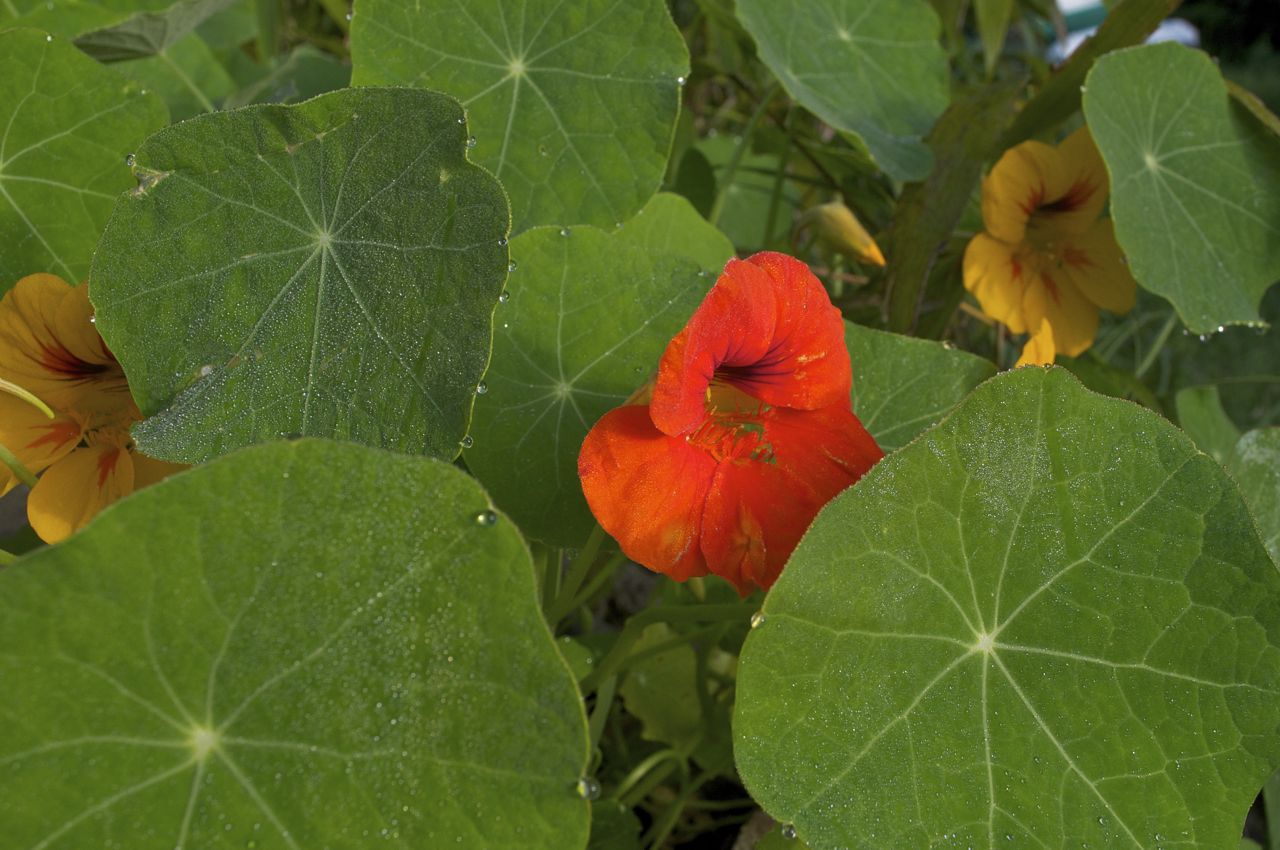
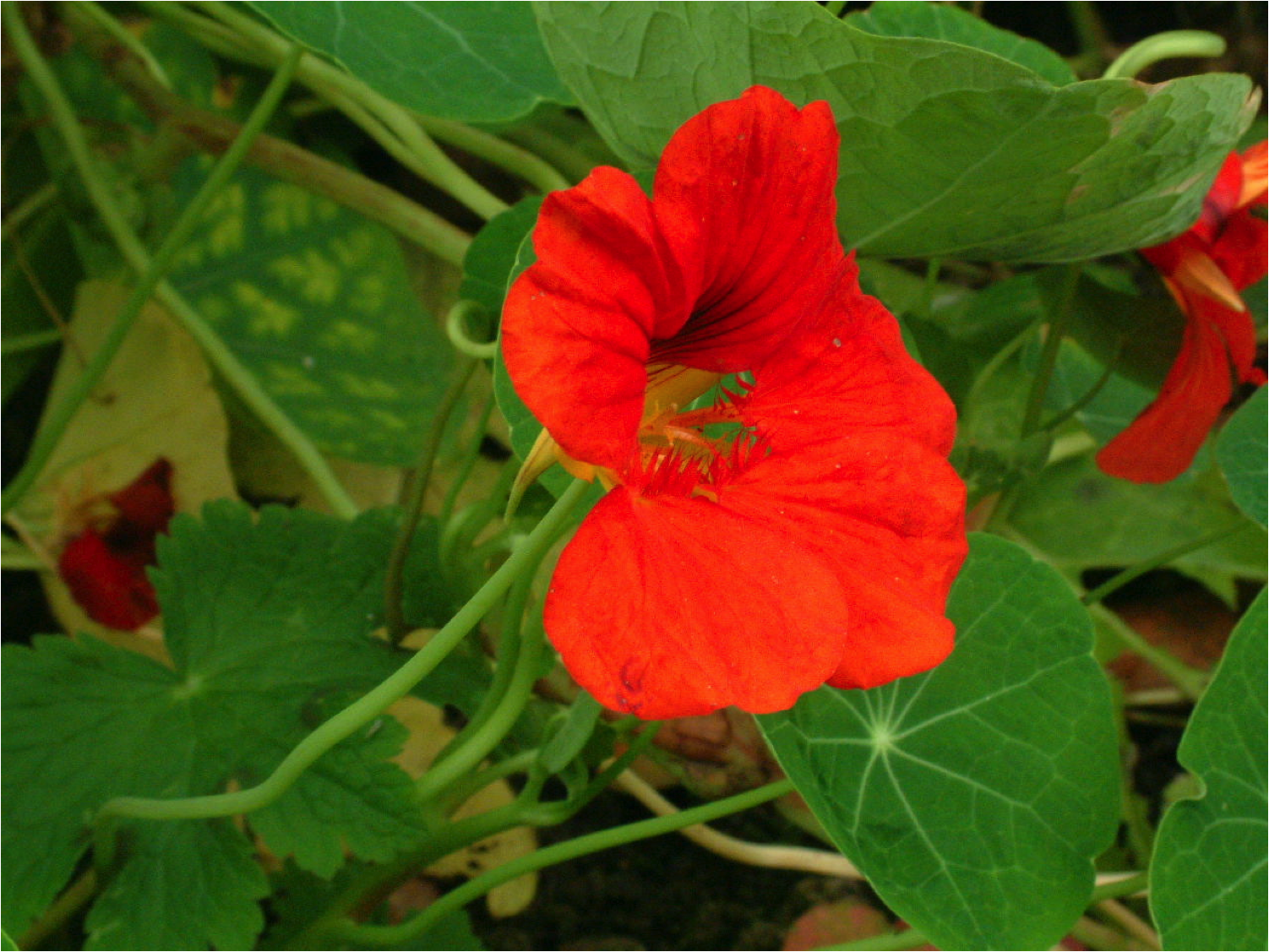
Tropaeolum majus -Nasturtium foliage and flowers (orange)

Method:

  1. Saute the onions in oil until soft, then add the garlic and cook for a few minutes more.
  2. Stir in the oats and cook them for a few minutes
  3. Add the chicken stock, do not stir continuously, if you do the oats will turn into a porridge. Instead move them around occasionally to stop them burning.
  4. Continue cooking until the stock in mostly absorbed, 20-30 minutes. They should be soft but with a little bite, al dente!
  5. Then add the nasturtium leaves and cook for a few minutes.
  6. Remove pan from the heat and stir in the cheese.
  7. Serve garnished with a nasturtium flower.

Serve with fresh garden salad or for carnivores, a nice organic striploin steak.

Tropaeolum majus -Nasturtium – flowers and foliage are edible and both have a nice peppery flavour!