Respect Your Elders – Elderflower Cordial Recipe

Elder flowers and foliage- cultivar selection

It’s wild. Its everywhere. Its elder flower –Sambucus nigra. In the month of June its flat flower heads whiten hedgerows and fields around Ireland. Outside my office window I can see the branches bob and sway with the breeze. Seedlings all too often appear in the garden, unwanted, in abundance. But I don’t mind, the elder flower is a handsome plant and it provides much pleasure, not only to look at, but for the taste buds too.

There are some really good garden varieties of the common elder. The dark leaved S. nigra ‘Black Beauty’ not only has dark seductive divided leaves but also bears beautiful pink flowers. Just like the wild one, it is vigorous and tough. If elders are pruned hard in the spring they re-grow with increased vigour and produce enlarged foliage, but flowers are absent. Dark leaved cultivars can be treated in this manner to produce excellent foliage plants. They provide interest to a herbaceous or mixed border. The finer leaved S. nigra ‘Black Lace’ is excellent when treated this way.

One of my favourite is the green cut leafed cultivar, S. nigra ‘Laciniata’. A beautiful textured plant with darker green foliage than the native species. The flowers are said to be bigger too, but I have been cutting our plants back each year. I moved one to a new position this Spring, this one I will leave to flower. Another with intriguing foliage is S. nigra ‘Marginata’, the leaves are edged with creamy white variegation. It produces flowers in the same way as the species.

The flowers will fade by mid-July and in the Autumn the dark purple berries hang in masses from the branches. Both the flowers and fruit can be made into a delicious cordial. The fruits can also be used for making wine and last year we used the fruits to make an autumn pudding, a recipe I got from an old book which also used sloes and blackberries. A closely related species is the North American S. canadensis. This flowers later in July and I have read that it can produce flowers over a longer period.We have one in a pot which we purchased as a small plant from Turku Botanical Gardens in Finland last summer. I plan on planting this in the garden in the next few days, the idea of being able to harvest elder flowers throughout the whole summer really appeals to me.

Over the last couple of weeks we have been cutting flower heads to make Elder Flower Cordial. if you have not tasted home made cordial, you are really missing out. Sweet and delicious, diluted with still or sparkling water, the taste of summer…

Elder flower cordial is very easy to make. Here is how!

Ingredients:

  • 10 or 12 Bunches of cut flowers, freshly opened flowers are best.
  • 0.5 Kg (1lb) Fruisana fruit sugar
  • 3.0 L water (about 5.5 pint) of water
  • A lemon cut in four
Elder flowers and lemon

Method

I use a  plastic food storage bucket

  1. Wash the elder flowers in cold water.
  2. Place the flower heads in the jar with the cut lemon
  3. Leave in a cool place for 48 hours so that the flavour of the elder infuses.
  4. In a saucepan heat the water and elder flowers, remove the lemon. (you can use the lemon separately to make lemonade)
  5. Dissolve the sugar in the water and bring to the boil.
  6. Strain the fluid through a muslin cloth and fill into sterilized bottles
  7. Store in a cool dark place.

To enjoy the cordial dilute with water (still or sparkling) about 1 part cordial to 10 water or to taste. It is also great when added as a dash to apple juice.

Elder flower- Sambucus nigra

Changing Perspectives – Show Garden Bloom 2012

Grafitti covered walls, dumped and battered old washing machine and litter strewn ground greet the visitor, not the typical welcome for a visior to a Bloom garden. Between the concrete blocks there are glimpses of a brighter place, a more colourful and welcoming place.

Changing Perspectives designed by David Shortall and Peter Fitzpatrick

This was a show garden that took the visitor on a journey, to understand the barriers of disability and the potential of those who are allowed to develop their gifts once such barriers are broken down in our society. The vandalized walls represent untapped talent and expressions of the individuals that could be art work in a different environment. The visitors enter the garden through a vortex emerging into a place of hope, opportunity colour and beauty.

Changing Perspectives designed by David Shortall and Peter Fitzpatrick

David Shortall one half of the garden design team works with REHAB, an organisation who for over 60 years, has been supporting people with disabilities and the marginalised to achieve their goals, maximise their potential and participate fully in communities.

The full effect of their contrasting effect was nearly ruined by the hard working cleaning staff working in the show gardens area at Bloom. Dedicated workers picked up every bit of his show garden litter, even the tiniest pieces of plastic, luckily the garden designers were able to quickly get their hands on some rubbish to throw around their garden.

Changing Perspectives designed by David Shortall and Peter Fitzpatrick

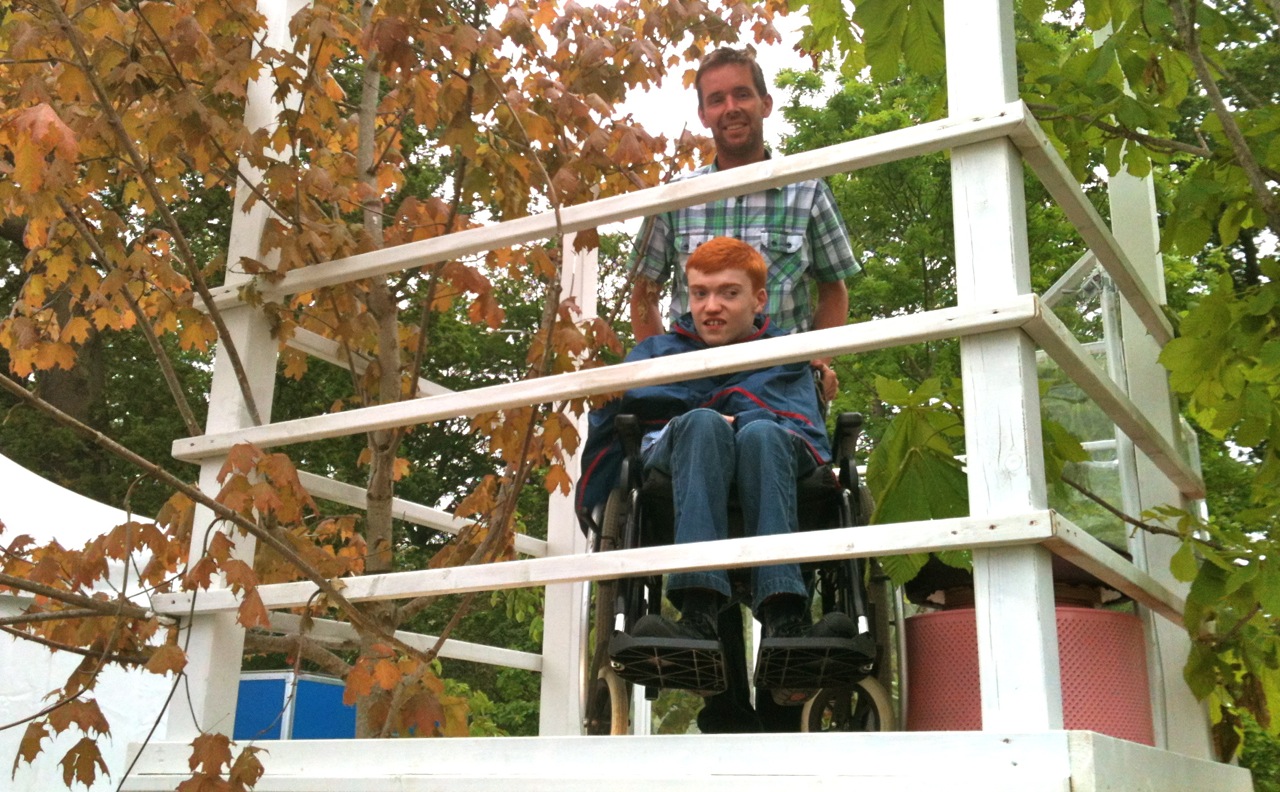
A feature of the garden was a wheelchair accessible tree house which some lucky visitors were able to enjoy and get a high point view of the Bloom show gardens.

A happy visitor to the wheel chair accessible tree house!
Changing Perspectives designed by David Shortall and Peter Fitzpatrick

All the plants in the garden were grown by people on REHAB programmes and garden furniture and sculptures were made from recycled materials like old washing machine drums that made up the stylish garden seating. The garden was a show garden with a different perspective,  demonstrating the challenges faced by people with disabilities, and the need to break down barriers, and demonstrated the important role art, horticulture and gardening can play in developing opportunity and allowing people marganilised by society to find expression. A garden which was about people,  all people.

Changing Perspectives designed by David Shortall and Peter Fitzpatrick

This slideshow requires JavaScript.

EXPERIENCE THE JOURNEY THROUGH THE VORTEX BY WATCHING THE VIDEO

CHANGING PERRSPECTIVES A SHOW GARDEN AT BLOOM

 Learn about the work of REHAB

http://rehab.ie/

Cookie and Creams (and bunnies) = Gold – Show Garden by Leonie Cornelius Bloom 2012

Cookie and Creams Reclaimed Sanctuary (RTE Supergarden winner) by Leonie Cornelius

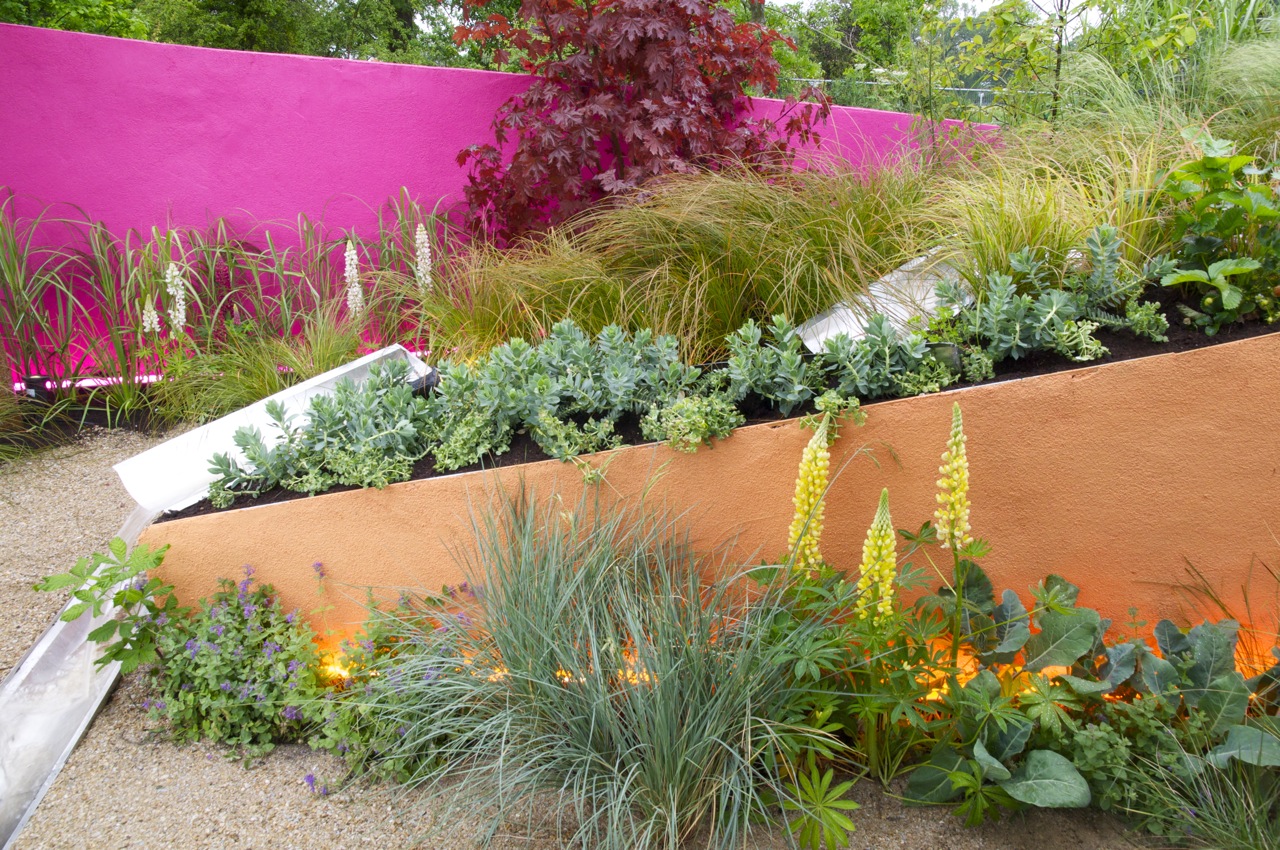
A contemporary garden which blends architecture and natural beauty and is built with reclaimed materials. Old windows, leftover steel and scrapped scaffolding become a classy garden hut. Straight edges and strong lines are softened with meadow style plantings, this garden combines formal elements with informal planting and it works. Hard lines are blurred with softness, and for an extra bit of cuteness it even has bunnies! Yes, that is right, a pair of rabbits are hopping around in their contemporary designer hut beneath a prairie style planting scheme.

Leonie Cornelius is at Bloom because she won the competition television programme Super Garden. I don’t care much for the TV series with its emphasis on “drama” rather than gardens, but if it can result in new talent like this being brought to BLOOM, then it does have its positive side. I really like this garden, and the bunnies are cute too. No wonder it got gold and judged to be the best in category medium garden.

Cookie and Creams Reclaimed Sanctuary (RTE Supergarden winner) by Leonie Cornelius

This slideshow requires JavaScript.

Leonie Cornelius Website http://www.blume.ie/

Jane Mc Corkell’s My Garden is a garden for everyone -BLOOM 2012

Bord na Mona Growise ‘My Garden’ by Jane McCorkell

Maybe it’s the economic climate, maybe people are more nostalgic when times are hard and we reminisce with our rose tinted glasses as we look back on the days that were better. Some of my favourite show gardens at Bloom have a touch of the past about them, where the simplistic design relies on a strong selection of plant material and the emphasis on plant composition. The overall large garden category award went to Jane McCorkell for her entry “Bord na Mona Growise ‘My Garden’, a garden with straight borders and a central lawn. Simply a gardeners garden, lots of colourful herbaceous planting, a veg patch, greenhouse and potting area.  I like it a lot!

Bord na Mona Growise ‘My Garden’ by Jane McCorkell

The garden which was designed as a space that can be recreated by visitors in their own homes incorporating a working garden for horticultural enthusiasts while offering an engaging space for all the family.  Jane Mc Corkell has had four previous entries at Bloom and she sets a high standard where nothing less than gold is the result.

Bord na Mona Growise ‘My Garden’ by Jane McCorkell

This slideshow requires JavaScript.

http://www.janemccorkelllandscape.ie/

Greenhouse Gold at Bloom 2011

Greenhouse by Patricia Tyrrell and Deirdre Prince

A sustainable front garden for an urban house. Often such themes are lacking charm and beauty but Greenhouse a Gold Medal Winner and best in Category small garden at Bloom this year’s Bloom has it all; style, simplicity, charm and a bin storage area with a green roof that doubles as a herb garden!

Greenhouse by Patricia Tyrrell and Deirdre Prince

http://deirdreprince.ie/deirdreprince/ABOUT_DEIRDRE_PRINCE.html

Bloom is Irelands biggest gardening, food and family festival and I open each day from 10 to 6 until Monday. LINK

Greenhouse by Patricia Tyrrell and Deirdre Prince

This slideshow requires JavaScript.

Nasturtium Pesto – Lower Food Miles Version- Recipe

Nasturtium pesto with Spelt Spaghetti
Nasturtium Pesto with Spelt Spaghetti

We have The Garden School at BLOOM this year situated in the “Budding Bloomers” area. We are hoping to inspire future generations of gardeners by teaching children (and many adults) how to make plant pots from newspaper and then sow a nasturtium seed into peat free compost.

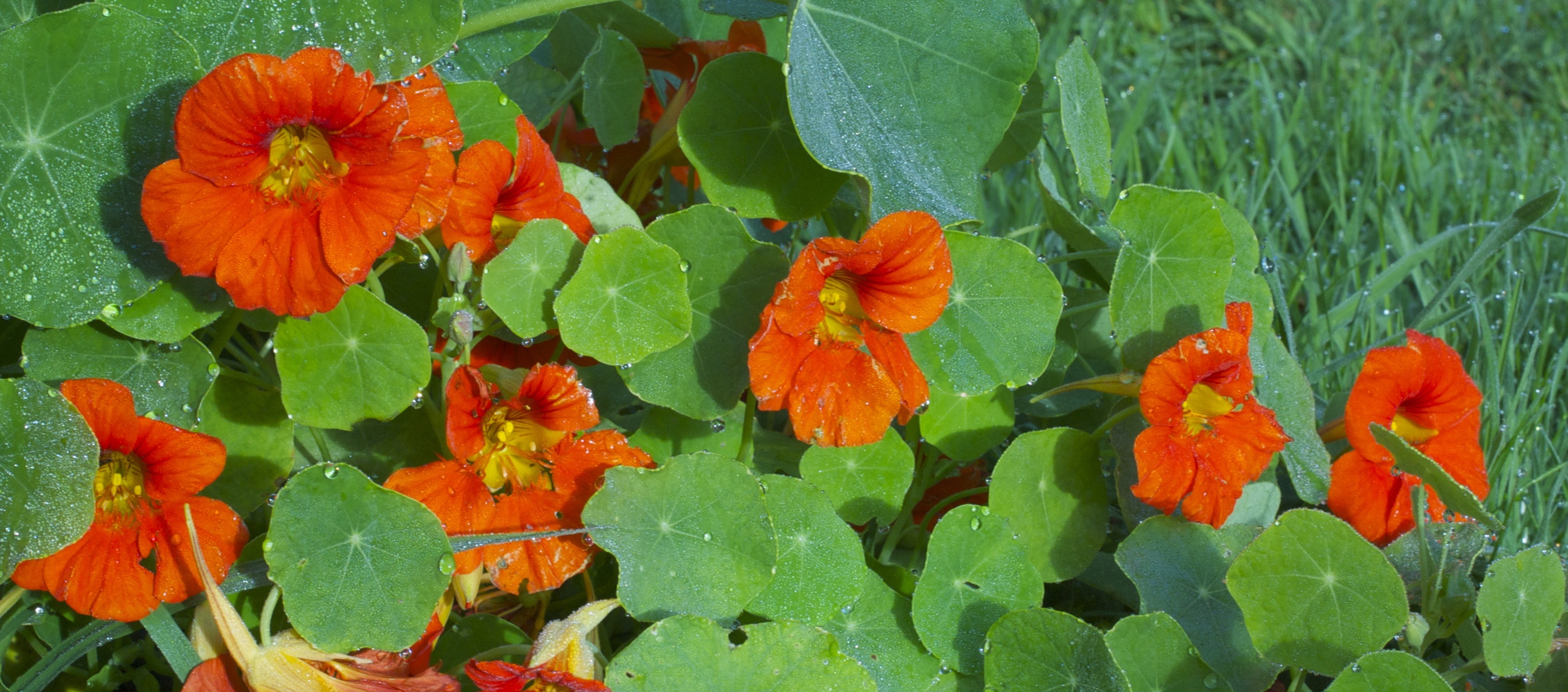
Nasturtiums are ornamental and edible. The simplest way to enjoy tem is to tear the leaves and petal into a salad. I love to use nasturtiums as pesto. featured here is our own lower food miles version that ses Irish produced rapeseed oil, irish goas cheese and sunflowers are cheaper than pine nuts, it is delicious.

we have a free nasturtium recipe booklet available for free download from The Garden School website. There are also some videos on how to make the pots!

http://www.thegardenschool.ie/THE_GARDEN_SCHOOL/BLOOM_2012.html

Nasturtium Pesto – Lower Food Miles Version- Recipe

Ingredients:

50g nasturtium leaves

2 garlic cloves, crushed

6 green nasturtium fruits

50g sunflower seeds

75g of Kilmallock organic goats cheese

juice of half a lemon

150 ml of olive oil Rapeseed Oil

Some salt, according to taste.

Method:

Throw everything into a food processor. Let it whizz around for a couple of minutes. The mixture should be well blended, a nice green colour.

The mixture can be used straight away, but this quantity will give you enough to fill a couple of small jars. When filling the jars pour a little oil on top of the pesto to seal them and help preserve them. They will keep for a few weeks.

 Image
Image

Stuffed Red Mustard Leaves – Recipe

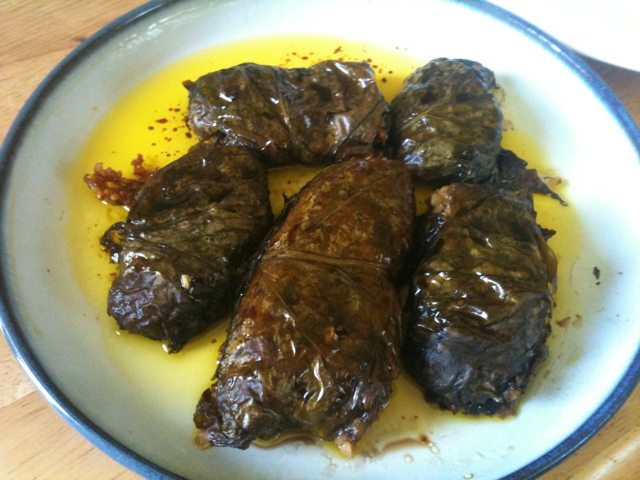
Stuffed Red Mustard leaves with pinhead oats

Last year we sowed red mustard leaves, Brassica juncea ‘Osaka Purple’, in neat rows in our salad bed in the vegetable garden. This year it is coming up all over the vegetable gardens and beyond. The large floppy red leaves are mottled green and the flowers are yellow and typical of the cabbage family.

It grows easily and rapidly, their hot flavour is delicious when mixed with salad greens, but there is always too many of them. The majority of the plants end up going to seed and hence, their random and rapacious appearances grabbing land and spreading faster than Genghis Khan. So what to do with all these lovely leaves? The answer, perhaps it is stuffed leaves with pin head oats…

INGREDIENTS
– 12 large red mustard leaves
– 1 Onion, chopped finely
-1/2 Chilli chopped
– 1/2 cup of pinhead oats
– Dessert spoon of honey
– Handful of raisins
– 1/2 cup of water
– Oil for frying

METHOD
1. Remove the base of the leaf stalk, and put the leaves in a steamer to wilt the leaves. This makes them easier to roll. Place them face down on a flat surface.

2. Fry the onions until they are soft. Add the chopped chilli and the oats. Fry to toast the oats, stir continuously, about ten minutes.

3. Add the water, raisins and honey, and cook until the oats are softened slightly, about 15 mins.

4. Remove from heat and put a heaped dessert spoonful of the oat mixture on each leaf.

5. Roll the leaves around the mixture and fold in the ends.

6. Place the rolls into a Pyrex dish, you can stack them if you need to, cover them with water and place on the lid.

7. Put in a heated oven 190 Celcius and cook for an hour. Check occasionally to make sure the water does not boil away completely. Add a little if needed.

8. When done, remove from oven dish and transfer to a serving dish. Drizzle over some rapeseed oil.

Serve hot or cold.

20120528-122049.jpg

Red Mustard- Brassica juncea "Osaka Purple'
Red Mustard- Brassica juncea “Osaka Purple’
Red Mustard Leves (centre) in rows in salad bed