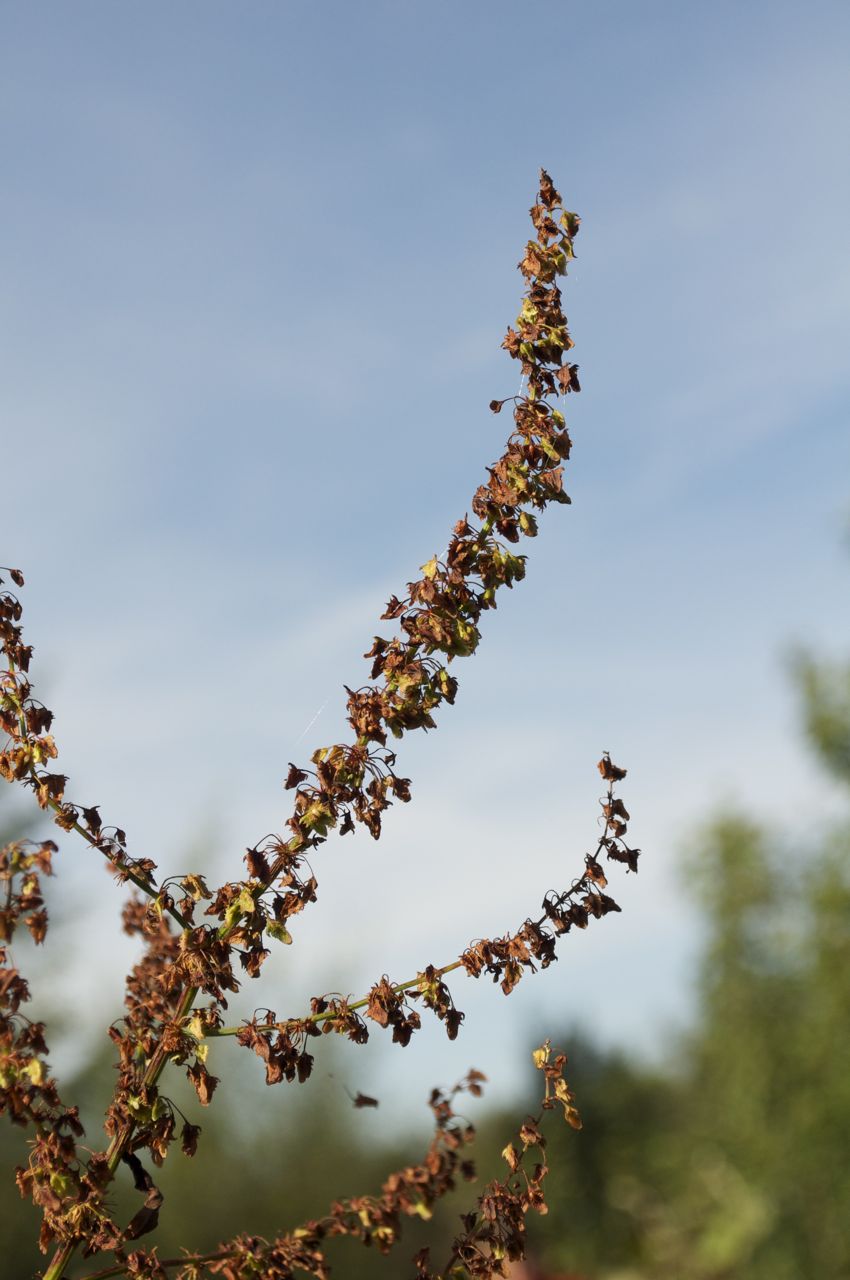
Rub them on a nettle sting. Apart from that what are dock leaves good for? Well, for a long time I have struggled to find a reason to allow a dock leaf to exist in the garden. Rumex obtusifolius the broadleaf dock is a deep rooted perennial, a thick tap root that is almost impossible to dig from the ground without it breaking. Any portion that remains in the soil will regrow, causing annoyance for most gardeners. Their large oval leaves with wavy edges are not pretty, coarse and rugged, the flowers greenish brown on a ribbed stem that reaches 60-90cm (24 – 36in) high. The flowers each form a pod which turns a dark reddish brown. The wind shakes them free and into the soil they fall, a new dock leaf will grow.
Dock seeds on plant
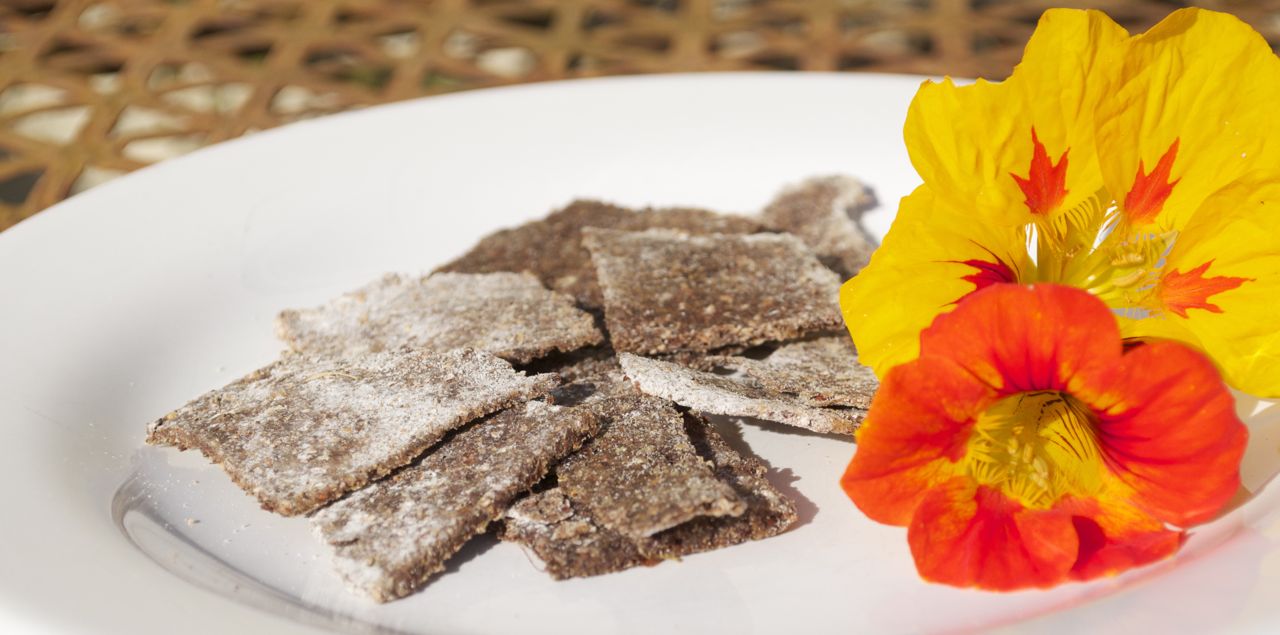
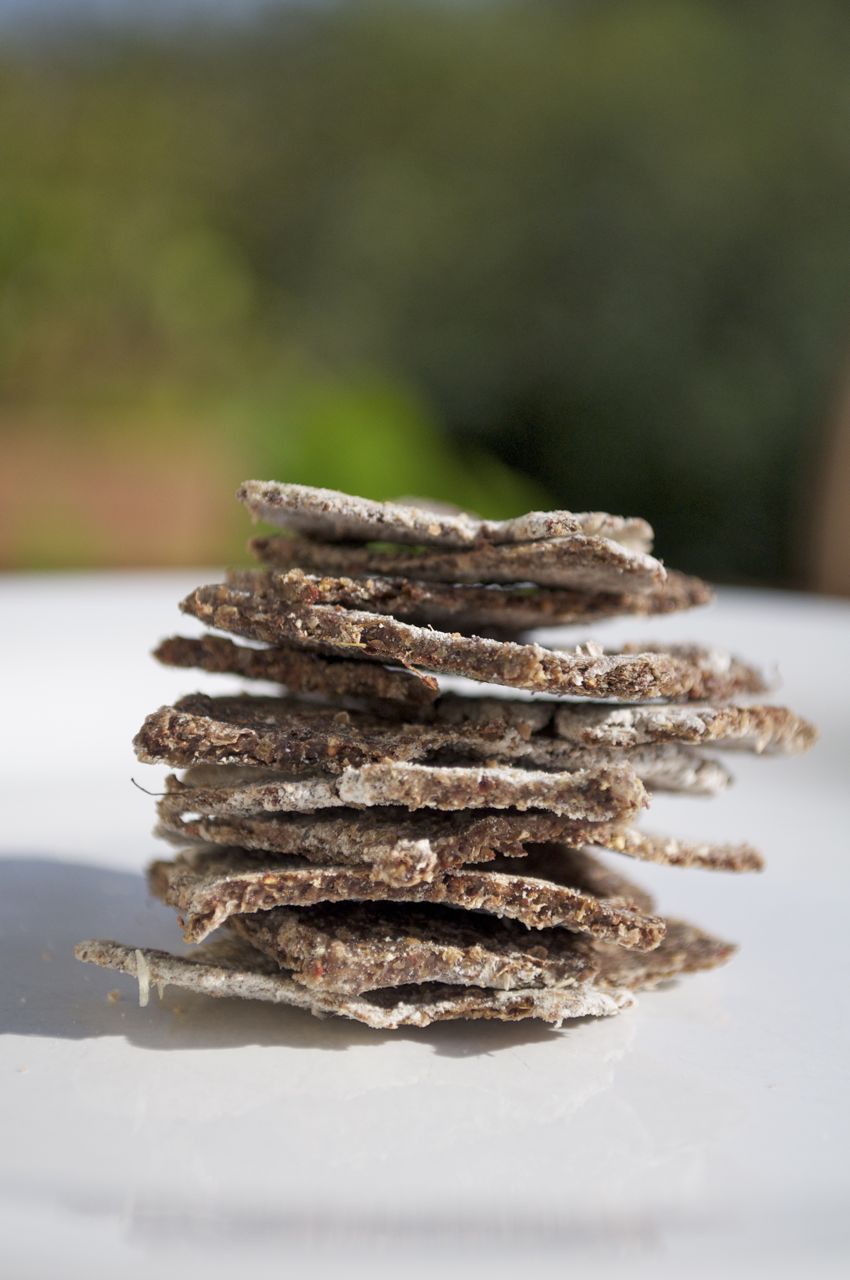
It is the seeds that have given the dock leaves in our garden a reprieve. Easily rubbed from the stems they can be ground up to make a fine flour. Mixed with spelt or heat flour they can produce a tasty mix, a crispy cracker to enjoy with cheese or pickled cucumber.
Dock seeds in hand
Harvest the dock seeds when they are dark brown. Make sure they are dry, best to collect them when the weather is dry.
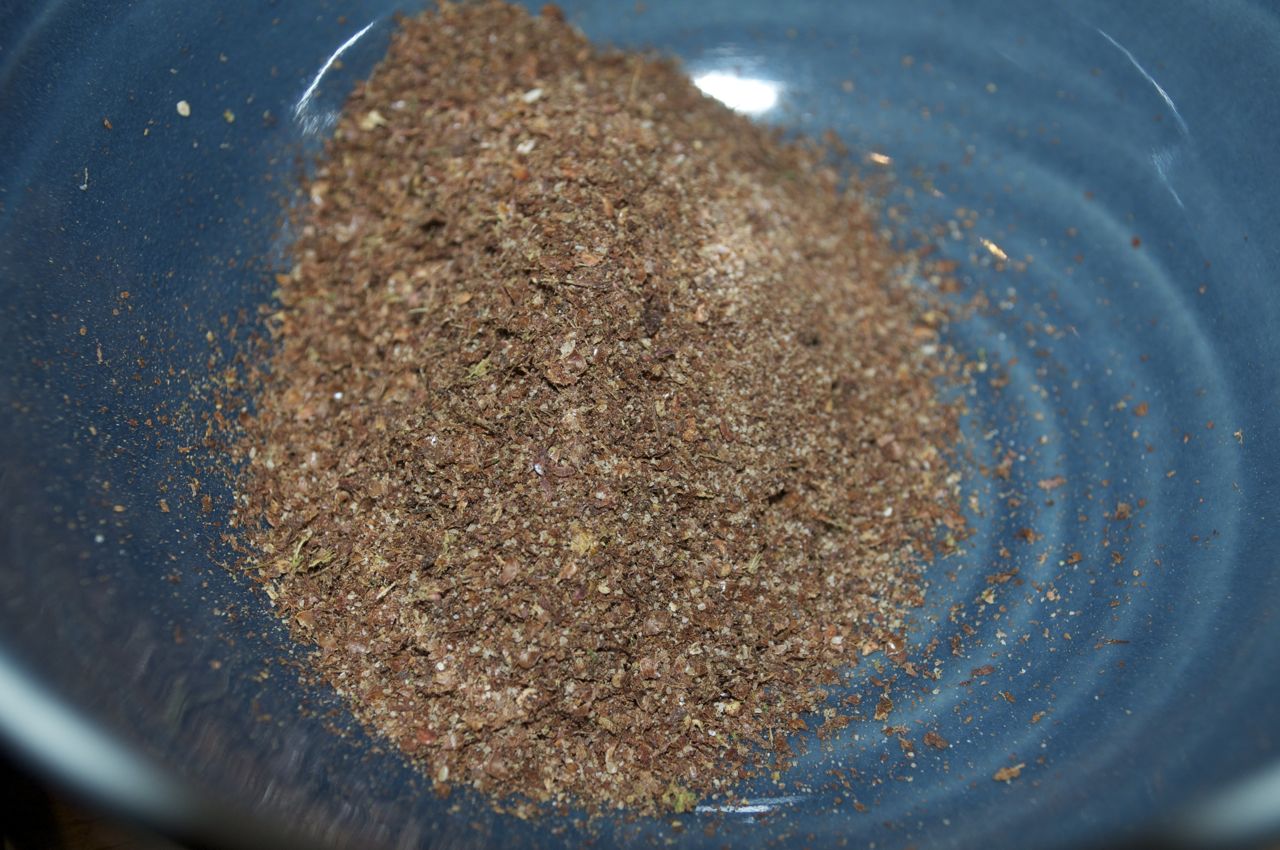
We first placed the seeds in a coffee grinder and then ground them finer using a pestle and mortar.
Dock seeds ground to a flour
Dock Seed Crackers- Recipe
Ingredients
100ml dock seed flour
100ml whole meal spelt flour
1 – 2 teaspoon of mixed hedgerow spice:
1/3 hogweed seeds
1/3 wild carrot seeds
1/3 lovage seeds
Water
Method
Mix ingredients to a dough that is not sticky.
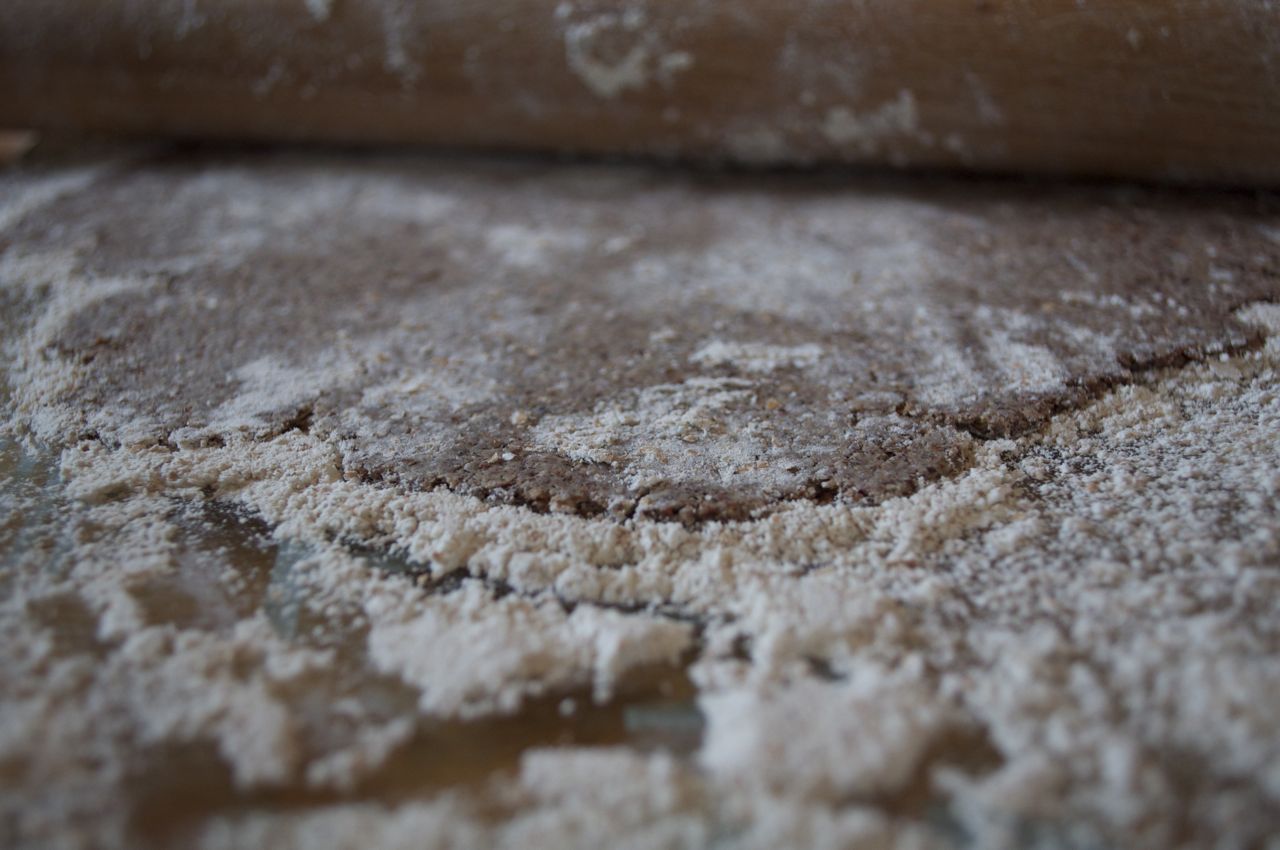
Sprinkle some flour on a wooden or glass surface, and then roll the pastty very thin.
Place on a baking tray, which has been rubbed with some oil
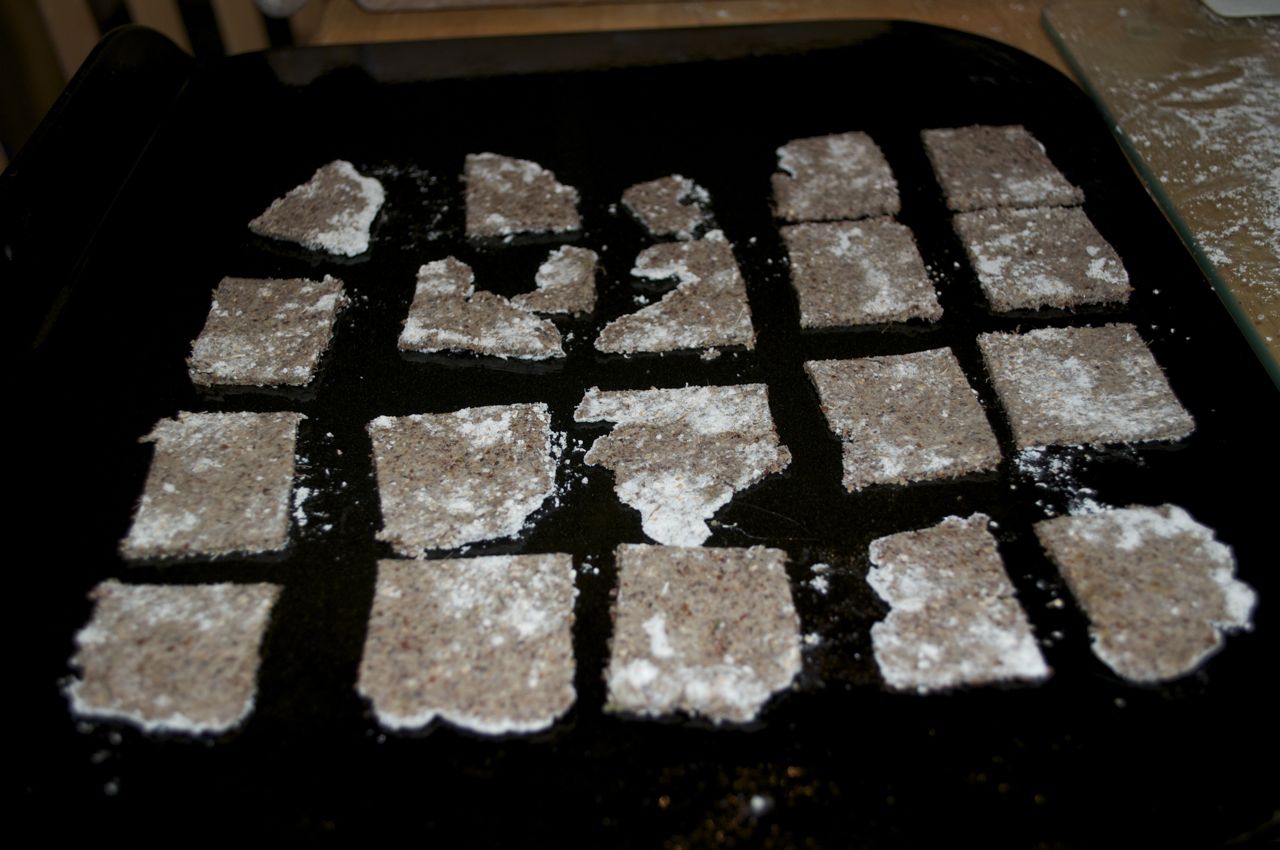
Cut into squares.
Bake in an pre-heated oven at 170 degrees Celcius for 12 minutes or until crisp.
Cutting the pastry into squaresDock wafers ready for the ovenA stack of dock seed wafers
We walked under the spruce trees, passed the twisted hawthorn and down the slope. The long grass brushed our knees, the mild damp autumn evening surrounded us and calmed our senses. The small river trickled over rocks, a soundtrack to soothe as we walked in to the lower part of the garden.
Here trees and shrubs grow in the grass, eventually we will have a woodland where ornamental species mingle with productive plants bearing fruit, berries and nuts. The weather has been so consistently wet I have not been able to cut the grass in this area of the garden since June. The area even flooded a few times when the stream over flowed, then that whole part of the garden looked like the river Shannon. As a consequence, the lower garden is a bit of a wilderness. Despite the wet conditions many of the trees species have grown well. Plants that grow here are tough. Birch trees are happy, willows are ecstatic. The alders, Alnus glutinosa, which we planted in the sucking, wet ground a few years ago have rocketed skyward, their branches provide shelter and their roots fix nitrogen to enrich the soil. Hazels are thriving where there is better drainage close to the stream and Parottis persica ‘Vanessa’ will soon turn gold and crimson with autumn tints.
Betula albosinensis ‘Fascination’ in our “wilderness”.
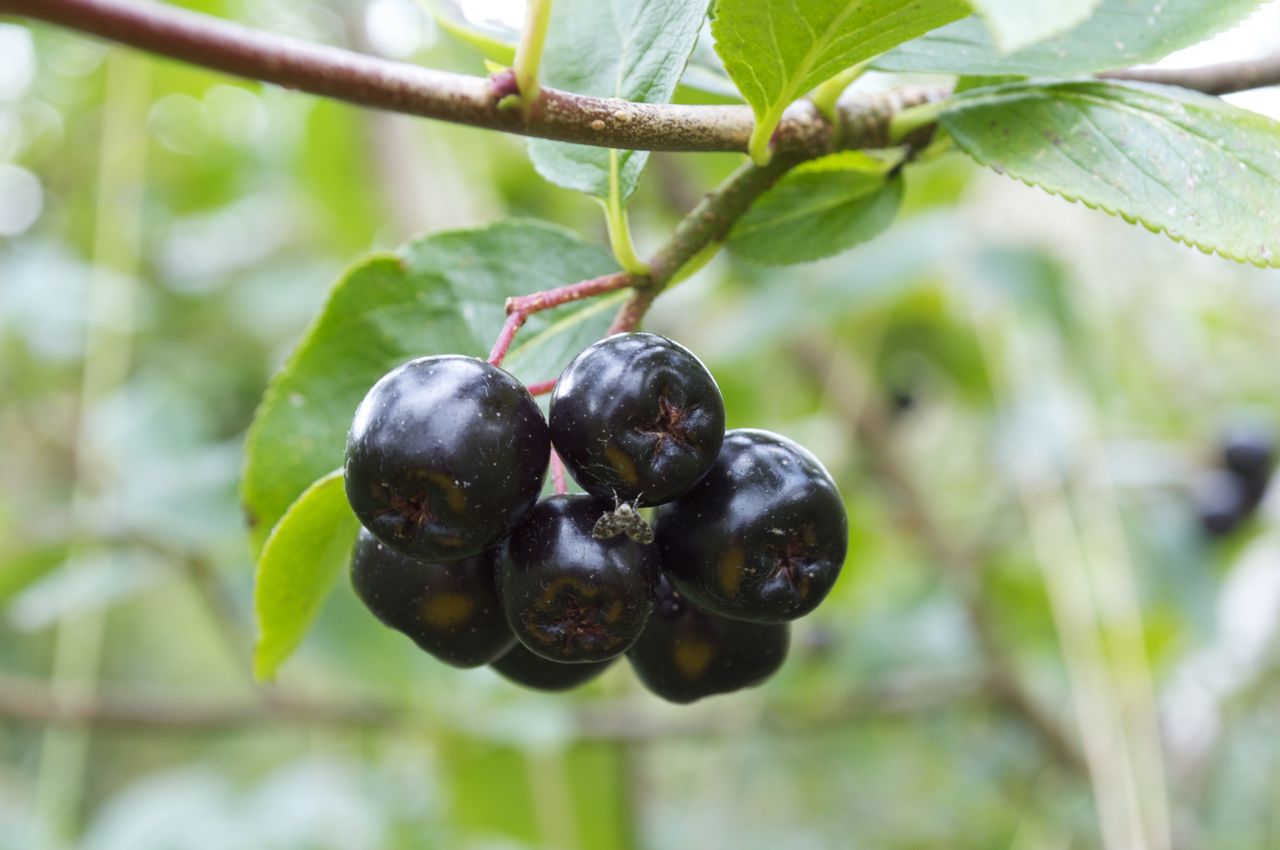
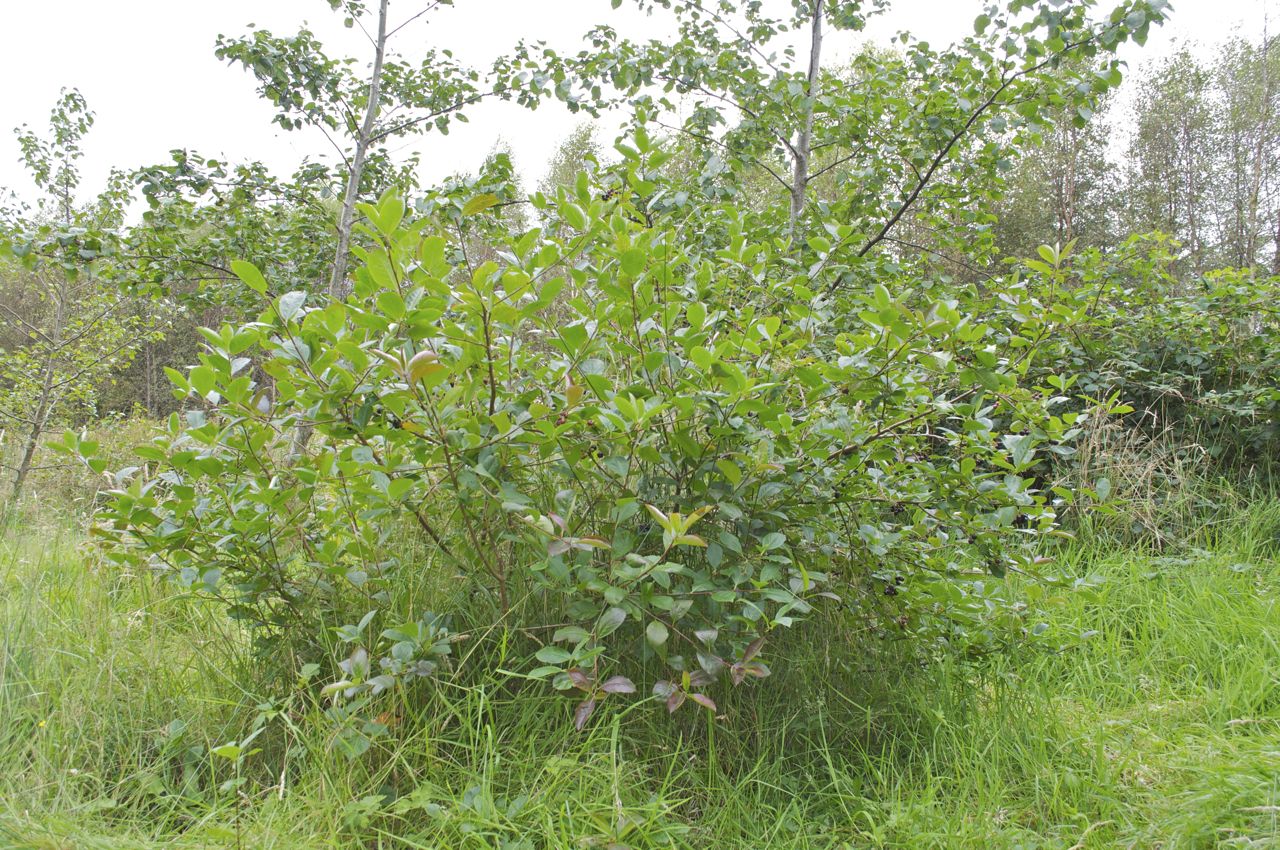
We picked our way through the grass, plucked some leaves of sorrel to munch and taste their sour flavour. A bush with large clusters of shining black berries drew our attention, Aronia melaoncarpa. Here in our wilderness, it has grown and triumphed. 1.5 metres high, so far, it will in time grow higher. A close relative of the wider grown genus, Cotoneaster, Aronias have a similar display of small white flowers in May.
Aronia melanocarpa fruits
Now in Autumn it gives us its best, the green leaves start to turn a rich red before fading to orange and gold before they fall. Hanging from the stems are juicy black fruits, the size of grapes. It is a plant of beauty and strong constitution. No weeding has been done around it, no fertilizing, no pruning. In wet acid soil it has thrived, and it has been fruitful. It also is growing in shade for most of the day, not until late afternoon when the sun has moved past the tall spruce trees does the plant receive direct sun rays.
Leaves of Aronia melanocarpa showing the first signs of autumn coloration.
There are other species of Aronia and hybrids too. Aronia arbutifolia is a smaller leaved plants with small red edible fruits and fiery red autumn foliage. Aronia ‘Viking’ is vigorous with dark purple edible fruits and good autumn colour. We also have another plant of Aronia in our garden with dark fruits that are smaller that A. melanocarpa with a different taste, I think it is A. x prunifolia.
Aronia melanocarpa
I was surprised by how well our plant of A. melanocarpa had grown, and by how beautiful it looked, my mind turned to jam. I mean, I thought about making jam! The berries make a lovely jam.
Beside our tunnel I have a number of plants of Aronia melanocarpa and A. ‘Viking” which I had propagated from cuttings. As soon as I give the long grass and rushes a strimming, I will definitely plant more Aronia bushes.
Aronia fruit
ARONIA JAM RECIPE
Ingredients
1Kg of ripe aronia berries (A. melaoncarpa or hybris, not A. arbutifolia).
Juice of one lemon
350g sugar
2 large cooking apples.
Method
Put the aronia berries in a saucepan with a little water and juice of a lemon. Cook on a low heat, simmering until they are soft, this takes longer than blackcurrants or blackberries, 35 – 40 minutes.
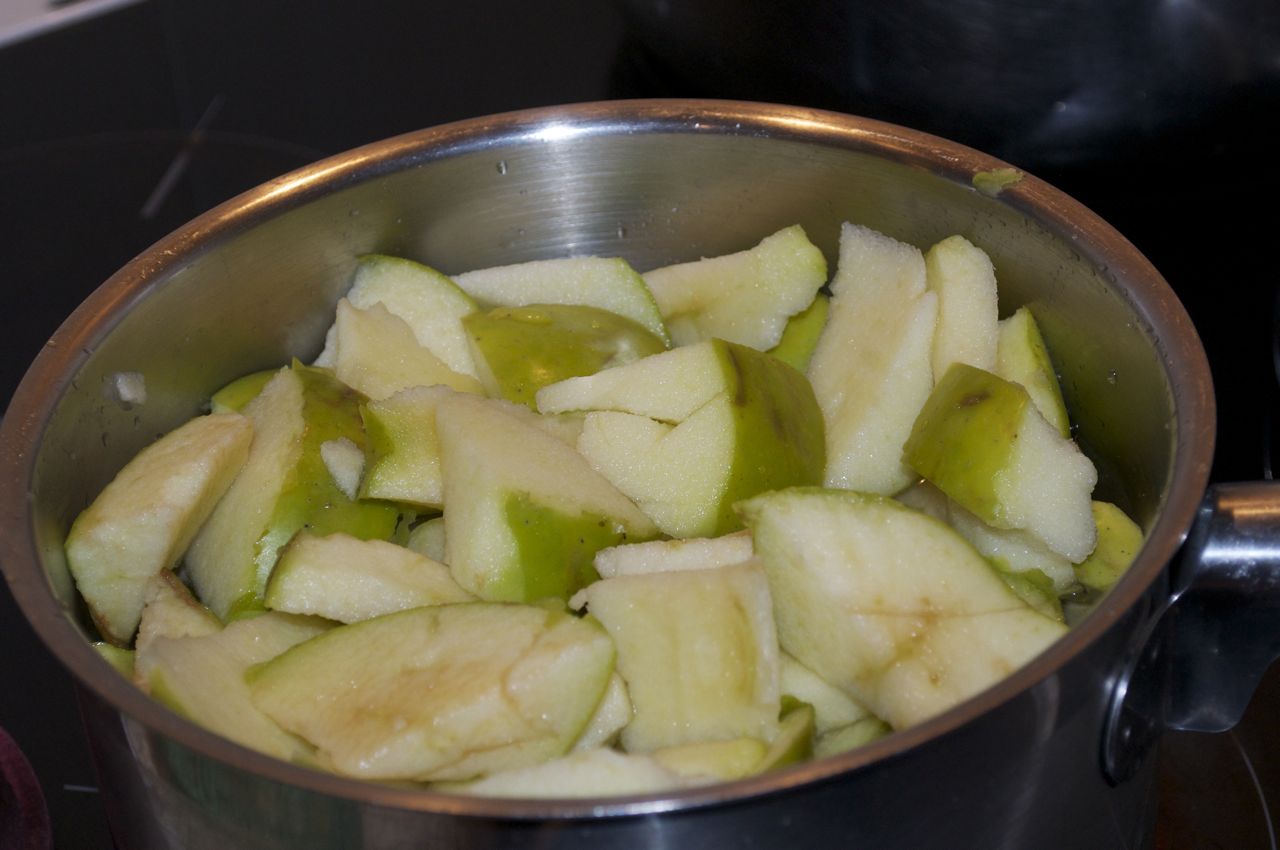
Chop up the apple into pieces, do not skin and cook in a separate saucepan with a little water until it reduces to a soft mushy pulp. Press the pulp through a sieve to remove the skin pieces and set a side.
Cooking apples sliced and in the sauce pan
When the aronia berries have softened stir in the sugar a little at a time. Then add the apple pulp.
Transfer the apple pulp into the jam once the jam fruit has softened.
Turn up the heat and boil the jam, it should be raging, a roiling boil which will splatter like mad, be careful, it is very hot.
After about fifteen minutes then jam should be thickening and ready for potting.
Filling jars and Storing
Transfer the jam into sterilized jars. I put washed and dried jars with lids removed into a cold oven and then turn the heat to 140 degrees Celcius. Leave them in the oven for 10 – 15 minutes. I put the lids in too.
Jam jars washed and dried, In the oven for sterilizing.
Fill the jars while jam is till hot, I use a jam funnel. Put lids on straight away and screw tight. This will cause a vacuum to develop as the jam cools, you will hear lids pop after a while. When the jam has cools, label with date and store jars in a cool, dark dry place. Well prepared jam can last for a year.
Amelie walked with her dad, or rather she ran ahead and he followed. Fueled by the curiosity and enthusiasm that only a young child can possess, running along the grass path and past the stone-walls she entered the vegetable patch. Calendula flowers made her exclaim, then she saw the heads of cabbage, firm pale green globes cradled by large firm leaves. It was love at first sight, she bent down to hug the cabbage and then the lucky brassica received a kiss to its crown. Her Dad laughed, she giggled with delight, then she buzzed off to chase a white butterfly.
Calendula flowersSnail eating some oat meal. Oats or bran is ideal for cleaning their digestive systems. The process takes about five to seven days.
Our visitors, a lively family, a lovely family, came to eat snails. Our petit gris, collected from the garden and reared in the shed, fed with bran to purge their digestive sytems. The kids preferred to eat Hanna’s delicious almond ring biscuits but us adults enjoyed l’escargot, the snails cooked in a white wine and tarragon sauce. Before they left, Amelie and her brother Gael brought us a gift, a new resident for our garden, Kitero.
Hanna’s almond rings baked according to her granny’s recipe from Finland. they proved to be a much bigger hit with the kids than my snails!
Kitero came from Knock. He arrived in a box and dressed in a fine red Kimono. His socks filled with sand and a beaming smile on his round green face. His hat and gloves on, ready for the cold, because Kitero is always on duty, in all weather, Kitero our scarecrow.
Kitero watches over our cabbage
We made him a home, he sits happily on the wooden edge of a raised bed, where he watches over our cabbages, including the kissed one. Kitero’s job is an important one, wood pidgeons love cabbages even more than Amelie. Where as she was happy to place a gentle kiss and give a firm hug, pidgeons would rather eat their leaves.
The feathered ones are not the only winged visitors to like our cabbage. Cabbage white butterflies, flutter around them looking for places to lay their eggs. When they do, usually on the underside of the leaves, caterpillars will soon emerge, hungry ones that will munch holes in the leaves. Unfortunately Kitero does not scare caterpillars, actually I am not sure if he would scare a bird, he looks too friendly. When I find groups of yellow eggs on any brassica leaves, including the relatives of cabbage such as Brussels Sprouts and Kale, I squash them. Those that I miss emerge as larvae, they get squashed. Some people do not like to squash them, instead they favour re-location of the pests, but I have no qualms about delivering a deadly squueze to a few caterpillars that I find on my cabbage leaves.
Caterpillars on brussel sprouts- Pieris brassicae, the larva stage of cabbage white butterfly
Cabbage is a widely grown vegetable and it likes the cool climate of the west of Ireland. It is hardy and reliable. Easy to grow in well prepared soil. Many people turn up their noses at cabbage, perhaps too many childhood dinners of over cooked and mushy leaves. I went through a phase of rejection but I have a renewed love of the green globes. Not that I have kissed a cabbage lately, nor given one a hug, but cooked with love to produce a tender dish kissed with the flavour of caraway and honey, cabbage is a vegetable I readily embrace again.
Sautéd Cabbage with Caraway Seed and Honey – Recipe
Ingredients
Half cup of finely chopped onion
4 cups of chopped cabbage
One tea spoon of caraway seeds
Table spoon of honey
Oil for frying
Method
Sauté the onion in oil until soft
Add the caraway seeds and stir for a couple of minutes
Add the chopped cabbage and stirfry until the cabbage becomes tender but not soft (ten minutes)
Stir in the honey and serve
Serves four as side dishes. One variation that an American visitor shared with us a while ago is to use dried chillis instead of caraway, both recipes are delicious! If you have tired of boiled cabbage this could make you fall in love with cabbage again!
Blackberries are an abundant fruit in the Irish countryside
Shining and black, tightly packed and full of flavour. Each segment a tiny drupe, like a miniature stone fruit, they line the lanes and roadsides of the Irish countryside. Blackberries are abundant, their prickled stems arch over the hedgerows and back to the soil where each stem can take root at its tip and continue its colonization of the earth.
Blackberries, Rubus fruticosa are a bit of a Jekyll and Hyde for gardeners, sometimes hated. Then it is called a bramble or a briar, a sharp prickled vigorous and multi-stemmed woody weed; Mr Hyde, wild vagabond and unwelcome. Brambles are sometimes loved. In September the sweet and juicy black fruits ripen to the darkest black, picked for jam making and delicious pies, then they are blackberries; Dr Jekyll, most welcome.
I have spent hours, days, maybe weeks chopping bramble stems in our garden. Gloved hands dragging their roots from the soil after vigorous hacking at their toots with a spade. It is a constant battle, more like war, where battles are sometimes won but the enemy always return to the same front or ambushes you somewhere else. Yet I love them, yes, I love my enemy.
Rubus fruticosa is a variable species and there are said to be hundreds of varieties occurring in the wild. Plants around our garden produce small hard fruits without great flavour so I take cuttings from plants that I find with good fruit. I will plant these into the woodland bordering our garden so I don’t have to travel looking for good berries in the future, reducing my carbon footprint! Until our new introductions of superior blackberries produce fruit, which will be a couple of years as they fruit on previous years growth, Hanna and I have been picking the fruit along the roads in our locality.
Rubus fruticosa – its a love hate thing!
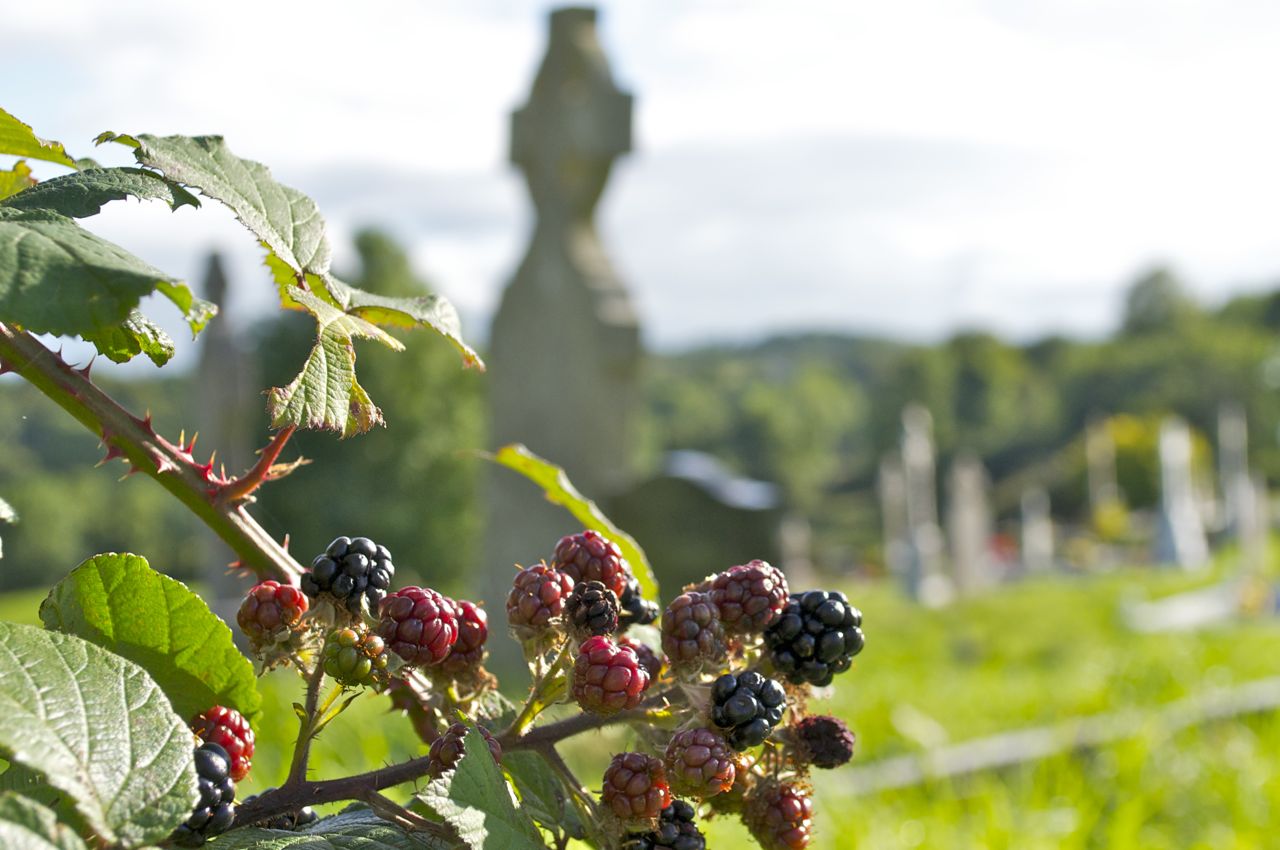
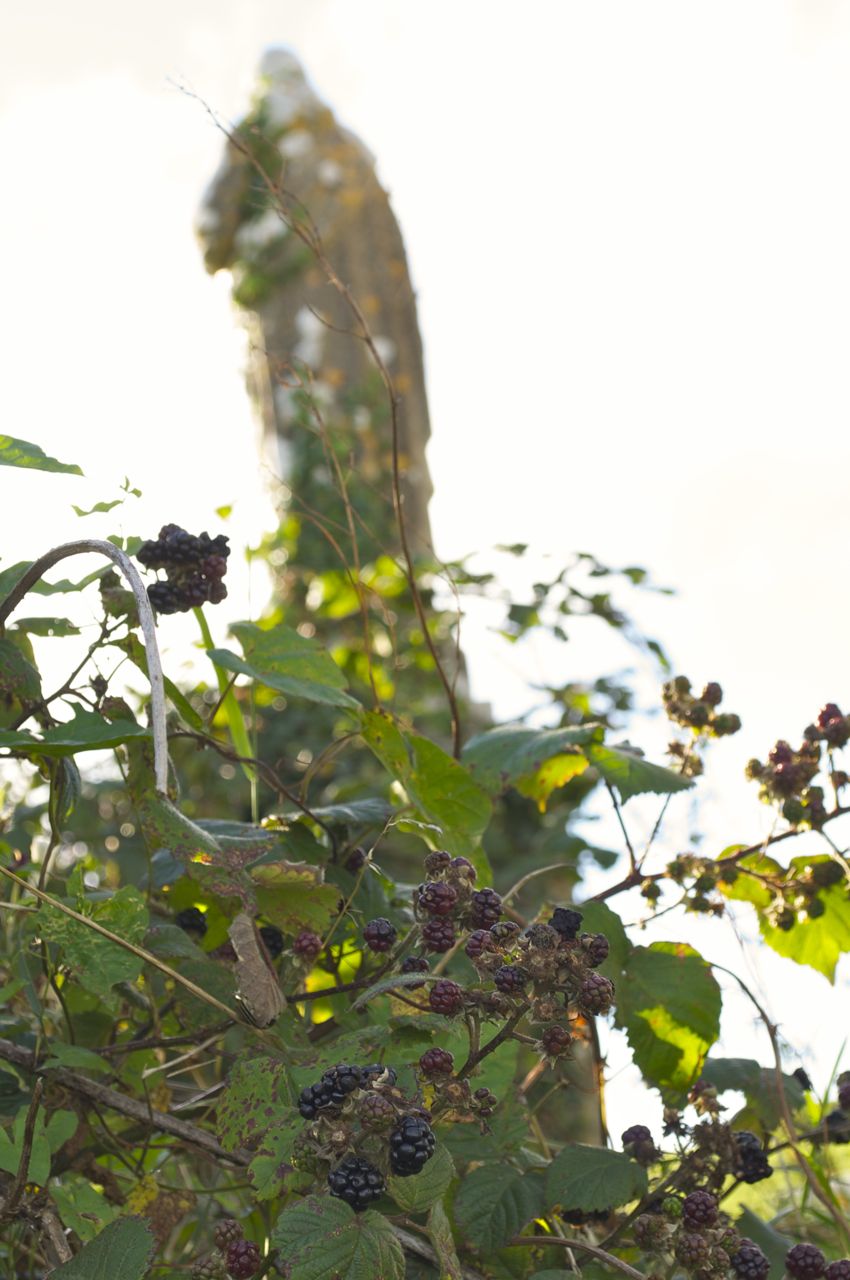
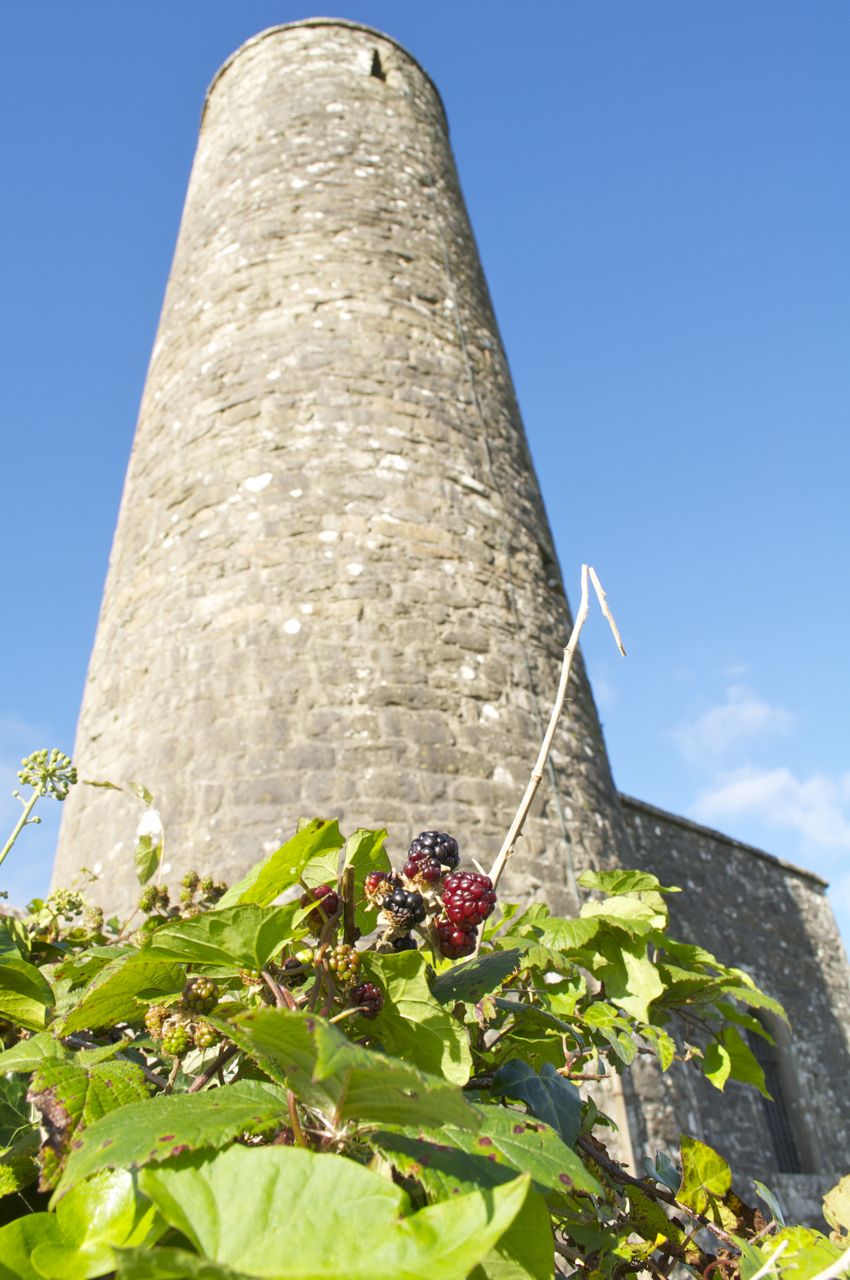
One of the reasons I enjoy food foraging and discovering more about the edible properties of the wild plants that grow all around us is that It gives me a new respect for plants I previously called weeds. It also creates a link with the past. This is something our ancestors would have done. Foraged food played an important part of their diet. It also bring back fond memories of my childhood. I have happy memories, of purpled hands and face, plastic buckets filling slowly and the sweet taste of blackberries in my mouth. Sometimes I ate more than I picked on our family expeditions to the countryside, where we would walk along the country roads gathering the fruit, falling in ditches, getting scratched and dyed. Recently when visiting Turlough Monastery and round tower near Castlebar in Co. Mayo I tasted delicious berries. They were big, juicy and sweet. Picking berries beneath the towering presence of a thousand year old stone tower, watched by a statue of Jesus and passing by the old yew trees brought a connection of site and action that goes back to pre-christian Ireland where probably this old monastery was preceded by a holy site where our ancestors probably nibbled on a berry or leaf when they visited.
Round tower and blackberries -Turlough, Castlebar, Co. Mayo, Ireland
You also have amusing encounters with people of the present when they see you picking berries. Last Monday on a country lane, we were filling our buckets ripe sweet fruit. A blue Nissan car approached and slowed to a stop. An elderly local lowered the passenger side window, an amused look on his face. We greeted each other and he asked “ are ye gettin’ many?”. I replied, telling him that there were lots of berries, he laughed and said “they will have lots of maggots by now” and drove away. Our relationship with the bramble in modern Ireland is a curious one, while the roadsides are filled with their free fruit, people buy farmed and imported blackberries instead, €3.95 for 250 grams! Last Monday we picked a small fortune of fruit in a couple of hours, and no maggots!
BLACKBERRY JAM RECIPE
Ingredients
2kg Blackberries
3 cooking apples cored and chopped
750 g of organic sugar
Juice of one large lemon
In a sauce pan I cooked the chopped apple with about 150ml of water until the apple had gone to a soft pulp. (Leave on the skins if organic and remember to wash them well)
In another larger saucepan I added 150ml of water and the blackberries and the juice of half a lemon.
Cook the berries slowly until they have become soft this can take 20 to 30 minutes
Then press the apple pulp through a sieve into the blackberries.
Slowly add the sugar, stirring to help it dissolve.
Turn up the heat and stir occasionally. The jam should be boiling really hard and it will splatter. I always leave the lid partially covering the pot to reduce the mess on the walls!
The jam will start to thicken, when set you pour it from a wooden spoon it will form thick droplets that are slow to leave the spoon. I like my jams to have a little give, not like a jelly. This boiling stage will take about twenty minutes, a little more if you want your jam more set.
Then transfer the jam into jars which have been sterilized.
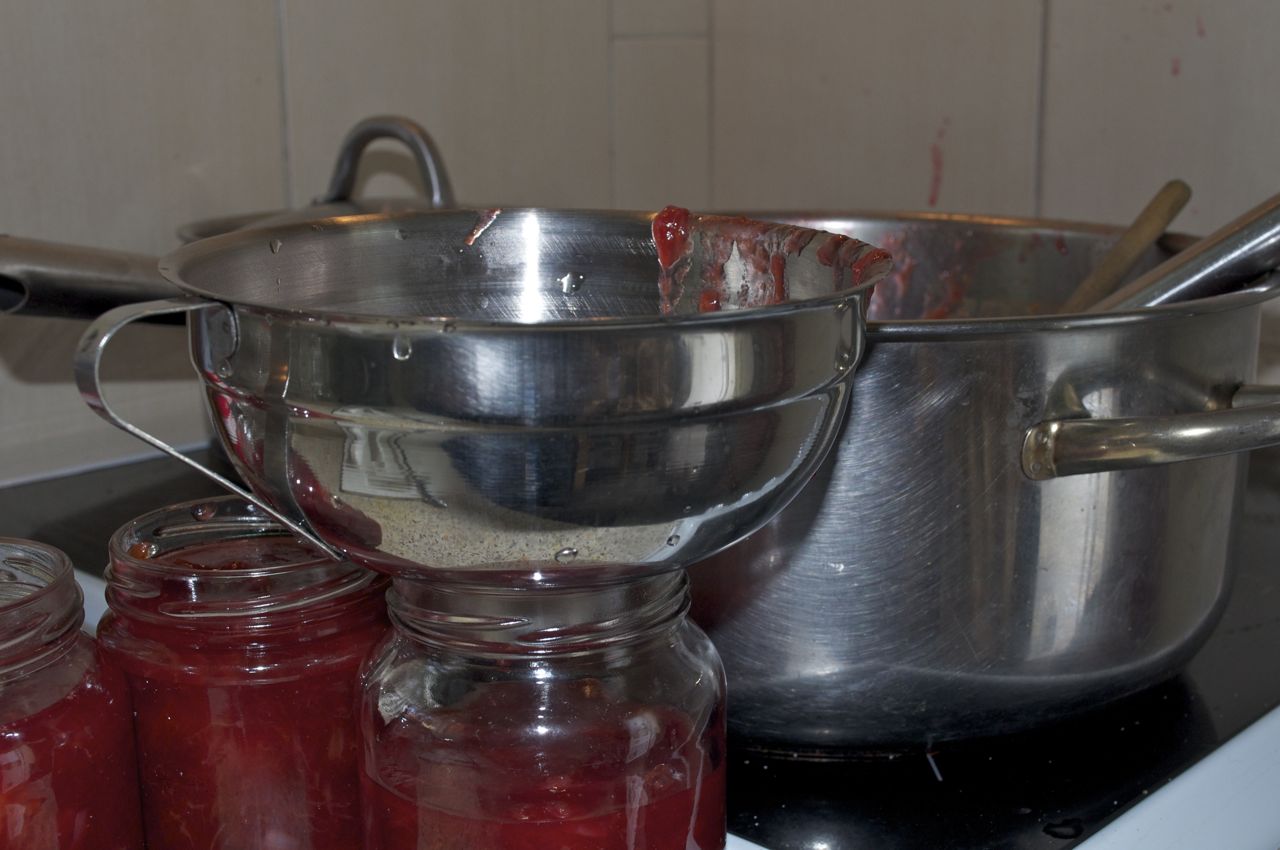
I use my new jam funnel, it cost about €6.50 and it reduces the mess, in fact there is no mess and it speeds up the process of jar filling. I put on the lids immediately.From these quantities of ingredients I got eight jars.The best part of jam making is continually having to taste the jam before it is ready, making sure it is sweet enough and the fruit has softened, and the smell of the cooking fruit is delicious too.
My new jam funnel used here to fill pots when making plum jam.Taxus baccata “Fastigiata’ _ Irish Yew and the round tower at Turlough, Castlebar, Co. Mayo, Ireland
Its coming to that time of year again, blackberries are ripe, elder berries are ripening and the rose hips are nearly there. I “look forward” to some Saturday nights making jam. During the summer I made some rose hip jam from fruits that were in the freezer, it is a delicious jam but it does take a bit of work. From my old blog here is the story of a Saturday night spent making rose hip jam in the company of Ozzy Osbourne and Black Sabbath. I have added my revised rose hip jam recipe using sugar and apples to add pectin.
The knife cuts through the red flesh, the head is severed, then, thop, brop, brop… bouncing in the bucket. I pick up the next one, cut and chop, thop, brop, brop…
It is Saturday night, the guitars, the bass, the drums, they blast from the speakers. Ozzy Osbourne’s tortured cries accompany, “Am I Going Insane?”… Cut and chop, top and tail, thop, brop, brop… Perhaps I will go mad! I am preparing a bucket full of rose hips, our bounty from the hedgerow, getting ready to make rose hip jam.
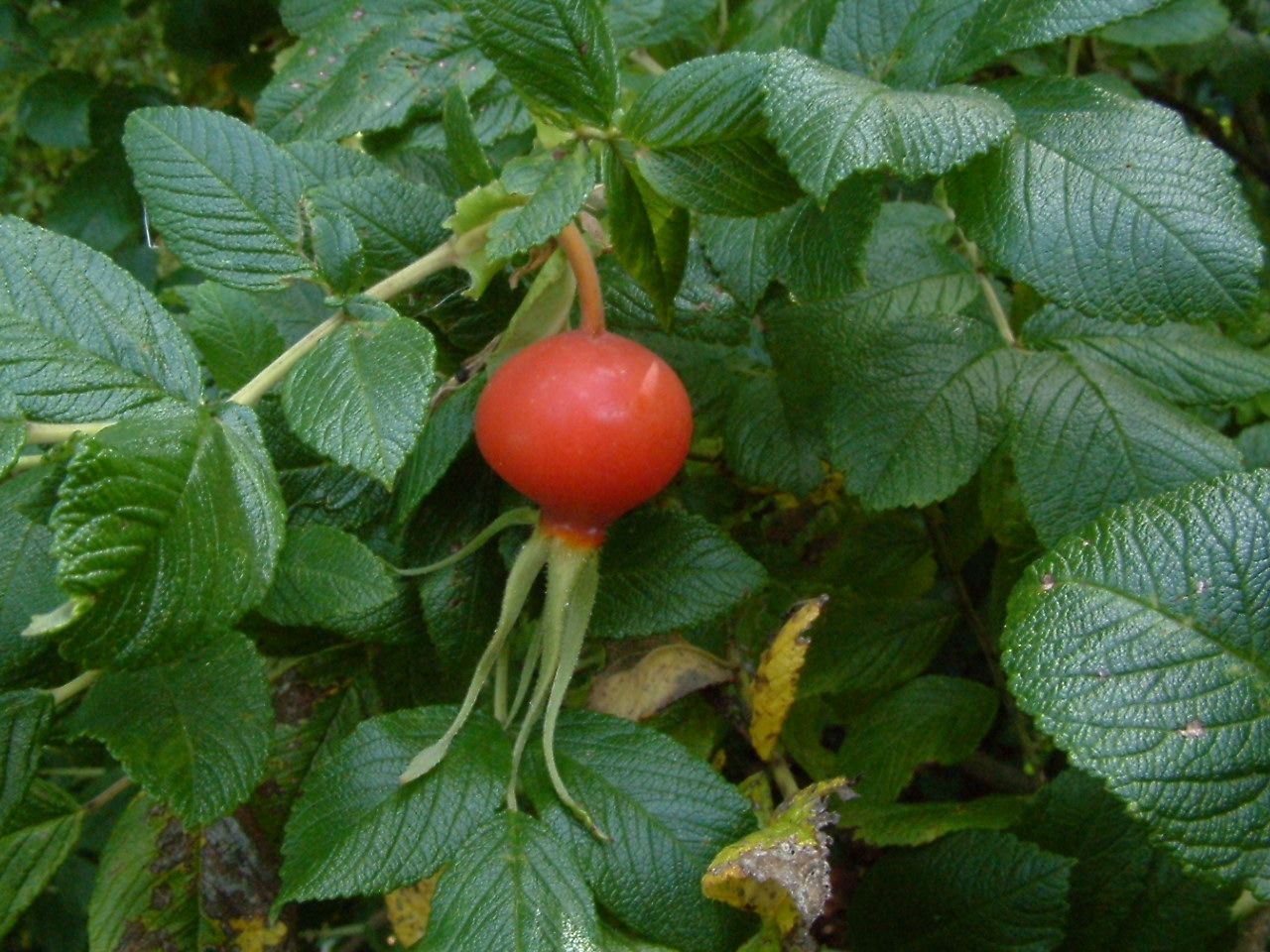
Rosa rugosa – hips
Rose hips, the fruit of the rose are easy to pick, once you get started its hard to stop. Wild dog rose, Rosa canina is ideal, and Rosa rugosa hips are also good. The bucket fills quickly, as you add more and more. Then you get home. Now you have to top and tail them. Remove the stalk from the base, and discard the leafy calyx from the top.
Rose hips- a long night ahead!
I start with enthusiasm, what better way to spend a Saturday night? Black Sabbath are playing loudly as I pick through the harvest, topping and tailing. Soon the sound of the falling rose hips is dulled as they land on a layer of prepared hips, no longer do I hear the hollow thop, brop, brop of topped and tailed hips bouncing in an empty bucket. I work away, Ozzy sings “Tomorrow’s Dream”, rose hip jam on my bread for breakfast.
A busy Saturday night topping and tailing rose hips!
The bucket of unprepared hips is still quite full, and Sabbath are nearly finished one album. I am beginning to think that I am going to get to hear their whole back catalogue. “Sabbath Bloody Sabbath” has me singing “Rosehips Bloody Rosehips” as I dip into the never emptying bucket. But I continue with my toil, my three containers in front of me; the harvesting bucket, the compost bucket and plastic bowl of prepared hips. Black Sabbath keep blasting out the tunes, I keep cutting. It is good to hear the old tunes again, air guitar with a sharp knife is not a good idea though
Eventually there is hope, a slight glimpse of white plastic, the bottom of the bucket. Briefly glimpsed before a hip rolls to replace its vacated companion. “Never Say Die”, ah yes, ah song for every occasion, the band plays on. With renewed vigor, I keep chopping, topping, tailing and the bucket is empty at last.
Rose hips topped and tailed
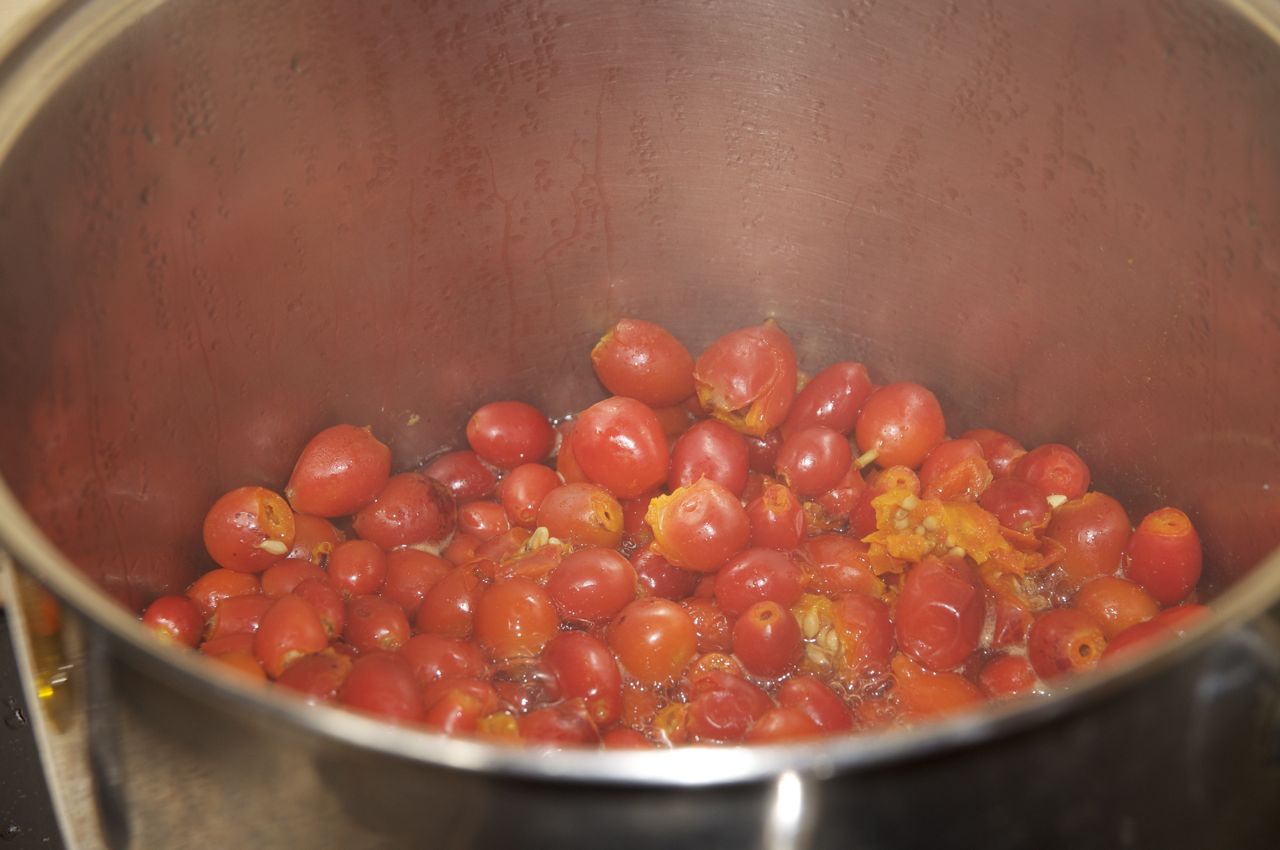
Next I wash some old jars, weigh out 1.2Kg of hips, bag the rest and put them in the freezer. I place the fruit in a big sauce pan add some water and cook them. Its getting late, but I have lots of Black Sabbath albums. As I move to the next phase of the jam making operation, I change to the second era of Black Sabbath, with Ronnie James Dio on vocals, “Turn Up The Night”. After about an hour the fruits have softened. I have to press them through a sieve to remove the seeds, a thick pulp of rich red results, it is hard work. Then I skin a few apples and chop them in the food processor. The pulp goes back into a saucepan with two 400ml bottles of apple juice concentrate and chopped apple. The mixture bubbles like a witches brew, Dio sings of circles and rings, dragons and kings, as I stir the jam. The temperature rises, the jam starts to thicken and after a while of continuous stirring it is time to fill the jars.
Rose hips in the saucepan
This is always the messiest part. The boiling jam is transferred with a spoon into jars that have been heated in the oven to sterilize them. I usually manage to spill some, but only minor scalding results. Soon the jars are filled, I scrape the cooling and setting jam from the edges of the pot. I lick the sweet sticky fruit from the spoon. It is late, it has been a long night of toil, but this is the best moment, it is hot, it is sweet and it is delicious as Dio sings… “ Heaven and Hell”. Well, it was hard work, for two and a half jars of jam. Not quite hell, but rose hip jam is close to heaven.
ROSE HIP JAM RECIPE
Since I fist made rose hip jam I have revised the recipe using sugar instead of apple juice concentrate. This jam wont be set like a jelly, instead it will be like a thick delicious sauce. It still involves topping and tailing!
INGREDIENTS:
500 g rose hips chopped
500ml water
200ml boiled water
3 apples, cored and chopped, don’t peel them
juice of half a lemon
1.5 cups of sugar
METHOD
Boil the rose hips in 500ml of water until they are soft.
In a separate pot boil the chopped apples in a little water until soft and mushy.
Push the pulp of the rose hips through a sieve into a bowl and set aside.
Put the seeds back into the pot and pour in 200ml of boiling water, cook for a few minutes and sieve again, add to the rose hip pulp.
Next, put the apple pulp through the sieve and mix into the rose hip pulp.
Heat the pulp, add the sugar slowly, stirring to make sure it is dissolved. Add the lemon juice. Turn up the heat and boil the jam.
Continue cooking for about 20 minutes until the jam has thickened.
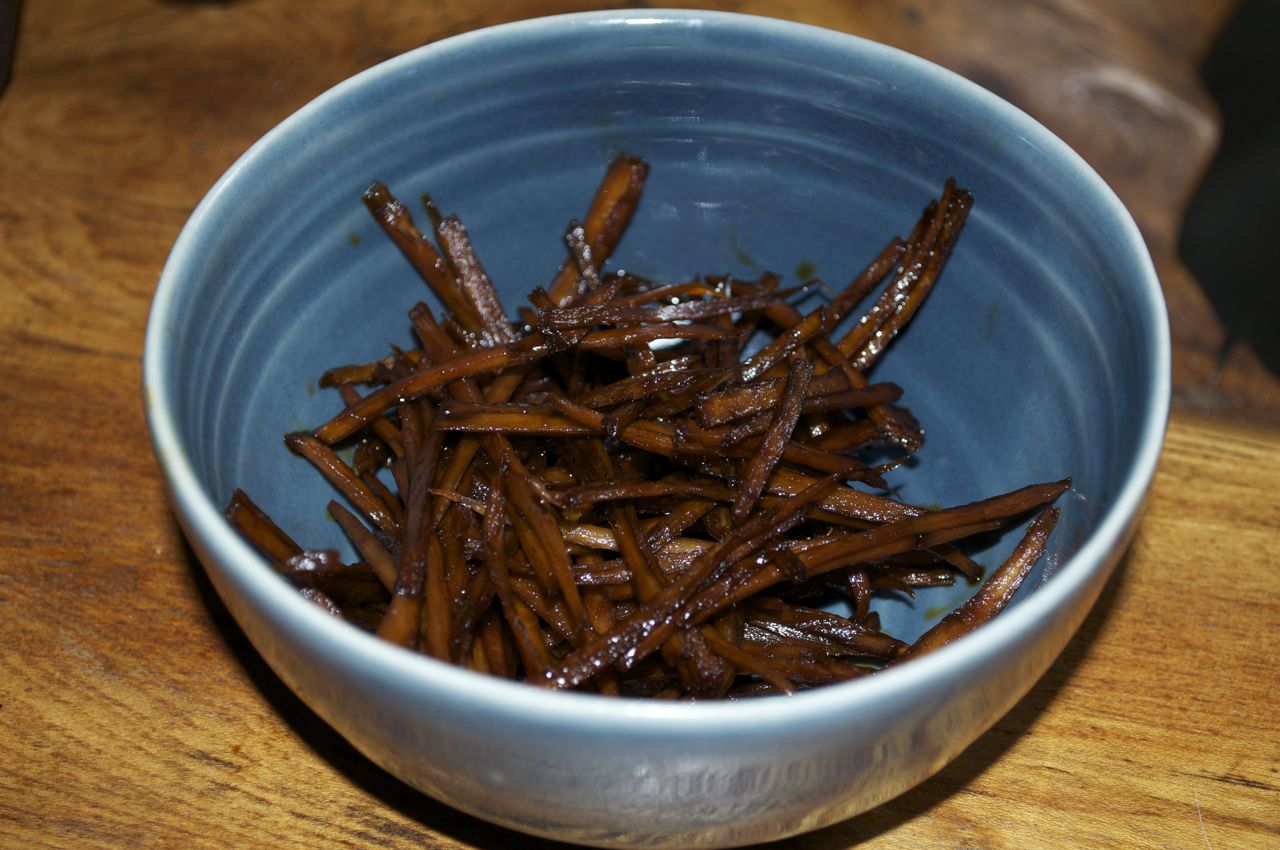
Bowl of cooked burdock roots- a tasty healthy snack
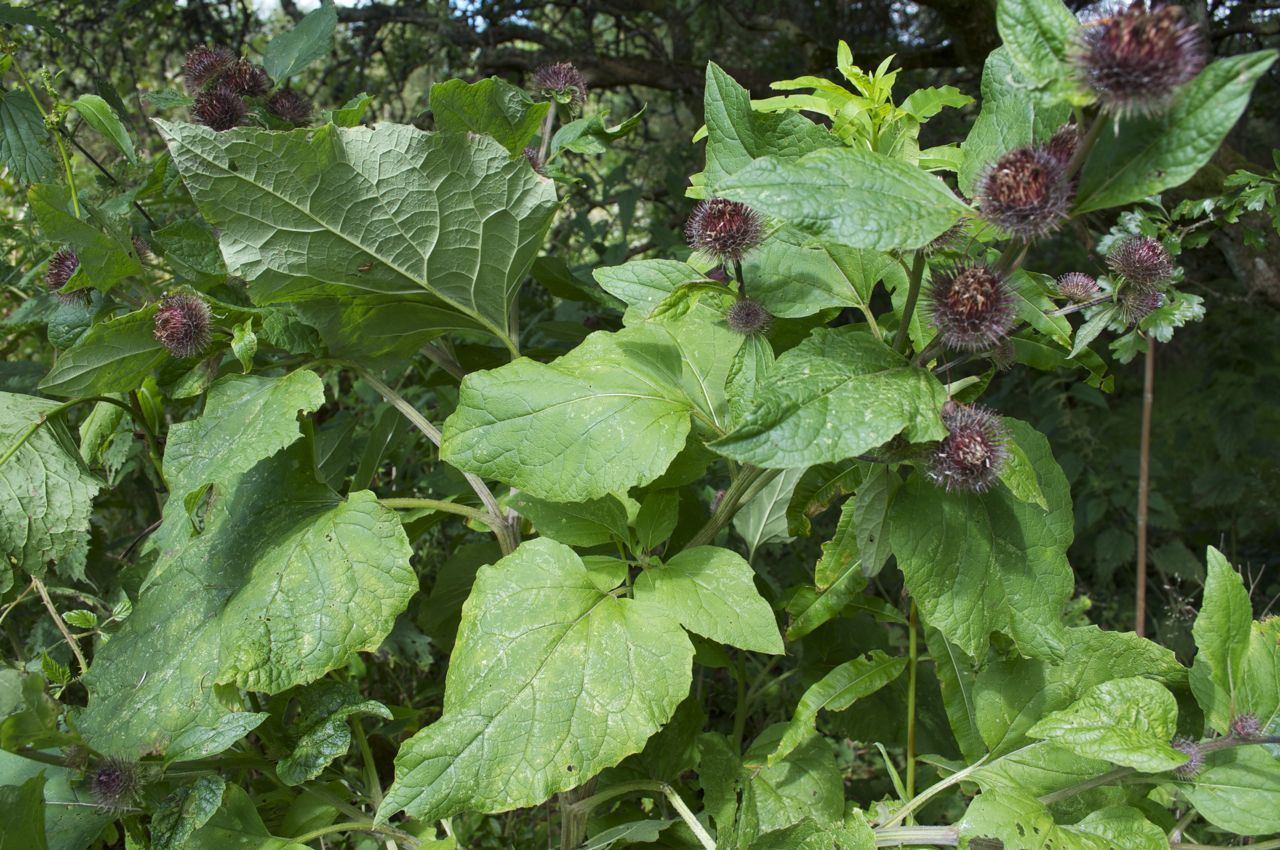
The story goes, George de Mestral took his dog for a walk and then invented Velcro. The Swiss inventor took his canine for a stroll one day sometime in the 1940s and upon arriving home he noticed that his dog has in this fur the spiky seed heads of Actium minus otherwise known as Burdock. The barbed seed heads attached themselves to the dog’s fur as they do to any fur or clothing that they come in contact with, this is the plants clever method of seed dispersal. Mr. de Mestral was fascinated by this and apparently examined the seed heads under a microscope and voilá…velcro was invented. Well, maybe not quite so easily.
The spiky seed heads attach themselves to clothes and animal fur
Burdock grows in our garden, especially under the old hawthorn tree in the woodland. Each year their impressive wide leaves wave in the wind to be followed by their thistle flowers, which then make fruits that attach themselves occassionally to one of our cats. Many a time I have cursed the burdock plant. Its roots go deep into the earth and I treated it with disdain, because I had viewed it as an unwanted plant, a weed. It was very hard to eradicate. But things have changed, or rather my attitude to plants, and what I condsider a nuisance or a weed has changed. As I grow increasingly interested in using native and wild plants for cooking and exploiting their culinary possibilities, it means that I now embrace a far greater range of plants than I did previously whenI gardened purely as a gardener interested in ornamental, exotic plants.
Burdock, Arctium minus is a handsome plant in its own way, broad dramatic foliage and emphatic thistle flowers of pink. It is a biennial, it dies after it flowers, just as carrots do. Also in common with carrots, the food stored in its long deep tap root can be exploited by us. In Japan, burdock is commonly used in cooking and is cultivated as a crop for its slender tasty roots. In Japanese the it is known as gobo. It is also used in England for making a traditional beer .
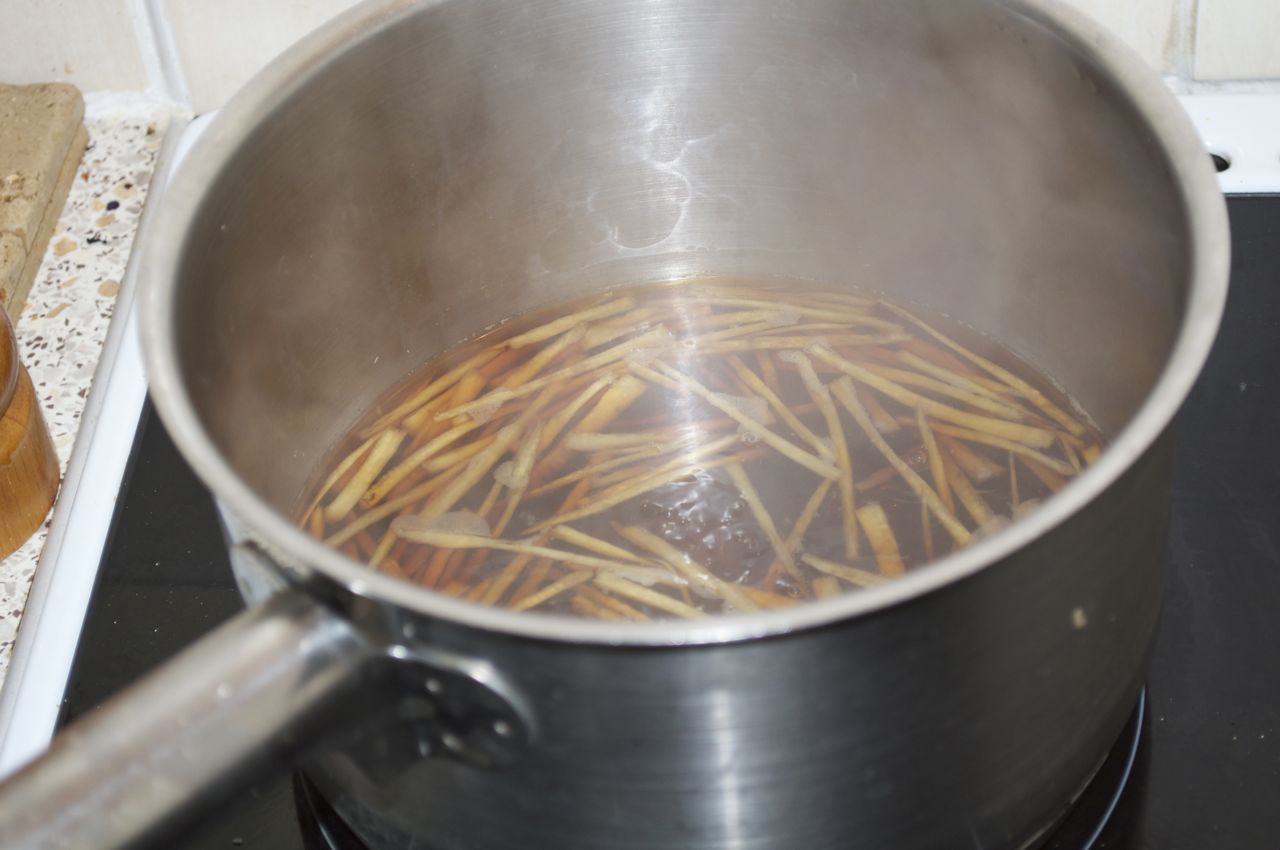
Cover the burdock root slices with water and add a good dash of soy sauce
To cook burdock the Japanese way, you cut the centre core of the root into slivers the size of match sticks and boil them in water into which a dash of soy sauce has been added. When the roots become tender, the liquid is reduced until the root pieces have absorbed all the flavour of the soy sauce.
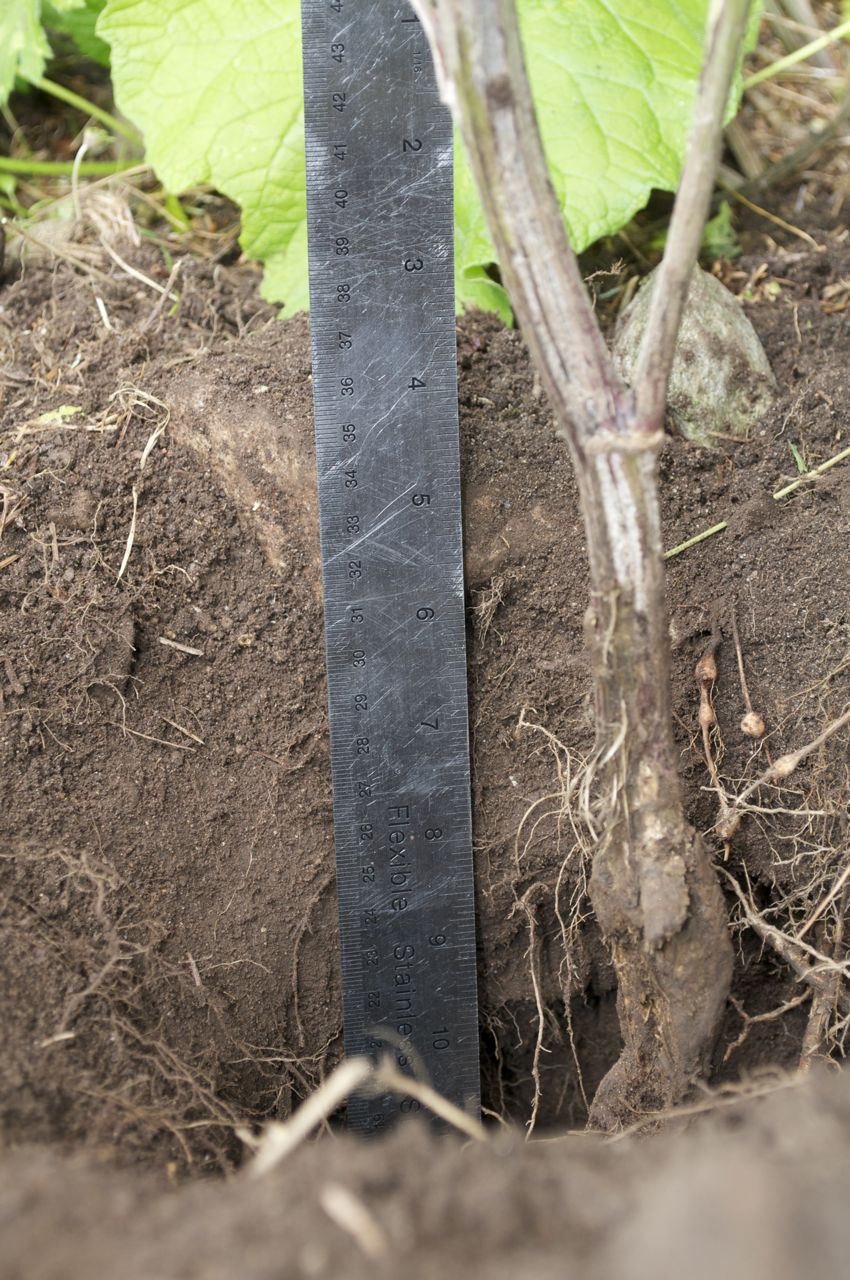
Deep rooted burdock root
With this recipe in mind my wife Hanna and I decided to tackle a burdock root with a garden and tool of which she makes much use of called a Cobra Head. The Cobra Head tool is made in USA and is most effetive a removing weeds from the garden especially deep rooted weeds such as dock and dandelion. As she dug around the burdock root it became apparent, that even the Cobra Head was no match for the stubborn nature of a burdock root, they do not like to be dug up. After much digging and scraping, Hanna’s efforts to remove the whole root intact were in vain, the burdock root won, and a fair portion of the root remained deep in the soil as I finished the extraction process with a shovel.
Use only the central part of the root, burdock roots are best harvested before the plants have flowered
Luckily we had more than enough to work with for our tasty snack. When preparing a burdock root for cooking, wash it well. Then with a sharp knife remove the outer layer of the root and only use the central core. The outer parts remain woody even after cooking. The flavour of burdock root is mild and agreeable but the addition of the soy sauce when cooking gives it a salty zing. It is high in fibre, calcium, potassium, amino acids, and is low in calories. Also, as it is prepared in water and not frying it makes a healthy snack. I wish I had not weeded out so many burdock roots in the past…
Cooking burdock root slivers in water with a good dash of soy sauce
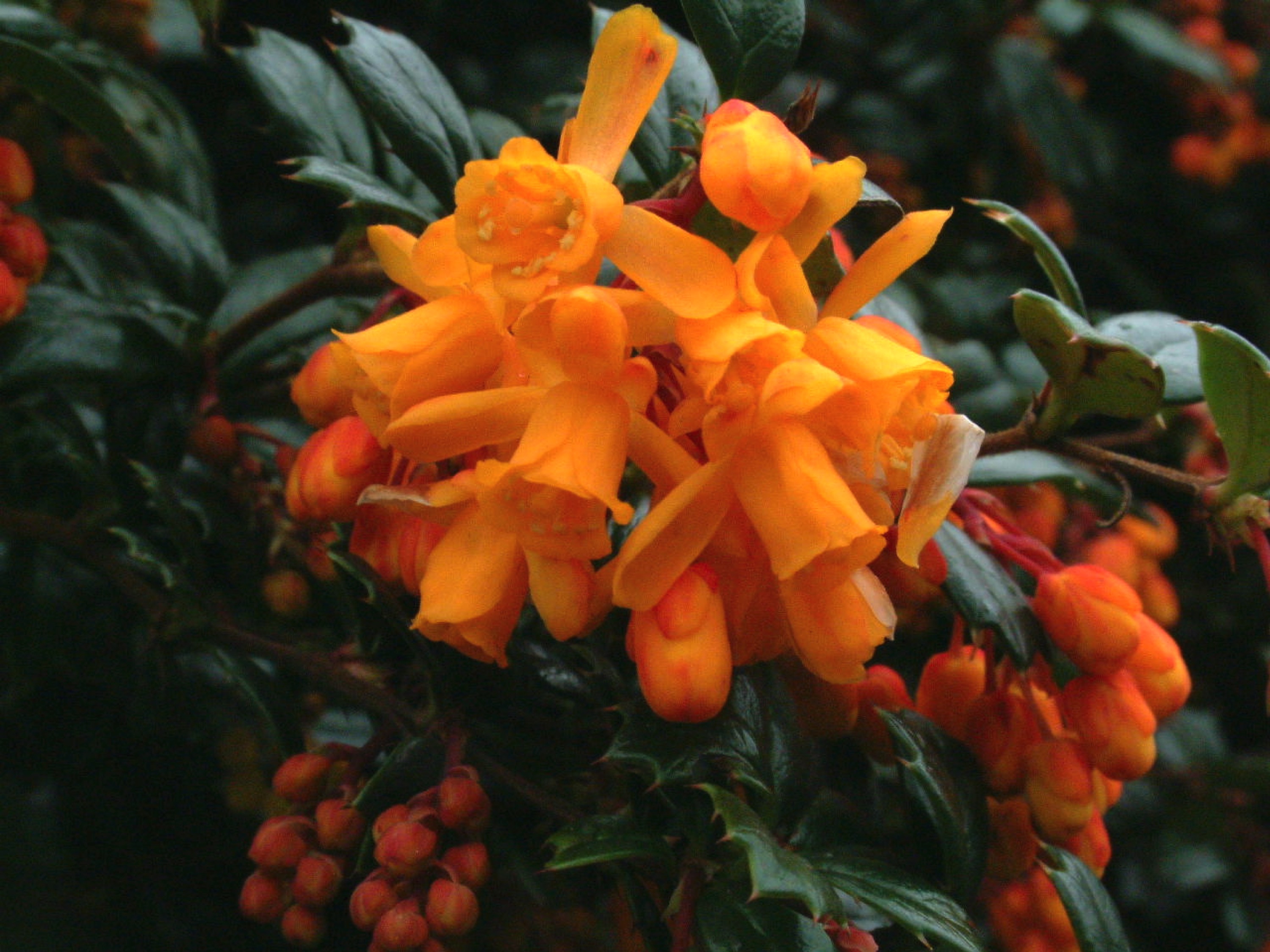
A Chilean native, discovered by the god father of evolution, Charles Darwin in 1835 and introduced by the great plant hunter William Lobb for the legendary Veitch plant nursery Berberis darwinii was brought to Europe in 1849 by legends of the horticultural and scientific worlds. Since then this evergreen barberry has deservedly been a popular choice with gardeners who value it for its bright orange flowers and spiny holly-like evergreen foliage. the drooping racemes of blooms are also much loved by bees, they buzz around the shrub in a droning symphony of sound that is their soundtrack to their busy work days collecting nectar and pollinating the flowers. The ovary of the flowers will then grow and swell to become a berry, dark plum coloured with a whitish bloom , the size of small peas.
Berberis darwinii -flowers
My first encounters of this spiny shrub were as a horticultural student, I did some gardening jobs at weekends and during the holidays. I helped a lady in Clontarf, a desirable suburb of Dublin, with her garden. She was a keen gardener who grew Trilliums in her raised beds and coveted her unusual perennials. Her front garden was hidden from the pedestrians by a tall dense hedge of Berberis darwinii. I used to trim it with a hand shears. The cutting was no problem but I did need a stout pair of gloves when collecting the trimmings and bungling them into large plastic sacks for the bin men to take away later during the week. The bags and my gloves invariably ripped each time but I always admired its floral display each May and respected its sturdiness, and the lady was never troubled by anyone sitting on her garden wall!
Over the last few weekd I have been admiring these fruits and was eventually tempted to pick them and make them into a jelly or jam. And, I am so glad that I did, it is delicious. If you have ever tasted bilberry jam, well, it is something like that!
the holly-like spiny leaves of Berberis darwinii
Our shrub grows in the dappled shade of a hawthorn tree and still flowers brilliantly and berries abundantly. At present it stand at about 1.8m high and having pinked most of the fruit, i left a few for the birds, I got 900g from the plant. Following the recipe below I got two good sized pots of jam. I will have to take some cuttings of B. darwinii so as to have more fruit to harvest in future years…
Ingredients:
900g of ripe Berberis darwinii berries
2 Litres of water
2 cups of sugar
juice of one lemon
Method:
Cook the berberis berries in the water until they have softened.
Sieve the berries and liquid to remove the skins and many seeds. What I did was mash them through a sieve then squeezed the remaining pulp through a muslin cloth, made a bit of a mess but it made sure I got as much as possible from my little harvest. I had 3 cups of berry pulp and liquid (1.5L)
Heat up the berries, add the lemon juice and as it heats stir in the sugar a cup full at a time.
Cook on a high heat for about 25 minutes until the jelly starts to set.
Spoon into sterilized jars and cover.
NOTE: I sterilize jars by washing them well in soapy water, then rinse and dry. Place jars in a cool oven and heat to 140 degrees Celcius for about ten minutes.





















 Ciaran The Gardener